
Hydrofires Fireplaces in South Africa: Range, Prices & Buyer’s Guide (2026)
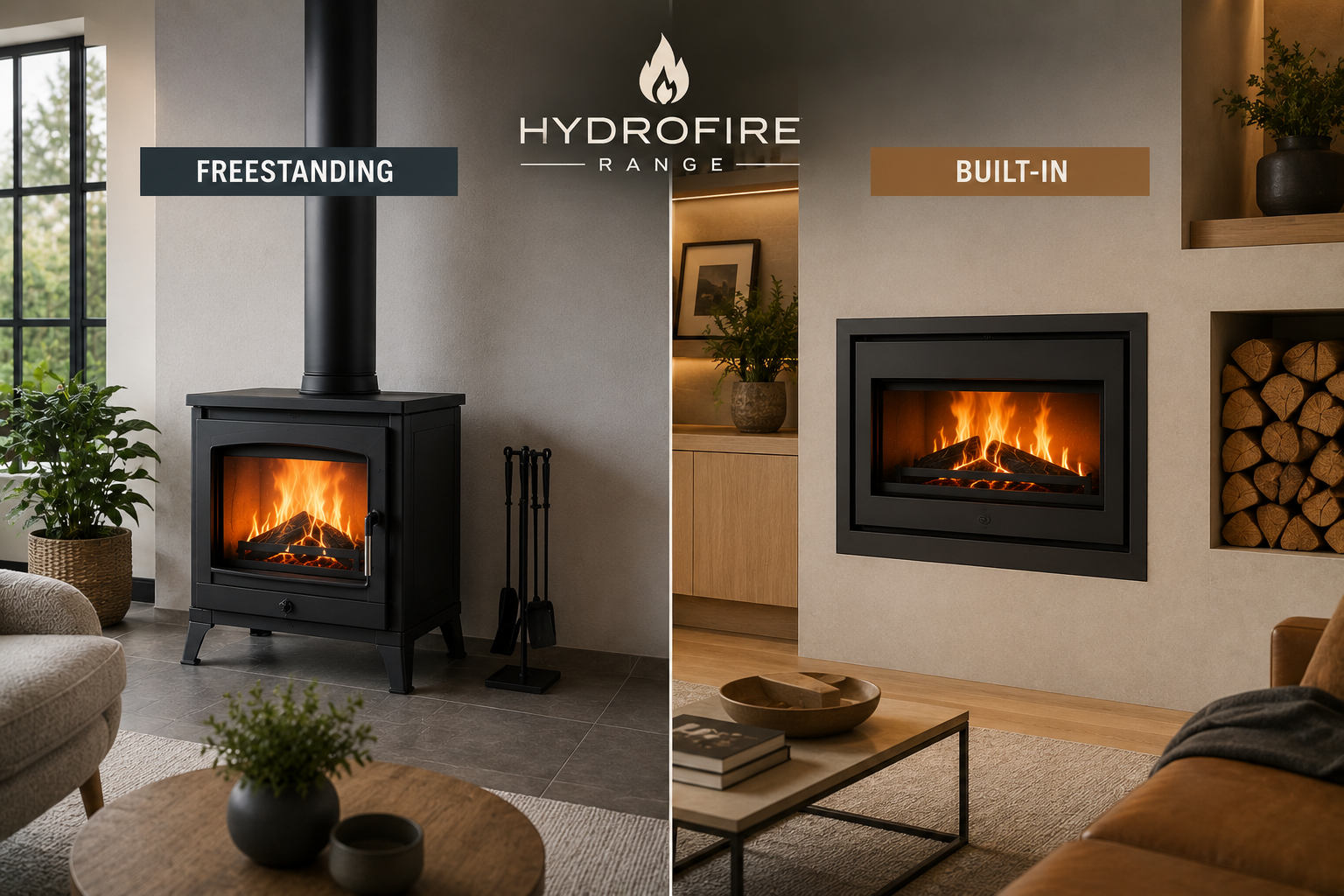
Everything South African buyers need to know about Hydrofires fireplaces: the full model range, 2026 prices in rands, installation costs, and Cape Town coastal tips.
If you’ve been shopping for a wood-burning fireplace in South Africa, you’ve almost certainly come across the Hydrofire name. It’s one of the most searched fireplace brands in the country — and for good reason. Hydrofire manufactures a broad range of wood-burning fireplaces right here in South Africa, from compact freestanding models suited to a small flat or cottage, to large built-in units that anchor an entire living room. Whether you’re comparing prices, trying to decide between models, or simply want to know what a Hydrofire costs fully installed, this guide covers everything. Start by exploring our range of fireplaces to see what’s available, then read on for the detailed breakdown.
For brand background and model context, see the official Hydrofire website as well as installer advice.
Who Is Hydrofire?
Hydrofire is a South African manufacturer that has been producing wood-burning fireplaces for the local market for many years. Unlike imported European brands, Hydrofire designs and builds its units with South African conditions in mind: the hardwood species we burn, the way we heat our homes, and the unique combination of indoor and semi-outdoor spaces typical of SA homes.
The result is a brand that has earned a strong reputation for durability, heat output, and value for money relative to its price point. Hydrofire stocks over 35 freestanding fireplace models and more than 18 built-in designs, making it one of the widest locally manufactured ranges available anywhere in the country.
One notable advantage for Cape Town and coastal buyers: many Hydrofire flue components use 304-grade stainless steel, which resists the salt-air corrosion that attacks inferior materials — a critical detail for homes within 5–10 km of the coast, where standard mild-steel flues can rust out within a few years.
The Hydrofire Range: Freestanding vs Built-In
Hydrofire’s product range splits into two broad families. Understanding the difference is the first step in choosing the right unit for your home.
Freestanding Hydrofire Fireplaces
Freestanding models stand independently on legs or a pedestal base and connect to your flue through a top or rear outlet. They are the more affordable option, faster to install, and still deliver substantial heat output. Hydrofire’s freestanding fireplaces span from smaller units with 8–10 kW output (ideal for a single living room or open-plan space up to about 35 m²) to larger models producing 12–18 kW that can take the chill off a 60–80 m² open area.
The freestanding design also makes future relocation possible — a meaningful consideration if you’re renting or planning a renovation. Because they don’t require a masonry surround, they can often be installed in a day by an experienced team.
Built-In Hydrofire Fireplaces (Inserts)
Built-in and insert models are recessed into a purpose-built surround or slotted into an existing fireplace opening, giving a cleaner, more architectural result. They suit homes where aesthetics are a priority, or where an old open wood fireplace is being upgraded to an efficient closed combustion unit. The surround can be tiled, rendered in plaster, or clad in natural stone — making each installation unique. Browse built-in fireplace inserts to see the designs currently in stock.
Deciding between the two formats is one of the most common questions buyers face. Our dedicated guide to freestanding vs built-in fireplaces walks through the full trade-off — heat output, installation complexity, aesthetics, and resale value.
Hydrofire Prices in South Africa (2026)
Below are realistic supply-price ranges for Hydrofires as sold through South African dealers in 2026. These figures exclude installation, flue, and accessories. Prices vary between dealers and fluctuate with material costs, so use these as a planning guide rather than a firm quote.
| Model Category | Typical Output | Approx. Supply Price |
|---|---|---|
| Freestanding — compact | 8–10 kW | R9,000 – R14,000 |
| Freestanding — mid-range | 10–14 kW | R14,000 – R20,000 |
| Freestanding — large/premium | 14–18 kW+ | R20,000 – R28,000 |
| Built-in insert — standard | 10–14 kW | R18,000 – R28,000 |
| Built-in insert — large | 14–22 kW | R28,000 – R45,000+ |
Because Hydrofire manufactures locally, its pricing has historically been more stable than imported European brands such as Dovre or Kratki, which are subject to rand/euro exchange rate swings. That said, steel and manufacturing input costs have risen steadily — prices above reflect current 2026 market levels.
What Does Full Installation Cost?
The fireplace unit is only part of your budget. A complete, compliant Hydrofire installation in Cape Town typically involves:
- Flue system: A single-wall or insulated twin-wall flue run vertically and out above the roofline. Insulated twin-wall is the recommended option for optimal draw and safety — budget R4,000–R12,000 depending on the length of run and flue type.
- Hearth and surround: Minimum hearth tiling or a concrete/stone pad to meet fire safety clearances. Budget R2,000–R8,000 for a basic hearth; more for custom stone or marble surrounds.
- Labour and commissioning: Professional fitting, ceiling penetration, cowl installation, and a test burn. Budget R5,000–R10,000 in Cape Town for a standard installation.
A mid-range Hydrofire freestanding unit therefore runs approximately R28,000–R45,000 all-in for a typical Cape Town installation. A built-in unit in a custom surround can reach R55,000–R80,000+ depending on the complexity of the finish. For a thorough breakdown by installation type, read our fireplace installation cost guide. Our professional fireplace installation team can also provide a precise quote based on your home’s layout and flue route.
Cape Town, Coastal Homes, and Load-Shedding
Hydrofire’s wood-burning design carries a practical advantage most South African buyers now rate highly: it is entirely electricity-free. No blowers, no ignition electronics, no external power supply. During load-shedding — still a fact of life in 2026 — your Hydrofire keeps the room warm regardless of whether the power is on. This is one of the main reasons wood-burning fireplaces continue to outsell gas units in many parts of the country.
For Cape Town and coastal Western Cape homes specifically, the salt-air environment accelerates corrosion on exposed steel. When configuring your Hydrofire installation, ask specifically about 304 stainless steel flue components and a quality powder-coat body finish. These options add modest upfront cost but can easily double the service life of your flue system in a coastal location.
Regardless of location, all wood-burning units require regular maintenance. Plan for at least one annual chimney sweeping and flue inspection to keep your draw strong and reduce the risk of creosote build-up. Also ensure your installer fits the correct flue and flue system for your specific Hydrofire model — an undersized or incorrectly installed flue is the most common cause of poor performance.
How Does Hydrofire Compare to the Alternatives?
Hydrofire’s primary advantage over imported brands is local availability, local parts, and local warranty support. You’re not waiting weeks for components from Norway or France. For budget-conscious buyers, local manufacturing also keeps entry-level pricing below comparable European closed combustion stoves.
If you’re still weighing up fuel type, our gas vs wood-burning fireplaces comparison covers running costs, convenience, and load-shedding factors in detail. Gas fireplaces offer instant ignition and no ash, while wood units like Hydrofire deliver independence from gas supply and that authentic, crackle-and-glow experience. For design inspiration, the 2026 fireplace design trends guide shows how both fuel types fit current interior styles.
Frequently Asked Questions
Are Hydrofires available in Cape Town?
Yes. Hydrofire has a dealer and installer network throughout South Africa, including Cape Town and the broader Western Cape. Fire Flame Installers supplies and installs Hydrofire units across the Cape Peninsula, the Winelands, and coastal suburbs from Bloubergstrand to Gordons Bay.
How long does a Hydrofire fireplace last?
With regular sweeping, correct use of dry seasoned hardwood, and an annual flue inspection, a Hydrofire unit typically lasts 15–25 years. The firebox body is the longest-lasting component; flue pipes, rope seals, and glass may need replacement over time. Coastal installations benefit from stainless steel flue upgrades, which significantly extend overall lifespan.
What flue does a Hydrofire need?
All Hydrofire wood-burning units require a correctly sized, vertically run flue that exits above the roofline and is fitted with an approved rain cowl. The specific diameter and wall thickness depend on the model’s rated output and the length of the flue run. Your installer will specify this during the site survey. Insulated twin-wall flue is recommended for all installations above two storeys or where the flue passes through unheated spaces.
Can I use a Hydrofire during load shedding?
Absolutely — wood-burning fireplaces require no electricity whatsoever. Light the fire and it burns through any power outage. This is one of the key reasons many South African homeowners choose a wood-burning fireplace over a gas or electric alternative.
Find the Right Hydrofire for Your Home
With over 50 models across freestanding and built-in configurations, a solid track record in South African conditions, and the advantage of local manufacturing and support, Hydrofire is a logical first choice for anyone investing in a quality wood-burning fireplace. Browse our full fireplace collection to see the models currently in stock — or request a free installation quote for a personalised recommendation and price based on your home’s layout, your flue route, and the area you need to heat.
Planning this kind of work?
Call or WhatsApp with your suburb and photographs. Fire Flames can discuss your fireplace, braai or home project and quote.
Get A Quote →