
Combustion Wood Stoves: What R8k, R20k and R45k Gets You
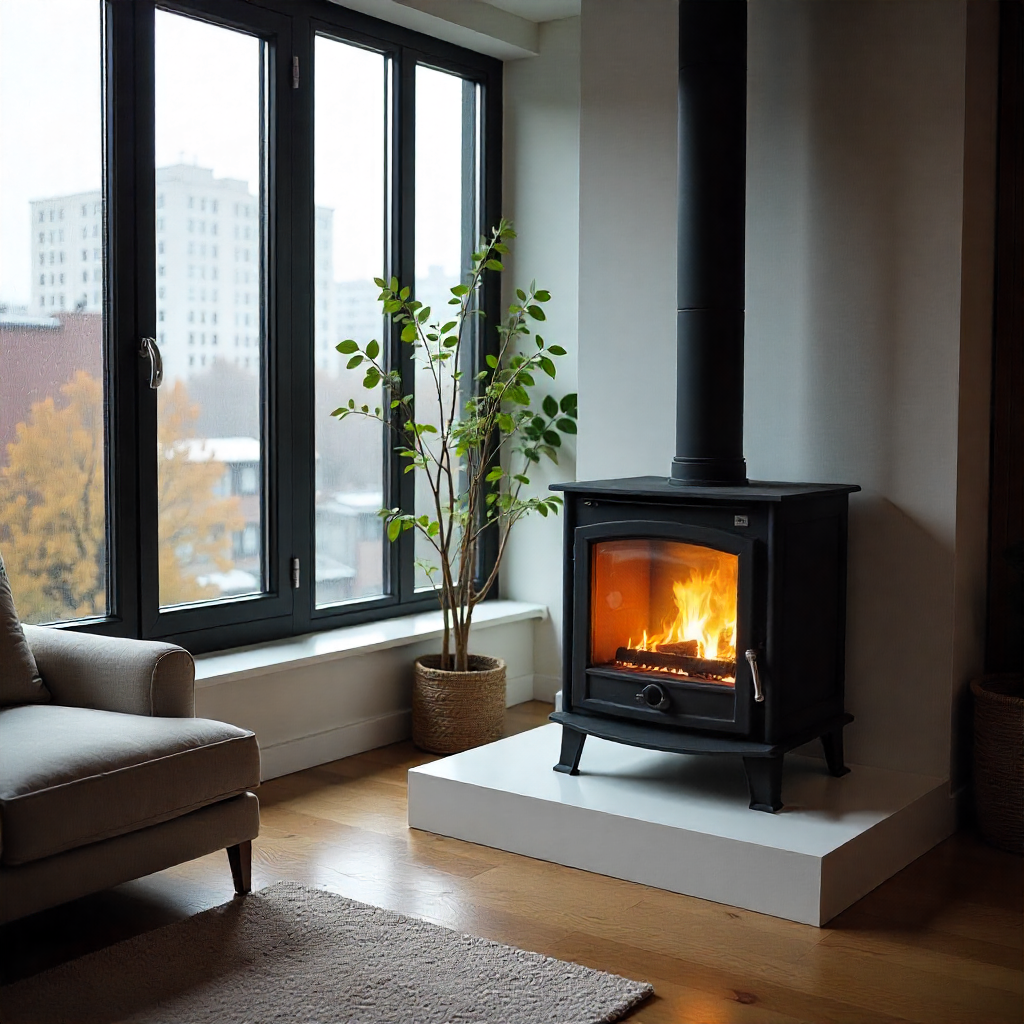
Not all combustion wood stoves are built the same. Here's exactly what separates an R8k entry model from an R45k premium unit — and how to choose right the first time.
A combustion wood stove is one of the most effective ways to heat your home during a Cape Town winter — and one of the few heating options that keeps working when the power goes out. But with stoves ranging from R8,000 to R45,000 or more, the price gap can feel baffling. What are you actually paying for? This guide cuts through the jargon and tells you exactly what each price tier delivers, what specs matter for a South African home, and what questions to ask before you buy.
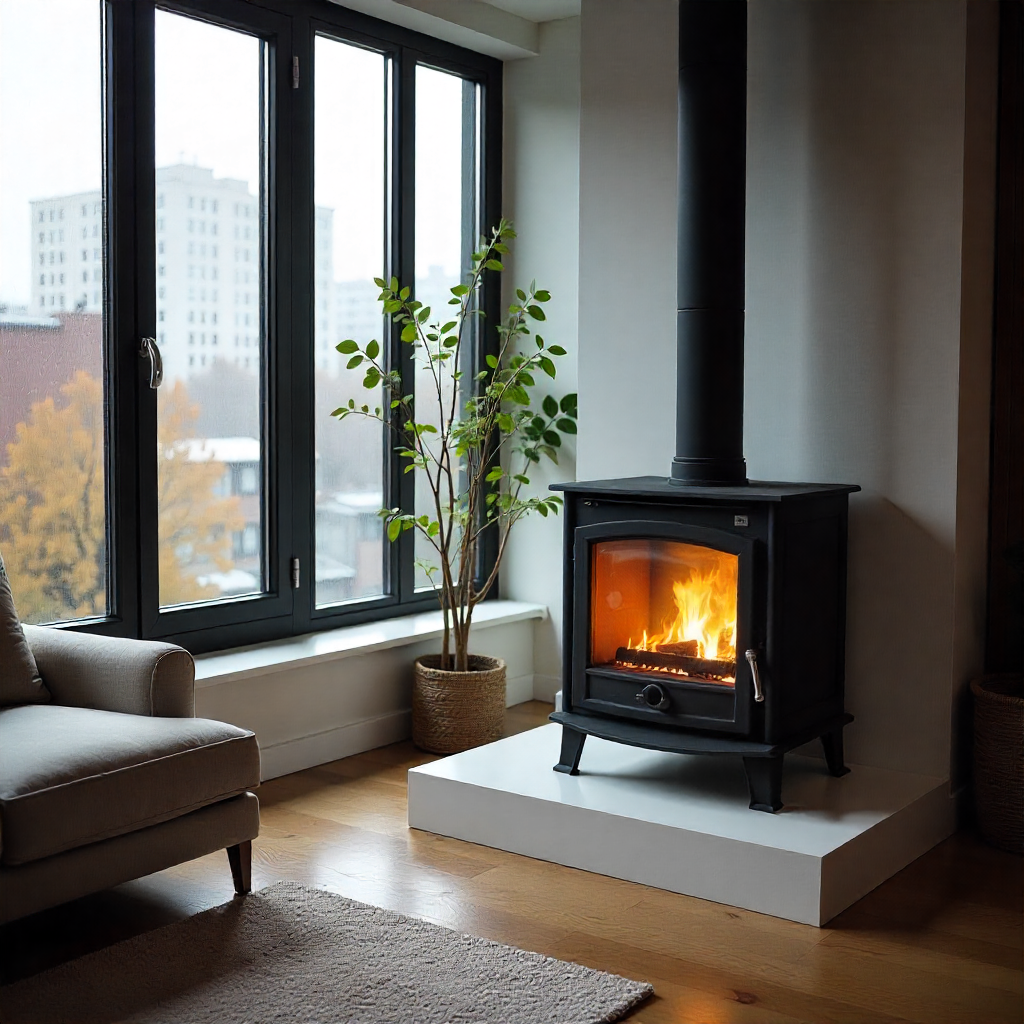
What Is a Combustion Wood Stove?
Unlike an open hearth — which sends most of its heat up the chimney — a combustion wood stove is a sealed, controlled-burn appliance. Air enters through adjustable vents, the fire burns in a firebox, and heat radiates (or convects) out into the room. Good models achieve 70–80% efficiency. A standard open fireplace manages around 10–20%.
Combustion wood stoves fall into two main types: radiant stoves, which heat by surface radiation, and convection stoves, which draw cool room air in through channels and push warm air out. Convection models distribute heat further — useful if you want warmth to spread into adjacent rooms. Radiant models heat the immediate area faster and are great as focal points.
Within those two types you’ll find freestanding wood-burning fireplaces (the most popular choice — easiest to install and reposition) and built-in fireplace inserts that slot into an existing opening. If you’re starting from scratch, freestanding is usually the simpler and more affordable path.
Combustion Wood Stove Price Tiers: What R8k, R20k and R45k Gets You
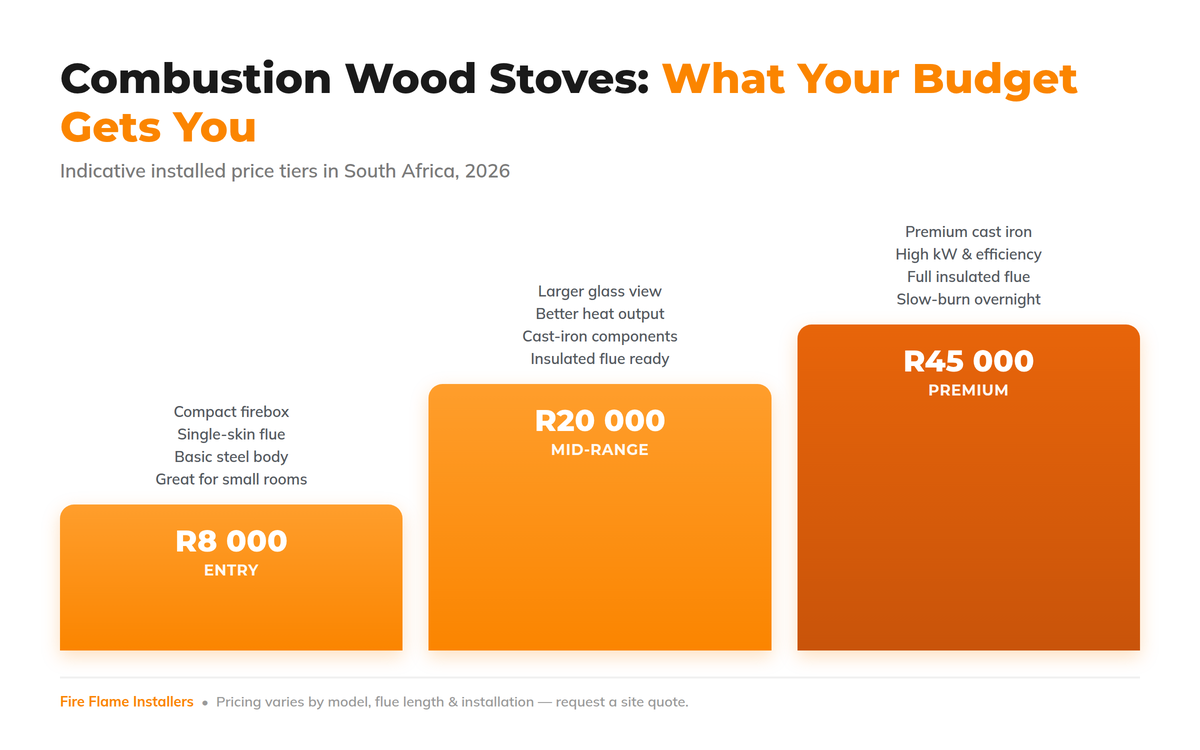
The sticker price of a combustion wood stove is only part of the equation — installation adds R5,000–R15,000 depending on flue run, but the stove itself tells you most of what you need to know. Here’s what each bracket typically delivers:
R7,000–R12,000: Entry-Level Stoves
You’ll find basic steel-bodied stoves in this range, usually 6–8 kW output, single-skin construction, and a simple air-wash system to keep the glass cleaner. They work. They’ll heat a medium room reliably. The trade-off: thinner steel warps faster under repeated high-heat cycles, and cheaper door seals wear out sooner. For a holiday cottage or a small bedroom, this tier makes sense. For a main living area you’re heating daily, you may regret skimping here.
R14,000–R25,000: Mid-Range Stoves
This is the sweet spot for most homeowners. Stoves in this range typically feature 5–12 kW output (with adjustable air controls), thicker gauge steel or cast-iron bodies, ceramic glass that handles higher temperatures, and better sealing. Many include external air intake — critical in well-insulated modern homes where the stove won’t rob oxygen from the room. You’ll also find cleaner secondary burn chambers in this tier, which means less smoke and more complete combustion. Fuel goes further.
R28,000–R50,000+: Premium and Designer Stoves
At this level you’re buying longevity, aesthetics, and advanced burn technology. Premium units — think heavy cast-iron Scandinavian-style stoves — are built to last 20+ years with proper maintenance. Some include soapstone cladding that stores heat and releases it slowly for hours after the fire dies. Others are designed as room dividers or architectural statement pieces. If you want something that functions as a centrepiece as much as a heater, this is the range. Our fireplace installation cost guide breaks down full installed prices so you can plan your budget accurately.
5 Features That Actually Determine How Well It Heats
When you’re comparing combustion wood stove models, these five specs cut through the marketing:
- Kilowatt output (kW). As a rough guide, allow 1 kW per 10–12 m² of well-insulated space. An open-plan kitchen-lounge of 60 m² needs 5–6 kW minimum. Many SA homes are older and poorly insulated — size up by 20–25%.
- Steel thickness / body material. 4mm+ steel or cast iron outlasts 2–3mm thin-gauge bodies by years. Ask your supplier to confirm plate thickness.
- Secondary combustion / clean-burn. Stoves with secondary air injection burn smoke gases for a second time, extracting more heat and reducing creosote build-up in your flue. This matters for flues and flue systems longevity.
- External air supply. In sealed, insulated homes (increasingly common in Cape Town builds), a stove that draws combustion air from outside prevents negative pressure issues and cold draughts.
- SABS / CE certification. Look for a stove that carries a recognised standard — either <a href="https://www.sabs.co.za" SABS approval or the European EN 13240 standard. This confirms the output, efficiency, and emissions ratings have been tested, not just printed on a brochure.
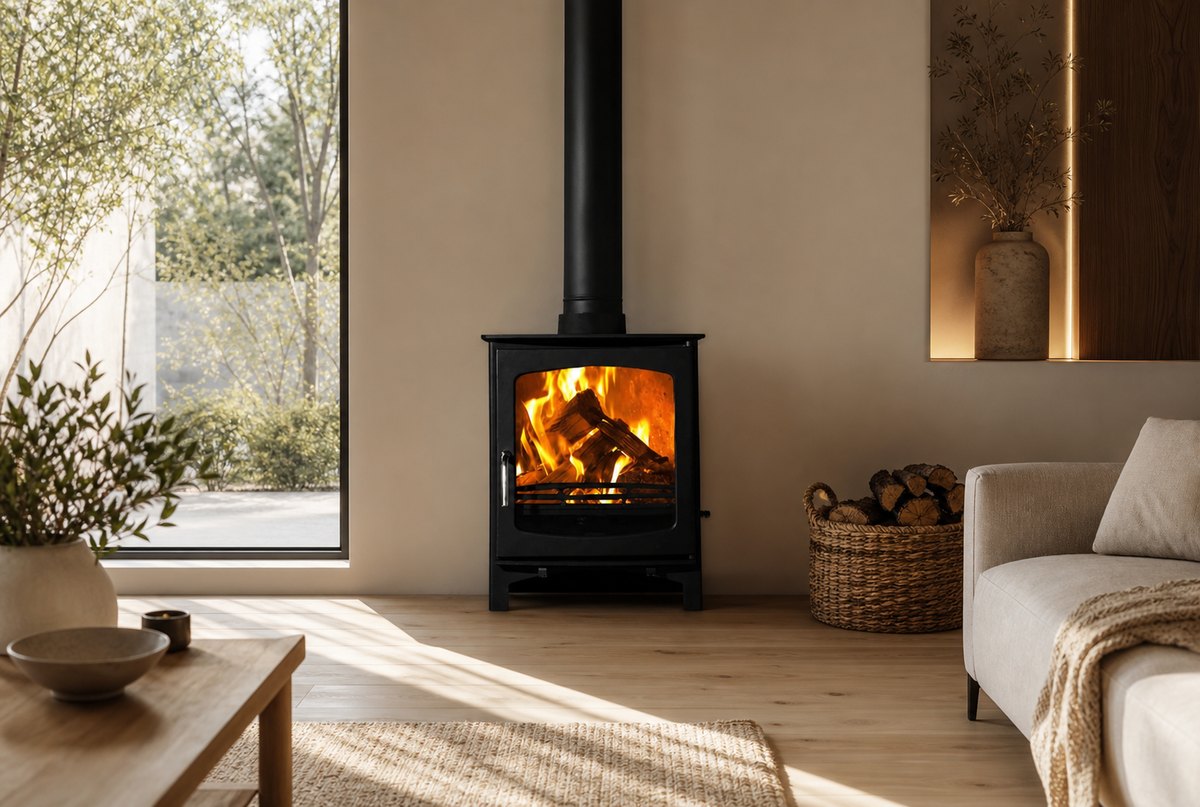
Freestanding or Built-In: Which Is the Better Buy?
If you’re buying a combustion wood stove for the first time, freestanding models offer the clearest advantages: simpler installation (just a flue run through an external wall or ceiling), easier servicing, and the ability to move if you renovate. Our pillar guide on choosing between freestanding and built-in fireplaces covers this trade-off in detail, but the short version is: if you have an existing fireplace opening to fill, a built-in insert is cleaner. If you’re starting fresh, go freestanding.
Either way, browse our fireplaces to compare the models we carry and install.
Installing a Combustion Wood Stove in Cape Town: What to Expect
A standard freestanding installation involves positioning the stove, connecting the flue pipe, running a single-wall or insulated twin-wall flue section to exit the building, and fitting a cowl at the top. Most single-storey installations with a short flue run take one day. Our team handles professional fireplace installation across the Cape Peninsula and Southern Suburbs.
What adds cost and complexity: flue runs over two storeys, cathedral ceilings, coastal installations (304-grade stainless steel flue required within ~2km of the ocean), and retrofitting into rooms without existing penetration points. If your home is in Muizenberg, Fish Hoek, or any coastal suburb, be sure to specify marine-grade 304 stainless for all flue components — standard flue degrades quickly in salt air.
After installation, plan for an annual chimney sweep — wood smoke deposits creosote in the flue over a season of burning, and a blocked flue is a fire risk. Factor this into your running costs.
Load-Shedding and Combustion Wood Stoves: A Natural Fit
One reason combustion wood stoves have surged in popularity in South Africa is simple: they need no electricity whatsoever. No pump, no thermostat, no circuit board. Light the fire, adjust the air vents, and you have heat that keeps going regardless of what Eskom is doing. Dry hardwood — rooikrans and sweet thorn are widely available and burn hot and clean — costs roughly R800–R1,400 per cubic metre in Cape Town. A well-sized stove burning 3–4 hours an evening will consume around 1–1.5 cubic metres per month in peak winter. For choosing the right fireplace for your home, factoring in fuel access is as important as output ratings.
Frequently Asked Questions
How much does a combustion wood stove cost to buy and install in South Africa?
Budget R13,000–R35,000 all-in for a mid-range stove plus a standard installation (single-storey, short flue run). Premium units with complex installations can reach R50,000–R70,000. The full installation cost breakdown on our blog gives itemised figures for different scenarios.
Can any wood burn in a combustion wood stove?
Technically yes, but moisture content is everything. Wet or green wood smoulders, deposits creosote, and produces far less heat than properly seasoned wood (below 20% moisture). Hardwoods like rooikrans, black wattle, and sweet thorn are the go-to options in the Western Cape. Avoid treated timber, painted wood, or anything that might release toxic fumes when burned.
Do I need planning permission to install a combustion wood stove in Cape Town?
Most residential combustion wood stove installations are covered under a standard building process rather than a full planning application, but a Certificate of Compliance (CoC) is required — your installer should provide this. In some City of Cape Town zones, air quality bylaws apply. Work only with a registered installer who understands local compliance requirements.
How often does a combustion wood stove need servicing?
Plan for an annual check: inspect door seals, replace rope seals if worn, check baffle plates, and have the flue swept. Stoves used daily through a 4–5 month winter season accumulate significant creosote if burning wet wood. Clean glass, functioning air controls, and a clear flue are the three things that keep a stove performing well and safely year after year.

Ready to choose? Get a quote from our team — we’ll advise on the right model and output for your home and handle installation from start to finish.
Related reading
- Can You Install a Fireplace in an Existing Home? Yes — Here's How
- Combustion Fireplace Installation: How It Works, Costs & Compliance
- Need it done professionally? See our fireplace installation in Cape Town service.
Planning this kind of work?
Call or WhatsApp with your suburb and photographs. Fire Flames can discuss your fireplace, braai or home project and quote.
Get A Quote →