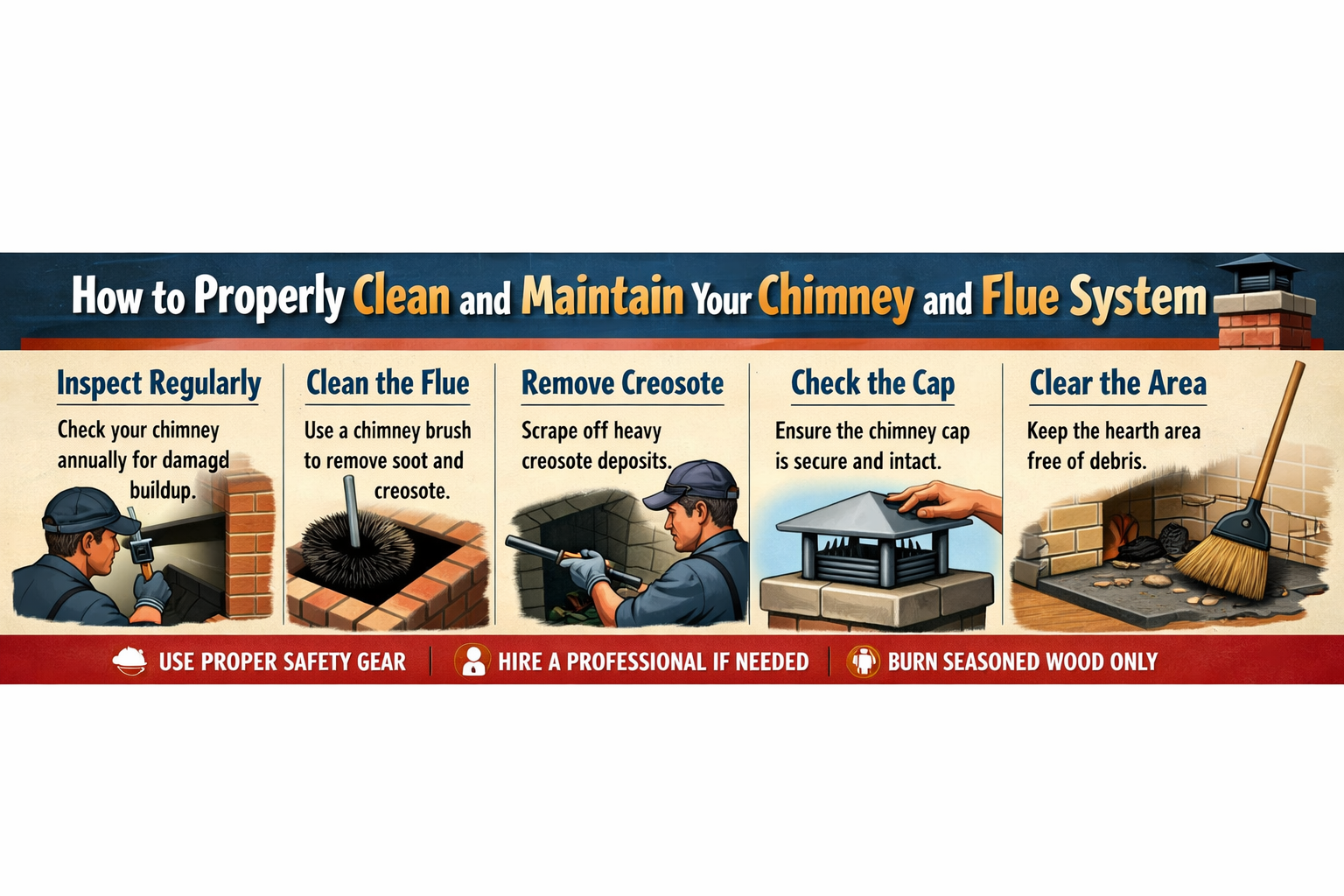
How to Properly Clean and Maintain Your Chimney and Flue System
Keeping your chimney and flue system in good shape is key to a safe and efficient fireplace. If you ignore maintenance, you risk chimney fires and carbon monoxide poisoning. Cleaning and checking your chimney...
Keeping your chimney and flue system in good shape is key to a safe and efficient fireplace. If you ignore maintenance, you risk chimney fires and carbon monoxide poisoning. Cleaning and checking your chimney regularly helps spot problems early, saves money, and makes your fireplace work better.
By taking care of your chimney, you can enjoy warm, cozy nights without worry.

Key Takeaways
- Regular chimney maintenance prevents chimney fires.
- Routine inspections can identify problems before they escalate.
- Proper wood burning techniques enhance fireplace efficiency.
- Timely chimney cleaning reduces the risk of carbon monoxide poisoning.
- Stay alert to signs of wear in your chimney and flue system.
Tell us what you need and we’ll send a free, no-obligation quote — fast.
Request a Free Chimney Sweeping Quote
The Importance of Maintaining Your Chimney and Flue System
Keeping your chimney and flue system in good shape is key for safety and efficiency at home. If you ignore this, you risk serious dangers like chimney fires and harmful gas buildup. Knowing these risks helps you take steps to avoid dangerous fires.
Understanding Safety Risks
Not taking care of your chimney can lead to too much creosote buildup. This is a big safety risk because it can catch fire and harm your home and family. Regular maintenance is vital to keep your chimney safe and working right.
Preventing Fire Hazards
Regular upkeep of your chimney is essential to avoid fires. A well-kept chimney means less chance of a fire, giving you peace of mind. Regular checks and cleanings can greatly reduce the risks of a neglected chimney.
Saving Money on Major Repairs
Regular maintenance of your chimney can save you a lot of money on repairs. Taking care of your chimney prevents damage that leads to expensive fixes. This not only keeps your home safe but also saves your wallet.

Signs Your Chimney Needs Cleaning
It’s important to know when your chimney needs cleaning for safety. Regular checks can spot serious problems early. Here are signs that mean it’s time for a detailed look and clean.
Visible Damage or Cracks
Look for damage in your chimney often. Cracks in bricks or mortar can mean big problems if not fixed. Any damage should be checked right away to avoid expensive fixes later.
Unpleasant Odors
Bad smells from your chimney could mean creosote or blockages. These smells are not just annoying; they can be a sign of a big issue. A clean chimney should not smell bad, so listen to your nose.
Signs of Creosote Buildup
Creosote buildup is dangerous and should be watched closely. This tar-like stuff can block airflow and raise fire risks. If you see sticky stuff in the flue, it’s time to clean your chimney to avoid fires.

Being alert to signs like damage, bad smells, and creosote buildup keeps your chimney safe. If you see any of these, getting a pro to inspect and clean is a smart move.
How to Inspect Your Chimney
Checking your chimney is key to keeping it safe and working well. Regular checks help find problems early. The right tools are important for a detailed inspection.
Tools You’ll Need for Inspection
- Flashlight: To light up dark spots and find hidden damage.
- Chimney brush: A must for cleaning and checking buildup.
- Drop cloth: Keeps your home clean from debris during the check.
- Inspection camera: Great for taking pictures of hard spots.
What to Look For During Inspection
When you check the chimney, look at a few important areas. Make sure everything is in good shape. Check for:
- Visible cracks and wear on the masonry.
- Blockages from soot, debris, or animal nests.
- Signs of moisture, which can cause rust or wood rot.
- The flue’s condition, making sure it’s clear and working right.

Steps to Clean Your Chimney and Flue System
Keeping your chimney and flue system in good shape is key. You can clean your chimney easily by following a few steps. Just gather the right tools and do the necessary tasks to keep your fireplace working well.
Gathering the Right Tools
First, make sure you have all the tools you need. You’ll require a chimney brush, extension rods, a vacuum, and a metal bucket for waste. Having these tools ready makes cleaning easier and more effective.
Cleaning the Inside of the Fireplace
Begin by cleaning the inside of the fireplace. Clear out any debris, soot, or ash that has accumulated. This not only makes your fireplace look better but also improves airflow and efficiency. Always dispose of the ash in the metal bucket for safety.
Brushing the Flue
Then, brush the flue. Use the chimney brush on extendable rods to reach the flue’s entire length from top to bottom. This step removes all creosote, lowering the risk of chimney fires. Be sure to brush thoroughly and carefully for the best results.

Choosing the Right Wood for Burning
Choosing the right wood for burning is key to keeping your chimney in good shape. Seasoned wood is better than green or unseasoned wood for your chimney. It has many benefits for chimney care.
Benefits of Seasoned Hardwoods
Seasoned hardwoods like oak or hickory make burning wood better. They are denser and produce less smoke than softwoods. This means less creosote in your chimney, needing less cleaning.
Seasoned wood also burns hotter and more efficiently. This means your home heats up better and faster.
Understanding Moisture Content
The moisture in the wood you burn affects how well it burns. Wood should have less than 20% moisture for best burning. If it’s too moist, it burns poorly, making more smoke and soot.
This can cause more creosote to build up. It also puts extra stress on your chimney. Keeping firewood dry helps it burn well and keeps your chimney working right.

Regular Professional Inspections
Getting your chimney checked by a pro is key to safety and performance. Experts say you should get a sweep at least once a year. If you use it a lot, you might need more visits. A good check can spot problems you can’t see yourself.
This is important because finding issues early can save you from big repairs. It also makes your home safer.
When to Call a Professional Chimney Sweep
Call a sweep if you see these signs:
- Your chimney hasn’t been checked in over a year.
- You get smoke backdrafts in your home often.
- There are visible damage or cracks on your chimney.
- You smell bad odors coming from your fireplace.
The Benefits of Professional Inspections
Regular checks by pros bring many advantages:
- Early identification of problems like creosote buildup.
- They check if your chimney is structurally sound.
- You’ll feel safe knowing your chimney is good to go.
- It might save you money on big repairs later.

Routine Maintenance Tasks for Homeowners
Keeping your chimney in good shape is key for safety and efficiency. By adding routine chimney care to your home tasks, you can avoid many problems. Regular checks help you spot any issues early on.
Look for signs of wear like cracks or loose bricks. This is important to keep your chimney safe and working well.
Keeping an Eye on the Chimney’s Condition
As a homeowner, watching your chimney’s condition is a must. Look for any damage, like cracks or missing mortar. Also, make sure the chimney cap is there to block debris.
If you smell something odd or see smoke when you shouldn’t, it might mean a blockage. Catching these problems early helps your chimney stay safe and efficient.
Using Proper Fire Safety Measures
Fire safety is a big deal for anyone with a fireplace. Keep your chimney clean and get it serviced often. Make sure there’s no flammable stuff near the fireplace.
Also, having working smoke and carbon monoxide detectors is a smart move. They add an extra layer of safety. By focusing on fire safety, you can lower the risk of accidents at home.

Understanding the Structural Integrity of Your Chimney
Every homeowner should focus on their chimney’s structural integrity. This ensures it lasts long and stays safe. Knowing about common problems helps keep your chimney in good shape. Spotting issues early can prevent bigger problems later.
Common Structural Issues to Watch Out For
There are several issues that can harm your chimney’s strength. These include:
- Cracks in the chimney flue: Flue cracks can lead to hazardous ventilation problems, allowing smoke and toxins to seep into your home.
- Spalling bricks: This occurs when moisture gets trapped in the bricks, causing them to break and chip away over time.
- Deteriorating mortar joints: Weak mortar joints can jeopardize the chimney’s stability, leading to a possible collapse.
Regular inspections are key to finding these issues early. This way, you can keep your chimney strong. Your attention ensures your chimney stays safe and works well for years.

Conclusion
Keeping your chimney and flue system in good shape is key for safety and efficiency at home. A clean chimney boosts airflow and lowers fire risks. This keeps your family safe when it’s cold outside.
Regular upkeep, like cleaning and checks, makes your chimney last longer. Using the right wood, like seasoned hardwoods, also helps your fireplace work better. Getting professional inspections early catches problems before they get big.
So, taking care of your chimney pays off in the long run. With some effort, your chimney will keep your home warm and safe for many years. This makes your fireplace a cozy and secure part of your home.
FAQ
Q: What are the basics of chimney maintenance and why is it important?
A: Chimney maintenance includes routine cleaning, annual chimney inspection, and checking the chimney structure and flue liner. Regular cleaning and maintenance helps maintain a safe heating system, improves energy efficiency, prevents dangerous chimney fires caused by soot and creosote buildup, and avoids costly repairs to the fireplace and chimney.
Q: How often should I perform chimney cleaning and flue cleaning?
A: Most experts recommend annual chimney inspection and at least one cleaning per year if you use your stove or fireplace regularly. Homes with heavy use may need more frequent flue cleaning. A well-maintained chimney that undergoes routine cleaning reduces the risk of a dirty chimney and helps maintain overall chimney system health.
Q: What are common cleaning methods for the chimney and flue liner?
A: Cleaning methods range from DIY cleaning using brushes and vacuums to professional chimney cleaning with rotary equipment and camera inspection. DIY cleaning can help with light soot, but professional cleaning services are recommended for thorough cleaning of the entire system and to properly inspect the flue and flue liner.
Q: When should I call for professional chimney cleaning or chimney services?
A: Call a certified chimney professional if you see heavy soot and creosote, water damage, cracks in the chimney structure, or if you smell persistent smoke in the house. Professional chimney cleaning and inspection helps prevent dangerous chimney fires and ensures the flue liner and chimney system are safe for continued use.
Q: Can I do DIY cleaning, and what are its limitations?
A: DIY cleaning can be effective for light maintenance, but it often misses creosote high in the flue and won’t detect structural problems. For safety and thorough cleaning and maintenance, hiring a professional chimney cleaning service or certified chimney inspector is advisable to inspect the chimney and flue liner and perform a thorough cleaning.
Q: How does proper cleaning and maintenance affect energy efficiency and heating system performance?
A: A clean flue and chimney system promotes better draft and combustion, which increases energy efficiency of your stove or fireplace. Removing soot and creosote and ensuring the flue liner is intact allows your heating system to operate more effectively and reduces waste and costly repairs.
Q: What signs indicate a dangerous chimney or need for immediate attention?
A: Signs include heavy soot on the hearth, strong creosote odor, smoke backing into the room, visible cracks in the chimney structure, or a damaged flue liner. If you detect any of these, stop using the fireplace and schedule a professional chimney inspection and cleaning services immediately to prevent dangerous chimney fires.
Q: What should a thorough chimney inspection and cleaning by a professional include?
A: A professional chimney cleaning should include flue cleaning, inspection of the flue liner, checking for creosote and soot buildup, examination of the chimney structure and cap, and testing for draft and leaks. Certified chimney technicians provide a full report and recommend repairs if needed so you can avoid costly repairs later.
Q: How can I maintain my chimney between professional cleanings?
A: Maintain your chimney by burning seasoned wood, using proper stove operation, removing ashes regularly, scheduling routine cleaning, and visually inspecting the chimney and flue for buildup or damage. These steps help maintain a well-maintained chimney and reduce the need for emergency chimney services while extending the life of your fireplace and chimney.
Related reading
- Need it done professionally? See our chimney sweeping in Cape Town service.
Planning this kind of work?
Call or WhatsApp with your suburb and photographs. Fire Flames can discuss your fireplace, braai or home project and quote.
Get A Quote →