Wood Burning Wood Stove for South African Homes: Heat, Style & Setup

There is something fundamentally satisfying about a wood burning wood stove — the crackle of seasoned bluegum, the deep radiant warmth spreading across a living room, and the complete indifference to whatever stage of load shedding Eskom happens to be running. For South African homeowners, that last point has become almost as important as the heat output itself. Whether you are in Constantia, Stellenbosch or the Karoo, a quality wood-burning stove is one of the few heating appliances that works harder the colder and darker the evening gets. This guide walks you through everything you need to make the right choice: the main types, how to size one correctly, realistic 2026 Rand pricing, and what a professional installation actually involves.
If you are already at the browsing stage, our freestanding wood-burning fireplaces range is a good starting point — it covers the most popular formats from compact bedroom units to high-output double-sided models.
Closed Combustion vs Open Fireplace: Why the Stove Wins
A traditional open fireplace looks beautiful but is surprisingly inefficient — up to 90% of its heat goes straight up the chimney. A wood burning wood stove, by contrast, is a closed combustion unit: the firebox is sealed behind a glass door, and air intake is controlled via vents. This design pushes combustion efficiency to 65–80% on modern units, meaning far more of your firewood’s energy actually heats the room rather than the sky above your roof.
The sealed glass door also means no sparks on the carpet, no draught pulling cold air through the room, and a much cleaner burn that produces less creosote in the flue. For families with young children or pets, that glass door is a meaningful safety feature too. If you are weighing up the trade-offs in more detail, our post on choosing between freestanding and built-in fireplaces covers the structural and aesthetic differences clearly.
The Main Types of Wood Burning Stove Available in South Africa
Freestanding Wood Stoves
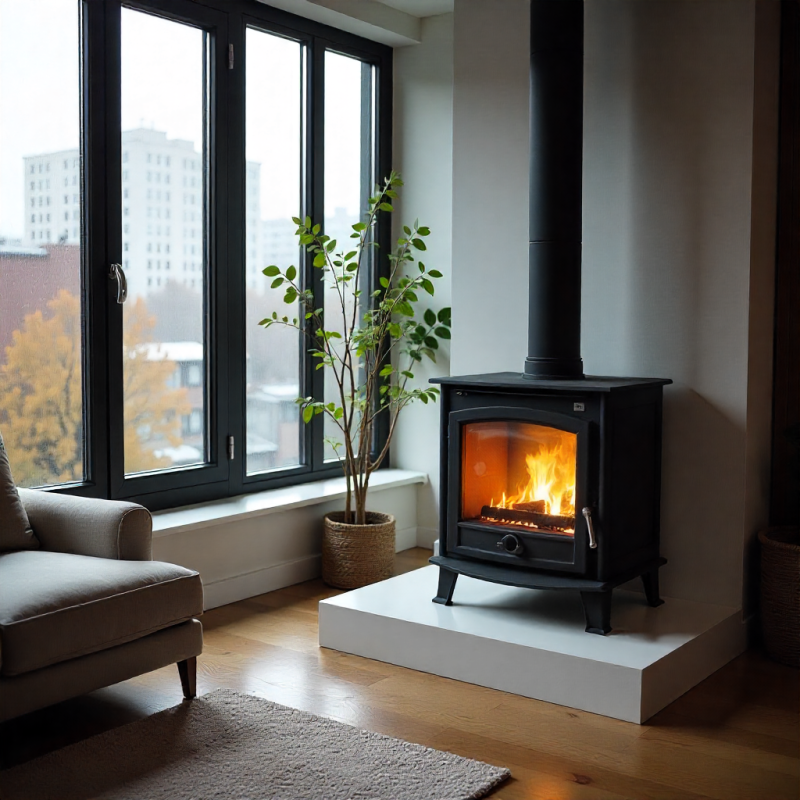
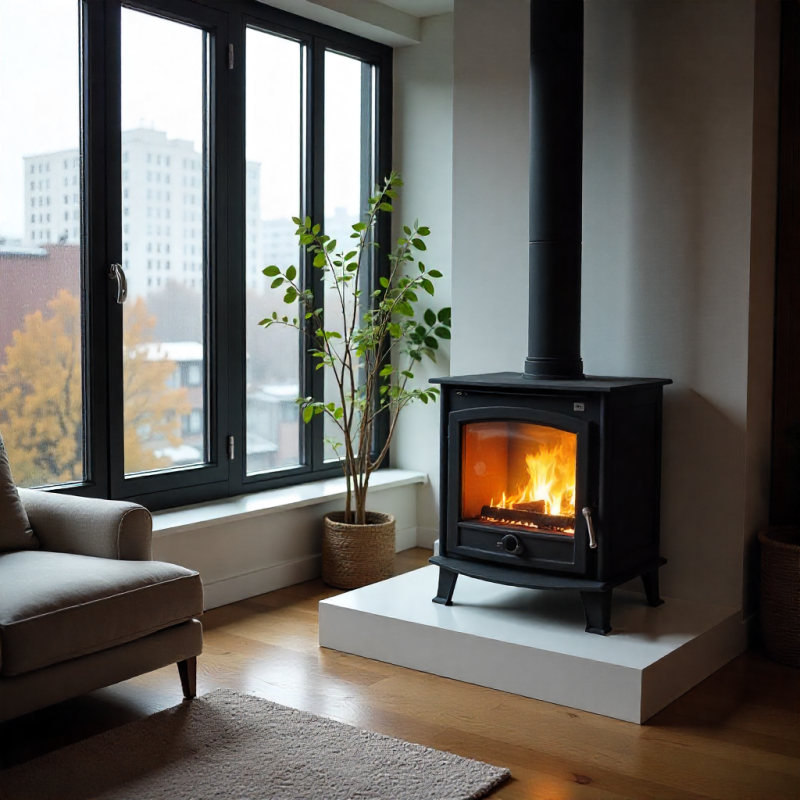
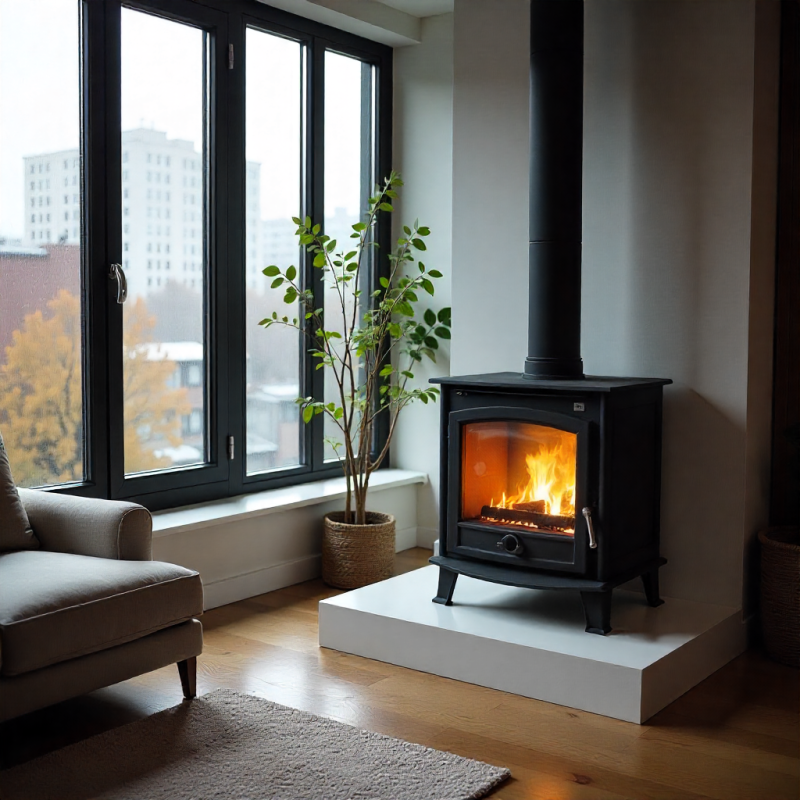
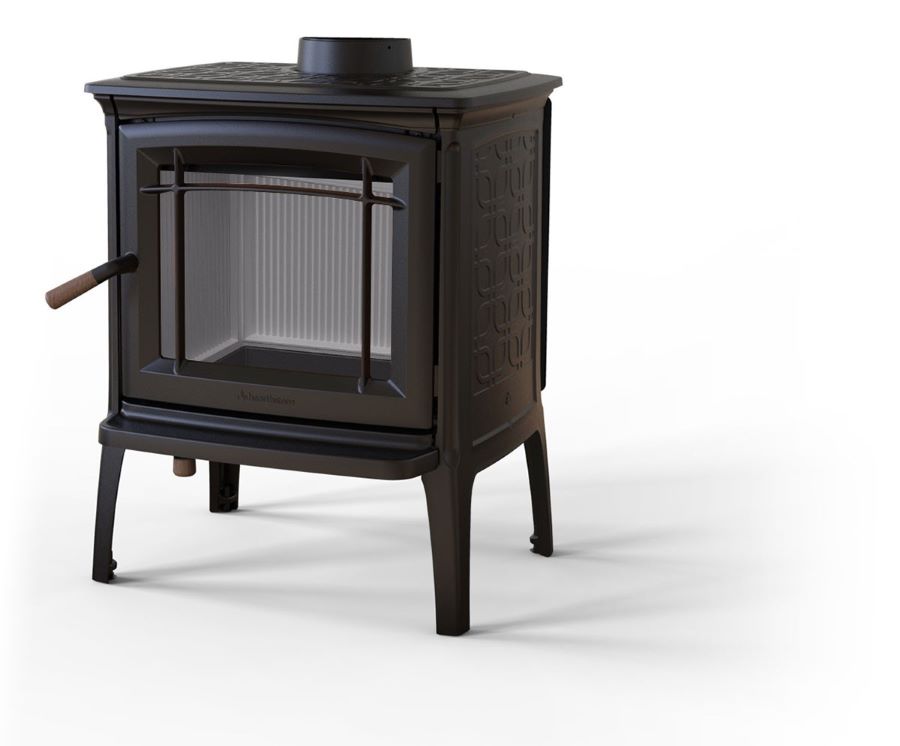
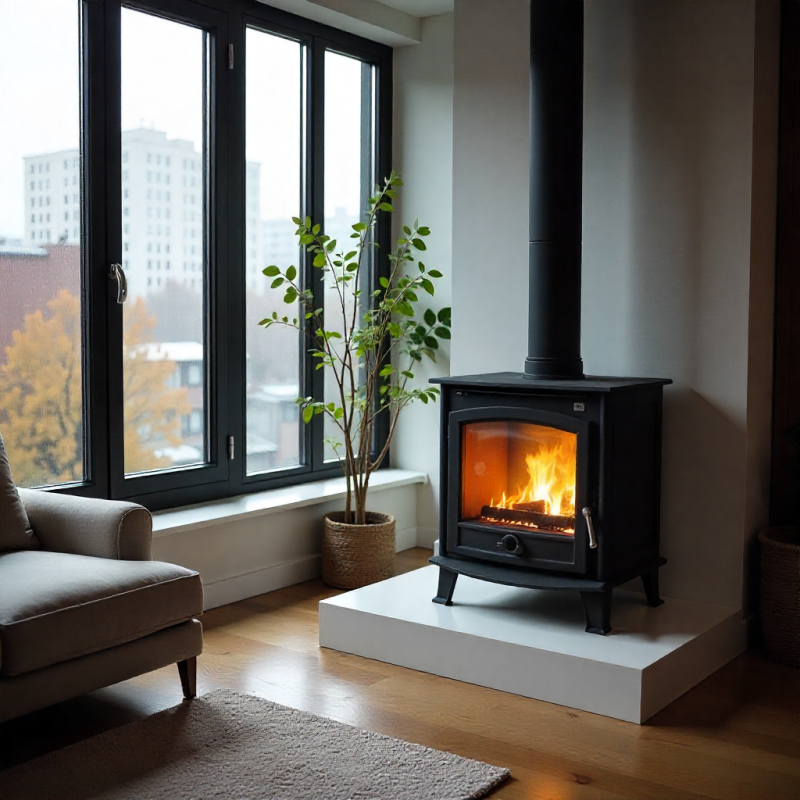
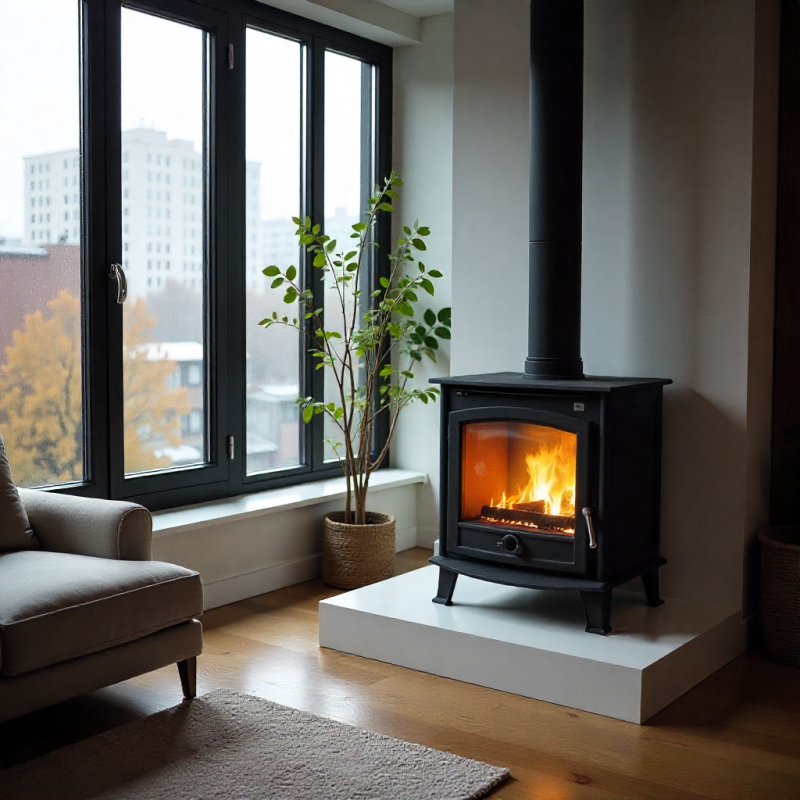
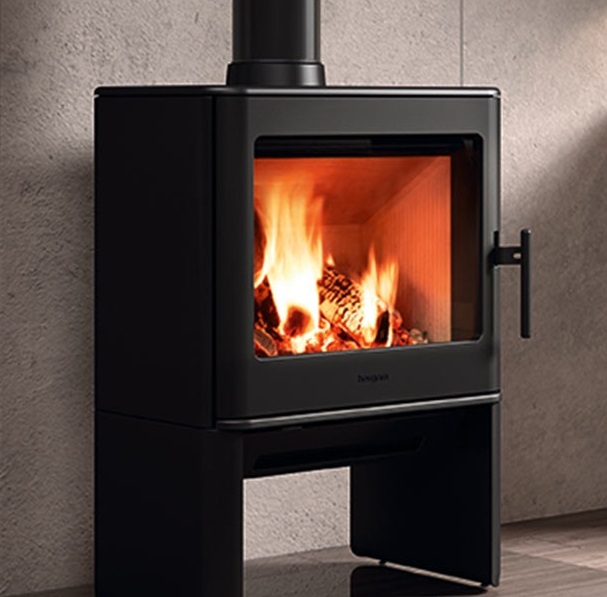
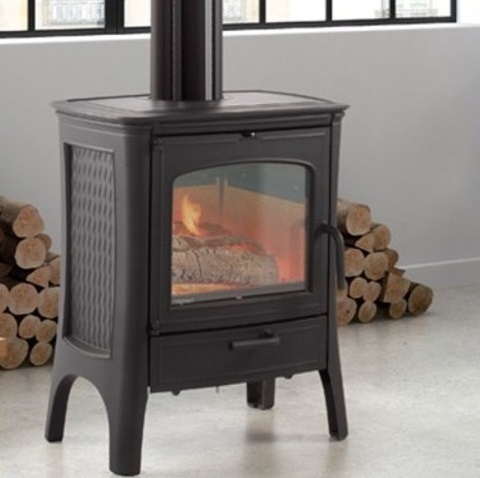
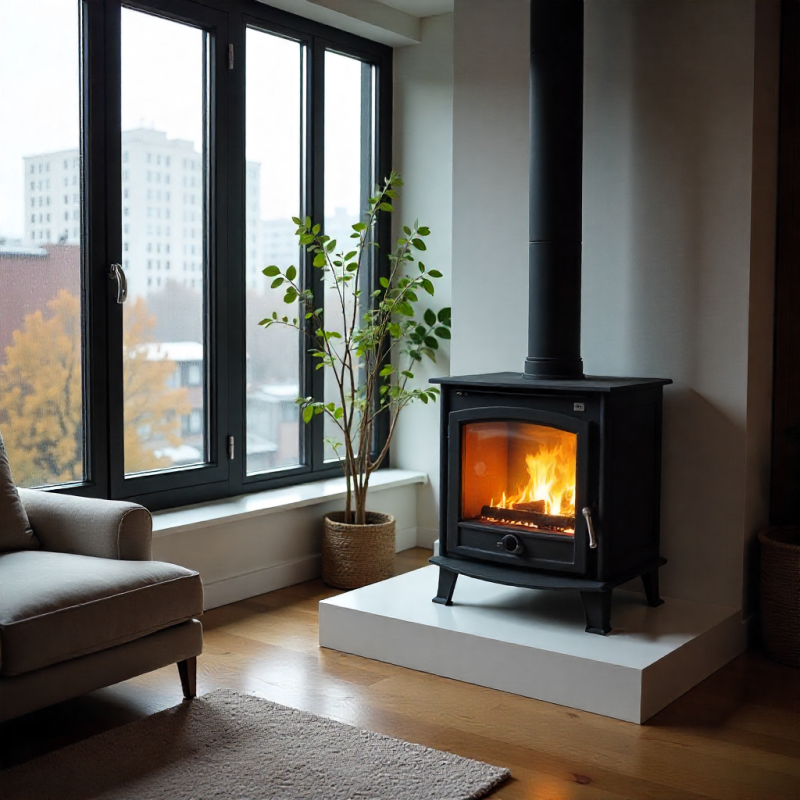
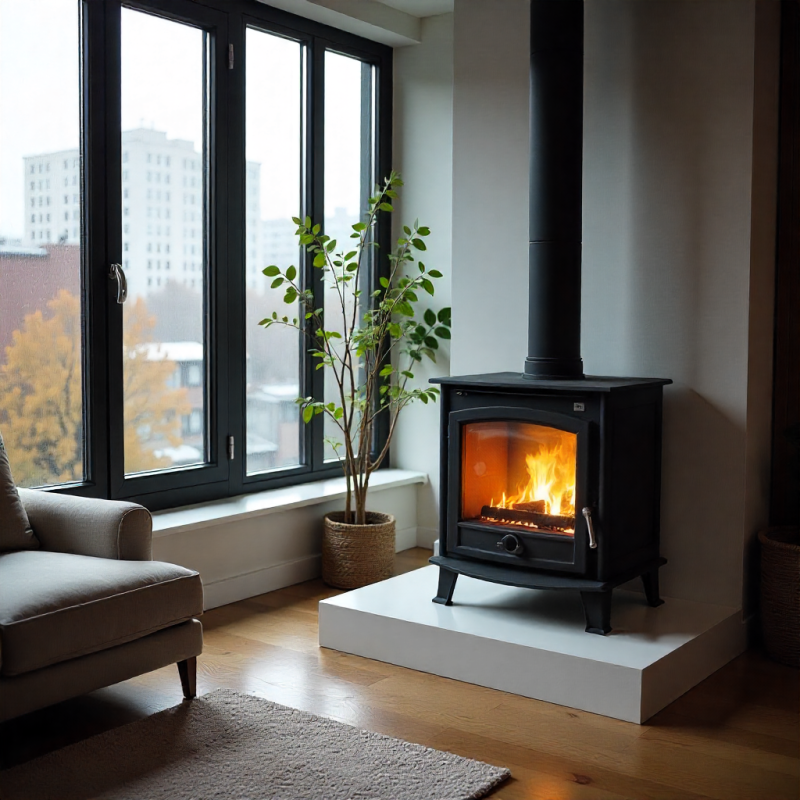
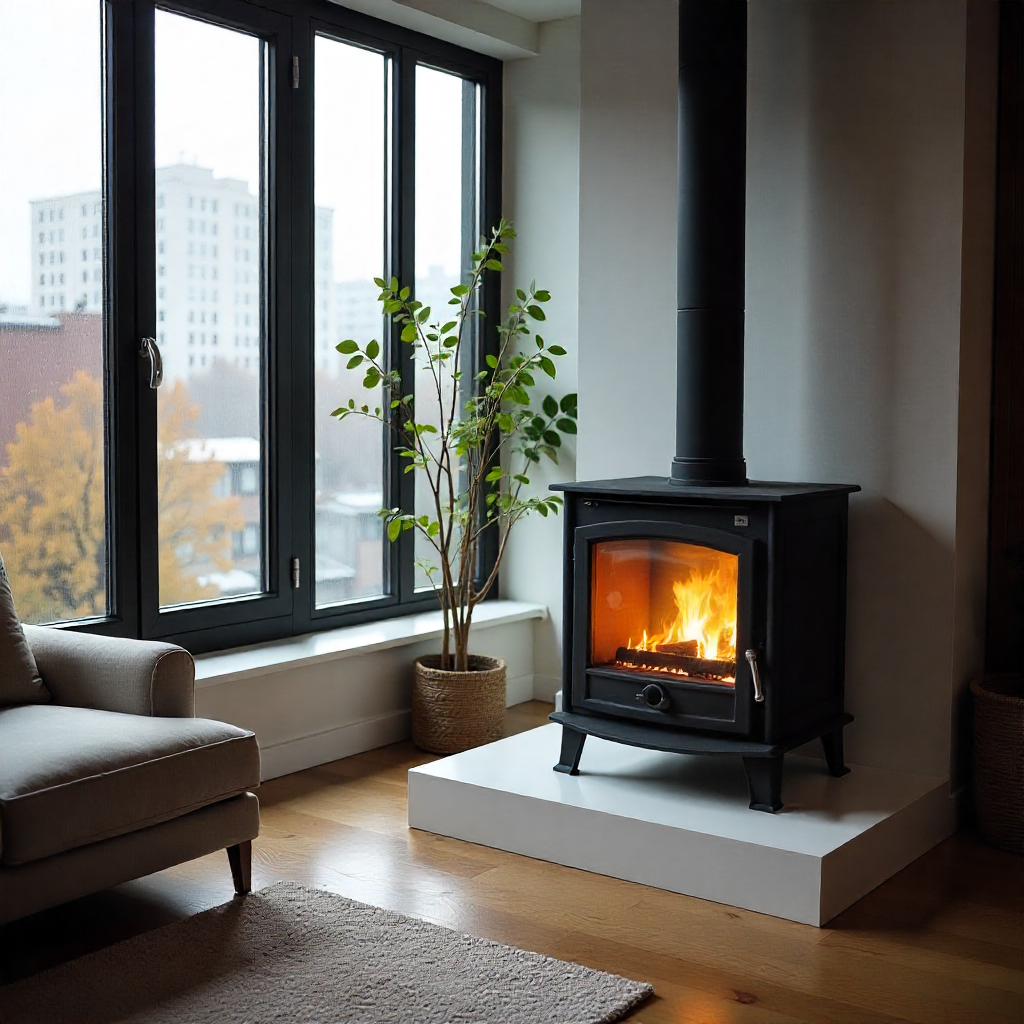
The most versatile format. A freestanding stove sits on its own legs or a plinth, connects to a flue pipe that runs up through the ceiling or out through a wall, and can be positioned almost anywhere in a room with adequate ceiling clearance. Installation is generally simpler than a built-in unit, and the stove can be relocated if you move or renovate. Prices for entry-level units start around R8 000–R12 000; premium cast-iron or steel models with larger glass panels and higher kW outputs sit in the R15 000–R30 000 range. Browse the full fireplace collection to compare specs side by side.
Built-in Fireplace Inserts
If you already have an existing masonry fireplace opening, a closed-combustion insert fits neatly inside it. You get the closed-combustion efficiency of a stove with the traditional built-in look. Inserts are slightly more involved to install because the flue liner must be run down through the existing chimney. Our built-in fireplace inserts section shows the available formats and sizes.
Double-Sided and Corner Models
These allow you to heat two adjacent rooms or create a dramatic see-through feature between a living area and a dining room. They cost more — typically R20 000–R45 000 for the unit — and require careful flue planning, but the visual impact and heating efficiency for open-plan homes is hard to beat.
How to Size a Wood Burning Wood Stove Correctly
Buying a stove that is too small means it runs flat-out and still leaves you cold. Too large and you will be damping it down constantly, which causes incomplete combustion, creosote build-up and a shorter appliance lifespan. The industry standard guide is roughly 1 kW of output per 10–14 m² of living space, adjusted for ceiling height, insulation quality and how well-sealed the room is.
- Small room / bedroom (up to 25 m²): 4–6 kW
- Medium lounge / dining room (25–45 m²): 6–9 kW
- Large open-plan living area (45–70 m²): 10–14 kW
- High-ceilinged Victorian or double-volume space: add 20–30% to your base calculation
In the Western Cape particularly, where homes often have high ceilings and single-glazed sash windows, erring one size up is sensible. Coastal homes around Cape Town, Hout Bay and Hermanus also tend to be damper than inland homes, which affects how quickly spaces heat up. If you are unsure, our team can help you work through the numbers — see our guide on how to choose the right fireplace for your home for a more detailed walkthrough.
What Does a Wood Burning Wood Stove Cost in South Africa (2026)?
The honest answer is: it depends on the unit and the installation complexity. Here is a realistic 2026 breakdown:
- Stove unit: R8 000–R30 000+ depending on brand, output and finish
- Flue system (insulated twin-wall): R4 000–R12 000 depending on run length and material
- Hearth / non-combustible floor protection: R1 500–R5 000
- Labour and professional installation: R3 500–R8 000
- Typical all-in range: R17 000–R55 000 for a standard single-sided freestanding unit in a typical suburban home
For coastal installations — particularly in Cape Town’s Atlantic seaboard and False Bay zones — specifying a 304-grade stainless steel flue rather than galvanised steel is strongly recommended. The salt-laden air in these areas accelerates corrosion on standard flue systems, and replacing a flue prematurely costs more than the upgrade in the first place. Our detailed post on why insulated flues are worth the investment covers the material choices in depth. For a broader cost picture, the fireplace installation cost guide lays out the full range of variables across fireplace types.
Installation: What Actually Happens on the Day
A professional wood stove installation typically takes one full day for a straightforward freestanding unit with a straight vertical flue run. Here is the sequence:
- Site assessment and flue planning — deciding the flue route (internal vs external), number of bends, and exit point through the roof or wall.
- Hearth preparation — laying or confirming a non-combustible hearth surface extending at least 300 mm in front of and to the sides of the stove opening.
- Stove positioning and connection — securing the stove, connecting it to the flue collar, sealing the joint and running the flue pipe to the exterior.
- Flashing and rain cap — weatherproofing the roof penetration and fitting a rain cap or chimney cowl to prevent downdraft and water ingress.
- Test burn and handover — the installer lights a test fire, checks for leaks and backdraft, and walks you through the air controls and maintenance schedule.
Our professional fireplace installation services cover the full process — from initial site visit through to the handover fire. We work across the Cape Town metro and surrounding areas.
Ongoing Maintenance: Keeping Your Stove Running Safely
A wood burning wood stove is a low-maintenance appliance, but not a zero-maintenance one. The single most important habit is burning only well-seasoned, dry hardwood. In the Western Cape, rooikrans, sekelbos and seasoned blue gum are excellent choices. Wet or green wood burns at lower temperatures, produces more smoke, and deposits creosote in the flue far faster — which is both inefficient and a fire risk.
Beyond the firewood, the key maintenance tasks are:
- Annual flue inspection and clean — before each winter season. Even with dry wood, some creosote accumulates. A professional sweep removes it and checks the flue for any damage.
- Glass door gaskets — check the rope seal around the door annually; a failing gasket lets uncontrolled air in and reduces efficiency.
- Ash removal — leave a thin bed of ash (2–3 cm) as it helps maintain combustion, but remove excess weekly during heavy-use periods.
- Flue pipe inspection — look for rust, soot leaks or separation at joints once a year.
For a full routine, our guide on chimney and flue maintenance covers the process in detail. The flue systems section of our shop also carries replacement components if you need them.
Wood vs Gas: Which Is Right for Your Home?
If you are torn between wood and gas, the decision usually comes down to convenience vs atmosphere. Gas fireplaces offer instant on/off and thermostat control; a wood burning wood stove offers a more tactile, immersive fire experience and zero reliance on gas supply. In load-shedding South Africa, both fuels have the advantage of grid independence. For a detailed side-by-side, read our comparison of gas vs wood-burning fireplaces.
Frequently Asked Questions
How long does a wood burning stove last?
A quality cast-iron or steel stove, properly maintained and used with dry wood, will last 20–30 years. The flue system and door gaskets are the consumable components you will replace over that period. Cheap units with thin steel fireboxes can warp or crack within 5–7 years, so buying from a reputable brand and having it professionally installed is money well spent.
Do I need a building plan or permit to install a wood stove in South Africa?
In most South African municipalities, a freestanding wood stove installation with a new flue penetration through the roof counts as minor building work. Some municipalities require a notification or minor works approval rather than a full building plan. Your installer should advise on local requirements, and our team always ensures installations meet SANS 10400 fire safety standards.
What is the best wood to burn in a South African wood stove?
Hardwoods with low moisture content (below 20%) burn cleanest. In the Western Cape, rooikrans and sekelbos are widely available and burn long and hot. Blue gum is good but needs at least 18–24 months of seasoning after cutting. Avoid alien invasive wood that has not been properly dried, and never burn treated timber, painted wood or construction waste — the fumes are toxic and will corrode your flue.
Can I use a wood burning stove during Cape Town fire season restrictions?
Closed-combustion wood stoves are generally exempt from open-fire restrictions because there is no open flame — the fire is fully enclosed. However, during very high fire-danger index days, local authorities occasionally issue blanket advisories. Check with the City of Cape Town’s Fire and Rescue Service for current conditions during Red Alert periods.
Ready to Install a Wood Burning Wood Stove?
If you have a shortlist of stoves in mind or want an expert eye on your room and flue options, we are here to help. Browse our freestanding fireplace range to compare models, or request a free installation quote and one of our installation specialists will visit your home, take measurements and give you a no-obligation price — usually within 48 hours.