
Cast Iron vs Steel Wood Stoves: Which Holds Heat Longer?
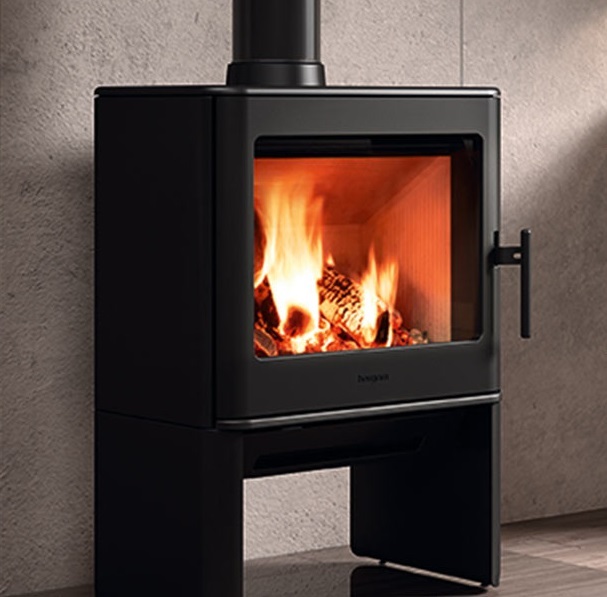
Cast iron or steel — which wood stove holds heat longer and costs less to run over time? We break down performance, price ranges and the top models available in South Africa.
A cast iron wood stove delivers something that steel and ceramic fireplaces rarely match: dense, sustained heat that radiates for hours after the fire has burned down to coals. For South African homeowners dealing with cold Cape Town winters and persistent load-shedding, that thermal staying power is the difference between a comfortable night and a freezing one.
Our freestanding wood-burning fireplaces collection spans cast iron, steel and ceramic models. Each has its place, but cast iron consistently draws buyers who want warmth that outlasts the fire itself. This guide breaks down how the material performs, what to look for when buying, which models are worth considering, and what you’ll realistically pay — including installation.
Cast Iron Wood Stove vs Steel: Why the Material Matters
Both materials start from the same raw iron. The difference is in how they’re formed. Steel is rolled into sheets and welded, making it lightweight and quick to heat. Cast iron is poured into moulds and allowed to cool slowly, producing a far denser, heavier end product.
In practical terms:
- Cast iron takes 30–45 minutes to reach full operating temperature — longer than steel, which heats in 15–20 minutes.
- Cast iron holds heat 2–4 hours after the fire dies — a steel stove typically cools in under an hour.
- Radiant heat from cast iron is gentler and more even, creating a comfortable ambient warmth rather than the blast-and-cool pattern of some steel units.
- Cast iron is more brittle — it doesn’t tolerate thermal shock well, so never douse a hot stove with water.
For a room you want to keep warm overnight — a main living area, a bedroom, a snug — the cast iron option is the smarter long-term choice. For a workshop or occasional-use space where fast heat on demand matters more, steel works equally well at a lower price point.
5 Features to Prioritise When Buying
Shopping for a quality wood stove in South Africa means sorting through local and imported options across a wide price range. These are the features worth comparing before you commit:
1. Secondary (Closed) Combustion
Closed-combustion technology burns the gases produced by smouldering wood before they escape up the flue. The result: more heat from every log, significantly less smoke, and a slower build-up of creosote in the chimney. Most quality models sold locally now include this. If a stove doesn’t have it, step past it.
2. Firebox Volume
A larger firebox holds bigger logs and burns longer between reloads. For a main living room or open-plan space, look for at least 50–60 litres. Compact models (30–40L) work well in bedrooms and studies where the heating load is lower.
3. Glass Air-Wash System
A well-engineered stove channels a thin film of air across the inside of the glass door to keep it clear. This preserves the flame view and is a useful quality indicator — cheaper stoves skip it, and the glass blackens within a few fires.
4. Flue Outlet Position
Most South African homes suit a top-exit flue connecting to a vertical chimney or twin-wall flue system. Rear-exit models are sometimes needed for a false fireplace recess. Check the specification before ordering — retrofitting the wrong exit position is costly.
5. Heat Output (kW)
As a working guide: 4–5kW heats roughly 80–100m², and 7–9kW covers 120–160m² in a well-insulated room. For open-plan spaces or homes with high ceilings, a proper heat-loss calculation is worth doing. Our professional fireplace installation team can help with sizing during a site visit.
Top Models Available in South Africa
Several brands stand out for their build quality, local availability and after-sales support.
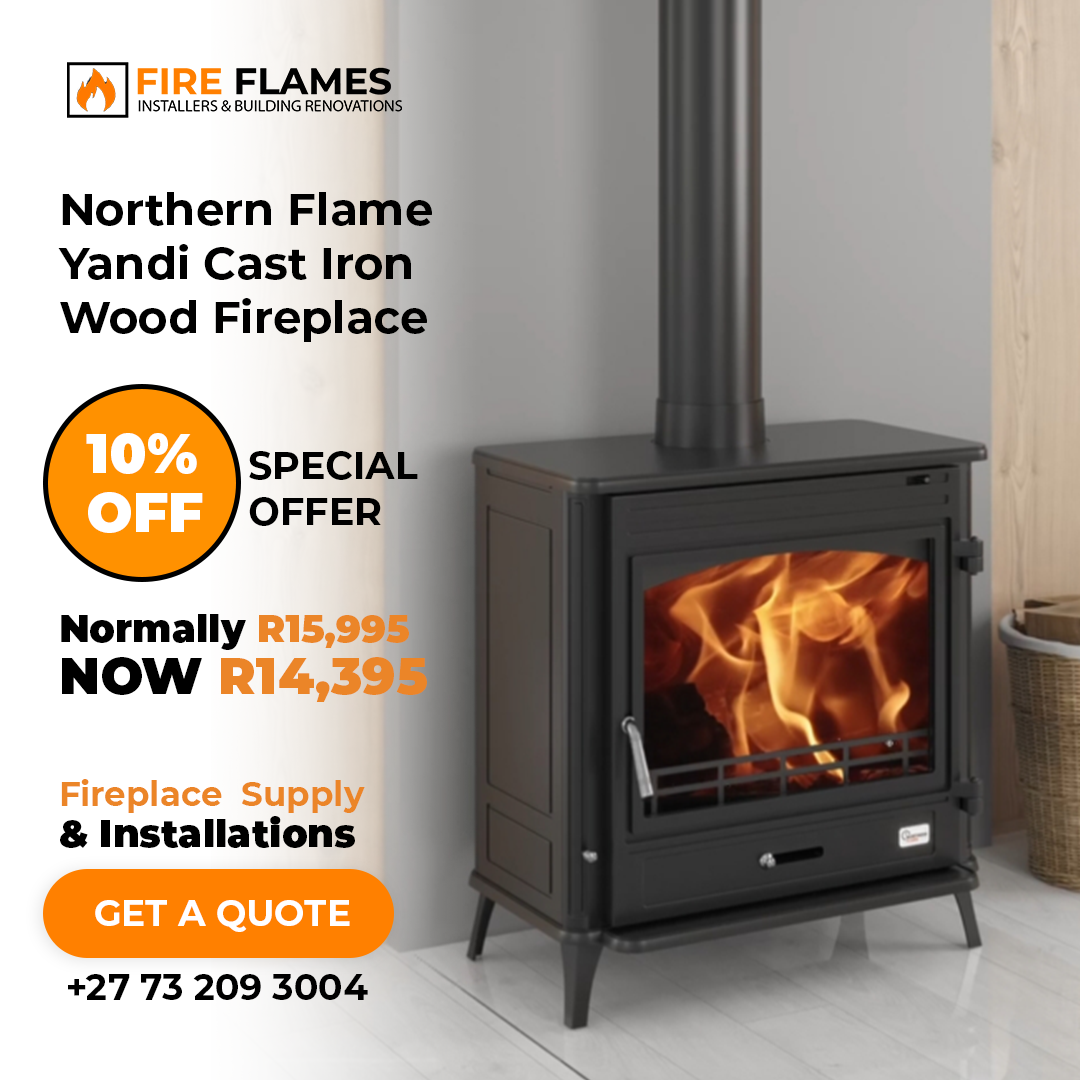
Northern Flame (SA-manufactured): Their Yandi and Snug Tall are cast iron freestanding units designed and built locally for the South African climate. The Yandi is compact (around 5kW), well-priced and ideally suited to smaller rooms. Local manufacturing means parts and service support are accessible without waiting on overseas shipping. See their full catalogue on the Northern Flame website.
Sentinel 051 Traditional: A 12kW closed-combustion model with classic cast iron panel detailing. Part of our Sentinel freestanding range, it’s a popular choice for formal lounges and heritage-style homes where the stove’s appearance matters as much as its output.
NORDflam Erino (imported): An 8kW EcoDesign-compliant unit from Poland, this model combines traditional cast iron heat-holding with modern emission standards. One of the better-specified imports in its price bracket.
All three are available through our full fireplace collection. If you’re still weighing whether a freestanding unit suits your home or whether a built-in alternative makes more sense, the guide to freestanding vs built-in fireplaces walks through that decision clearly.
What a Cast Iron Wood Stove Costs in South Africa
Here’s a realistic price breakdown for 2026:
- Entry-level (local brands, 4–6kW): R8,000–R16,000 for the stove unit
- Mid-range (7–9kW, closed combustion, glass air-wash): R16,000–R30,000
- Premium European imports (EcoDesign, high-output): R30,000–R60,000+
Installation adds significantly to these figures. A standard flue installation — liner, register plate, flue cap and labour — typically runs R9,000–R20,000, depending on chimney height and access. Our fireplace installation cost guide covers the full picture, from straightforward installs through to complex heritage jobs.
Compared to gas or quality electric alternatives, a cast iron wood stove sits at a higher upfront investment — but ongoing fuel costs are low with a reliable firewood source, and it operates entirely without electricity. For households in areas with frequent or extended load-shedding, that off-grid reliability is a core part of the value.
Installation Requirements for South African Homes
A freestanding cast iron stove requires:
- A non-combustible hearth — minimum 300mm in front of the door and at each side
- A 150mm or 200mm flue liner to match the manufacturer’s specification
- A register plate to seal the chimney opening where the flue exits
- A Certificate of Compliance (CoC) issued by a registered installer
In coastal areas — Cape Town, Hermanus, Plettenberg Bay — specify 304 stainless steel for all flue components. Cheaper aluminised steel corrodes quickly in salt-laden air. The premium is modest relative to the full installation cost, but skipping it is a false economy.
If you’re still at the stage of choosing the right fireplace for your home, that guide covers all major options by room type and budget. Once you’re ready to move forward, request a free installation quote and our team will assess your space, recommend the right model and handle the full CoC process.
Frequently Asked Questions
How long does a cast iron wood stove last?
With regular maintenance, these stoves commonly last 20–40 years. Cast iron doesn’t warp or distort under heat cycles the way steel can, and replaceable components — door seals, fire bricks, glass — are available for most quality brands. Avoid thermal shock (never put cold water on a hot unit), and the body should outlast the house it heats.
Can I fit one in a room without an existing chimney?
Yes. Twin-wall insulated flue systems let you add a compliant chimney in rooms without an existing one. The flue can run vertically through the ceiling and roof or exit through an external wall. It adds to the installation cost but provides a permanent, clean solution. Our professional fireplace installation team can advise on the best route for your layout.
Is a wood-burning stove worth it during load-shedding?
Both cast iron and steel wood-burning stoves operate entirely without electricity, so the fuel supply — firewood — is the only variable. The cast iron advantage specifically during load-shedding is heat retention: once at temperature, it keeps the room comfortable through a 4–6 hour outage without needing a reload. For overnight heating security, it’s hard to beat.
What firewood burns best in these stoves?
Kiln-dried or well-seasoned hardwood with a moisture content below 20% burns hotter, cleaner and produces far less creosote build-up in the flue. Rooikrans, bluegum and Port Jackson are common in the Western Cape and all perform well when properly dried. Avoid treated pine, painted timber, chipboard or anything with adhesives — these release toxic compounds and can compromise the CoC on your installation.
Ready to look at options? Browse our freestanding fireplace range or get in touch with our team to discuss which model suits your space and budget.
Related reading
- Can You Install a Fireplace in an Existing Home? Yes — Here's How
- Combustion Fireplace Installation: How It Works, Costs & Compliance
- Need it done professionally? See our fireplace installation in Cape Town service.
Planning this kind of work?
Call or WhatsApp with your suburb and photographs. Fire Flames can discuss your fireplace, braai or home project and quote.
Get A Quote →