
Freestanding Fire Stoves: What R8 000, R22 000 and R55 000 Get You
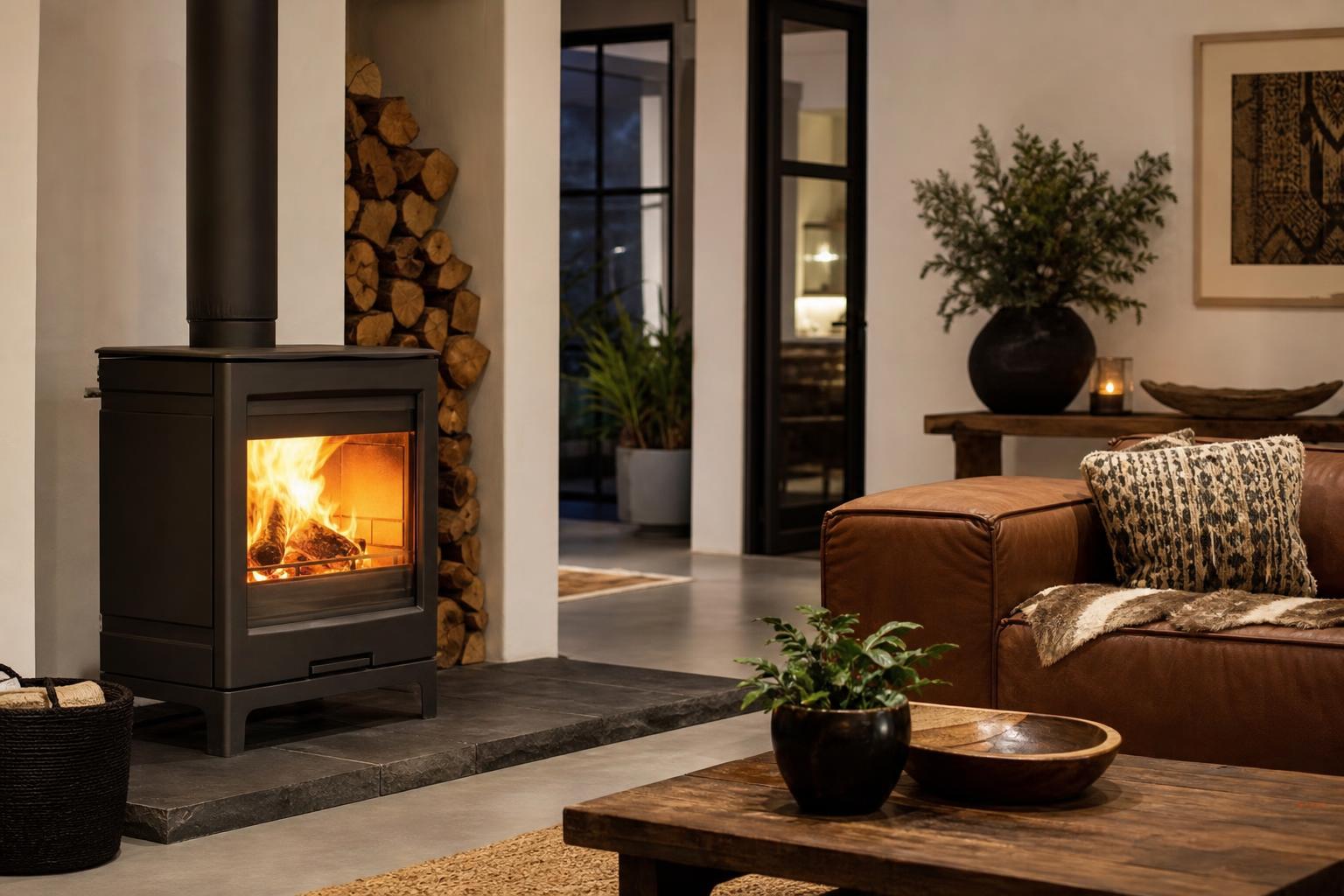
Shopping for fire stoves for sale in South Africa? This guide covers five proven stove types from R8,000 to R60,000+, what each offers, and four practical checks every buyer should run before spending anything.
When you start searching for fire stoves for sale, the options are immediately overwhelming — prices stretch from under R10,000 to well above R55,000, and marketing copy rarely tells you what actually separates a stove worth buying from one you’ll regret. This guide covers five proven types, what each costs in South Africa right now, and four practical checks to run before you spend anything.

One thing to settle before you start: buying a stove is only part of the project. Every installation also needs a correctly sized flue, a non-combustible hearth pad, and a Certificate of Compliance (CoC) from a registered installer — typically an additional R4,000–R12,000 depending on flue length and whether any brickwork is involved. Budget for the full project cost from the start.
If you want to compare stoves side by side before diving in, our freestanding fireplace range lists specs, output and pricing across the models we stock and install.
What Makes a Good Fire Stove in a South African Home?
Most online buying guides are written for the UK or Europe. A few factors apply differently here:
- Load-shedding resilience. A wood-burning stove requires zero electricity — no inverter, no generator, no solar top-up needed. It heats your home reliably through stage 6, which is why demand for wood-burning stoves has grown sharply over the last two winters.
- Firewood cost and availability. Quality kiln-dried hardwood in the Western Cape runs R800–R1,200 per cubic metre. A 70–80% efficiency stove burns roughly half the wood an open fire would to produce the same heat — over a winter, that adds up to a meaningful saving.
- Coastal corrosion. If you’re within 5 km of the coast, check that flue collars, damper plates and any exposed steel components are 304-grade stainless. Mild steel rusts quickly near the sea.
- kW output vs room size. A rough rule of thumb: 1 kW per 10 m² of reasonably insulated space. An open-plan kitchen-lounge of 50 m² typically needs 5–6 kW at minimum. Undersizing is the single most common buyer regret we see.
5 Fire Stoves for Sale Worth Considering
1. Entry-Level Cast-Iron Freestanding Stoves — R8,000 to R16,000
Cast iron has been used in stove-making for centuries because it stores and radiates heat well — even after the fire has died down to embers, a cast-iron body keeps releasing warmth into the room. At this price point you’ll typically find 5–7 kW output, a basic sealed glass door, and a single primary-air control lever.
What you’re giving up: the glass air-wash system is basic on entry-level stoves, which means the viewing pane soots more readily. For buyers who want reliable radiant heat on a budget and don’t mind cleaning the glass occasionally, these do the job well. They suit well-insulated lounges of 40–60 m².
2. Mid-Range Steel Closed-Combustion Stoves — R12,000 to R25,000
Modern steel-bodied stoves offer cleaner lines and are noticeably lighter than cast iron — useful if floor loading is a consideration. In the R12,000–R25,000 band you get 6–10 kW output, improved air-wash glass that stays cleaner during normal operation, and usually a dedicated secondary air control for cleaner, more complete combustion.
Fire stoves for sale in this category are the bestsellers in Cape Town showrooms — they hit the sweet spot between cost, looks and performance that suits most homes. If you’re still deciding whether freestanding or built-in is right for your space, read our full comparison of freestanding vs built-in fireplaces first — it covers installation cost, flexibility and heat distribution differences in detail.
3. Multi-Fuel Freestanding Stoves — R15,000 to R30,000
Multi-fuel stoves burn wood as their primary fuel but are also rated for dry compressed logs, anthracite or peat. The key mechanical difference is a raised grate (to allow ash clearance below the grate when burning solid fuel) and often a de-ashing drawer that makes daily cleaning simpler than emptying a base pan.
For Western Cape buyers who sometimes struggle to source quality dry hardwood, this fuel flexibility is genuinely practical. Output in this range runs 7–12 kW. More sophisticated combustion systems also mean lower particulate output — relevant if neighbours are close or you’re in a wind-sensitive street where smoke direction is unpredictable.
4. High-Efficiency Freestanding Stoves — R20,000 to R42,000
At this price point, efficiency ratings typically reach 78–85%. You get panoramic glass panels, primary and secondary (sometimes tertiary) air injection for near-complete combustion, and substantially lower wood consumption per heat-hour. A full load of wood in a high-efficiency stove typically burns for 6–8 hours; the same volume in a basic unit lasts 3–4 hours.
Output ranges from 8–14 kW — suitable for large open-plan homes of 100–180 m². Browse our range of fireplaces to compare efficiency ratings and output specs across brands. For a realistic picture of what the complete project will cost — stove, flue, hearth and installation — our fireplace installation cost guide breaks it down by budget level.
5. Large-Format Freestanding Stoves — R35,000 to R60,000+
These units — often rated at 12–22 kW — are designed to heat a whole home rather than a single room. Some models include optional boiler backs that connect to a hot water circuit or underfloor heating loop, giving you off-grid heating that works independently of the electricity grid. Positioning matters: large-format stoves are most effective when placed centrally in an open-plan home where warm air can circulate freely.
If your primary goal is to heat two adjacent rooms from one fire, a double-sided fireplace often distributes heat more evenly than a single large stove in the corner of one room. And before you commit to wood, our comparison of gas vs wood-burning fireplaces puts real SA running costs side by side to help you make an informed decision.
Fire Stoves for Sale: 4 Checks Before You Buy
1. Calculate Your Room’s kW Requirement Properly
Don’t guess. Measure the room in m², note ceiling height (anything above 2.7 m increases the heat load), and be honest about insulation quality. A double-volume lounge of 60 m² with poor insulation and large glass sliding doors may need 9–10 kW, not the 5–6 kW a basic calculation suggests. Any reputable installer will do this calculation before recommending a stove — if they don’t ask about room dimensions, that’s a red flag.
2. Map Your Flue Route Early
A straight vertical run through the ceiling is the cheapest and most efficient flue option. Any horizontal offset or long horizontal run increases cost and can reduce natural draw — which affects how the stove burns. Check where the flue would exit relative to roofline obstructions before you choose a stove, and confirm the flue collar diameter (typically 150mm or 200mm) matches your chosen unit. Our flues and flue systems range covers insulated and single-wall options for different budgets and situations.
3. Check Local Brand and Warranty Support
A stove that costs R5,000 less but has no local distributor is a risk. Brands with established South African manufacturing or distribution — like Homefires, who produce locally (homefires.co.za) — can supply spare parts and honour warranty claims within a reasonable turnaround. Grey imports may look attractive on price, but sourcing a replacement ceramic glass pane or combustion air plate 18 months later can be a frustrating and expensive experience.
4. Include Professional Fireplace Installation in Your Budget
South African law requires a CoC for any fireplace or stove installation — it’s not optional, and it’s required by most home insurers. Beyond legal compliance, a properly installed flue draws better, produces less smoke and lasts longer than a DIY job. Budget R4,000–R8,000 for a standard single-storey installation, and up to R12,000 for a more complex two-storey or extended flue run.
FAQ: Fire Stoves for Sale
What’s the most important spec to compare when shopping fire stoves for sale?
kW output relative to your room’s size and insulation quality. Everything else — aesthetics, brand, fuel type, efficiency rating — is secondary. An underpowered stove is the most common and most frustrating buyer mistake, and it can’t be fixed without replacing the stove.
Can I buy a fire stove online and self-install to save money?
You can source a stove online, but installation must be done by a registered installer who issues a CoC. Self-installation is not legal in South Africa and voids home insurance. Get a free installation quote to understand the full project cost before you buy — knowing the install fee often influences which stove makes the most sense financially.
Are wood-burning stoves a smart choice given load-shedding?
Yes — and it’s one of the main reasons demand has held strong. A wood stove is completely off-grid by nature: no electricity required for the fire itself, and a well-chosen stove keeps a family comfortable through an extended outage without any backup power infrastructure. Many Cape Town homeowners now treat a well-installed stove as essential, not optional.
How long does a fire stove last?
A quality cast-iron or steel stove, properly maintained, should last 15–25 years. The flue system typically needs inspection every 2–3 years and may need relining or partial replacement after 10–15 years depending on use intensity. Regular cleaning and correct wood selection (dry, well-seasoned hardwood) are the two biggest factors in stove longevity.
If you want advice on which stove suits your specific room, flue route and budget, get in touch with our team — we’ve been installing fire stoves and fireplaces across the Western Cape for years and can help you find the right fit before you commit to anything.
Related reading
- Can You Install a Fireplace in an Existing Home? Yes — Here's How
- Combustion Fireplace Installation: How It Works, Costs & Compliance
- Need it done professionally? See our fireplace installation in Cape Town service.
Planning this kind of work?
Call or WhatsApp with your suburb and photographs. Fire Flames can discuss your fireplace, braai or home project and quote.
Get A Quote →