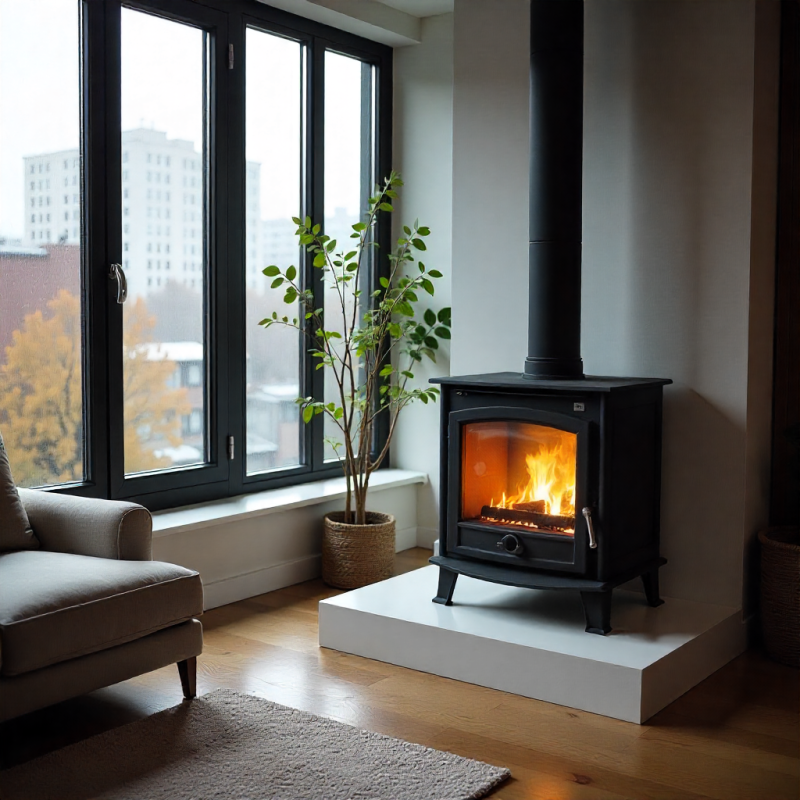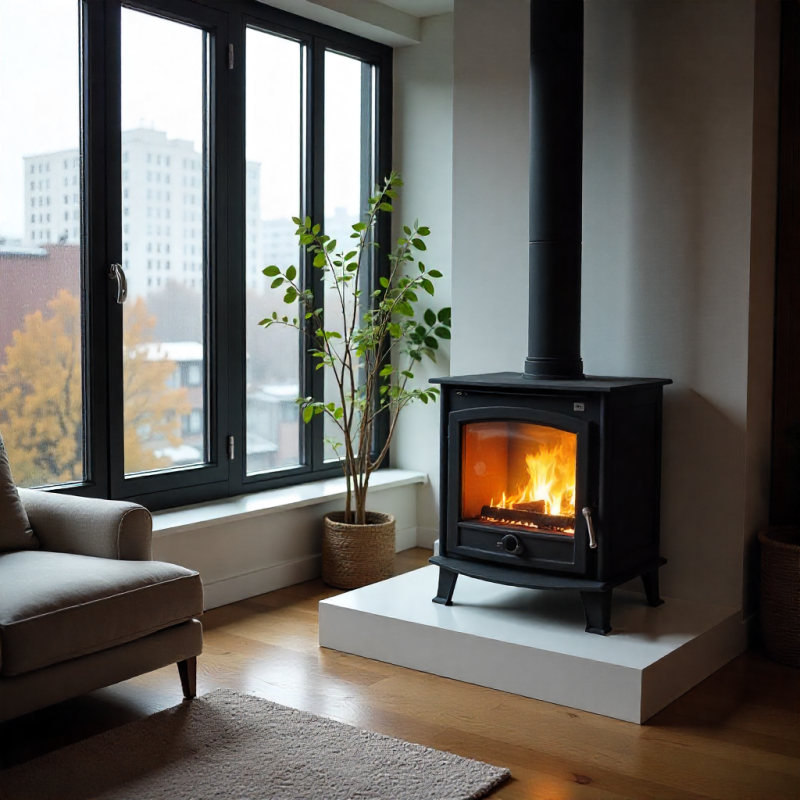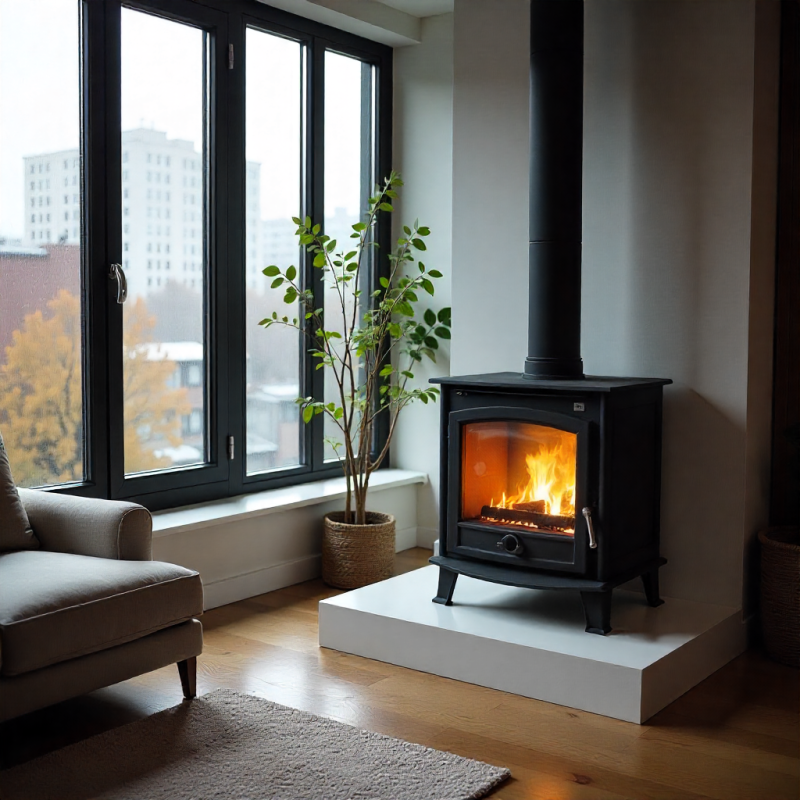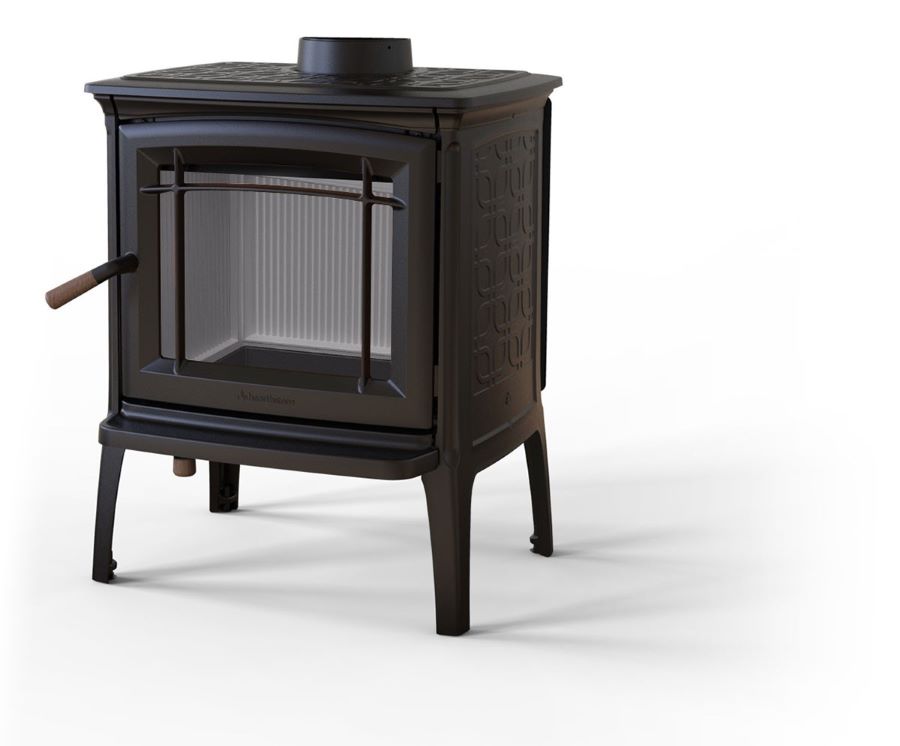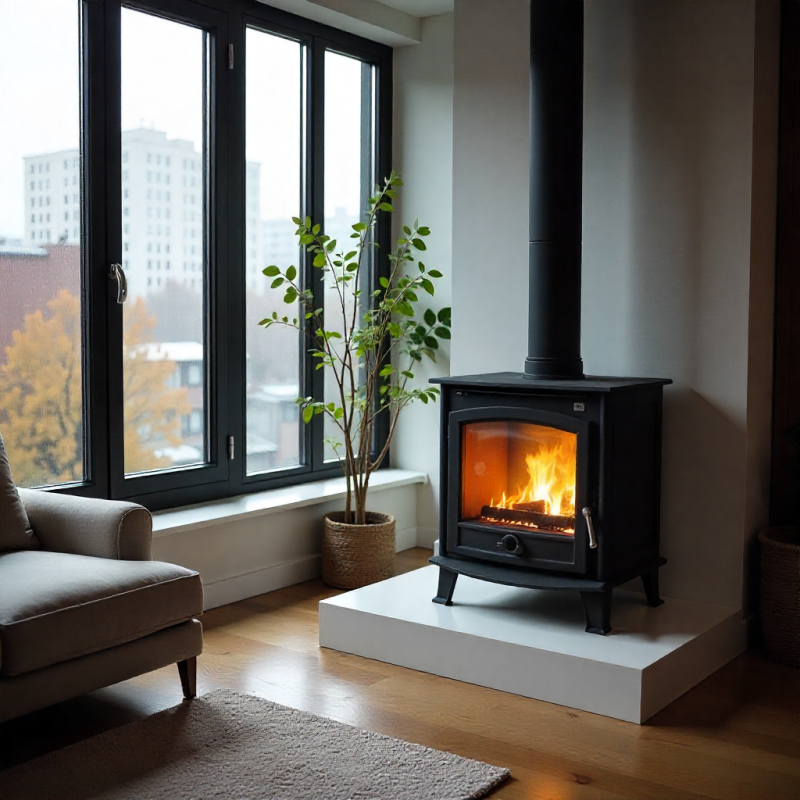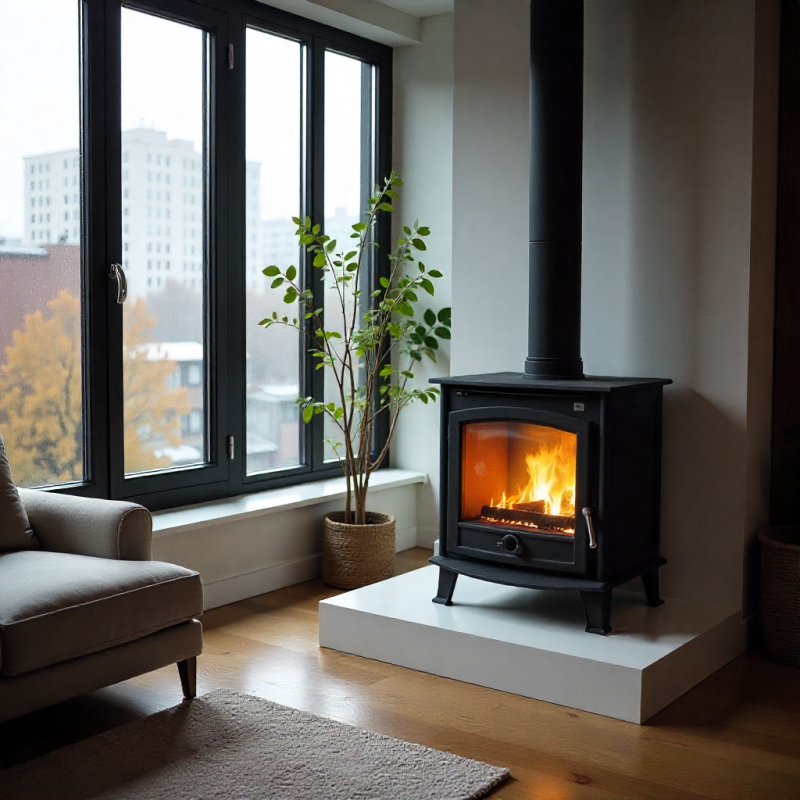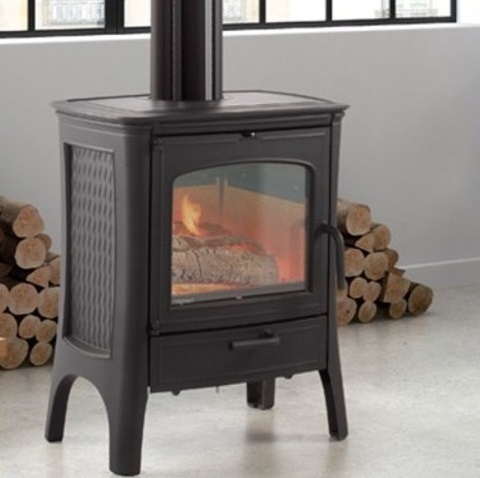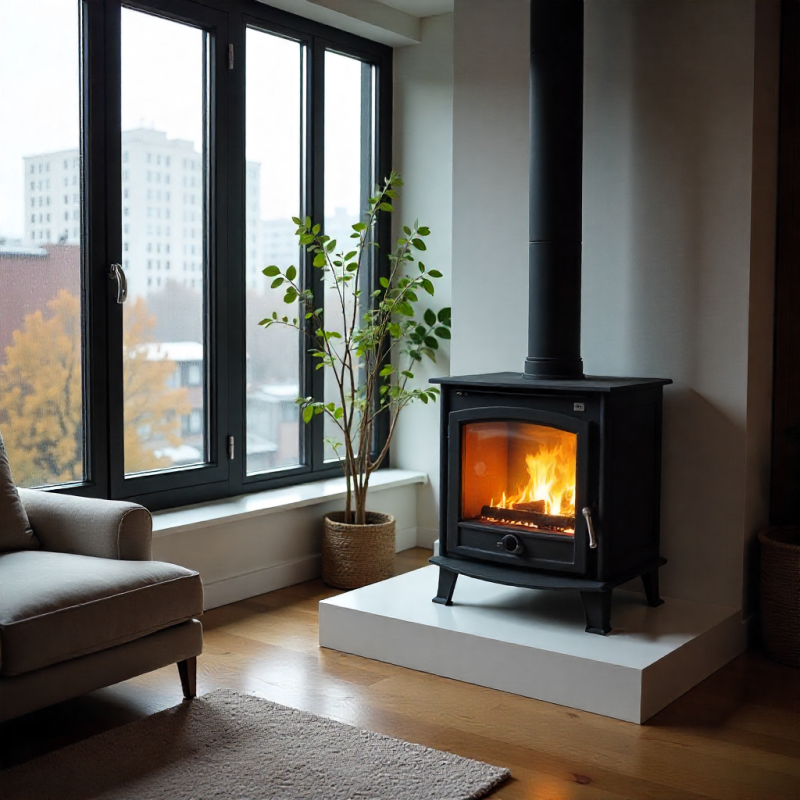

A wood stove is one of the most practical heating investments a South African homeowner can make. It burns without electricity, runs on widely available firewood, and throws serious heat into a living space — often more efficiently than an open fireplace. If you’re budgeting for one in 2026, this guide gives you real Rand figures, explains what drives the price up or down, and tells you exactly what to set aside beyond the sticker price.
If you want to see the full range before reading further, browse our freestanding wood-burning fireplaces — from compact entry-level units to high-output cast-iron models.
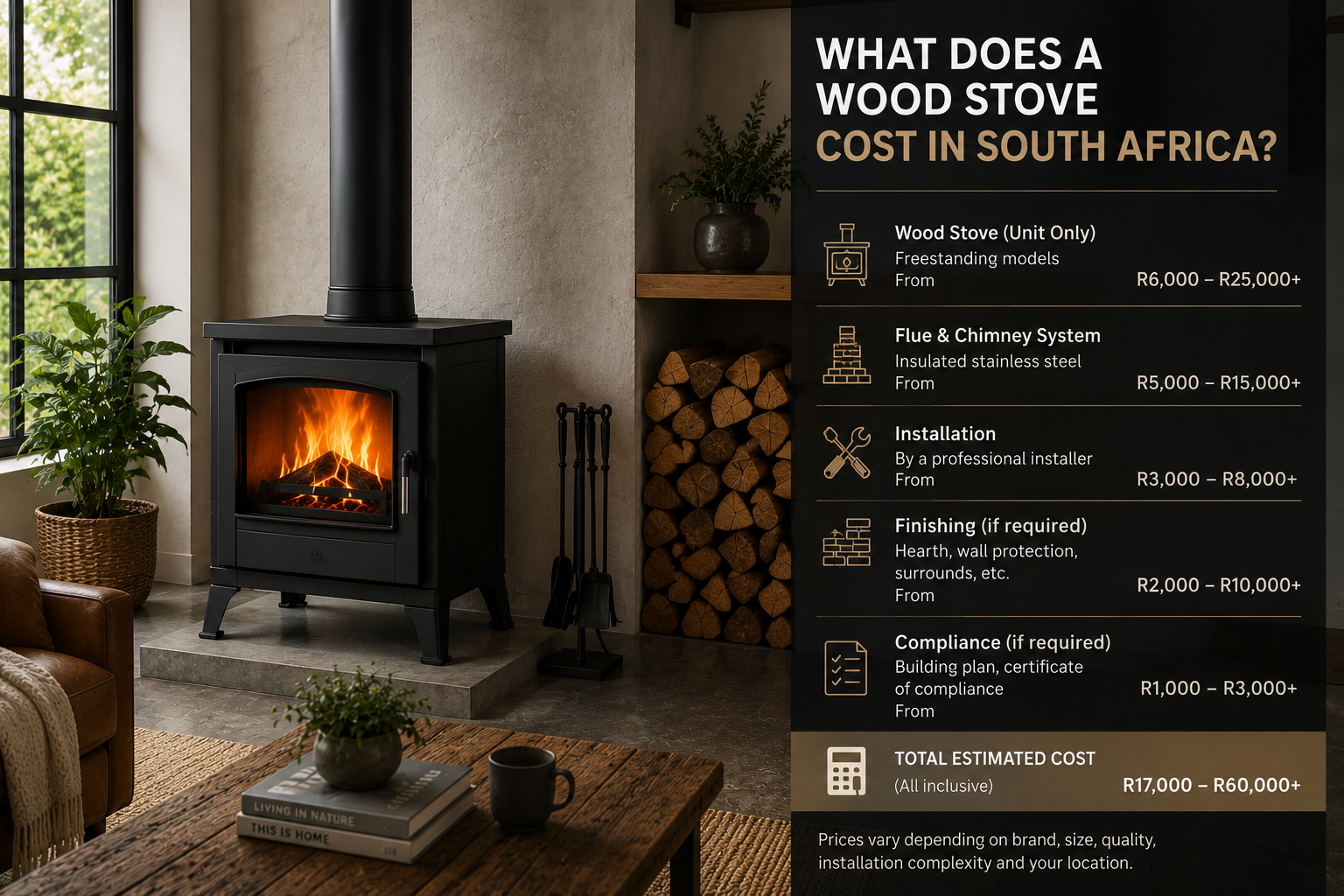
What Does a Wood Stove Cost in South Africa?
Prices vary significantly depending on size, brand, and material. Here is a realistic breakdown for 2026:
- Entry-level freestanding stoves (4–6 kW): R6,000 – R10,000. These are typically mild-steel units suitable for smaller rooms (up to about 40 m²). They heat well but tend to have thinner fireboxes and shorter lifespans than mid-range options.
- Mid-range stoves (6–10 kW): R10,000 – R22,000. The most popular category in SA — solid steel or hybrid cast-iron construction, better door seals, and higher efficiency. Brands like Hydrofire and Northern Flame sit in this band.
- Premium and cast-iron stoves (10–20+ kW): R22,000 – R45,000+. European brands such as Dovre and Morso, and high-output local models. Built to last decades. Ideal for open-plan living spaces or homes in cold inland or high-altitude locations.
These are stove-only prices. Installation, flue, and hearth costs are additional — see the installation section below. You can explore our full range of fireplaces to compare models across the price spectrum.
What Affects the Price of a Wood Stove?
Several factors shift the price meaningfully, and understanding them helps you avoid overpaying for features you don’t need — or underpaying for ones you do.
Heat output (kW)
Output is the single biggest price driver. A 5 kW unit is enough for a standard bedroom or small lounge. A 12 kW unit can heat a large open-plan living and dining area in a Cape Town home. Oversizing is just as wasteful as undersizing — a stove running far below capacity produces more creosote and burns through wood inefficiently. A good rule of thumb for South African conditions: allow roughly 1 kW per 10–12 m² of well-insulated space.
Material: mild steel vs cast iron
Mild-steel stoves heat up faster and are cheaper, but can warp over years of intense use. Cast iron takes longer to heat but retains and radiates heat for longer after the fire dies down — a real advantage for overnight warmth during Cape Town’s wet, cold winters. Premium European stoves are almost always cast iron; local entry-level models are typically mild steel.
Brand origin and warranty
Locally manufactured stoves (Hydrofire, Northern Flame, Sentinel) are generally more affordable and easier to service in South Africa. European imports (Dovre, Morso, Godin) carry a premium for build quality and certification but can have longer lead times for spare parts. For most SA buyers, a well-specced local or hybrid model offers the best value.
Flue type and length
The flue system is separate from the stove price. A standard single-wall flue is the minimum; a 304 stainless steel double-skin insulated flue is the professional recommendation, especially in coastal homes where salt air accelerates corrosion. Browse our flues and flue systems for a sense of the options — insulated flue kits typically add R5,000 – R15,000 to a project depending on ceiling height and roof pitch.
Freestanding vs Built-in: Which Costs More?
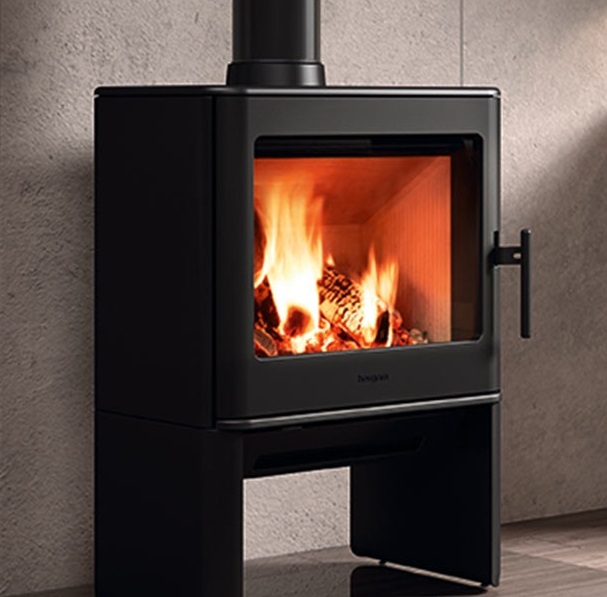
Freestanding wood stoves are self-contained units — they stand on legs or a pedestal, connect to a flue, and sit on a fireproof hearth pad. Built-in fireplaces are recessed into or framed within a wall, requiring more construction work. As a general rule:
- Freestanding stoves cost less overall because installation is simpler — fewer building alterations, quicker fit, and the unit is removable.
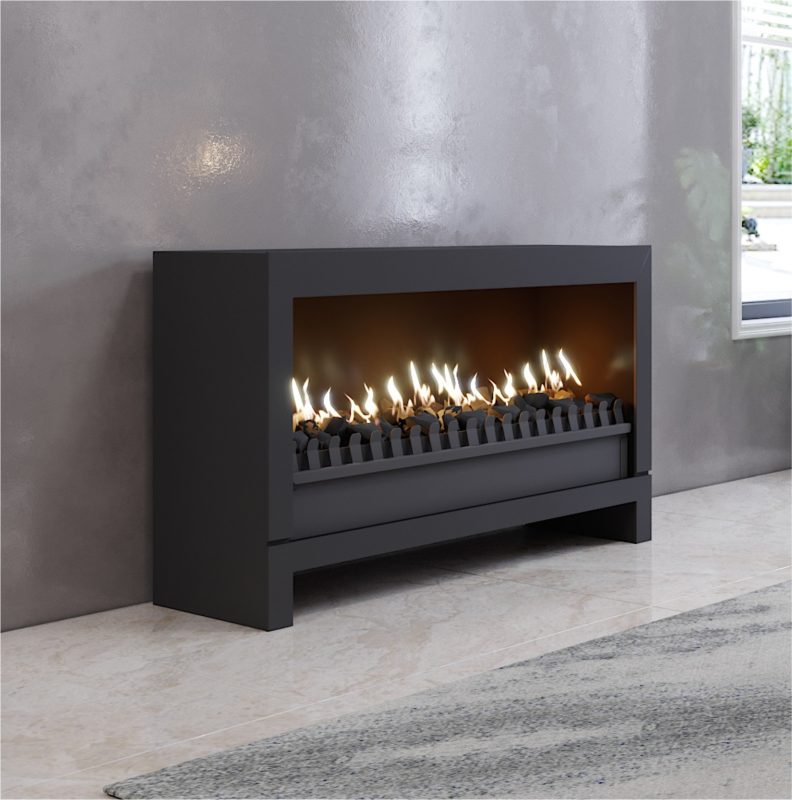
- Built-in fireplaces typically cost more to install but create a more permanent, architectural focal point and often suit larger open-plan rooms better.
Our guide to freestanding vs built-in fireplaces walks through the decision in detail, including which works best in specific room configurations. If you’re still deciding on form factor, it’s worth a read before you settle on a budget. You can also browse our built-in fireplace range to compare both categories side by side.
Wood Stove Installation Costs: What to Add to Your Budget
The stove purchase price is only one line in the budget. Here is a realistic breakdown of what installation adds in Cape Town and the Western Cape in 2026:
- Labour and installation: R4,000 – R10,000 depending on complexity, ceiling height, and whether the flue exits through a roof or wall.
- Flue system (insulated, 304 stainless): R5,000 – R15,000. The longer the flue run, the higher the cost. Most standard Cape Town homes fall in the R6,000 – R9,000 range.
- Hearth pad: R1,500 – R4,000 for a tiled or steel non-combustible hearth that protects the floor directly under and in front of the stove.
- Chimney cowl/cap: R600 – R1,800. Keeps rain, wind, and birds out of the flue.
- Plastering, wall sealing, or surround: R2,000 – R8,000 if any brickwork or feature surround is required.
Total all-in budget (mid-range stove + professional install): R20,000 – R40,000 for most Cape Town homes. Premium stoves with elaborate surrounds can push R60,000+.
Our detailed fireplace installation cost guide breaks down every line item with current figures, including what changes in coastal versus inland situations. When you’re ready to move forward, our professional fireplace installation services cover supply, fit, and commissioning — one team, no subcontracting surprises.
Is a Wood Stove a Smart Buy for Load-Shedding Resilience?
One of the reasons wood stoves have surged in popularity across South Africa over the past few years is simple: they work regardless of what Eskom is doing. A wood stove runs on firewood — no inverter, no battery bank, no generator. In Cape Town winters where evening temperatures can drop below 8°C, a stove that keeps running through Stage 6 load-shedding is not a luxury; it’s a practical necessity for many families.
Beyond the load-shedding angle, wood heating is often cheaper per kJ of heat than electric heating at South Africa’s current electricity tariffs — especially if you have access to reasonably priced firewood. Well-dried hardwoods like rooikrans, bluegum, or Namibian hardwoods burn cleaner and longer than softwoods or freshly cut timber.
If you’re also weighing gas against wood, our comparison of gas vs wood-burning fireplaces covers the running cost maths in detail. Gas offers convenience; wood wins on load-shedding immunity and fuel cost in most Cape Town contexts. Our gas fireplaces are there if gas suits your situation better.
For help choosing the right model for your specific room and lifestyle, our guide to choosing the right fireplace for your home is a good starting point before you talk to an installer.
Ongoing Costs: Firewood and Maintenance
A wood stove is not zero-cost after purchase. Budget for:
- Firewood: R1,200 – R3,000 per winter season for regular evening use, depending on how often you light the stove and how cold the winter is. Buy seasoned (dry) wood — wet wood is inefficient and coats your flue in creosote faster.
- Annual chimney sweep: R800 – R1,500. A clean flue is a safe flue. Our chimney sweeping services include a visual inspection — essential before each winter season.
- Door rope seals and firebricks: R300 – R800 every few years as wear items. Easy to replace and readily available in South Africa.
Frequently Asked Questions
What is the cheapest wood stove available in South Africa?
Entry-level freestanding steel stoves start around R6,000 – R7,500 at retail in 2026. At that price point you’re getting a functional unit, but typically with thinner steel and a shorter service life. If budget is tight, a R10,000 – R14,000 mid-range stove often delivers far better value over a ten-year period.
How much does it cost to install a wood stove in Cape Town?
All-in (stove + flue + labour + hearth) most mid-range Cape Town installations land between R20,000 and R38,000. The main variables are flue length, ceiling height, and whether any brickwork or surround is needed. Request a free installation quote for an accurate figure for your specific home.
Do I need a 304 stainless steel flue in Cape Town?
In coastal and near-coastal areas (including most of greater Cape Town), yes — the combination of salt air and condensation in the flue accelerates corrosion in cheaper mild-steel or single-wall systems. A 304 stainless, double-skin insulated flue costs more upfront but typically outlasts the stove itself, making it the better long-term choice.
Can a wood stove heat an entire South African home?
In a well-insulated open-plan home, a 10–15 kW output stove can realistically heat the main living area and allow warmth to circulate into connecting spaces. Most SA homes benefit from closing off bedrooms and hallways and using the stove as the primary heat source for the living/dining zone, supplementing with electric panel heaters in bedrooms when needed.