
Wood Fires in South Africa: What to Budget in 2026
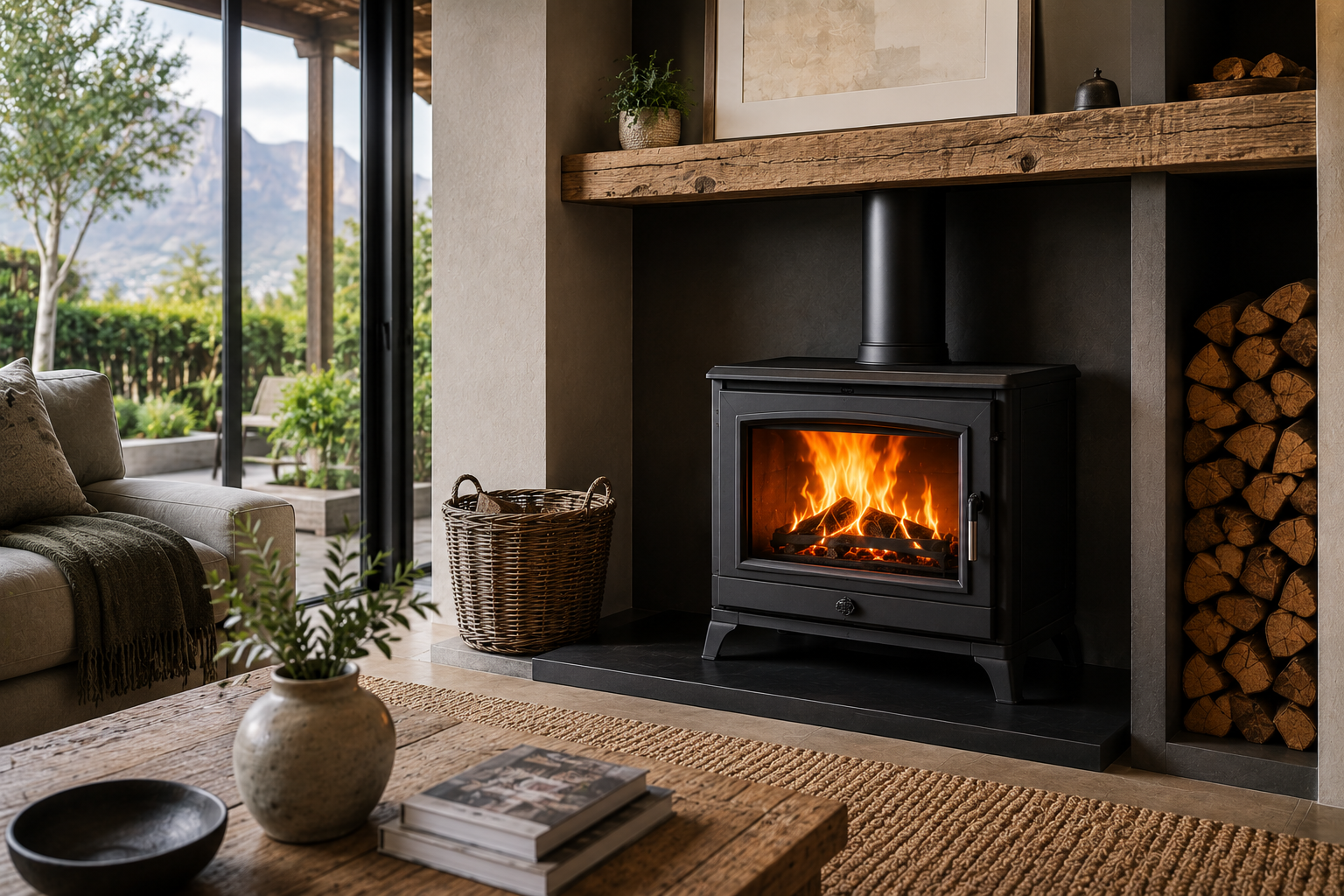
Planning to add a wood fire to your South African home? This cost guide breaks down real 2026 Rand prices — from entry-level freestanding units to premium built-in installations — plus installation, flue and running costs.
Wood fires remain one of the most popular home-heating choices in South Africa. The smell of burning hardwood, the crackle of flames, and genuine warmth that no electric heater can replicate — it is easy to see why. But before you commit, you need a realistic number. Prices for freestanding wood-burning fireplaces start well under R10,000, while a fully specified, professionally installed built-in can run past R60,000 once flues and finishing are included. This guide walks you through every cost layer so you can budget confidently.
What Type of Wood Fire Are You Buying?
The single biggest factor in your budget is which category of wood fire you choose. The three main types sold in South Africa each have a distinct cost profile:
- Freestanding wood-burning fireplaces — also called closed combustion or slow-combustion stoves. These are self-contained units that stand on a hearth, connect to a flue, and radiate heat efficiently. They are the most popular option for budget-conscious buyers because installation is simpler and the units themselves range from affordable to mid-range. If you want the best balance of cost and performance, this is usually the right starting point — our guide to choosing between freestanding and built-in fireplaces covers the full trade-off.
- Built-in (insert) fireplaces — installed flush into a wall or custom surround. They deliver a sleek, architectural finish and are a top choice for new builds or renovations. Built-in fireplace inserts generally cost more in both unit price and installation labour, but the added property value can justify the spend.
- Open wood fireplaces — traditional masonry open fires. Much of the heat escapes up the flue, making them less efficient than closed combustion units, but they suit heritage homes and certain aesthetic briefs.
Browse the full fireplace collection to see current stock across all categories.
Wood Fire Unit Prices in South Africa (2026)
The table below reflects typical retail prices for closed combustion and freestanding wood fires currently available in the South African market. These are unit-only prices — installation, flue and hearth costs are separate and covered in the next section.
Entry-Level: R5,000 – R12,000
At the lower end you will find smaller output models (typically 6–10 kW) from brands such as Earthfire and entry-level Hydrofire units. These are well-suited to townhouses, smaller living rooms and holiday cottages. Expect basic cast-iron or steel construction, single-skin doors, and manual airwash controls. They heat a room effectively but lack some of the efficiency refinements of mid-range models.
Mid-Range: R12,000 – R28,000
This is where most SA buyers land. Mid-range units from brands such as Hydrofire, Dovre, Kratki and Northern Flame offer output from 10–18 kW, panoramic glass doors, primary/secondary/tertiary air controls for clean burns, and ceramic/vermiculite fireboxes that hold heat longer. Build quality is significantly better than entry-level, and these units will last 20-plus years with proper maintenance.
Premium and Designer: R28,000 – R70,000+
At the top end you find cast-iron classics from Godin and Morso, sleek designer units with wrap-around glass, double-sided see-through models, and large-output (20+ kW) fireplaces for open-plan spaces. If you are installing a wood fire as the focal point of a new home, a premium unit is a long-term investment in both heating performance and interior aesthetics.
If you are still comparing wood-fire and gas-fire running economics, read our breakdown on comparing gas and wood-burning running costs — the answer is more nuanced than it looks once you factor in load-shedding and gas refill logistics.
Installation Costs: What to Budget Beyond the Unit
The purchase price of the unit is only part of the story. A proper wood-fire installation has three additional cost layers that many buyers overlook:
Flue System: R3,500 – R10,000
Every wood fire needs a correctly sized, correctly installed flue to draw combustion gases safely out of your home. Single-wall flue pipe is cheaper but cools quickly, which encourages creosote build-up; insulated twin-wall flue systems maintain flue gas temperature, produce a stronger draw, and reduce maintenance intervals. For a coastal or salt-air environment (Cape Town’s Atlantic Seaboard, the Garden Route, Hermanus), you should insist on 304-grade stainless steel throughout — it resists corrosion far better than standard 430-grade alternatives, which can rust out within a few seasons near the ocean. Expect to budget R3,500 for a simple single-storey run and up to R9,000–R10,000 for a two-storey or structurally complex installation.
Installation Labour: R2,500 – R6,000
Labour costs depend on the complexity of the install — a freestanding unit in an existing chimney breast is quick; breaking through an external wall and boxing a new flue run is not. Cape Town installers typically charge between R2,500 and R6,000 for a standard residential job. Always use a professional: an improperly sealed flue joint is a carbon-monoxide risk, and an under-sized flue will cause chronic smoking and flue-fire risk.
Hearth and Surround: R1,500 – R8,000
Most freestanding units require a non-combustible hearth pad beneath them. This can be as simple as a pre-cast concrete slab (R1,500–R2,500) or as elaborate as a custom-tiled or slate-clad surround that becomes a design feature (R4,000–R8,000+). Built-in units typically require a more involved finishing package including the fireplace surround, plaster or tile work, and sometimes a lintel — budget R5,000–R15,000 for the full finishing job on a built-in.
Example Total Budgets
- Affordable freestanding install (entry unit + single-wall flue + basic hearth): R12,000 – R20,000 all-in
- Mid-range freestanding install (quality unit + insulated flue + tiled hearth): R22,000 – R38,000 all-in
- Premium built-in install (designer unit + insulated twin-wall flue + custom surround): R45,000 – R80,000 all-in
For a deeper breakdown of what drives installation costs, read the fireplace installation cost guide.
Cape Town and Coastal Considerations
SA buyers on the Cape coast face a specific challenge that inland buyers do not: salt-laden, moisture-rich air accelerates corrosion on every metal component exposed to the elements. This affects your flue terminal cap, the external section of your flue pipe, and any external firebox components. Specifying 304-grade stainless steel adds 10–15% to your flue budget but can double the service life in coastal conditions. It is not optional in suburbs like Sea Point, Hout Bay, Plettenberg Bay or Hermanus — it is a practical necessity.
Cape Town’s load-shedding pattern also makes wood fires more attractive as a primary heat source rather than a supplement. An independent wood-burning closed combustion fireplace operates entirely without electricity — no blower fan, no thermostat, no Eskom dependence. During Stage 4–6 loadshedding on a cold Cape winter evening, a properly sized wood fire is more reliable than any gas or electric alternative. Factor this resilience value into your buying decision, not just the unit price.
Not sure which unit is right for your room size, home age or suburb? Our team can advise — read the guide on choosing the right fireplace for your home or speak to an installer directly.
Running Costs: Wood, Sweeping and Maintenance
Once your fire is installed, ongoing costs are modest but real. Here is what to budget annually:
- Firewood: A well-sized fireplace used on winter evenings (May–August) will consume approximately 1.5–2.5 tonnes of hardwood per season. Kiaat, rooikrans and bluegum are the most common SA firewood options. Budget R2,000–R4,500 per season depending on species and area — sourcing from reputable suppliers (not freshly cut green wood) will dramatically improve combustion efficiency.
- Chimney sweeping: Annual sweeping is essential for removing creosote build-up that can cause chimney fires. Professional chimney sweeping typically costs R600–R1,200 for a standard residential flue. Budget for it every year — not every few years.
- Fireglass/gasket replacement: Door gaskets and ceramic glass panels may need replacing every 5–10 years depending on use. Parts for mainstream brands are available through installers. Budget R500–R1,500 for gaskets; glass replacement varies by unit.
The total annual running cost for a mid-range wood fire — wood, sweeping, minor maintenance — is typically R3,000–R6,000 per year for a family home in Cape Town used regularly through winter. Spread over the 20-year lifespan of a quality unit, this makes wood fires extremely cost-competitive versus gas or electric alternatives.
Getting a Firm Quote
Every home is different — ceiling height, room volume, flue route, local council requirements and choice of unit all influence the final number. The ranges above give you a realistic budget framework, but a firm quote from a qualified installer is the only way to get an accurate figure for your specific situation. Our professional fireplace installation services cover Cape Town and surrounding areas — site visits are available.
Ready to move forward? Request a free installation quote and one of our team will be in touch to discuss your project, walk you through unit options in your budget, and give you a transparent, itemised price before any work begins.
Frequently Asked Questions
How much does a wood fire cost in South Africa in 2026?
A complete wood fire installation in South Africa — unit, flue, hearth and labour — typically costs between R12,000 and R80,000 depending on the unit tier and installation complexity. Entry-level freestanding units installed simply can come in under R20,000 all-in; premium built-in fireplaces with designer surrounds can exceed R80,000. The unit itself usually represents 50–65% of the total project cost.
What is the cheapest wood-burning fireplace available in South Africa?
Entry-level closed combustion freestanding units start at around R5,000–R7,000 for the unit alone. When you add a basic single-wall flue and simple hearth slab, a straightforward installation can be completed for R12,000–R15,000 in total. These entry-level units are smaller in output (6–8 kW) and suit compact rooms up to about 30–40 m².
Do I need planning permission for a wood fire in South Africa?
Requirements vary by municipality. In Cape Town, most residential wood fireplace installations do not require formal planning approval provided the installation meets SANS 10400 Part T (fire protection) requirements and the flue terminates at the correct height above the roofline. Your installer should be familiar with local compliance requirements and responsible for ensuring the installation is code-compliant. Always ask your installer to confirm compliance before signing off on the job.
How much firewood does a wood fire use per winter?
A mid-sized South African home using a 12–15 kW closed combustion fireplace on winter evenings (roughly 4–5 hours per day, May to August) will typically consume 1.5–2.5 tonnes of dry hardwood per season. Well-seasoned rooikrans or kiaat will burn hotter and cleaner than soft or green wood, stretching your wood budget further. Always buy dry, seasoned wood — it burns more efficiently and produces less creosote, reducing your chimney-sweeping frequency.
Related reading
Planning this kind of work?
Call or WhatsApp with your suburb and photographs. Fire Flames can discuss your fireplace, braai or home project and quote.
Get A Quote →