
Anthracite Fireplace: Types, Sizes & How to Choose (South Africa)
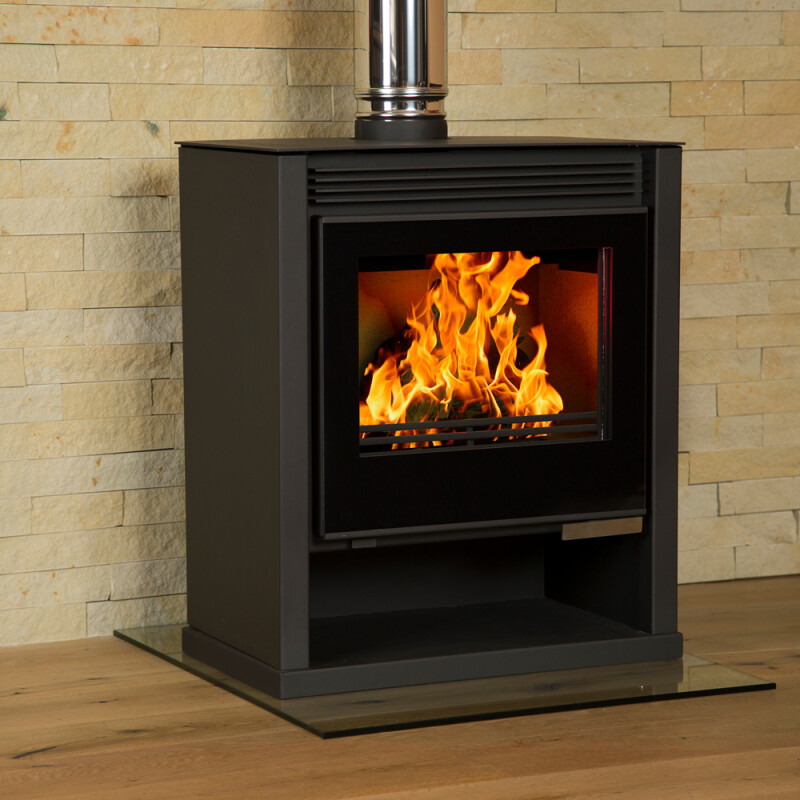
Anthracite fireplaces combine a striking dark charcoal finish with serious heating performance. This guide covers every type available in South Africa, how to size one correctly, what they cost in Rands, and the key features worth paying for.
That deep charcoal-grey finish on a steel fireplace — the one that looks sharp in a modern lounge and practically disappears into an exposed-brick feature wall — has a name: anthracite. It is one of the most searched fireplace finishes in South Africa right now, and for good reason. An anthracite fireplace does not just look the part; when the right model is matched to your room, it delivers efficient, wood-fuelled heat that keeps working through load shedding without so much as flickering.
This guide unpacks everything you need to make a confident buying decision — types, kW sizing, realistic Rand price ranges, and the features that actually matter. Whether you are starting from scratch or replacing an old open fireplace, our freestanding fireplace range includes several anthracite-finish models suited to South African conditions.
What Does “Anthracite” Mean for a Fireplace?
The word carries two meanings in the fireplace world, and both are relevant to SA buyers.
The first is a colour. Anthracite is a dark charcoal-grey powder-coat or enamel finish — similar to RAL 7016 — applied to the steel body of a fireplace. It sits somewhere between black and dark grey, pairs effortlessly with white walls, raw concrete, or dark timber, and shows far less dust and fingerprints than gloss black. The finish has been trending sharply in South African interiors through 2025–2026; you can see why in the 2026 fireplace design trends roundup.
The second meaning is a fuel. Anthracite is a premium grade of hard coal — dense, low in moisture, high in carbon — that burns hotter and cleaner than standard bituminous coal. Many closed combustion fireplaces marketed as “multi-fuel” can burn anthracite coal alongside wood. This is useful in parts of KwaZulu-Natal and the Highveld where sourcing dry hardwood is expensive or difficult.
In most Cape Town, Johannesburg, and coastal searches, buyers mean the colour. This guide covers both angles.
Types of Anthracite Fireplaces in South Africa
1. Freestanding Closed Combustion Fireplaces
The workhorse of the SA market. A freestanding closed combustion fireplace sits on legs or a plinth, connects to a flue pipe that exits through the ceiling or wall, and uses a sealed glass door to control airflow and combustion efficiency. The anthracite powder-coat finish is standard on most mid-to-premium freestanding models from brands such as Kratki, Hydrofire, Sentinel, and Lacunza.
These are the models most South African buyers have in mind when they search for an anthracite fireplace. They are the right choice for anyone who wants genuine whole-room heating, all-night burn times, and a statement piece that doubles as décor. For help deciding whether freestanding is the right format for your space, our in-depth comparison of freestanding vs built-in fireplaces walks through every trade-off.
2. Built-In Fireplace Inserts
A built-in insert fits flush into a cavity — either a new masonry surround or an existing open-fireplace opening. Many insert models are also available in an anthracite finish, letting you achieve the dark-grey aesthetic within a more architectural, wall-integrated look. Built-in fireplaces are the better choice when you want the heating appliance hidden behind a custom surround or when your room layout does not accommodate a freestanding unit.
3. Multi-Fuel Fireplaces
Multi-fuel fireplaces are designed to burn both wood and solid fuels like anthracite coal or wood briquettes. They feature a raised grate (to allow ash to fall and air to circulate beneath the fuel) and a more robust firebox lining that handles the higher heat output of coal. If you live in a region where clean dry hardwood is scarce or expensive, a multi-fuel model gives you the flexibility to switch between fuels as supply and price dictate.
4. Designer and Wall-Mounted Options
A smaller segment of the market — contemporary, minimal-profile fireplaces designed more for visual impact than raw heat output. Many are available in anthracite to complement modern interior schemes. Output is typically lower (4–8 kW), making them appropriate for smaller, well-insulated rooms rather than large open-plan spaces. If you are still working out which format suits your home, our guide to choosing the right fireplace for your home is a useful starting point.
How to Size an Anthracite Fireplace: kW Output Explained
Getting the kW output right is the single most important specification decision. An undersized fireplace will run on full blast trying to warm the room; an oversized one will run so hot you are forced to choke it down, which causes tarring in the flue and wastes wood.
The standard South African rule of thumb is 60–80 W per square metre of room area (use 80 W/m² for high ceilings or older, draughty homes; 60 W/m² for well-insulated newer builds):
- Small rooms (20–30 m²) — 5 to 6 kW is typically sufficient.
- Medium rooms (35–50 m²) — 8 to 10 kW covers the space comfortably.
- Large or open-plan areas (60–80 m²) — 12 to 15 kW, or consider a double-sided model to distribute heat in two directions.
Cape Town and coastal homes face a specific challenge: sea air accelerates corrosion on exposed metal components. If you are near the coast, look for fireplaces with 304-grade stainless steel internal components and flue collars — not just painted mild steel — to ensure a long service life without rusting from the inside out.
What Does an Anthracite Fireplace Cost in South Africa?
Prices below are current Rand ranges for the fireplace unit only. Installation — flue, hearth prep, and fitting — adds to the total; see our detailed breakdown of what fireplace installation costs in South Africa for an honest all-in budget guide.
- Entry-level (5–6 kW, basic steel, anthracite finish): R7,000–R14,000. These are budget-friendly units from entry-range local distributors. Performance is adequate for small rooms, but build quality and glass seals vary.
- Mid-range (8–12 kW, quality steel, ceramic glass, clean-burn primary air wash): R15,000–R35,000. This is where most quality brands sit — Hydrofire, Kratki, and similar. Excellent heat output, better combustion efficiency, longer lifespan.
- Premium (12–20 kW+, cast iron or heavy-gauge steel, enamelled or high-temp powder coat, European-engineered combustion system): R35,000–R80,000+. Brands like Lacunza, Dovre, and Godin fall here. These fireplaces are built to last 20–30 years and typically carry better emission ratings.
For a rough all-in budget: add R5,000–R15,000 for a basic single-wall flue installation in an existing space, or R15,000–R30,000+ for an insulated twin-wall system through a ceiling. Professional fireplace installation ensures the flue is sized, sealed, and compliant — cutting corners here is where chimney fires and carbon monoxide risks originate.
Key Features to Look For
Not all anthracite fireplaces are equal. These are the specifications that separate a fireplace you will love in ten years from one you will regret after the first winter:
- Air-wash system: A controlled flow of air across the inside of the glass door keeps it clear during normal use. Without it, the glass goes black within an hour of lighting.
- Tertiary combustion air: Pre-heated air injected above the flame burns off unburnt gases, improving efficiency and reducing creosote deposits in the flue. Standard on quality closed combustion models.
- Firebox lining: Vermiculite or refractory-brick lining retains heat between loads of wood and protects the steel firebox from high temperatures. Cheaper units use thin sheet steel liners that warp over time.
- Flue collar size and position: Ensure the collar diameter matches the flue system you are installing. A rear-exit collar is easier to route through an existing wall; a top-exit collar is more common for through-ceiling installations.
- Door seals: High-temp rope seals on the door keep combustion air controlled. Check that replacement seals are available locally — on cheaper imports they often are not.
When comparing anthracite-finish models, also consider whether gas or wood-burning better suits your lifestyle and running costs — gas fireplaces have their own range of anthracite-finish options if convenience is the priority over fuel cost.
Frequently Asked Questions
Can I burn anthracite coal in my fireplace?
Only in a multi-fuel fireplace with a raised grate and a firebox rated for solid fuels. Standard wood-burning closed combustion fireplaces are not designed for coal — the heat is more intense and the ash behaviour is different. Burning coal in a wood-only stove will damage the grate, burn through the firebox lining, and may void your warranty. Always check the manufacturer’s fuel specification before purchasing.
How long does an anthracite fireplace burn on a single load?
On quality seasoned hardwood (moisture content below 20%), a mid-range 10 kW closed combustion fireplace typically burns 4–8 hours per load, depending on how much you close down the air controls. Multi-fuel models burning anthracite coal can burn even longer — 8–12 hours on a full load — because coal releases energy more slowly than wood. This makes them practical as overnight heating for cold Highveld and Cape winters.
Does an anthracite powder-coat finish require special maintenance?
No — it is one of the lower-maintenance finishes available. Standard powder coat does not rust under normal indoor conditions and can be wiped clean with a dry cloth. Avoid abrasive cleaners or steel-wool pads, which will scratch the surface. Over many years at very high external temperatures, the finish can begin to discolour near the top of the firebox; a touch-up with high-temperature spray paint (matched to the original colour) is a simple fix.
Do I need a flue for every anthracite fireplace?
Yes — all wood-burning and multi-fuel fireplaces require a properly sized and sealed flue to exhaust combustion gases safely. There is no such thing as a flue-free wood-burning fireplace. The flue diameter, height, and insulation level must be matched to the fireplace’s kW output and your home’s roof and ceiling configuration. Our team handles this as part of every fireplace installation service — it is not something to improvise.
Choosing the Right Anthracite Fireplace: The Short Version
Match the kW output to your room size (60–80 W/m²), choose closed combustion over open for efficiency, and budget for a quality flue system as part of your total spend — not as an afterthought. If you are in a coastal area, insist on 304 stainless steel components. If you want fuel flexibility, a multi-fuel model is worth the modest premium over a wood-only unit.
Ready to choose? Browse our full fireplace collection online, or request a free installation quote and one of our team will help you select the right model and size for your specific space.
Related reading
- Can You Install a Fireplace in an Existing Home? Yes — Here's How
- Combustion Fireplace Installation: How It Works, Costs & Compliance
- Need it done professionally? See our fireplace installation in Cape Town service.
Planning this kind of work?
Call or WhatsApp with your suburb and photographs. Fire Flames can discuss your fireplace, braai or home project and quote.
Get A Quote →