
Slow Combustion Fireplace in South Africa: Pros, Cons & What to Know Before You Buy
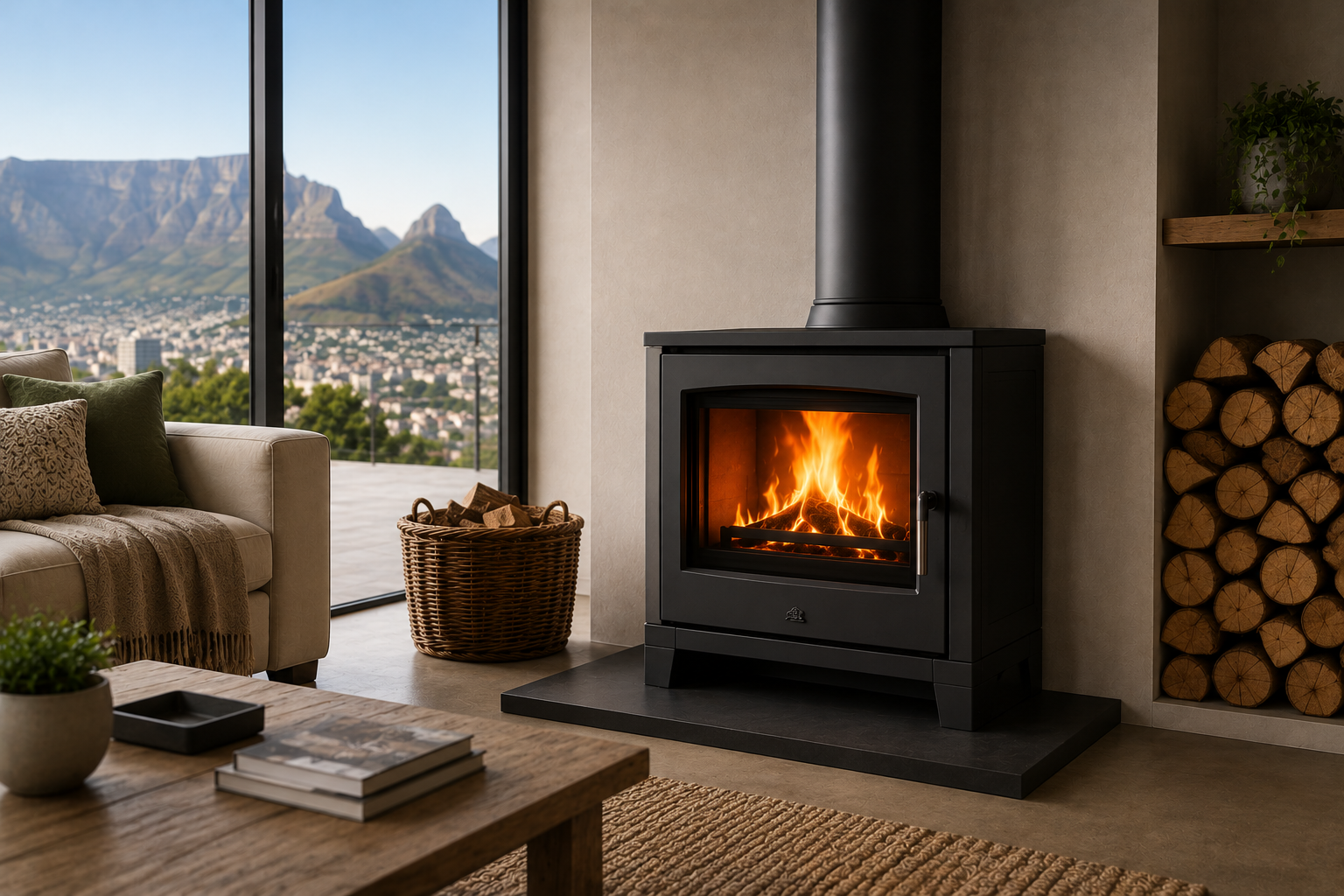
Slow combustion fireplaces burn wood at up to 80% efficiency — far better than a traditional open fire. But they're not for everyone. This guide covers how they work, the real pros and cons, what they cost in South Africa, and the key questions to ask before you commit.
A slow combustion fireplace — also called a closed combustion or wood-burning stove in South Africa — is the most efficient way to heat a room with wood. By controlling the airflow through sealed vents, these units extract far more heat from each log than an open hearth ever could. If you’re looking at freestanding fireplaces for this winter and wondering whether a slow combustion model is right for you, this guide will tell you exactly what to expect: how they work, the honest pros and cons, and what they’ll cost you installed.
How a Slow Combustion Fireplace Works
The principle is simple but clever. Unlike an open fireplace where air flows freely over the burning wood, a slow combustion fireplace is sealed behind a glass-fronted door. You control how much air reaches the fire through adjustable dampers or air-wash vents. Restrict the airflow and the wood burns more slowly — releasing heat over a longer period rather than flaring up and dying quickly.
Better models also feature a secondary combustion chamber: hot gases produced by the primary burn pass through a second burn zone and ignite again. This secondary burn captures energy that would otherwise escape up the flue, pushing efficiency ratings to 75–80% in quality European units. For comparison, a traditional open fireplace typically runs at 20–35% efficiency — meaning 65–80% of the wood’s energy goes straight up the chimney.
The Real Pros of a Slow Combustion Fireplace in South Africa
Heat that outlasts load-shedding
This is the big one for South African homeowners right now. A properly sized slow combustion fireplace loaded with dense hardwood — leadwood, rooikrans, sekelbos — will hold a fire for four to six hours with minimal intervention. That easily covers a Stage 4 load-shedding block and keeps your home warm through the night. No electricity required, no gas cylinders to monitor, just wood and a good door seal.
Lower wood consumption
Because you’re extracting more heat per kilogram of wood, you use less of it. A well-insulated Cape Town home running a good 10 kW slow combustion unit through a full winter season will typically burn 2–3 cubic metres of wood. The same home with a basic open fireplace might get through twice that. With seasoned hardwood running R1,200–R2,000 per cubic metre, the savings accumulate quickly across a few winters.
Cleaner burn, less maintenance
Higher combustion temperatures produce less creosote — the tar-like residue that builds up inside flues and is a leading cause of chimney fires. You’ll still need annual chimney sweeping services, but a slow combustion unit burning dry hardwood will give your sweep much less to deal with than a leaky open fire. Consistent chimney and flue maintenance keeps the system safe and the glass clean.
Better heat distribution
The sealed firebox radiates heat in all directions, including forward and sideways through the glass. Many models include a convection channel that draws cool room air in from below and pushes warmed air out above — effectively acting as a small convection heater as well as a radiant heat source. This means the warmth reaches corners of the room that an open fireplace never would.
The Honest Cons
You must use dry, seasoned hardwood
This is non-negotiable. Wet or green wood — moisture content above 20% — creates excessive smoke, poor combustion, rapid creosote build-up and, in some cases, can damage door seals and glass. Pine and other softwoods are also problematic: they burn fast, produce a lot of resin, and foul the flue. In South Africa, look for dry rooikrans, leadwood, sekelbos or other indigenous hardwoods from a reputable supplier who can vouch for the moisture content.
Higher upfront cost than a basic open fireplace
A quality slow combustion unit costs more than a simple open masonry fireplace. Entry-level slow combustion models start around R8,000–R12,000 for the firebox, and you still need the flue system and professional installation on top of that. Our detailed breakdown of fireplace installation costs in South Africa covers what to expect at each budget level — the short answer is that a complete freestanding slow combustion installation typically runs R15,000–R35,000 all-in.
The glass needs regular attention
The air-wash system on most modern units helps keep the glass clean by directing a thin curtain of air over the inner surface — but it’s not perfect. Burning damp wood or closing the vents too aggressively will leave deposits on the glass within a few sessions. A dedicated fireplace glass cleaner applied to a cold surface fixes this in minutes, but it’s a maintenance step you need to factor in.
Not ideal for very large open-plan spaces alone
A single slow combustion fireplace works beautifully as the primary heat source for a living room of 30–50 m². But if you’re trying to heat a huge open-plan kitchen-lounge-dining space, you may need either a higher-output unit or supplementary heating in the zones furthest from the firebox. Getting the kW rating right for your space is the most important specification decision you’ll make.
What to Look For Before You Buy
kW output matched to your room
South African building stock varies widely — a double-brick home in Stellenbosch loses heat differently from a timber-frame house in Knysna. As a rough guide, budget 1 kW per 10 m² in a well-insulated room, or 1 kW per 7–8 m² in an older home with single-brick walls. Most slow combustion fireplaces sold in SA range from 6 kW to 20 kW; get a professional recommendation for your specific space before buying.
Freestanding or built-in cassette?
Slow combustion technology comes in both formats. A freestanding wood-burning unit with a pipe flue is the fastest and cheapest installation — you can often have one running within a day. A built-in cassette or insert fireplace gives a cleaner flush finish but involves more construction. If you’re weighing up the two, the comparison between freestanding vs built-in fireplaces covers the trade-offs in detail. To see the full scope of what’s available, browse our fireplace collection — it spans both freestanding and insert formats across a wide range of kW ratings and price points.
Coastal vs inland specification
If you’re installing in Cape Town, the Southern Suburbs, the Overberg coast or any area within a few kilometres of the sea, specify 304 stainless steel components for your flue system. Marine air is corrosive enough to eat through mild steel within two to three years. The upgrade to marine-grade steel adds a modest cost at installation and avoids an expensive replacement down the line.
Door seal quality
The door seal — usually a rope gasket — is what makes the whole system work. A worn seal lets uncontrolled air in, undermining efficiency and causing the fire to burn too fast. Check seal condition annually and replace it the moment you notice smoke seeping from the door edge during operation. Most seals cost R200–R500 to replace and are a straightforward DIY job.
Popular Slow Combustion Fireplace Brands in South Africa
The local market is well served. The Sentinel freestanding range is manufactured locally and well regarded for build quality and heat output in the mid-range. European brands like Kratki, Dovre and Godin are available through specialist retailers and offer high-efficiency secondary combustion designs. Hydrofire remains one of the most widely installed brands at the entry-to-mid level. When choosing the right fireplace for your home, brand matters less than getting the correct kW rating, a quality flue system, and a proper professional installation.
Wood vs Gas: Is Slow Combustion Still the Better Choice?
Gas fireplaces have come a long way and deserve serious consideration if you don’t have convenient wood storage or if you value instant-on convenience above all else. But for most South African homeowners, wood remains the lower cost-per-season option — especially given load-shedding risk. Our full comparison of gas and wood-burning running costs runs the numbers; slow combustion wood typically wins on annual fuel cost once you account for a full winter’s usage.
Frequently Asked Questions
Is a slow combustion fireplace the same as a closed combustion fireplace?
Yes — these terms are used interchangeably in South Africa. Both refer to a sealed wood-burning unit where air is controlled through vents rather than burning openly. Some suppliers use “wood stove” or “combustion stove” for the same thing. The key common feature is the sealed glass door and adjustable air controls.
How long will a slow combustion fireplace keep burning overnight?
With dense hardwood and the air vents partially closed, a well-loaded unit can sustain a fire for five to eight hours. The fire won’t be roaring at 3 AM — but it will still be producing heat from a bed of hot coals that can be quickly rebuilt in the morning. Use a full load of seasoned leadwood or rooikrans for the longest overnight burn.
Can I install a slow combustion fireplace in an existing home?
Absolutely — it’s one of the most common retrofit projects we handle. A freestanding unit with an external flue going through an outside wall is typically the simplest approach. Where an external wall isn’t practical, a flue can be routed through ceiling voids and out through the roof. A site visit lets us confirm the best route for your specific home layout.
What maintenance does a slow combustion fireplace need?
Annual chimney sweeping before the winter season, periodic ash removal from the firebox (leave a thin bed of ash as insulation for the fire), annual door seal inspection, and occasional glass cleaning. It’s a modest maintenance commitment for a heating system that can last 20–30 years with good care.
Get the Right Fireplace Installed This Winter
Fire Flame Installers supplies and installs slow combustion fireplaces across the Western Cape, from Cape Town to Hermanus to Paarl. We’ll assess your space, recommend the right unit and kW output, and install it with a compliant flue system — no shortcuts. Request a free installation quote and let’s get your home warm before the worst of winter arrives.
Related reading
- Can You Install a Fireplace in an Existing Home? Yes — Here's How
- Combustion Fireplace Installation: How It Works, Costs & Compliance
- Need it done professionally? See our fireplace installation in Cape Town service.
Planning this kind of work?
Call or WhatsApp with your suburb and photographs. Fire Flames can discuss your fireplace, braai or home project and quote.
Get A Quote →