
Fireplace Without a Chimney: Your Options and What Each Needs
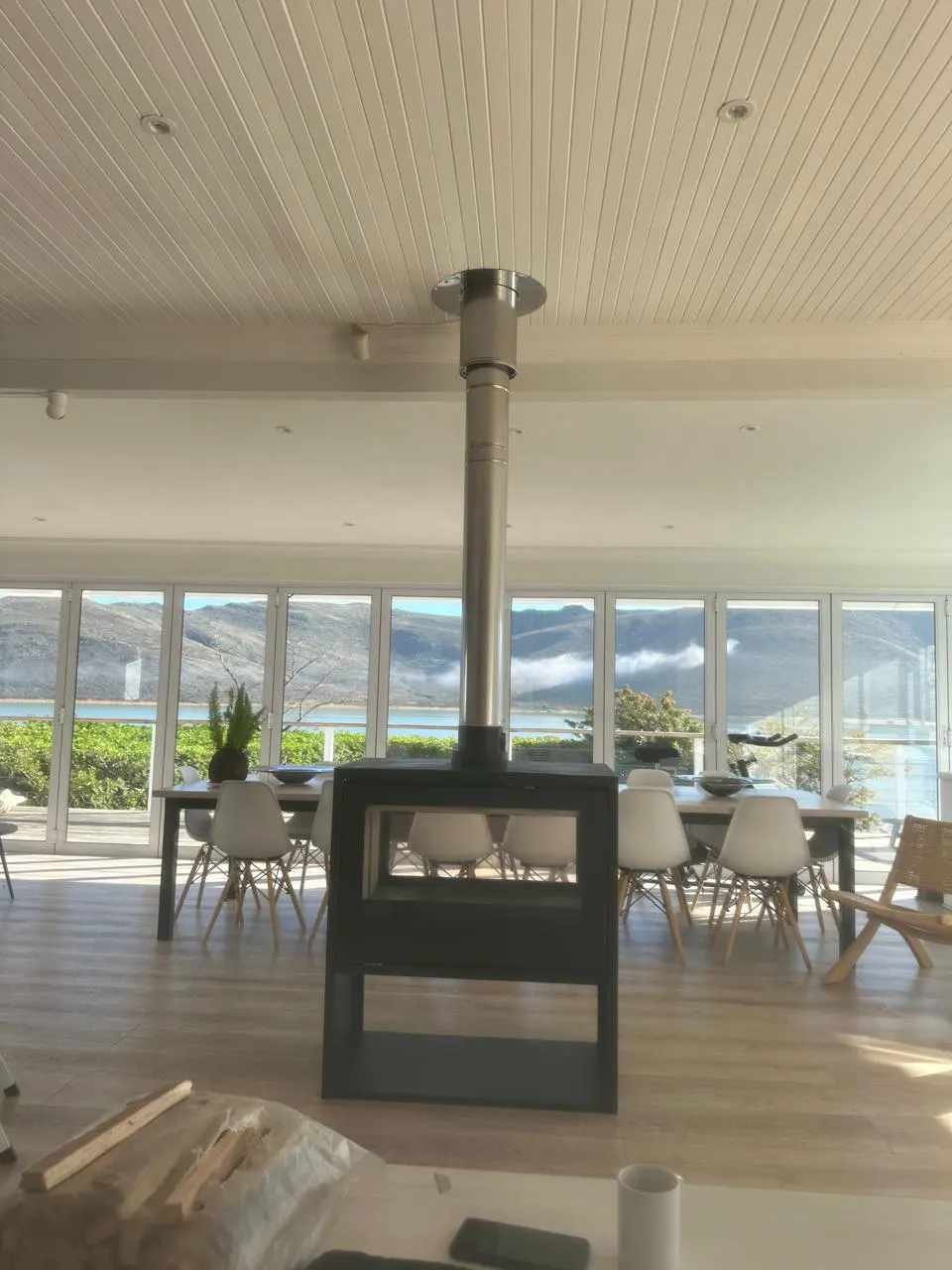
A house, flat or townhouse without a chimney can still have a real fire. Here are the options, from a wood stove with a new flue to gas and bio fireplaces, and what each one needs to be safe.
Quick answer
Yes, you can have a fireplace without a chimney. The main options are a wood stove with a new steel flue through the ceiling and roof, a gas fireplace that vents through an outside wall, a flueless gas fireplace that needs good ventilation, and a bio ethanol fireplace that needs no flue at all. Which one suits you depends on how much heat you want, your roof and walls, and the rules of your complex.
Many people in newer houses, townhouses and flats assume a real fire is off the table because there is no chimney. That used to be true. Today many of the fireplaces our team installs go into rooms that never had a chimney, because a modern steel flue does the same job and takes up far less space.
So if you want an indoor fireplace, no chimney is no longer a reason to give up on the idea. Below we go through each option, what it needs to be safe and legal, and who it suits. The right choice is usually clear once someone has looked at the room, the roof and what is above the ceiling.
Not sure what will work in your home? Send us a photo of the room and tell us if there is a roof or a flat above. We will tell you what is possible.
Can You Have a Fireplace Without a Chimney?
A chimney is just a way to get smoke and fumes out of the house. A brick chimney is one way to do it. A steel flue pipe is another, and it is what almost every closed wood stove and many gas fires use. So the real question is not whether you have a chimney, but whether a flue can leave the room safely.
In a single storey house with a pitched roof, the answer is nearly always yes. In a double storey home, a flue can often run up through a cupboard or along an outside wall. In a flat with neighbours above, a wood fire is usually not practical, but a gas or bio fireplace often is.
Option One: A Wood Stove With a New Flue
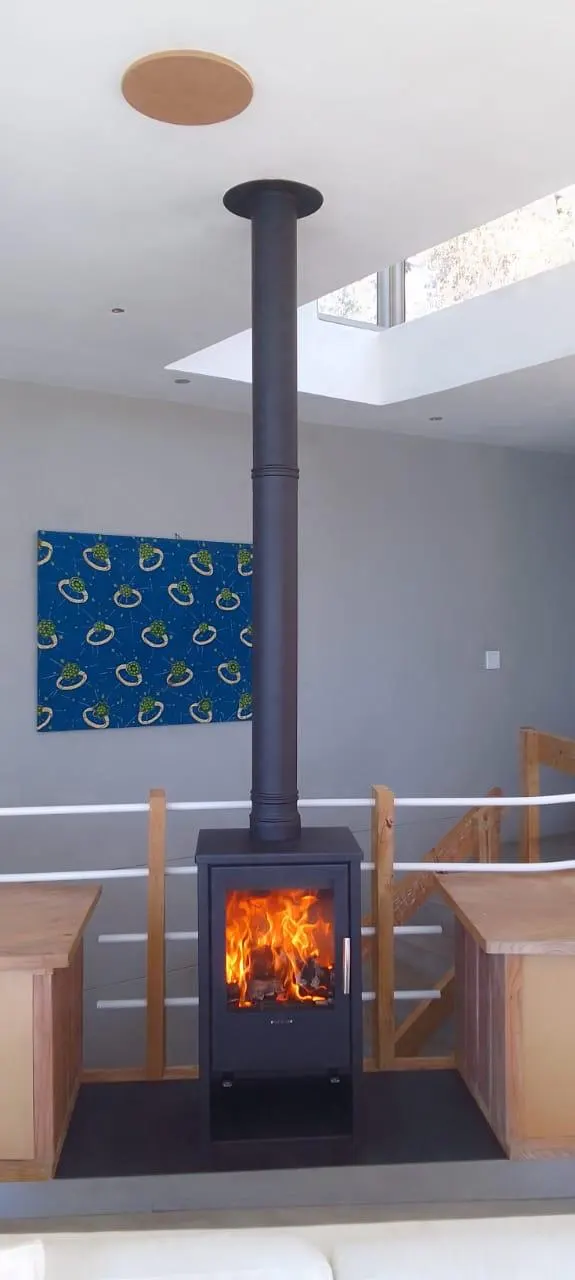
If you want real heat and the crackle of wood, a freestanding stove with its own flue is the best no chimney fireplace you can get. The stove stands on a non combustible hearth or floor plate, and a steel flue runs straight up through the ceiling and roof. Where it passes through timber, the flue switches to an insulated section so nothing near it gets hot.
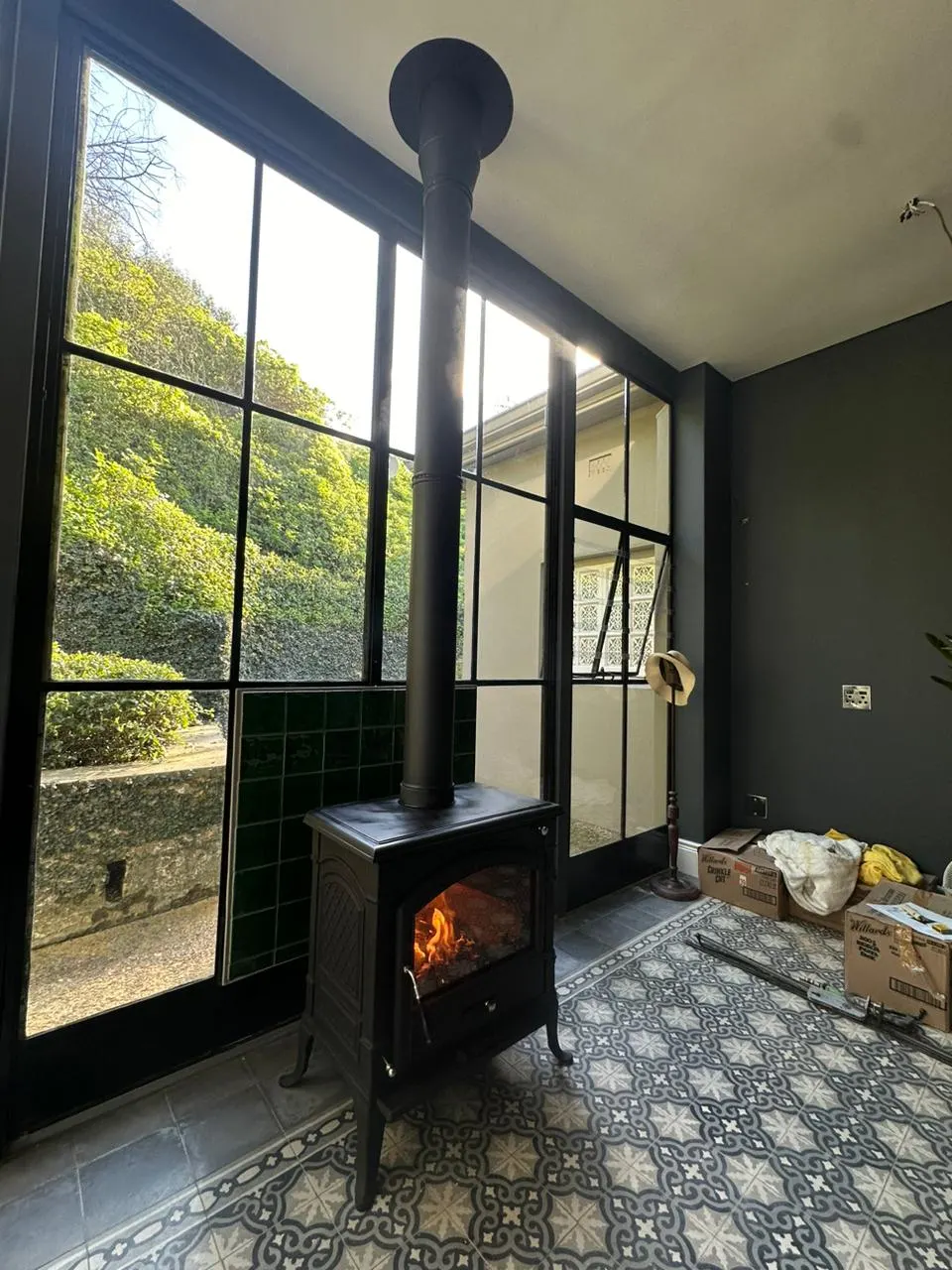
What a wood fireplace without a chimney needs
- A clear route for the flue through the ceiling and roof, or out through a wall
- A non combustible hearth under and in front of the stove
- Safe clearances from walls, furniture and roof timbers
- A roof flashing that suits your roof type, plus a cowl on top
- A flue tall enough above the roof to draw properly
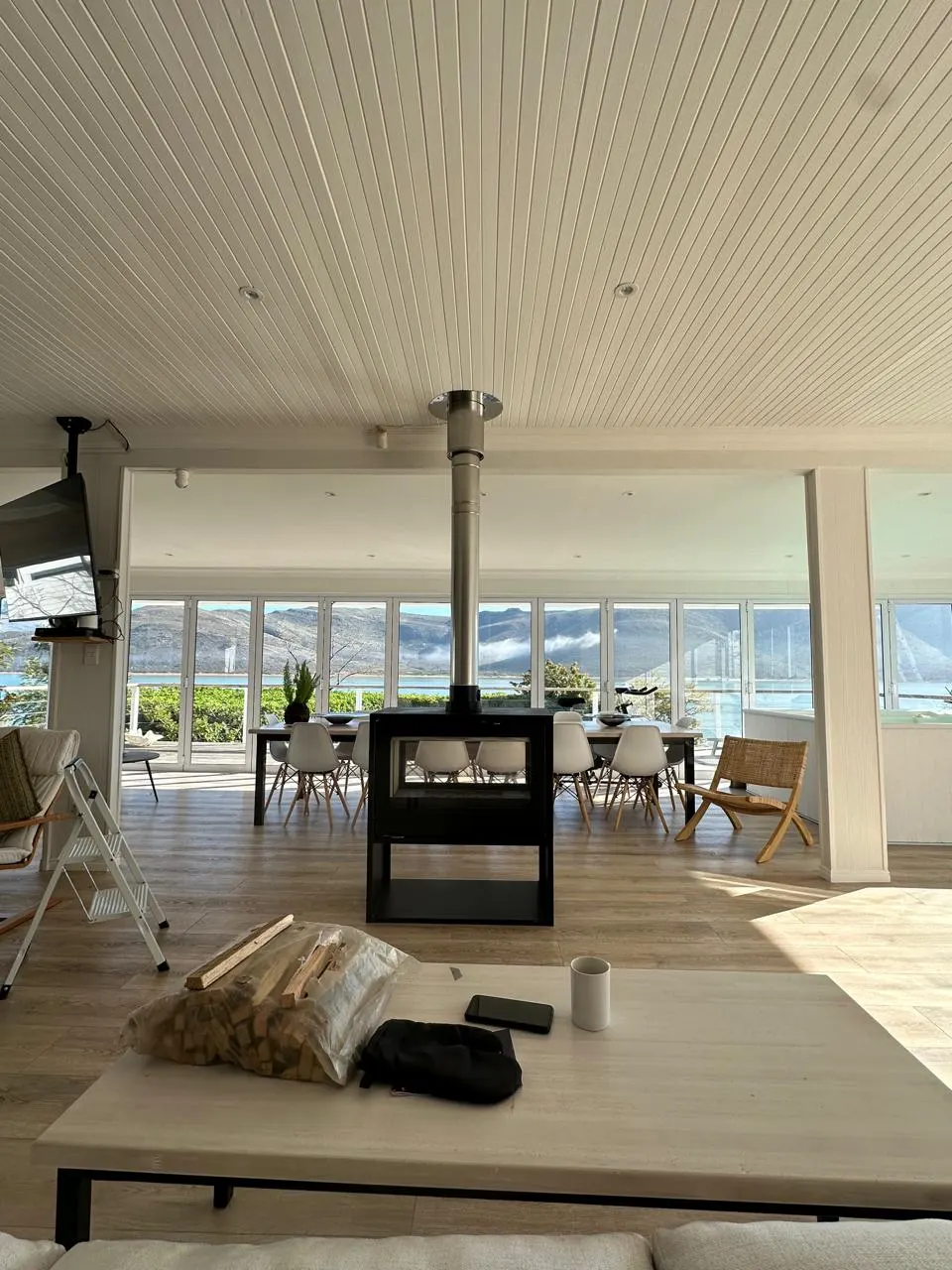
The flue is the part that makes or breaks the job, so it is worth reading up on fireplace flue installation before you buy a stove. If you like the idea of a stove that stands on its own in the middle of a room, our guide to the standalone fireplace shows some of the styles.
Option Two: A Gas Fireplace Without a Chimney
A gas fireplace gives you a real flame at the push of a button, with no wood to carry and no ash to clean. Many gas fires are made to vent through an outside wall with a short flue, so they suit homes where a flue cannot go up through the roof. This makes gas a strong choice for townhouses and some flats.
Gas work in South Africa must be installed by a registered gas installer, who signs off the job with a certificate of compliance (CoC). Our gas fireplace installers near me team handles the fire and the gas line, and you can read more about the paperwork on our gas installation and CoC page.
Flueless gas fireplace: what to know
A flueless gas fireplace burns indoors with no flue at all. It is the easiest gas option to fit, but the room needs enough fresh air, because the fumes stay inside. Most flueless units have an oxygen depletion sensor that shuts the gas off if the air gets stale. They are not suited to small rooms, bedrooms or bathrooms, and the maker sets a minimum room size. Body corporates and estates may also have their own rules, so check before you buy.
⚠ Safety first
Any fire that burns indoors produces carbon monoxide, which you cannot see or smell. Keep the room ventilated, have gas appliances serviced, and fit a carbon monoxide alarm. Our guide to carbon monoxide safety explains the warning signs.
Thinking about gas? Our team will check the wall, the gas supply and your complex rules, then give you a written quote that includes the CoC.
Option Three: What Is a Bio Fireplace?
A bio fireplace burns bio ethanol, a liquid fuel made from plant material. It burns with a clean, real flame and gives off mostly heat, steam and carbon dioxide, so it needs no flue or chimney. Bio fires come as tabletop units, wall mounted boxes and burners that sit inside a built surround.
The trade off is heat. A bio fireplace warms a small area and looks lovely, but it will not heat a large lounge on a cold Cape Town night the way a wood stove will. The room still needs some ventilation, and the fuel must only be added once the burner has cooled down. Our comparison of bio fireplaces and gas goes into the pros and cons.
Fireplace Without a Chimney: Options Compared
| Option | Heat output | Needs | Best for |
|---|---|---|---|
| Wood stove with new flue | High, heats a whole open-plan area | Flue route through roof or wall, hearth | Houses with a roof above the room |
| Gas fire, wall vented | Medium to high | Outside wall, gas supply, CoC | Townhouses, double storeys, some flats |
| Flueless gas fire | Medium | Ventilation, room size, gas supply, CoC | Larger rooms where no flue can go |
| Bio fireplace | Low | Some ventilation, safe fuel storage | Flats and small spaces, mainly for looks |
If you are still torn between real wood and gas, our guide on gas vs wood burning fireplaces compares running, upkeep and feel.
Why Cape Town Homeowners Choose Fire Flames
Our team installs wood stoves, gas fires and flues in homes across Cape Town, from new builds in the northern suburbs to older houses in the Southern Suburbs and apartments along the Atlantic seaboard. Many of these homes had no chimney when we arrived. We check the roof, the walls and what is above the ceiling, then tell you honestly which option will work.
If your home has no chimney and you are looking for fireplace installers near me, our installation page shows the kinds of fires we fit. Every job starts with a site visit and a written quote.
Tell us about your room and send a photo. We will come out, check the flue route and give you a written quote with no obligation.
Fireplace Without a Chimney: Common Questions
Can you install a fireplace without a chimney?
Yes. Most modern stoves and many gas fires use a steel flue instead of a brick chimney. The flue runs up through the ceiling and roof or out through a wall. Bio fireplaces and some gas fires need no flue at all.
Can you have a wood fireplace without a chimney?
Yes, but it still needs a flue. A wood fire always makes smoke, so a closed wood stove with a steel flue is the safe way to do it. Open wood fires with no flue are never safe indoors.
Can you have a gas fireplace without a chimney?
Yes. Many gas fireplaces vent through an outside wall, and flueless gas fires need no flue but do need good ventilation. Either way, a registered gas installer must fit it and issue a certificate of compliance.
What fire can you have without a chimney in a flat?
In a flat with neighbours above, a gas fire that vents through an outside wall, a flueless gas fire or a bio fireplace are the usual choices. Check your body corporate rules first, as some buildings limit gas or open flames.
Is a fireplace without a chimney safe?
It is safe when it is the right type for the room and installed properly. Flued stoves and gas fires carry fumes outside, while flueless and bio fires need ventilation. Fit a carbon monoxide alarm with any indoor fire.
Planning this kind of work?
Call or WhatsApp with your suburb and photographs. Fire Flames can discuss your fireplace, braai or home project and quote.
Get A Quote →