New Flue Installation
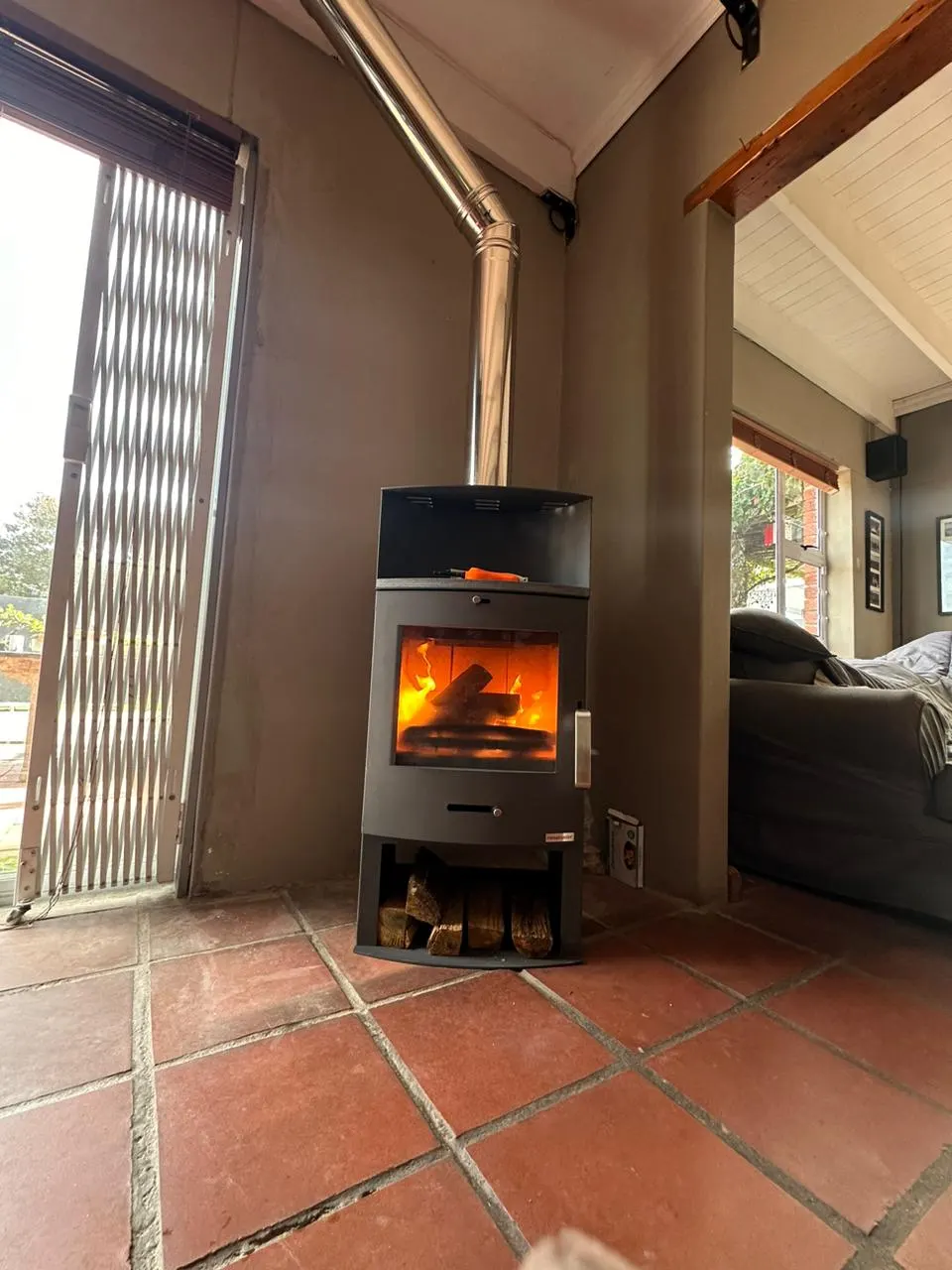
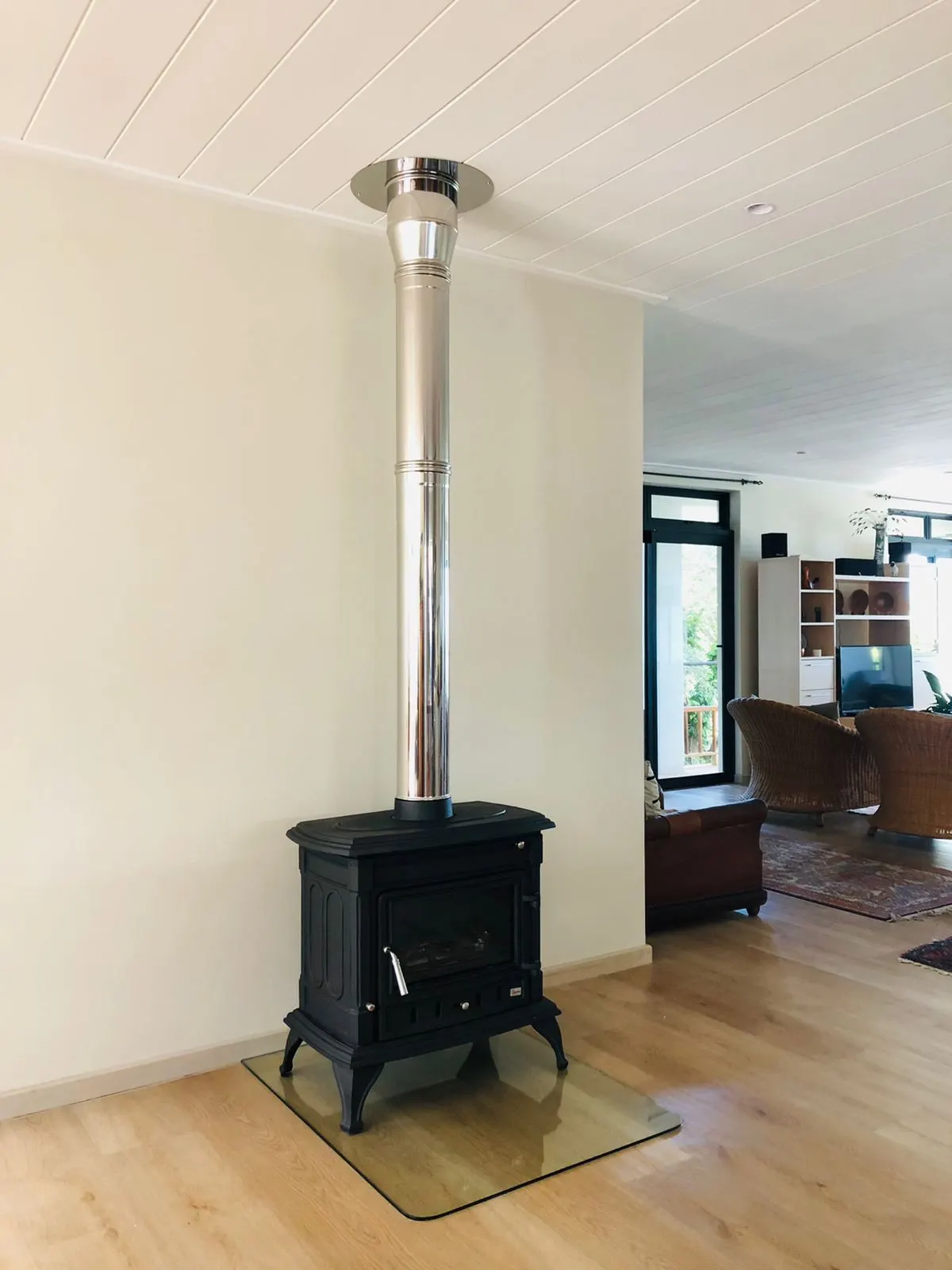
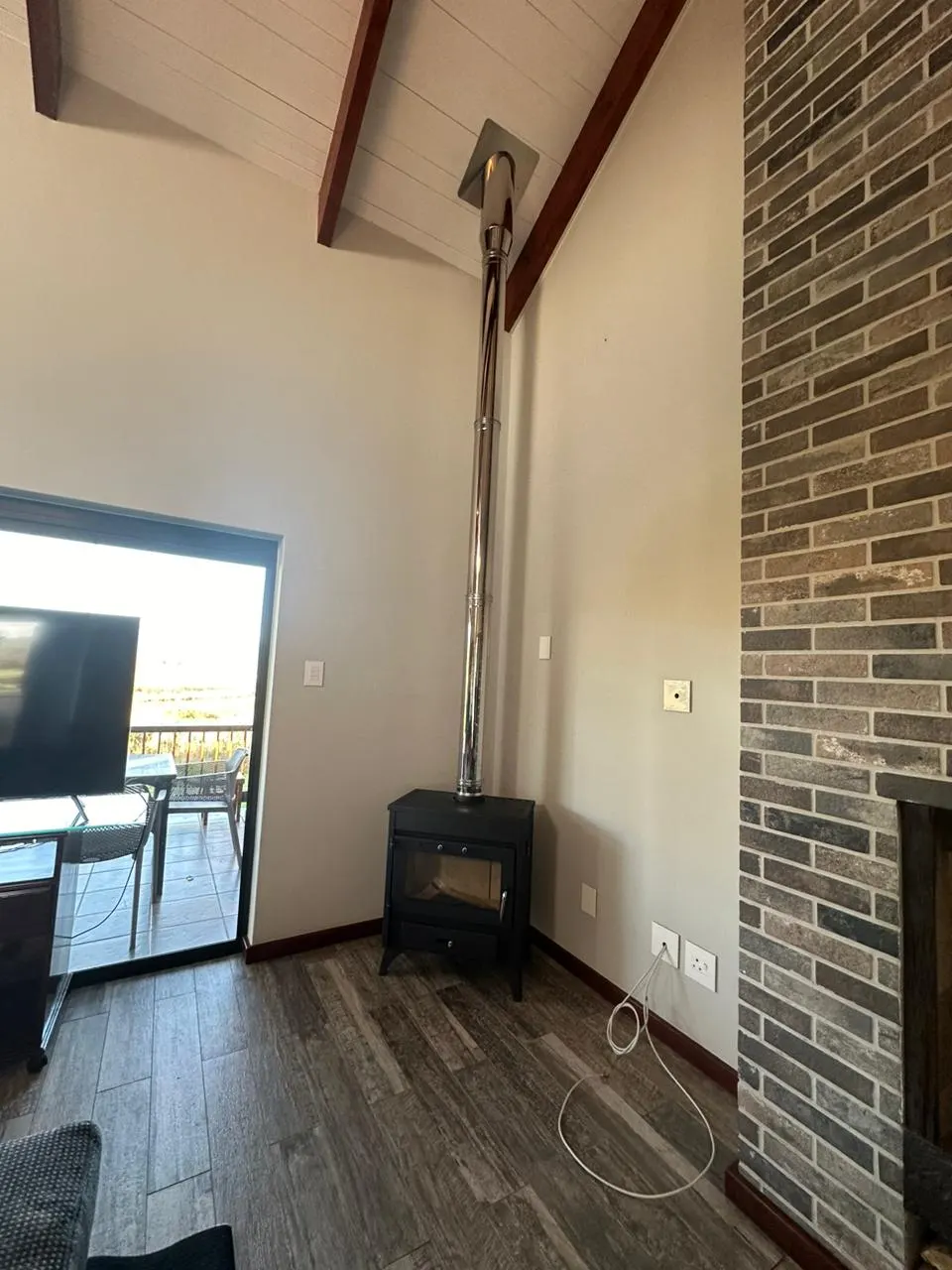
- Flues for new fireplaces and stoves
- Straight runs through ceiling and roof
- Offsets and bends where needed
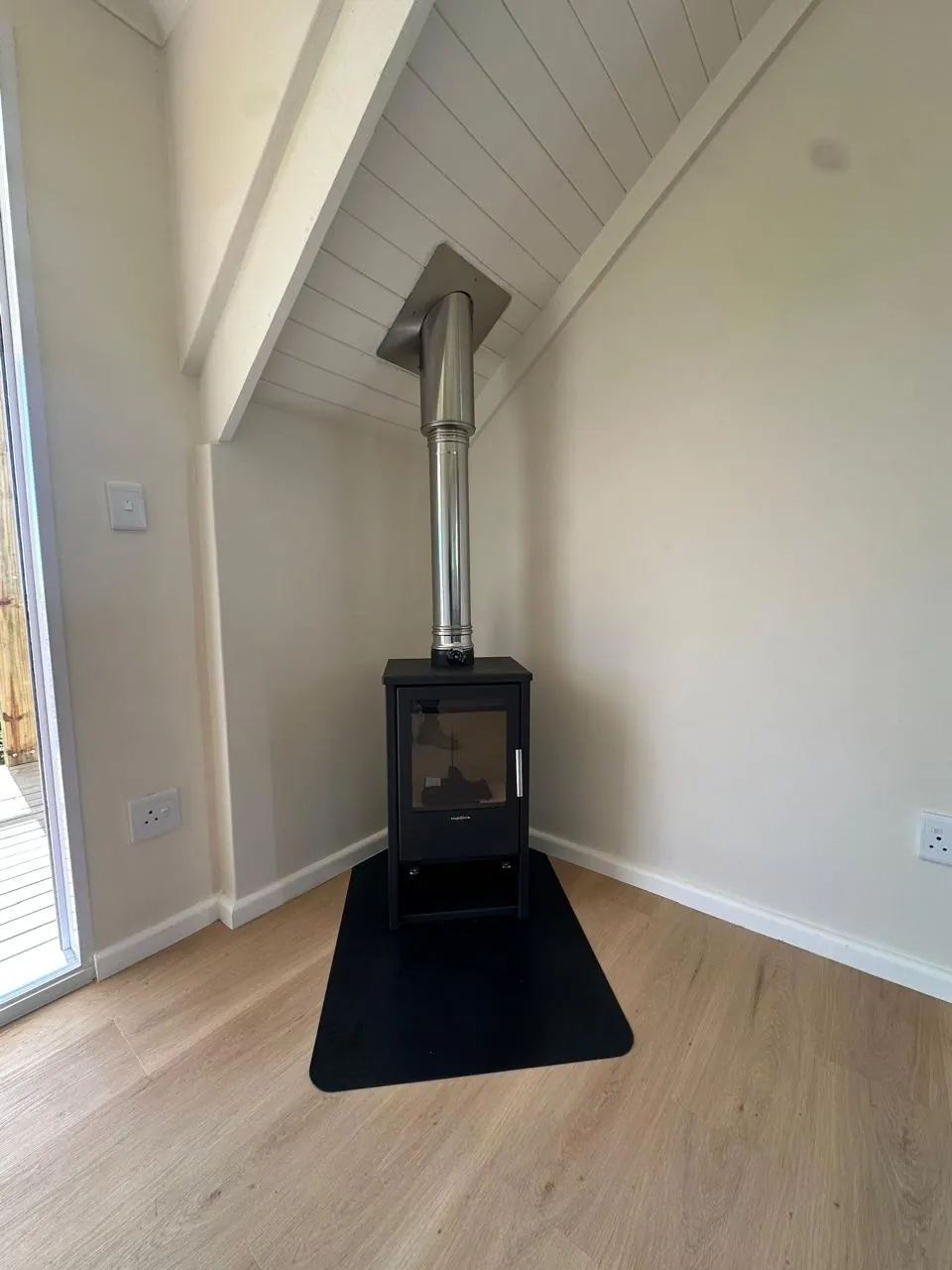
- Ceiling plates and support brackets
- Double skin through ceilings and roofs
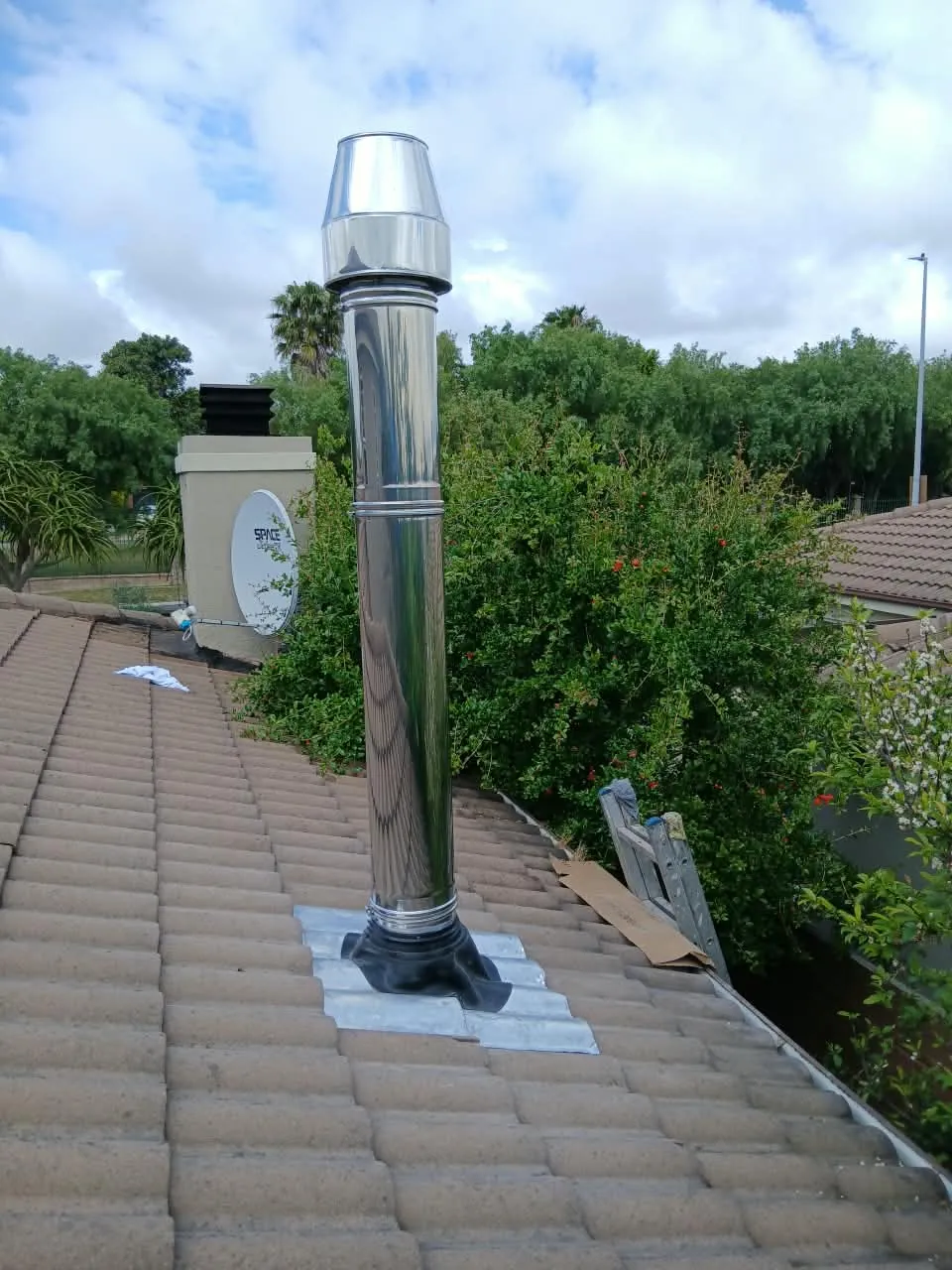
- Cowl fitted at the top
Good flue installation decides whether a fireplace draws cleanly or fills the room with smoke. Our team fits new flues and replaces rusted or wrong-sized ones across Cape Town, from single-storey cottages to double-storey runs up the outside wall.
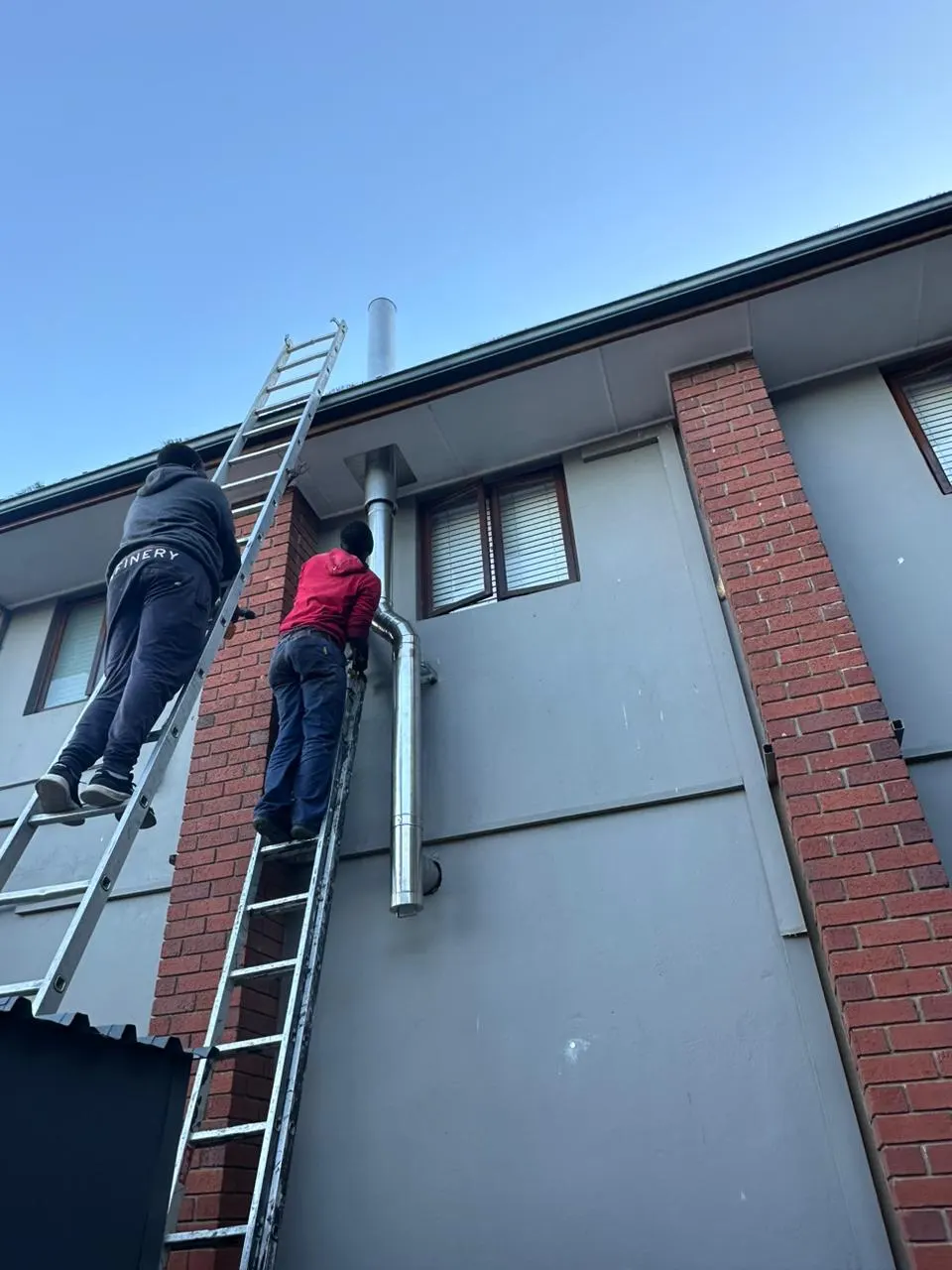
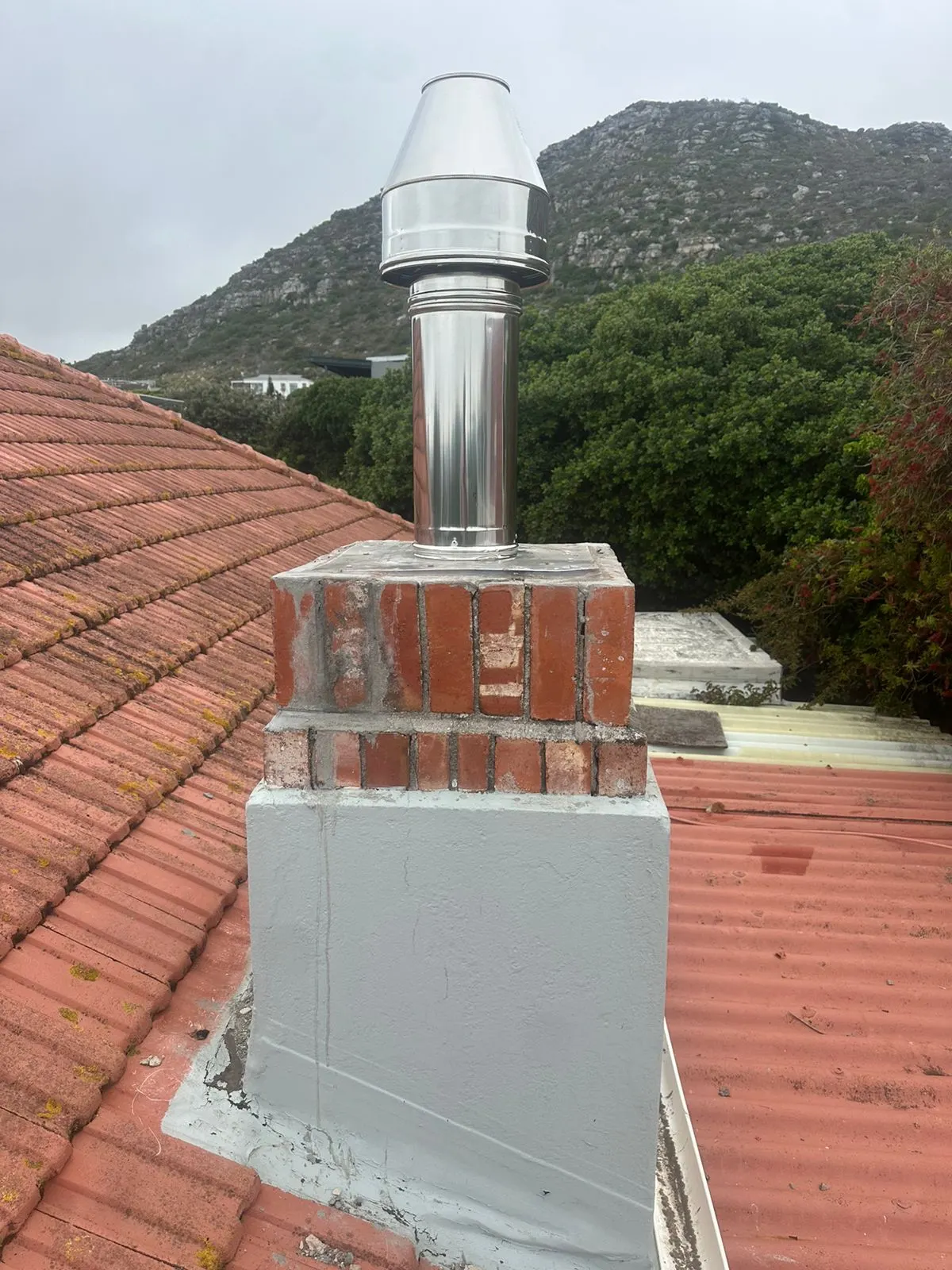
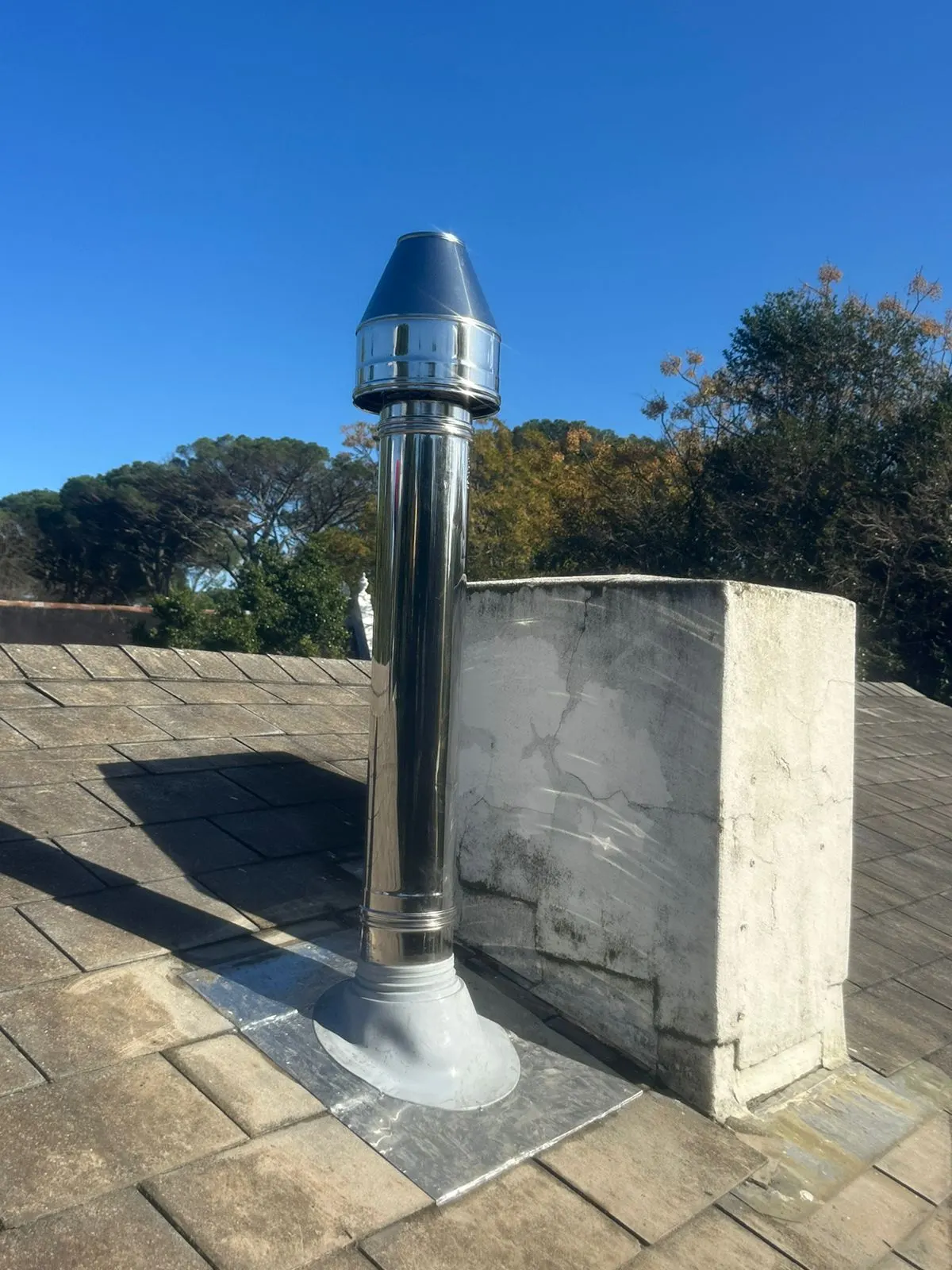
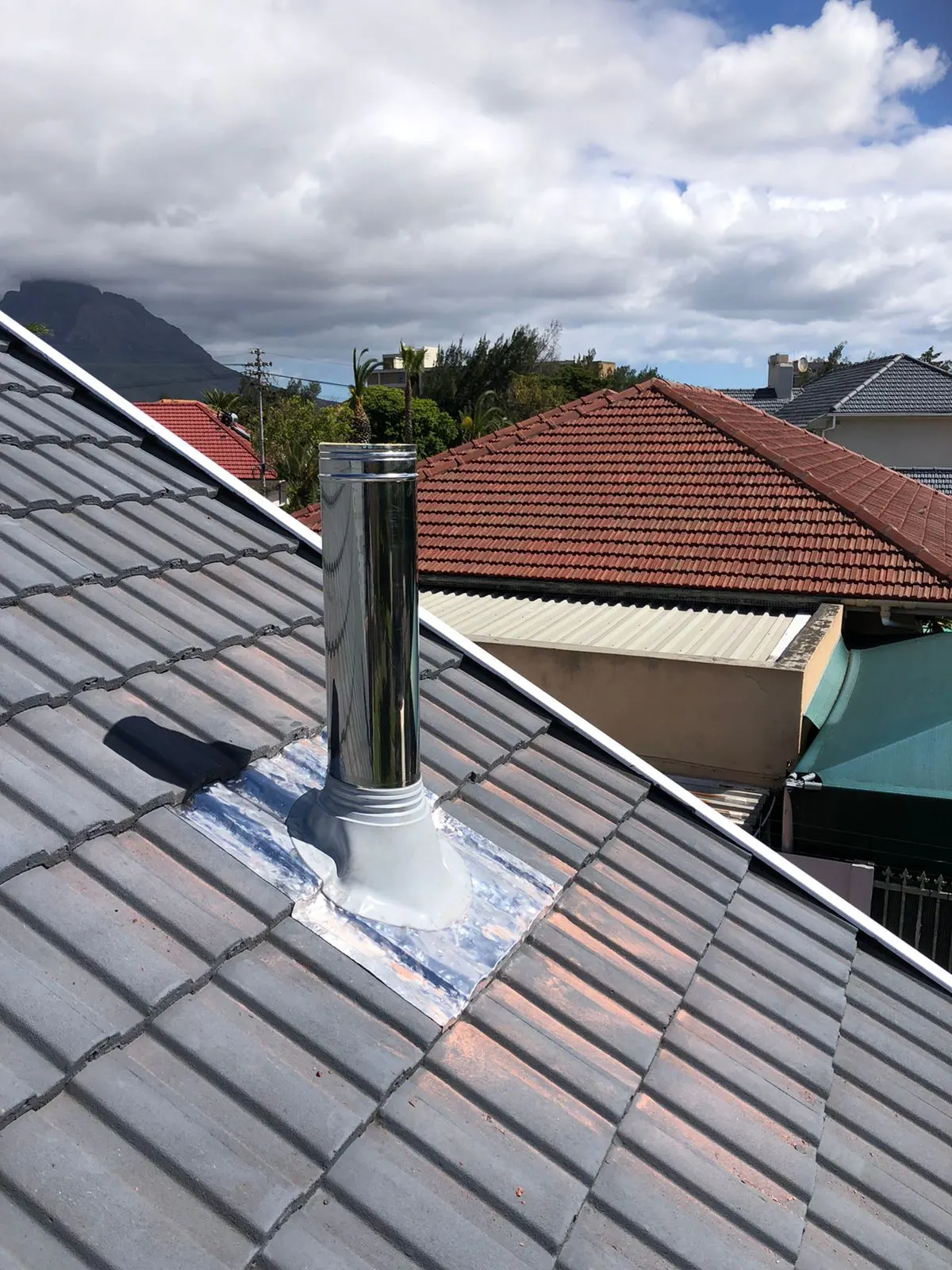
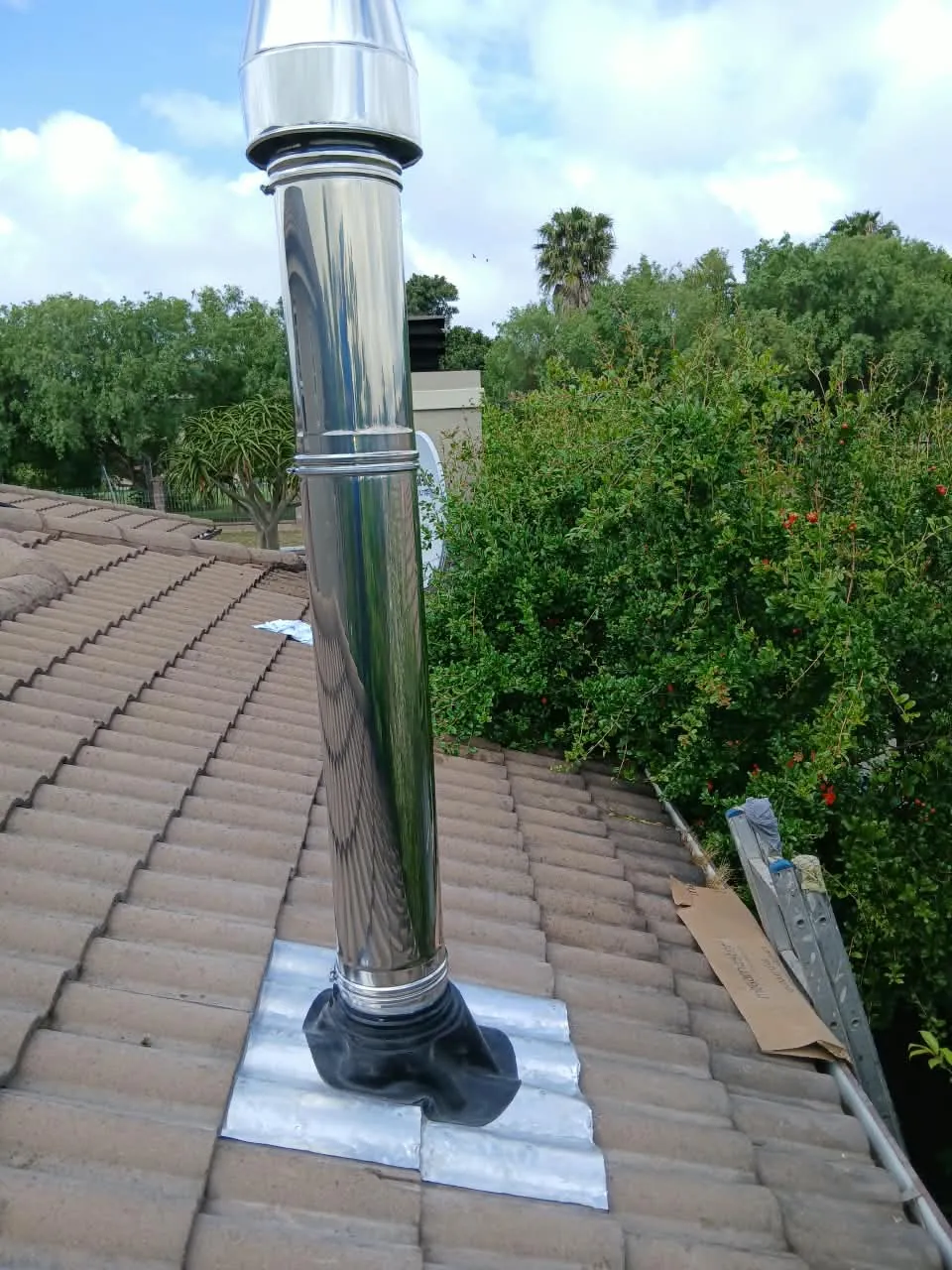
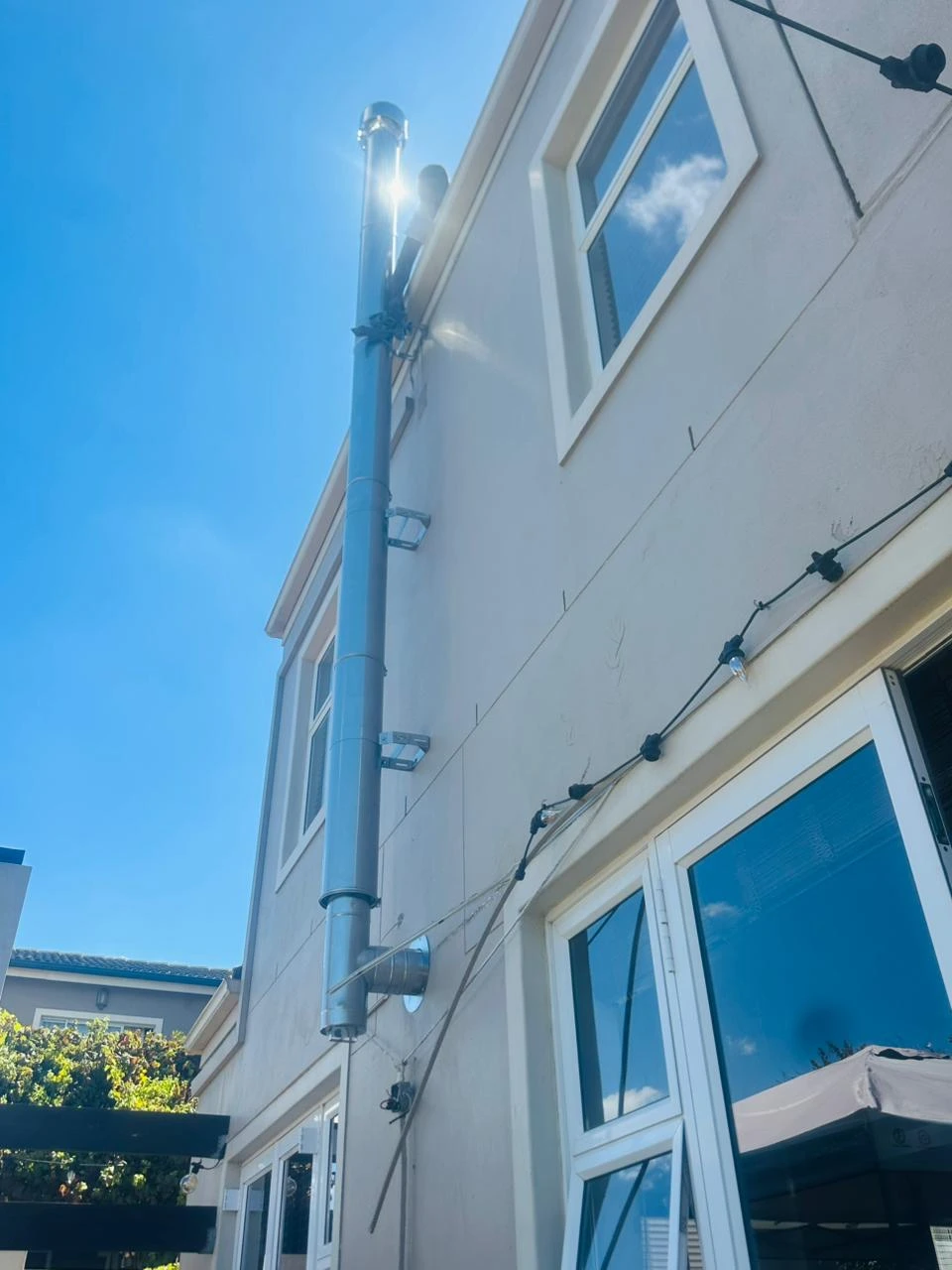
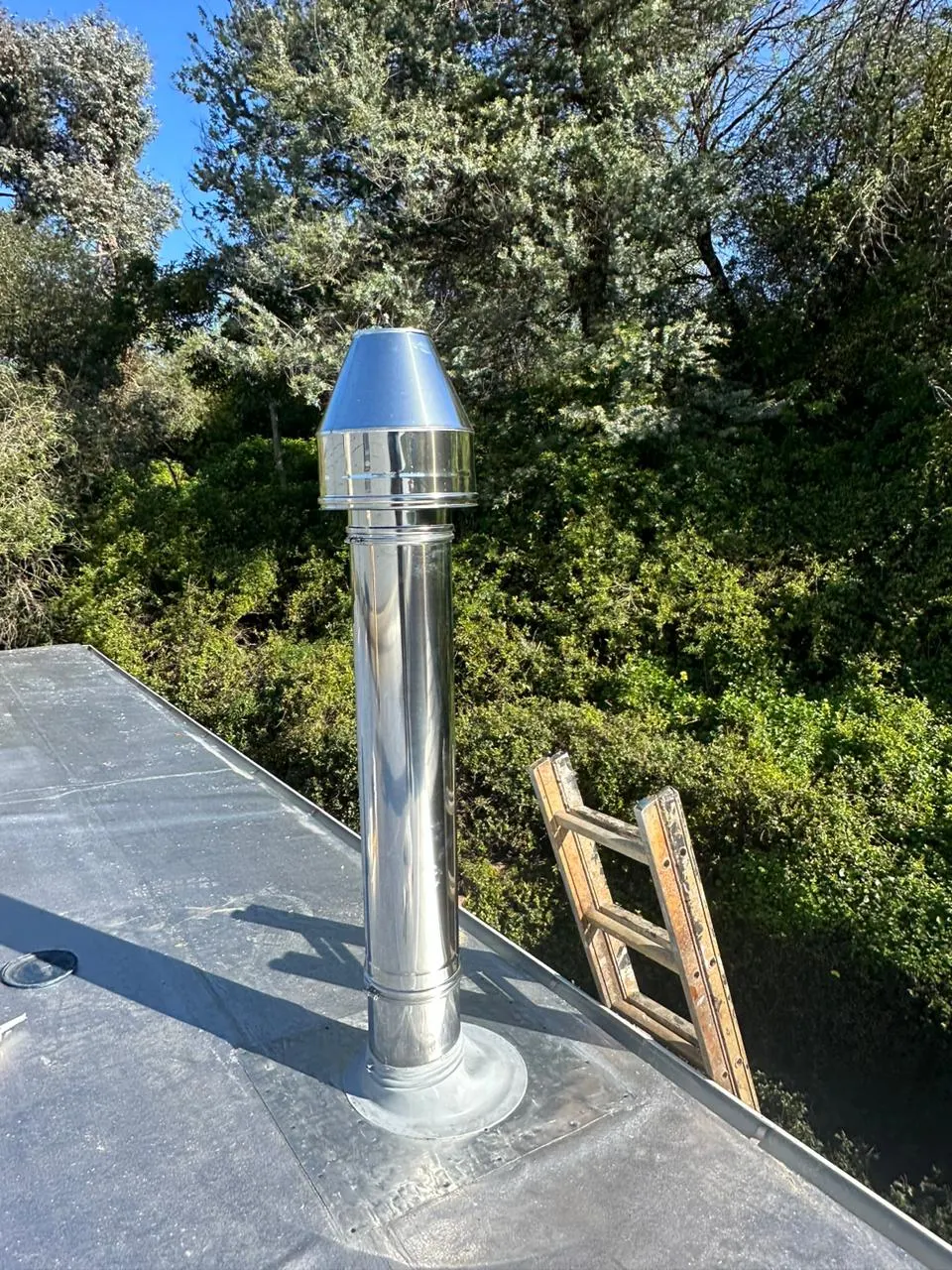
The flue is the engine of a fireplace. It has to match the diameter of the fireplace outlet, be tall enough to draw, and be sealed at every joint. A flue that is too narrow, too short or full of bends will smoke, no matter how good the fireplace is.
Cape Town is hard on flues. Salt air rusts cheap steel, winter rain finds any gap in the flashing, and the south-easter pushes smoke back down short flues. We use stainless steel, fit double skin insulated sections through ceilings and roof space, and finish the top high enough to clear the roof and the wind.
For the cap on top, see our chimney cowl installation page. For more on flue types, read our complete guide to fireplace flues in South Africa.
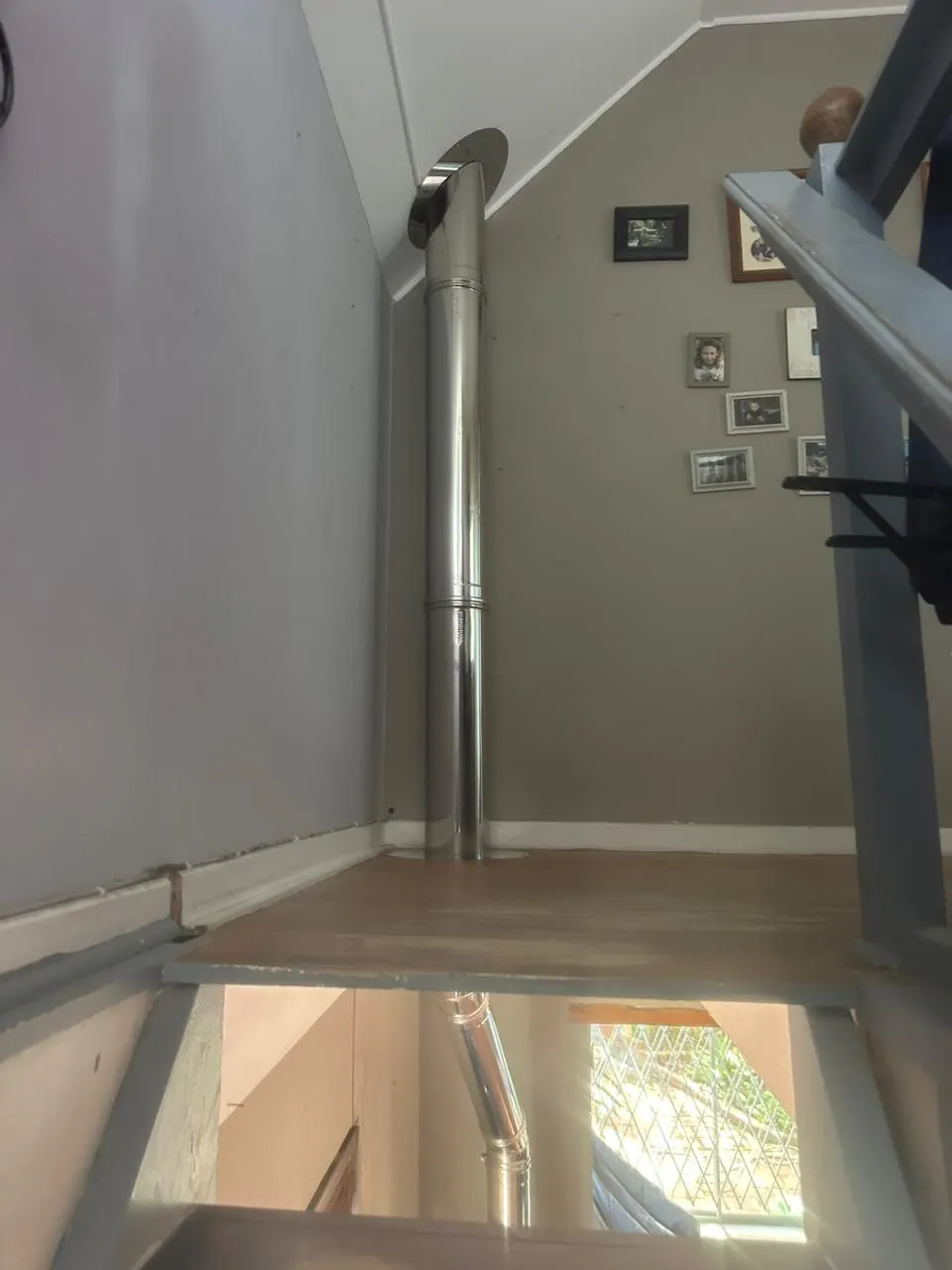
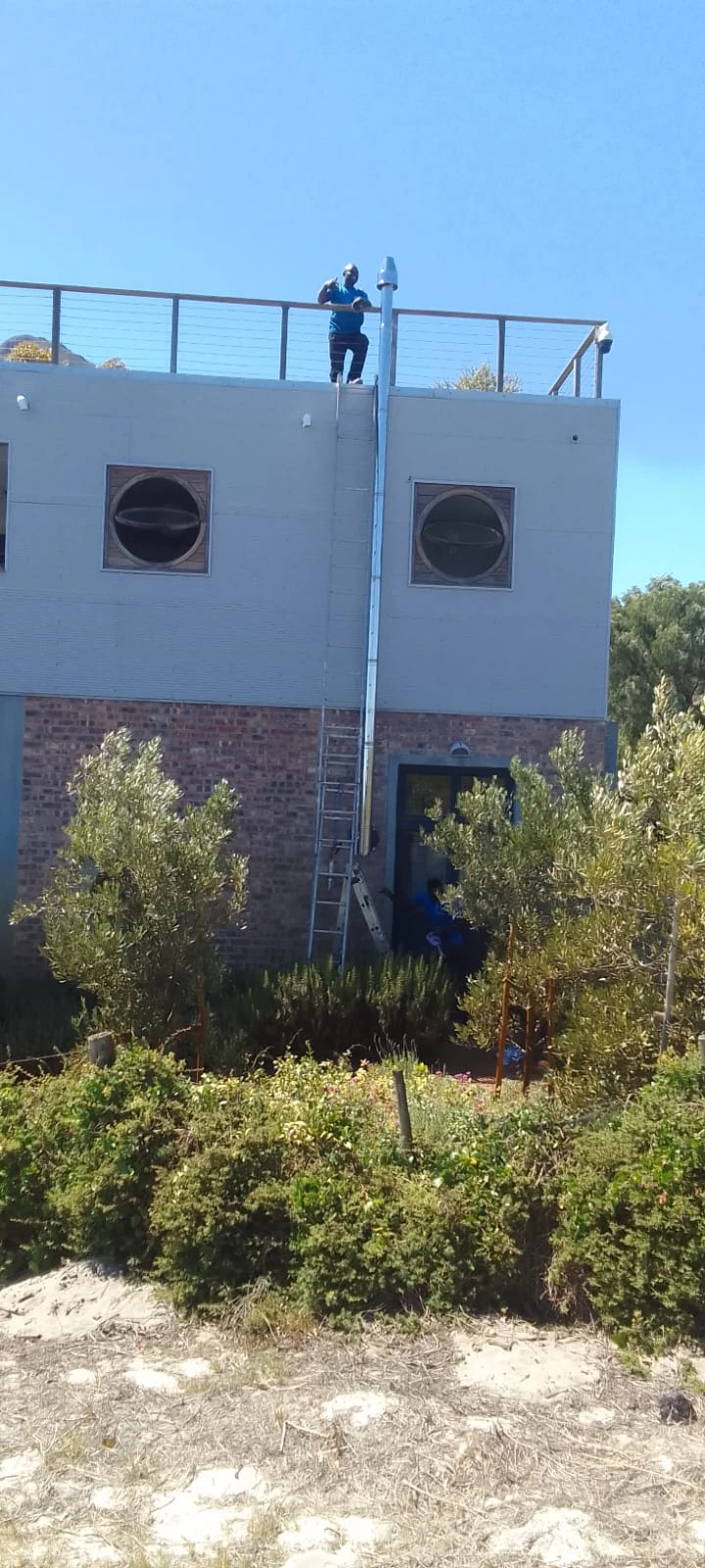
Every house and every roof is different, so we quote after seeing the route. These are the things that change it.
Length of the run. A single-storey run is shorter than a double-storey run or a flue up the outside wall.
Single or double skin. Double skin insulated flue costs more, but it is needed where the flue passes through ceilings, timber and roof space.
Bends and offsets. Each bend adds parts and labour, and too many bends hurt the draw.
Roof type. Tile, metal sheeting, slate and flat concrete roofs each need different flashing.
Old flue removal. Taking out a rusted flue or lining an old brick chimney adds time.
1. Photos and model. Send photos of the fireplace, the ceiling and the roof, plus the fireplace make and model.
2. Plan the route. We work out the straightest route, the flue size, and where single or double skin is needed.
3. Quote and parts. You get a written quote, and the flue sections, flashing and cowl are ordered to size.
4. Cut and fit. We cut the ceiling and roof openings, fit the ceiling plate and supports, and join the sections.
5. Flash and seal. The roof flashing is fitted and sealed so the opening stays dry through winter.
6. Cowl and test. The cowl goes on top, and we test the draw with a fire before we leave.
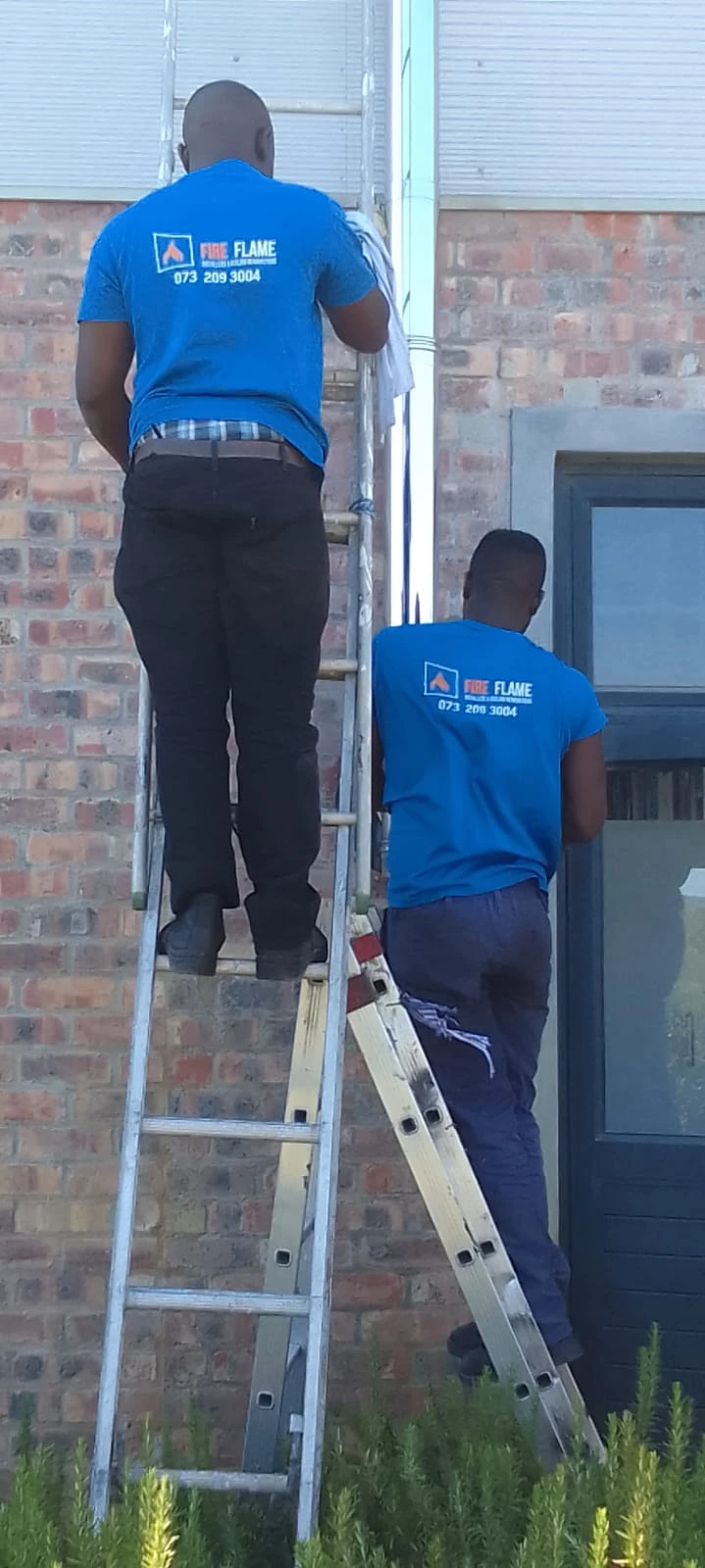
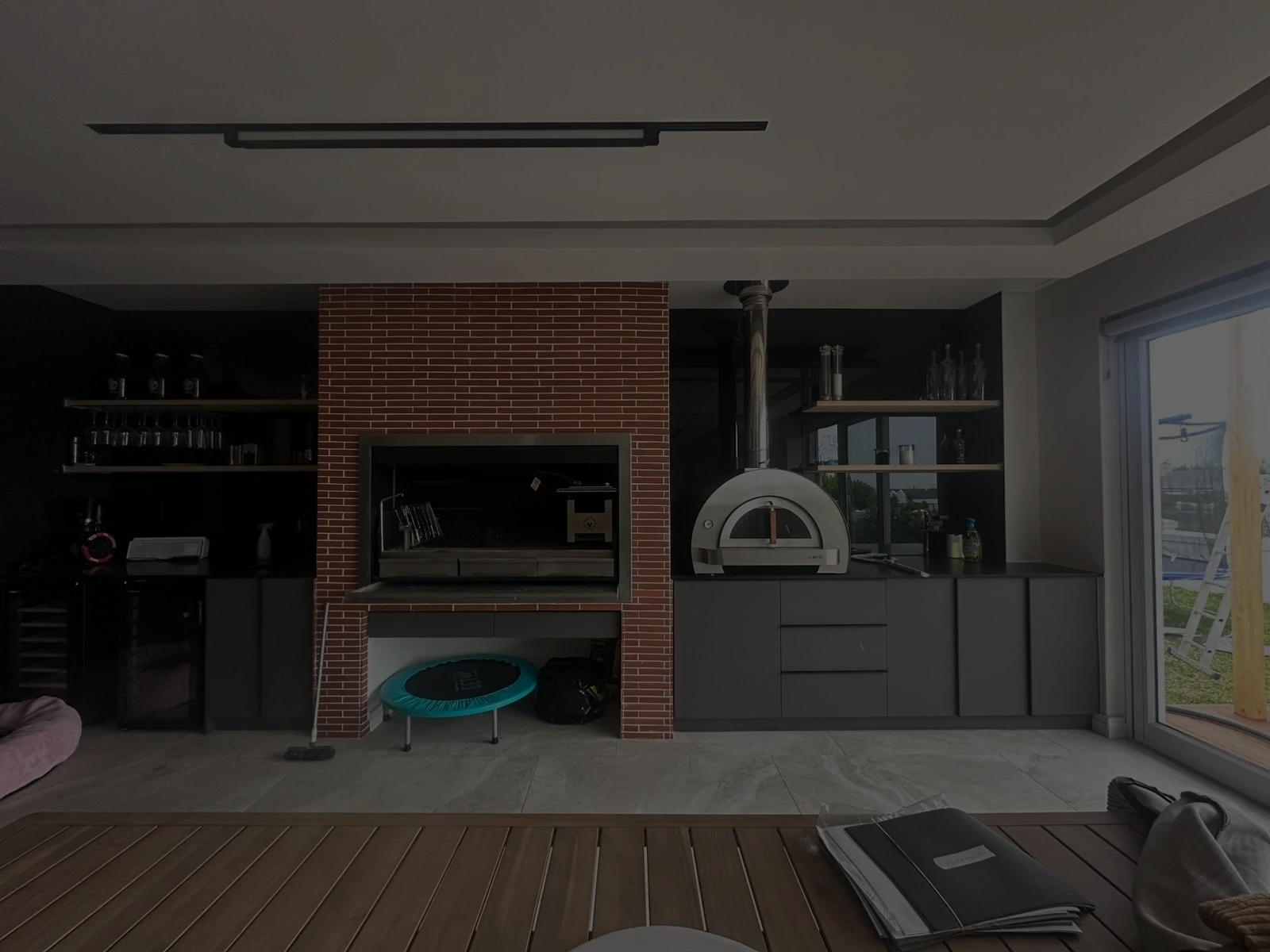
Flues, flashing and roof work from recent Cape Town jobs, photographed on site.
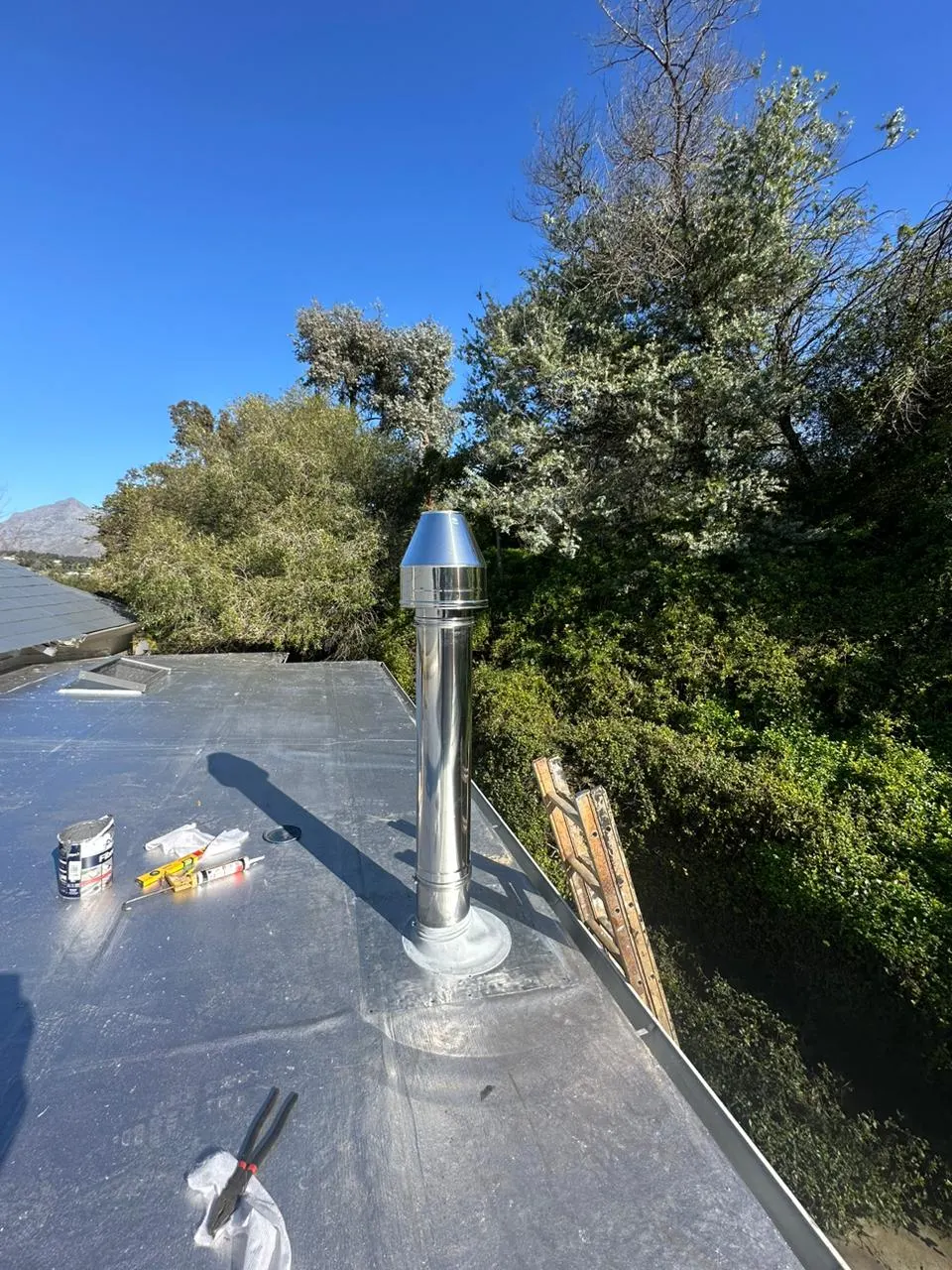
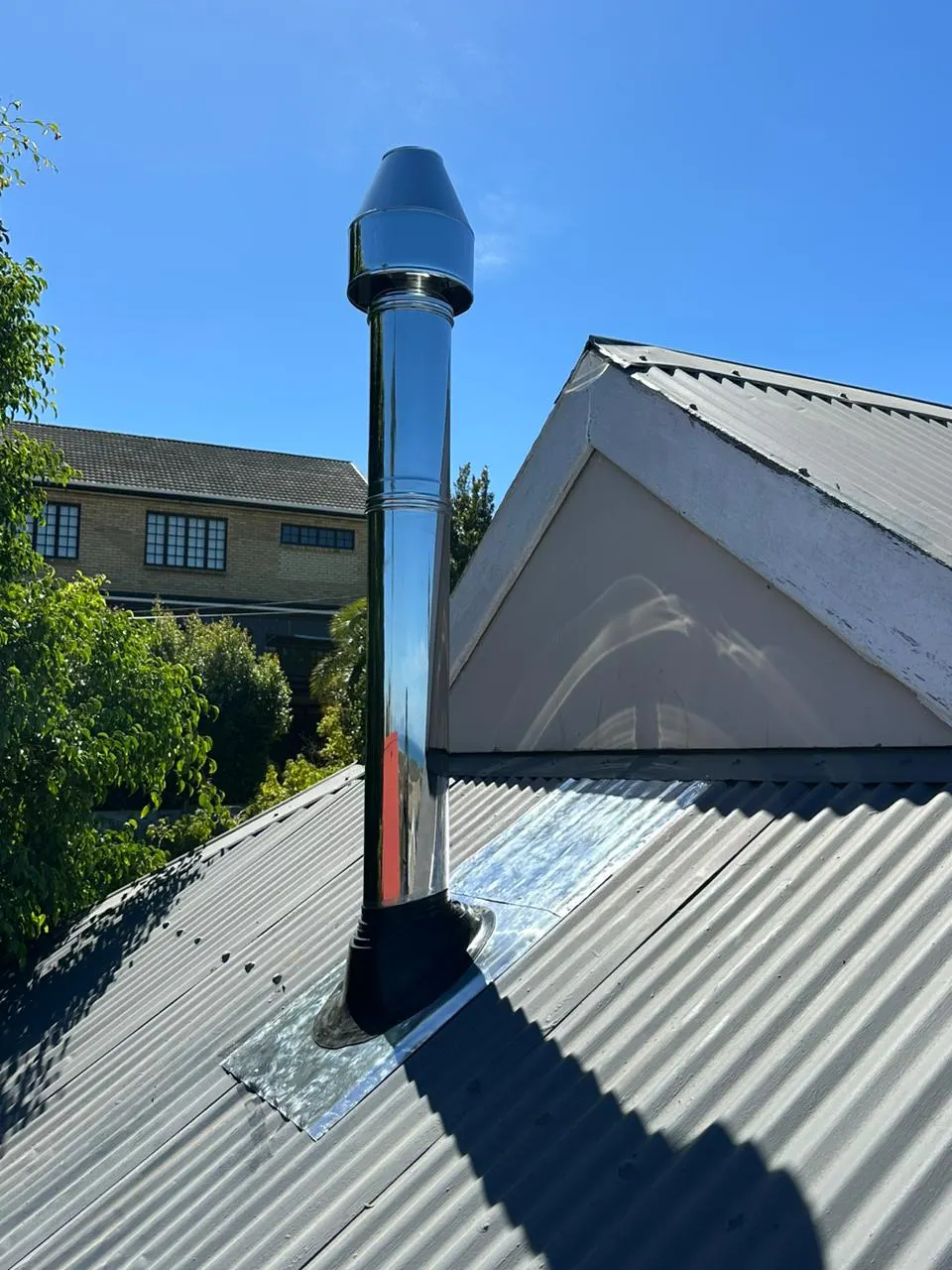
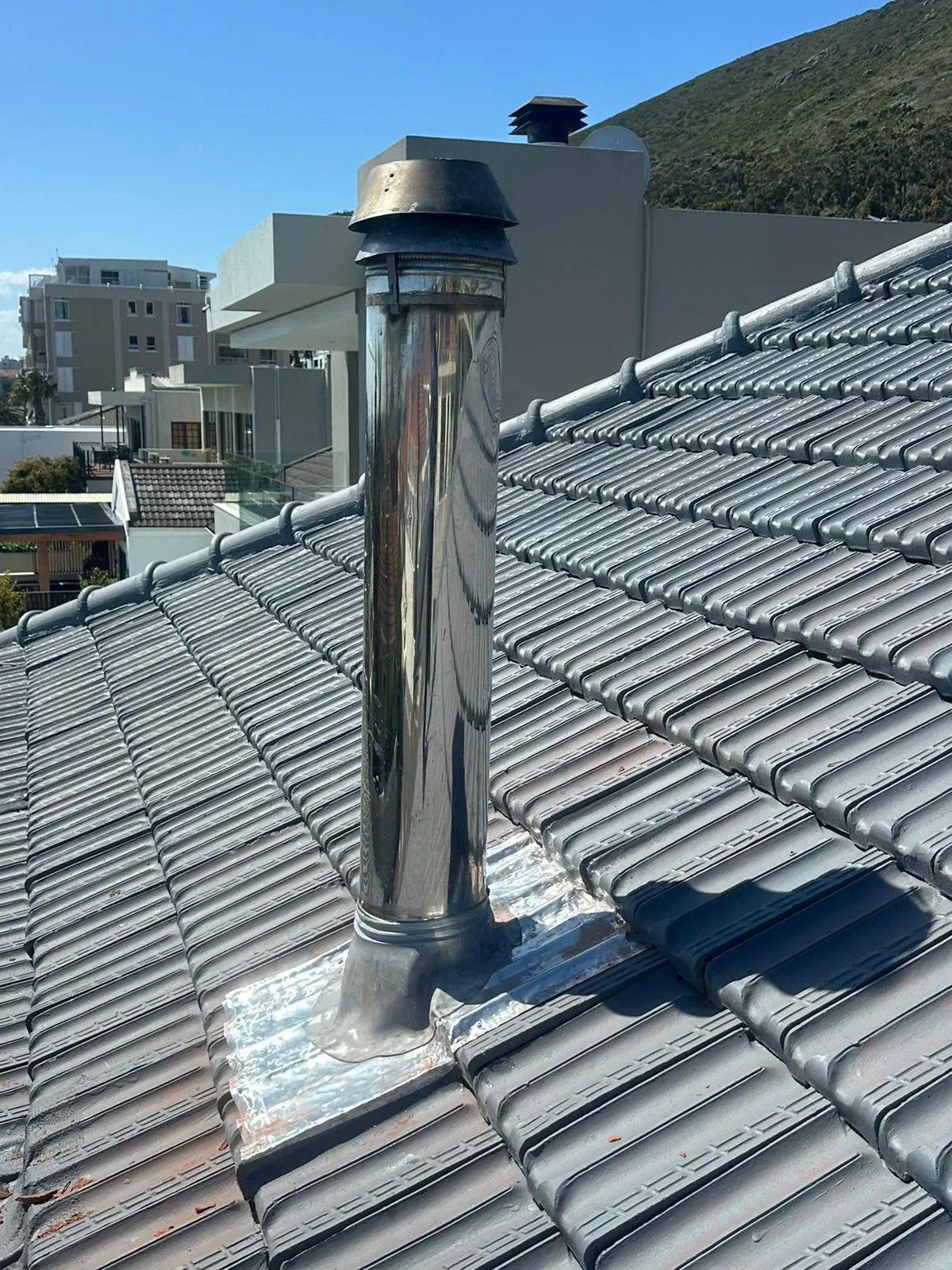
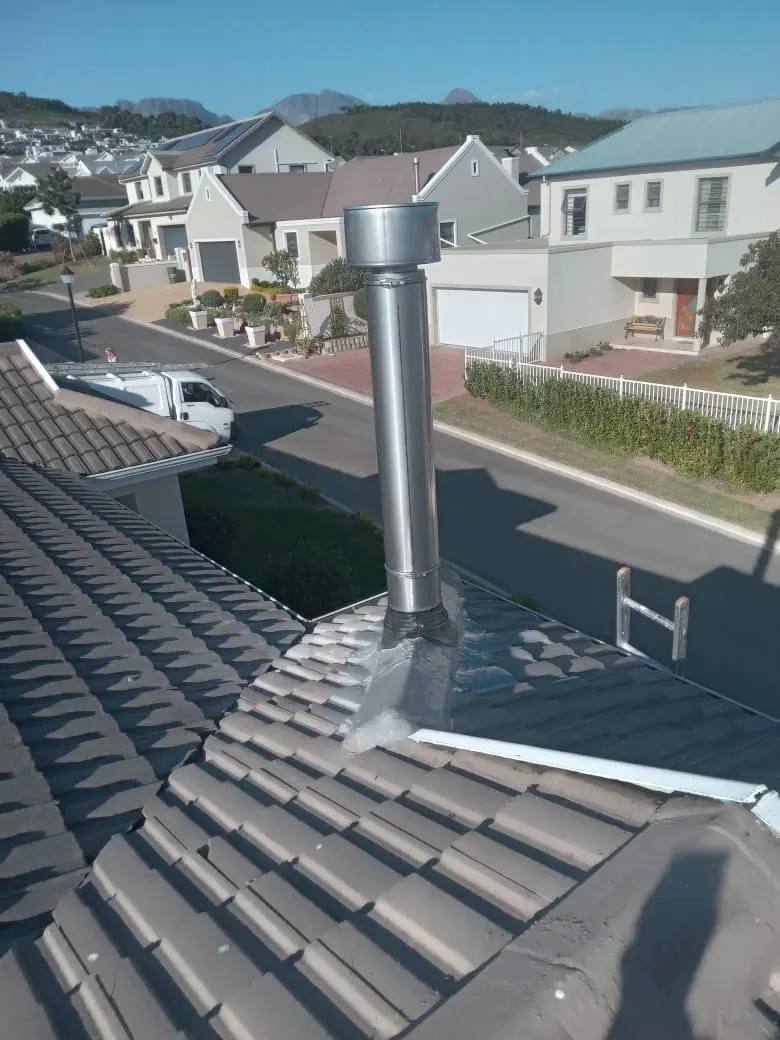
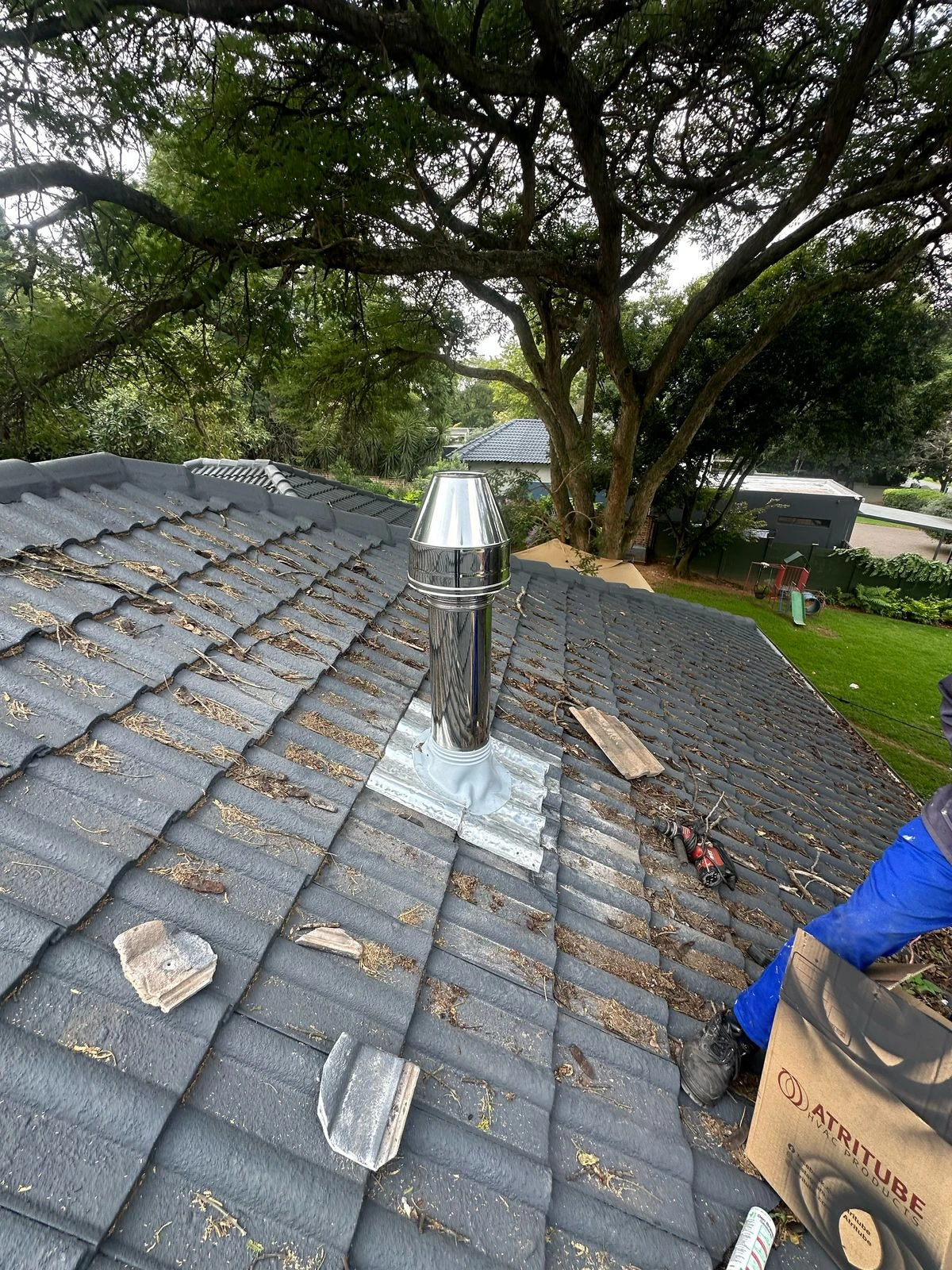
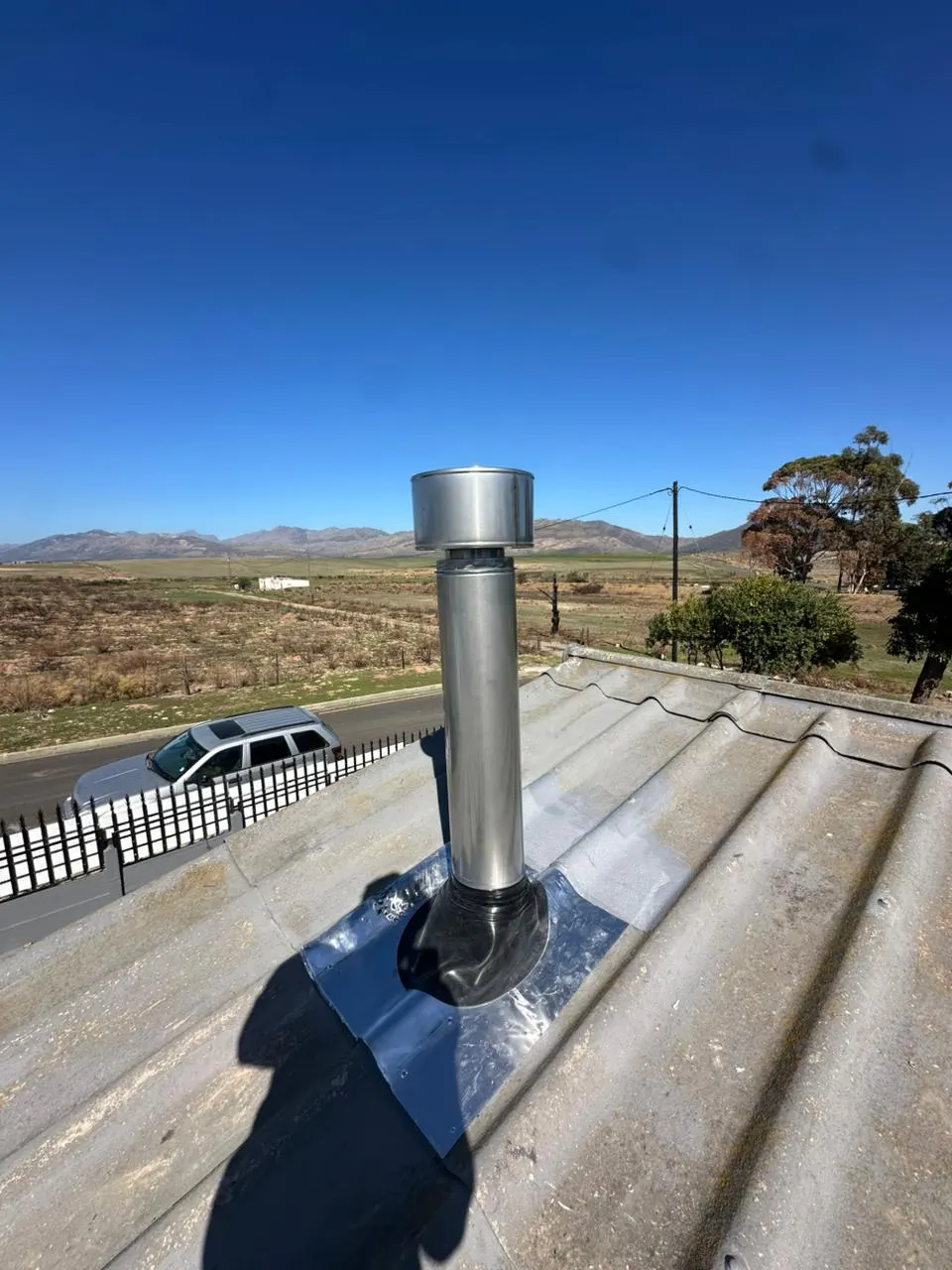
Send us photos of the fireplace and the roof, and we will tell you what it needs.
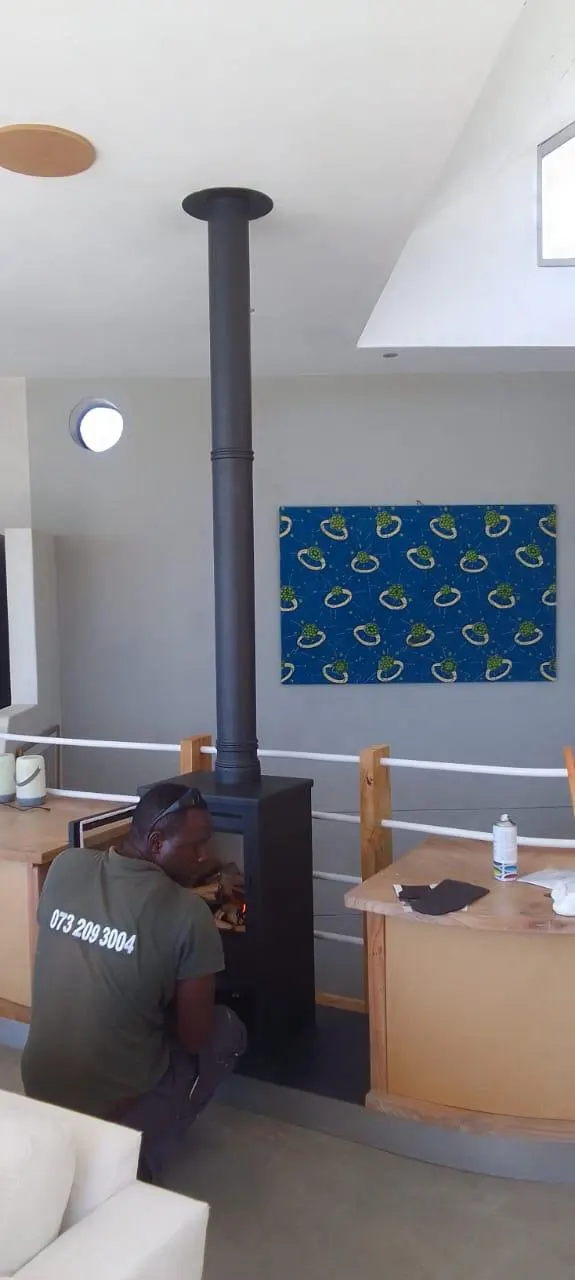
Two-storey runs. A flue that passes through an upper floor, or climbs the outside wall, to clear the roof.
Liners in old chimneys. A steel liner run down an old brick chimney so a closed fireplace can use it safely.
Wrong-sized flues. Replacing a flue that is narrower than the fireplace outlet, a common cause of smoke.
Rusted flues. Swapping corroded sections for stainless steel, especially close to the sea.
Short flues. Adding length so the top clears the roof ridge and the wind.
High enough to clear the roof ridge and nearby walls, so the wind does not blow smoke back down. The exact height depends on the fireplace manual, the roof shape and SANS 10400. We check this on site before we cut.
A single skin flue is one steel pipe. A double skin flue has insulation between two pipes, so the outside stays cooler and the flue draws better. Double skin is used where the flue passes through ceilings, timber and roof space.
Yes. Much of our flue work is on older installs. Send us photos and the fireplace model, and we will size the new flue to match.
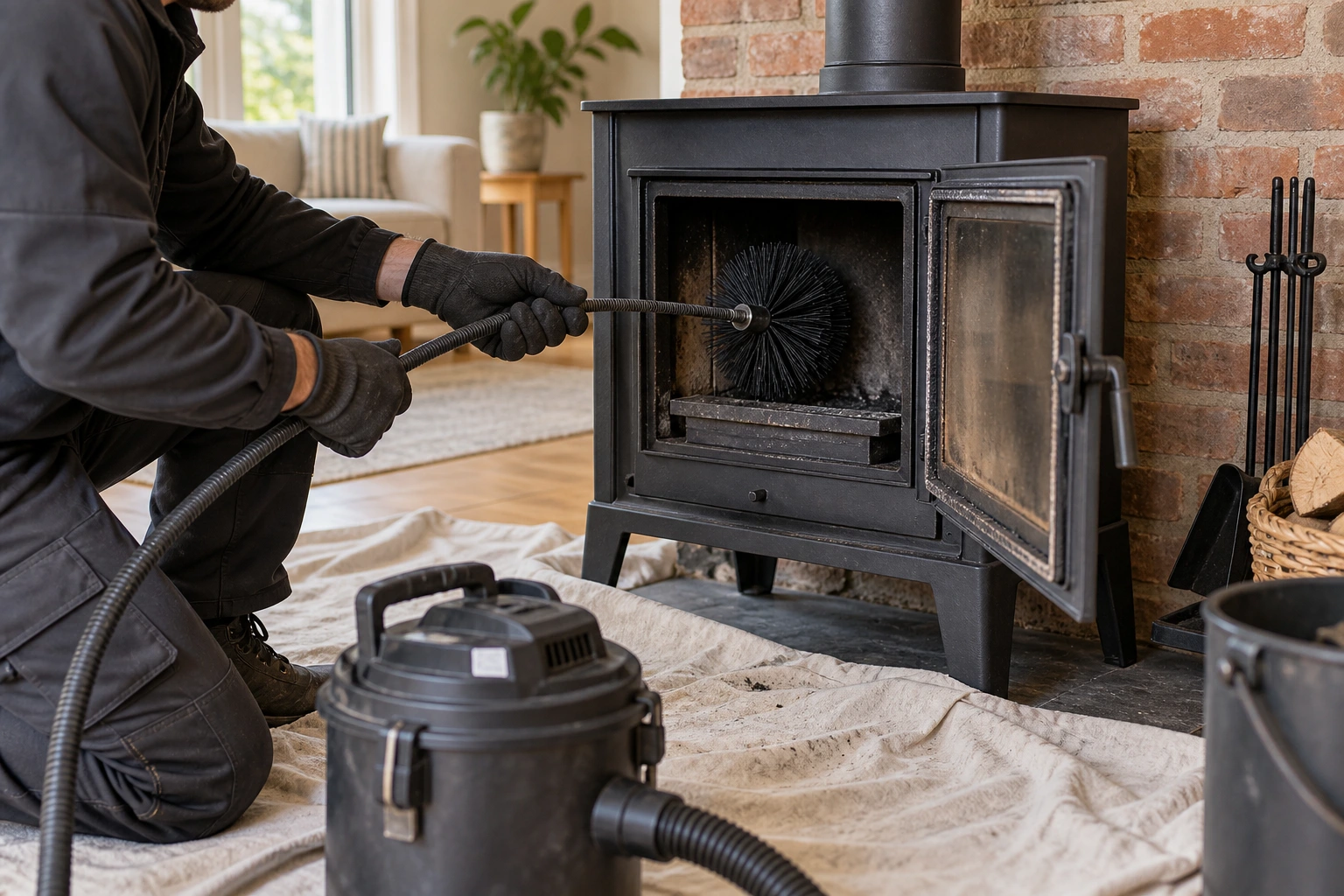
Often, with a steel liner run down the inside of the chimney. The liner gives the right size and a smooth, sealed path for the smoke. We sweep and check the chimney before lining it.
A straight single-storey flue is usually done in a day. Double-storey runs, flues up the outside wall and liners take longer. We confirm the timeline in your quote.