
How Much Do Gas Fires Cost in South Africa? (2026 Price Guide)
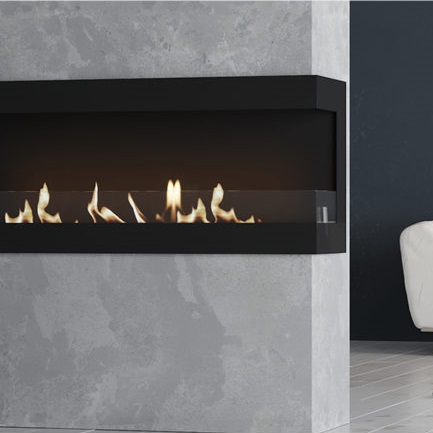
A complete 2026 price guide for gas fires in South Africa — unit costs by type, installation costs, running costs, and what drives the price up. Real Rand ranges for built-in, freestanding, and flueless gas fires.
Gas fires have quietly become one of the most sought-after heating choices for South African homes — especially in Cape Town and along the Western Cape coast, where winters are wet, grey, and every room carries that faint smell of damp. Unlike a wood fire, gas fireplaces light instantly, need no wood storage or ash removal, and keep burning through load-shedding as long as your cylinder has fuel. The question most people ask before committing is simple: what does one actually cost?
The short answer: anywhere from roughly R8,000 for a basic flueless unit to well over R120,000 for a large, architect-specified built-in gas fire. The wide range exists because “gas fire” describes very different products. This guide breaks down what each type costs, what installation adds to the bill, and what genuinely drives the price up or down.
Types of Gas Fires Available in South Africa
Before you can compare prices sensibly, it helps to understand the three main categories on the South African market.
Flueless (Catalytic) Gas Fires
These burn LPG so efficiently that no flue or chimney is required — a catalytic converter inside the burner transforms combustion gases into water vapour and carbon dioxide within safe limits. They are the simplest to install and the most affordable, making them a practical option for rental flats, apartments, or rooms where running a flue through the ceiling would be impractical. The trade-off: they require a degree of background ventilation and are typically smaller in output than a built-in model.
Built-in (Inset) Gas Fires
Built-in gas fires sit inside a fireplace cavity or are recessed flush into a wall, vented via a balanced flue — a co-axial twin-pipe system that simultaneously draws fresh combustion air in from outside and expels exhaust gases out, with no open chimney required. These deliver the most realistic flame effect and highest heat output. They integrate cleanly into a feature wall and are the dominant choice for new builds and renovations. Our built-in fireplace range includes both wood and gas inset options.
Freestanding Gas Fires
Freestanding units stand on the floor rather than being recessed, with a visual aesthetic similar to a traditional cast-iron stove. They still require a flue — typically a double-wall insulated stainless steel pipe run through the ceiling or wall — but they suit period homes where recessing into a wall is not feasible, or rooms with existing flue infrastructure. You can compare styles in our freestanding fireplace range.
Gas Fire Price Ranges in South Africa (2026)
All prices below are approximate retail prices for the unit only, excluding installation. Coastal properties — especially within five kilometres of the sea — should confirm that the burner components are 304-grade stainless steel, which resists salt-air corrosion significantly better than 430-grade. Some manufacturers include this as standard; others offer it as a coastal upgrade.
- Flueless gas fire: R8,000 – R35,000 (entry R8,000–R14,000 / mid R15,000–R22,000 / high R23,000–R35,000)
- Built-in / inset gas fire: R18,000 – R120,000+ (entry R18,000–R28,000 / mid R30,000–R55,000 / high R60,000–R120,000+)
- Freestanding gas fire: R14,000 – R80,000 (entry R14,000–R24,000 / mid R25,000–R45,000 / high R46,000–R80,000)
- Double-sided / panoramic built-in gas fire: R45,000 – R150,000+ (entry R45,000–R65,000 / mid R70,000–R95,000 / high R100,000–R150,000+)
Double-sided and panoramic models — those statement fires with glass on two sides that serve as a room divider — sit at the prestige end of the gas fireplace market. The price premium buys a flame visible from two rooms and a striking architectural focal point.
What Does Installation Cost?
Installation is always a separate line item, and it varies considerably depending on how much pipework and venting is involved.
- Flueless gas fire: R2,500 – R4,500 — mostly gas line connection and compliance checks; no flue to run.
- Built-in gas fire (balanced flue): R5,000 – R12,000 — includes wall penetration, twin-wall flue sleeve fitting, gas line connection, and commissioning.
- Freestanding gas fire: R4,000 – R9,000 — flue pipe run through ceiling or wall, gas line connection.
- Building a new niche or fireplace surround: Add R8,000 – R25,000 if the installer needs to construct a recessed cavity or surround from scratch.
Using a registered gas practitioner is not optional in South Africa. The Pressure Equipment Regulations under the Occupational Health and Safety Act require all gas appliance installations to be completed and certified by a CoC-registered installer. See our professional fireplace installation services if you would like a no-obligation site assessment.
Our detailed fireplace installation cost guide covers all fireplace types in depth, including what site-specific factors most commonly push the final bill higher than the initial quote.
Running Costs: What to Expect
LPG costs roughly R26 – R32 per kilogram in 2026, depending on your supplier and cylinder size. A typical built-in gas fire running at medium output burns approximately 0.5 – 0.8 kg per hour. At those rates:
- Two hours of evening use per winter night = roughly 1.0 – 1.6 kg = R26 – R51 per evening
- A standard 9 kg cylinder = approximately 6 – 12 evenings at moderate heat setting
- Monthly winter running cost for typical use: R500 – R1,200
Gas fires generally cost a little more to run per hour of heat output than a well-established wood fire. What you gain in return is meaningful: instant ignition, no wood sourcing or drying, no ash cleanup, and zero dependence on Eskom. A gas fire runs normally during load-shedding — battery piezo or electronic ignition means no power connection is required at all.
If you are weighing up the full financial picture before committing, our gas vs wood-burning fireplaces comparison covers heat output, annual maintenance, fuel costs, and which type suits different home layouts and lifestyles.
What Drives the Price Up
Several factors push a gas fire budget above the base retail figure:
- Flame bed and log set quality. Realistic ceramic logs, river-pebble sets, or driftwood aesthetics are priced separately on some models and can add R3,000 – R8,000 to the unit price.
- Remote control and thermostatic operation. Higher-end models include Wi-Fi or RF remote thermostats — genuinely useful when you want the room warm before you arrive home.
- 304 vs 430 stainless steel burner components. Coastal properties benefit strongly from 304-grade stainless inside the burner box. Always ask your supplier which grade is fitted as standard.
- Glass size and format. Wide-format panoramic glass fronts are expensive to produce — a primary reason panorama and corner models sit at a significant price premium over standard single-face units.
- Brand and manufacturing origin. European-made gas fires — Belgian, Dutch, and British brands in particular — typically cost more than locally assembled alternatives. In most cases the build quality, parts availability, and after-sales support justify the premium for a long-term installation.
To see what is available across the full spectrum of types and price points, browse our fireplace range — it covers gas, wood-burning, and multi-fuel options with guidance on which suits each home layout.
Frequently Asked Questions
Do I need a Certificate of Conformity after a gas fire installation?
Yes, without exception. Any gas appliance installation in South Africa must be completed by a registered gas practitioner who issues a Certificate of Conformity on completion. This document is required by law, by your home insurer, and is essential when you sell the property. If a contractor offers to skip the CoC to save money or time, do not proceed — the liability in the event of an incident falls entirely on the homeowner.
Can I use a gas fire during load-shedding?
Yes. Modern gas fires use battery-powered electronic or piezo ignition and have no mains electrical components beyond an optional thermostat or remote receiver. Provided your gas cylinder has fuel, the fire lights and operates normally regardless of load-shedding stage. This is one of the most practical reasons South African homeowners are choosing gas fires as their primary winter heating solution.
Is LPG or natural gas better for a gas fire in Cape Town?
LPG from a 9 kg or 19 kg cylinder is the default for almost all Cape Town installations — piped natural gas infrastructure is limited mainly to parts of Johannesburg and the East Rand. LPG has a higher energy density than natural gas, so the burner jets must be correctly calibrated for the fuel. A reputable installer will confirm this during commissioning. Do not assume a gas fire supplied for natural gas will work safely on LPG without adjustment — it will not.
How long does a gas fire installation take?
A straightforward built-in gas fire installation into a prepared cavity with a clear flue route typically takes a full working day — four to eight hours. If the installer needs to cut through a wall, build a niche, or route a flue through multiple ceiling voids, allow two days. Freestanding gas fires connected to an existing nearby gas point can sometimes be completed in three to four hours.
Get a Price for Your Home
The most reliable next step is a site visit — every installation is different, and what looks straightforward on paper can involve unexpected flue routing or structural work on the day. Our team provides free assessments across Cape Town and the surrounding areas. Request a quote and one of our gas fireplace specialists will be in touch to arrange a convenient time.
Related reading
- Can You Install a Fireplace in an Existing Home? Yes — Here's How
- Combustion Fireplace Installation: How It Works, Costs & Compliance
- Need it done professionally? See our fireplace installation in Cape Town service.
Planning this kind of work?
Call or WhatsApp with your suburb and photographs. Fire Flames can discuss your fireplace, braai or home project and quote.
Get A Quote →