
What Makes a Built-In Gas Fireplace Worth Installing?
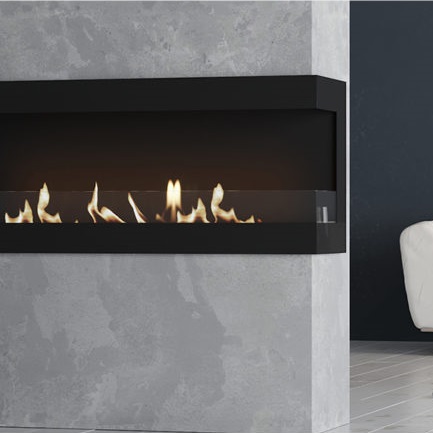
A built-in gas fireplace delivers instant warmth, zero load-shedding vulnerability and a clean permanent flame. Here's everything SA homeowners need to know before buying.
A built in gas fireplace transforms an ordinary wall into a permanent heat source that lights at the turn of a dial, runs through load shedding, and never asks you to stack wood or sweep ash. If you’re weighing up whether a gas unit is the right move, this guide covers what you need to know — from installation to running costs — so you can walk into the decision with your eyes open. Browse our gas fireplace range once you’re ready to compare models.
What Is a Built-In Gas Fireplace?
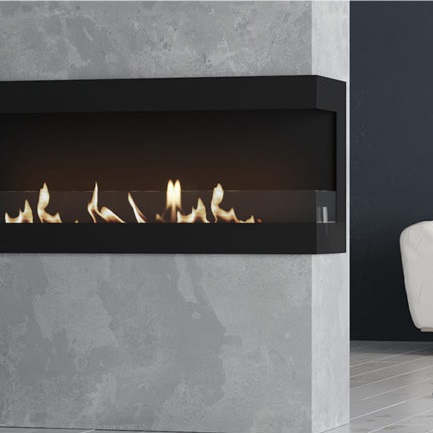
A built-in gas fireplace is set into a wall cavity or purpose-built surround, flush with the wall surface. The burner sits behind a glass front, the flame is framed like a picture, and the whole unit becomes a fixed architectural feature rather than something you move around. That permanence is part of the appeal — it reads as part of the room rather than an appliance dropped in it.
Two main types exist in the South African market:
- Balanced-flue (room-sealed) units — a twin-pipe system draws fresh air in and vents combustion gases out through an external wall. No chimney stack is required, which makes these the most practical option for modern homes. All combustion is isolated from the living space.
- Conventional flued units — these vent via a vertical flue or chimney to the roofline. More flexibility in placement, but they require an existing or new chimney run.
Most South African installs run on LPG (liquid petroleum gas) from a 48 kg cylinder. Homes in certain urban areas with natural gas infrastructure can also be accommodated. Our built-in fireplace inserts range covers both wood and gas built-in options if you haven’t yet decided on fuel type.
Built-In Gas Fireplace vs Other Heating Options
When customers come to us undecided between gas, wood or bioethanol, the conversation almost always comes down to three things: convenience, load-shedding resilience and total cost of ownership. Our in-depth look at gas vs wood-burning fireplaces covers the full trade-off, but here’s the summary:
- Instant on/off. Gas lights in seconds with no kindling, no warm-up period and no cool-down. On a cold Cape Town evening when you arrive home at 7 PM, this matters.
- No electricity required. A gas fireplace operates entirely off-grid. Balanced-flue units with a battery-backed piezo igniter will light during Stage 6. This is the single biggest reason gas has surged in popularity over the past three years in South Africa.
- Clean burning. Gas produces no creosote, no soot, and no particulate build-up in your flues and flue systems. Annual servicing is simpler and cheaper than for a wood-burning unit.
- Running cost. LPG is more expensive per kJ than firewood, but the zero-maintenance overhead and no-ash convenience mean many homeowners find the total cost of ownership lower over three to five years.
What Does Installation of a Built-In Gas Fireplace Involve?
Installation is more involved than dropping in a freestanding heater but less disruptive than a masonry wood fireplace. A typical project runs as follows:
- Site survey. We assess your wall, the flue route and gas cylinder placement. For a balanced-flue unit, the external wall must be accessible — usually straightforward in a single-storey home or on an external room wall.
- Opening and surround. The wall cavity is prepared (or a framed surround is built), the unit is set in, and the surround — tiled, plastered or panelled — is finished.
- Flue installation. A balanced-flue twin-pipe exits horizontally through the wall, typically requiring a single 150 mm penetration. A conventional flued unit requires a vertical run to the roofline.
- Gas line connection. Only a registered LP gas fitter may connect your appliance to a gas supply. This is a legal requirement under SANS 10087-1 — not optional. All our installations are carried out by SAQCC-registered gas fitters, ensuring compliance from day one.
- Certificate of Compliance (CoC). On completion, your installer issues a CoC. Your insurer requires it, and it’s mandatory for any future property sale.
Fire Flame Installers manages the complete project — unit supply, surround, flue and gas connection. Professional fireplace installation from one team means one project manager, one timeline and one CoC at the end.
5 Things to Look for When Choosing a Built-In Gas Fireplace
1. Heat Output (kW Rating)
Match the output to your room volume. A rough guide: allow 1 kW per 10–12 m² for a well-insulated room. Most South African living rooms between 30–50 m² are well served by a 5–8 kW unit. Oversizing wastes gas; undersizing means the fire runs flat-out and still doesn’t heat the room.
2. Balanced Flue vs Conventional Flue
If you have easy access to an external wall, a balanced-flue unit is almost always the right choice — faster to install, no chimney required, and all combustion air is drawn from outside. If you need flexibility of placement (e.g. an internal wall or existing chimney breast), a conventional flued unit gives you more options.
3. Frame Material and Coastal Suitability
In coastal homes — Cape Town, Hermanus, Knysna, Plettenberg Bay — the salt air attacks mild steel frames within a year or two. Specify a unit with a 304-grade stainless steel fascia or a powder-coated marine-grade finish. This detail is often skipped at the point of sale and deeply regretted two winters later.
4. Thermostat vs Manual Control
Higher-end built-in gas fireplaces include a thermostatically controlled burner operated by remote or wall switch. You set the target temperature and the fire modulates output to maintain it — far more efficient than running at full output all evening. Entry-level models are manual (fully on or fully off). If you plan to use the fireplace daily, the thermostat upgrade is worth the price difference.
5. Brand Support and Parts Availability
The best-supported gas fireplace brands in South Africa currently are SAFire (locally manufactured, short lead times), Gazco/Stovax (UK-made, widely stocked by SA importers) and Napoleon (Canadian, growing local network). Avoid buying a unit from a brand with no local service agent — gas appliance repairs require certified technicians, and parts must be locally stocked.
What Does a Built-In Gas Fireplace Cost in South Africa?
Supply-and-install pricing varies by model, flue complexity and surround finish. As a realistic guide for 2026:
- R18,000 – R30,000 — entry to mid-range unit, balanced flue, basic plaster or tile surround (e.g. SAFire Canto Two or equivalent)
- R30,000 – R55,000 — mid to premium unit, thermostat control, stone or joinery surround (e.g. SAFire Panorama, Gazco Studio range)
- R55,000+ — bespoke feature fireplaces: large glass face, custom cabinetry, double-sided or corner configurations
All prices include unit, flue, labour and CoC. Our fireplace installation cost guide breaks down exactly what drives the price up or down. If you’re still deciding between a fixed and moveable option, the freestanding vs built-in fireplaces comparison is a useful read before you commit.
Frequently Asked Questions
How much does a built in gas fireplace cost to run per hour?
At full output, a 5 kW unit running on LPG at roughly R22–R24/kg (2026 pricing) costs approximately R15–R25 per hour. In practice, a thermostatically controlled unit runs at partial output most of the time — real-world costs are meaningfully lower. LPG prices fluctuate with international oil markets, so factor in a 10–15% buffer when budgeting annual running costs.
Does a built-in gas fireplace need a chimney?
Not necessarily. Balanced-flue units vent directly through an external wall using a concentric twin-pipe system — no chimney stack or liner is needed. Conventional flued units do require a vertical flue run, either an existing masonry chimney or a new stainless steel flue system. Your installation survey will determine the best option for your specific home layout.
Can a gas fireplace run during load shedding?
Yes — and this is one of the strongest reasons South Africans choose gas. A built-in gas fireplace requires no mains electricity to ignite or run. Balanced-flue models with battery-backed piezo or electronic ignition will light and operate through a complete blackout. Our full range of fireplaces includes both gas and wood options — both entirely independent of the grid.
What gas safety compliance is required in South Africa?
All domestic LP gas installations must comply with SANS 10087-1. The installer must be registered with SAQCC Gas and must issue a Certificate of Compliance on completion. Your home insurer will ask for this document, and it is legally required when you sell the property. Never accept an installation without a CoC — the liability risk is yours, not the installer’s.
Ready to Install?
A built-in gas fireplace is a significant investment — but for households that want immediate warmth, load-shedding independence and a fireplace that looks like it was always meant to be there, it’s hard to beat. Fire Flame Installers covers the full project from site survey to final CoC, across Cape Town, the Winelands and beyond. Request a free installation quote and we’ll recommend the right unit and flue configuration for your home.
Related reading
- Can You Install a Fireplace in an Existing Home? Yes — Here's How
- Combustion Fireplace Installation: How It Works, Costs & Compliance
- Need it done professionally? See our fireplace installation in Cape Town service.
Planning this kind of work?
Call or WhatsApp with your suburb and photographs. Fire Flames can discuss your fireplace, braai or home project and quote.
Get A Quote →