
Drop-In Gas Fireplaces: 6 Design Styles and What They Cost to Install
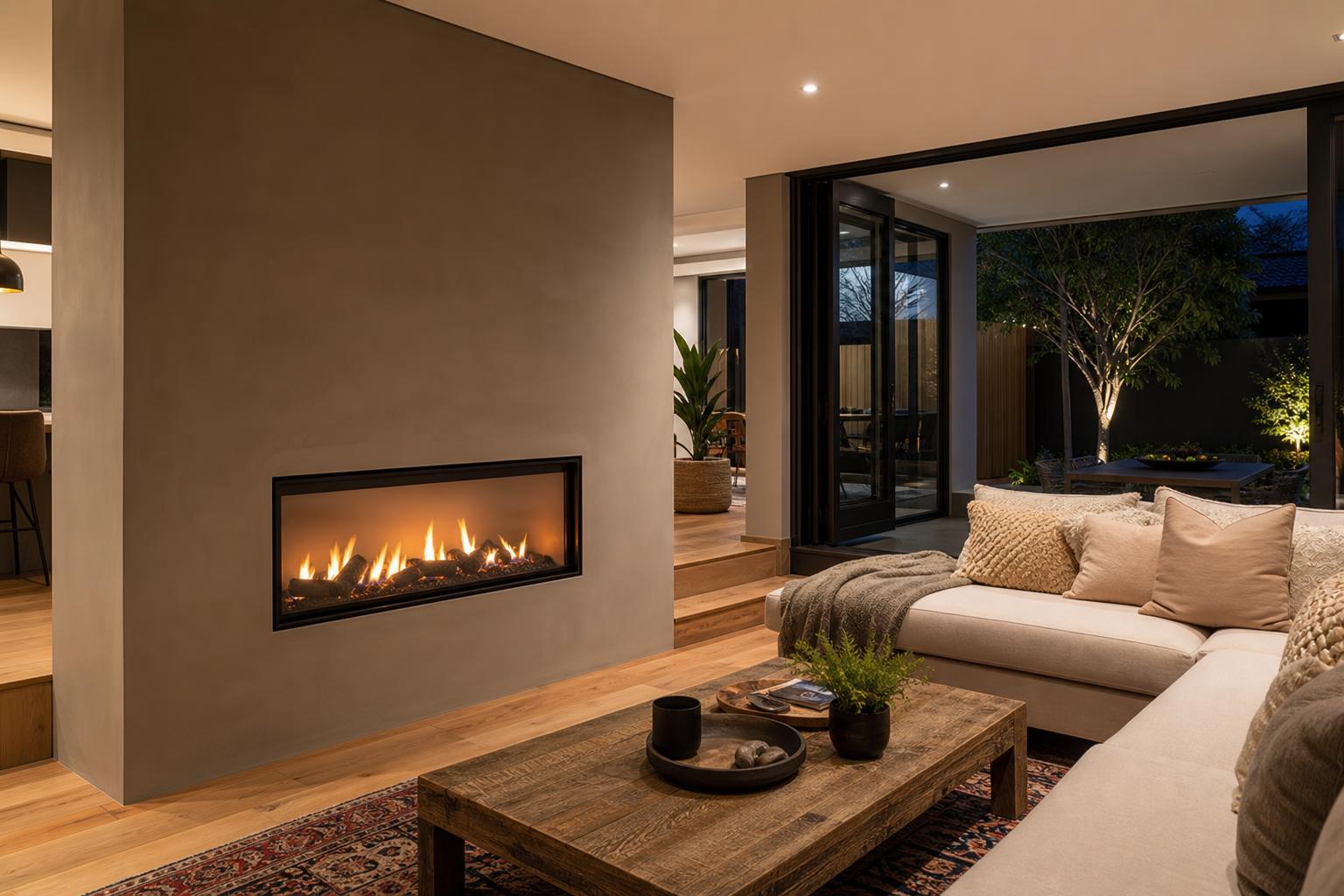
A drop-in gas fireplace gives you flame, warmth and design flexibility without a chimney rebuild. Here are 6 real configurations, what each costs in South Africa, and what to ask your installer before you commit.
A drop in gas fireplace is a self-contained firebox unit that sits into a framed opening — no flue liner rebuild, no ash, and no dependency on Eskom to keep the room warm. Whether you’re building new or renovating a feature wall, it’s one of the most flexible gas heating solutions available for South African homes right now.

Unlike a built-in insert that retrofits into an existing masonry chimney breast, a drop-in unit is fitted into a purpose-built or renovated cavity during construction. That gives your designer and installer real freedom with the shape, size and orientation of the flame — which is why drop-in gas units have become a popular choice for architects and homeowners who want a clean, contemporary look. Browse the full gas fireplace range to see what’s available, or read on for an honest breakdown of what each configuration costs and delivers.
What Is a Drop-In Gas Fireplace?
The term “drop-in” refers to how the unit is installed: the firebox is lowered into a framed opening during construction or renovation, then finished with a surround, casing or feature wall. Most units use a balanced flue system that vents horizontally through an external wall — which means they can go into interior rooms that would never support a traditional chimney. Some models are fully flueless and rely on room ventilation only.
They run on LP gas (from a cylinder) or natural gas where mains supply is available. Because gas combustion produces no ash, maintenance is minimal — an annual safety check and burner clean is usually all that’s required. According to LPGSASA guidelines, every gas appliance installation in South Africa must be signed off by a registered gas practitioner and backed by a Certificate of Conformity — something to build into your project timeline and budget from the start.
6 Drop-In Gas Fireplace Designs Worth Considering
Not all drop-in gas fireplaces share the same shape or orientation. Here are the six configurations that come up most often in local installation work, with honest notes on where each one fits best.
1. Single-Sided (Front-Facing)
The most common format: flame visible from one side only, facing the main seating area. It’s the easiest to install, the most energy-efficient — all heat projects forward into the room — and typically the most affordable. Works in almost any room size and suits both linear and traditional surround designs.
2. See-Through / Double-Sided
Flame is visible from two opposite rooms — typically a lounge and dining room, or an entrance hall and a study. If you’re weighing up this format, our guide on choosing between freestanding and built-in fireplaces covers the structural trade-offs in detail. The main drawback: heat efficiency drops because warmth radiates in two directions, so you’ll need a higher burner output to achieve the same comfort level in either room.
3. Three-Sided (Bay)
Visible from the front and both sides — a panoramic flame effect that works beautifully as a room divider or island centrepiece. Bay configurations often appear in open-plan living spaces where the fireplace is the dominant design element rather than just a heat source. They’re the most dramatic option but also the most complex to frame and finish correctly, and they require careful heat-clearance planning.
4. Peninsula / L-Shape
Visible from the front and one adjacent side. Popular where a feature wall meets a hallway, or where the room layout prevents a full three-sided opening. A useful compromise between visual impact and installation complexity — and typically more affordable than a full bay configuration.
5. Corner Drop-In
Fits into a 45° corner, making use of otherwise dead space. A practical choice for smaller rooms or awkward layouts where a standard feature wall isn’t possible. Angled glass or a triangular firebox gives a wider viewing arc than a single-sided unit from the same corner position.
6. Outdoor / Alfresco Drop-In
Purpose-built for covered outdoor entertainment areas and designed for exposure to weather and temperature swings. These units use 304-grade stainless steel internals — essential on the Cape coast where salt air accelerates corrosion on standard mild steel components. Outdoor drop-in units are often paired with gas braais built into the same entertainment wall, creating an integrated cooking and heating zone under one structure.
What Does a Drop-In Gas Fireplace Cost in South Africa?
Prices vary considerably by brand, burner width, glass configuration and installation complexity. Here’s a realistic framework based on current local market pricing:
- Entry-level single-sided (600–800 mm wide): R18 000–R30 000 for the unit; R5 000–R10 000 for installation (framing, gas line, CoC).
- Mid-range single or double-sided (900–1 200 mm): R30 000–R55 000 for the unit; R10 000–R18 000 installation.
- Premium three-sided or bay (1 200 mm+): R55 000–R100 000+ for the unit; R18 000–R30 000+ installation, depending on the feature wall finish.
These figures exclude tiling, plastering or joinery work on the surround, which is typically quoted separately. For a broader picture of how fireplace budgets break down, our fireplace installation cost guide covers all the variables — from raw unit cost through to professional installation and finishing.
Installation: What You Actually Need to Plan For
A drop-in gas fireplace installation involves more than sliding a unit into a wall. Here’s what your installer will need to account for:
- Framing the opening to spec: The cavity must match manufacturer dimensions precisely — too tight and the unit won’t seat correctly; too loose and trim gaps will show. Allow a few millimetres clearance per side for the finishing trim.
- Balanced flue routing: The horizontal flue pipe runs through the external wall with a concentric terminal (fresh air in, exhaust out). Termination points must clear windows, doors and ventilation openings per SANS 10087. Where a longer run is needed, insulated flue pipe maintains draw performance and reduces condensation in the pipe.
- Gas supply line and CoC: A licensed gas practitioner must run the supply line, fit the isolator valve, pressure-test the system and issue the Certificate of Conformity. The professional fireplace installation team handles this as part of the full project — not an afterthought.
- Heat clearances: Combustible materials — timber framing, gypsum board — must maintain the manufacturer’s specified clearance from the firebox. This is measured and documented during the CoC process.
Drop-In vs Insert: What’s the Difference?
People often confuse “drop-in” with “insert.” A gas insert slides into an existing masonry fireplace opening and connects to the existing chimney — it’s the correct approach for converting an old wood-burning fireplace. A drop-in, by contrast, goes into a purpose-built cavity with no pre-existing chimney. If you have an old open fireplace to convert, an insert fireplace is usually more cost-effective. If you’re starting fresh, a drop-in gives you far more design freedom.
Not sure which applies to your project? Request a free installation quote — it’s the fastest way to get a specific recommendation for your space without committing to anything.
Frequently Asked Questions
Can I convert my existing wood fireplace to a drop-in gas unit?
Technically yes, but it’s rarely the cleanest solution. You’d need to seal the existing chimney (to prevent draft problems), then frame a new cavity inside the existing firebox — which is often tight. A gas insert is usually better suited for conversions. For more context on the trade-offs, our gas vs wood-burning fireplace comparison covers running costs, installation differences and what each format suits.
Do I need a gas certificate for a drop-in gas fireplace?
Yes — a Certificate of Conformity is a legal requirement for any gas installation in South Africa. It must be issued by a registered gas practitioner after pressure-testing the installation. Keep it on file: it’s required when you sell the property and may be requested by your insurer when making a claim involving a gas appliance.
How long does a drop-in gas fireplace installation take?
A straightforward single-sided unit in a new build typically takes one to two days — framing, unit placement, gas line and CoC. More complex three-sided or outdoor configurations with custom feature wall finishes can extend to three to five days depending on trades and material lead times.
Will a drop-in gas fireplace work during load-shedding?
Most drop-in gas fireplaces can be lit manually or with a battery ignition system, making them completely independent of mains power. This is one of the practical reasons gas fireplaces remain a popular choice in South Africa — the flame keeps going through any stage of load-shedding. Models with electronic controls or internal blowers do need power for those specific features, but the core heating function continues regardless.
Ready to Move Forward?
A drop in gas fireplace is a long-term investment in comfort, design and — in the right property — resale value. Getting the configuration right from the start saves costly rework later. Browse the gas fireplace range to shortlist models that fit your space, then get in touch with our team to talk through the configuration, burner size and finish that will work best for your project.
Related reading
- Can You Install a Fireplace in an Existing Home? Yes — Here's How
- Combustion Fireplace Installation: How It Works, Costs & Compliance
- Need it done professionally? See our fireplace installation in Cape Town service.
Planning this kind of work?
Call or WhatsApp with your suburb and photographs. Fire Flames can discuss your fireplace, braai or home project and quote.
Get A Quote →