Free Standing Gas Fireplace: Design Options, Features & Installation Tips

A gas fireplace that you can position anywhere in a room — no built-in alcove, no load-bearing wall, no permanent recess — is an appealing prospect. Free standing gas fireplaces deliver exactly that: a self-contained heat source with a real flame, available in designs that range from classic cast-iron stove silhouettes to razor-thin contemporary cylinders. If you are weighing this option for your South African home, this guide explains what separates a free standing gas unit from other fireplace types, which design families are available locally, the features that genuinely matter, and what you should expect to budget and install in 2026.
What Makes a Free Standing Gas Fireplace Different?
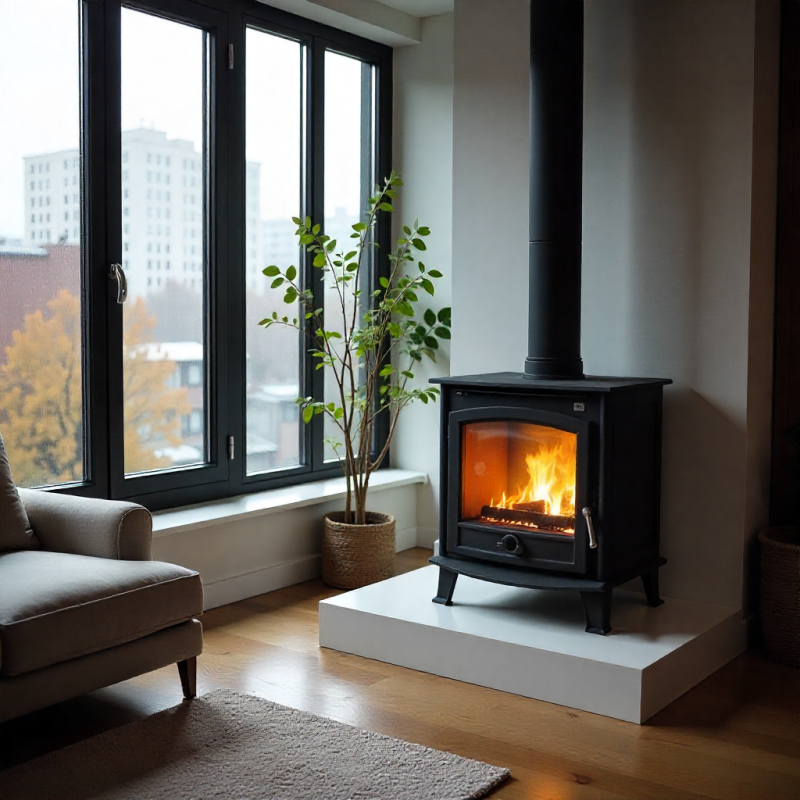
Unlike a built-in fireplace insert or a wall-recessed panel, a free standing unit is fully self-contained. It sits on legs, a plinth, or a base pedestal, connects to an LPG or natural-gas supply, and — depending on the model — vents through a single flue pipe running up to the ceiling or through an exterior wall. This gives you two practical freedoms that built-in models cannot match:
- Repositioning is possible. A gas line can be extended or capped; moving a built-in concrete surround is a demolition job.
- Retrofitting is straightforward. If your home has no existing fireplace opening, a free standing model avoids the structural work needed to create a built-in recess.
The trade-off is footprint. A free standing unit occupies floor space in a way that a built-in does not, so room size and furniture layout matter during the selection process. For a detailed comparison of when to go free standing versus built-in, read our guide to choosing between freestanding and built-in fireplaces.
Design Families Available in South Africa
South African retailers — including Fire Flame Installers — typically stock four broad free standing gas fireplace styles.
1. Traditional Stove Shape
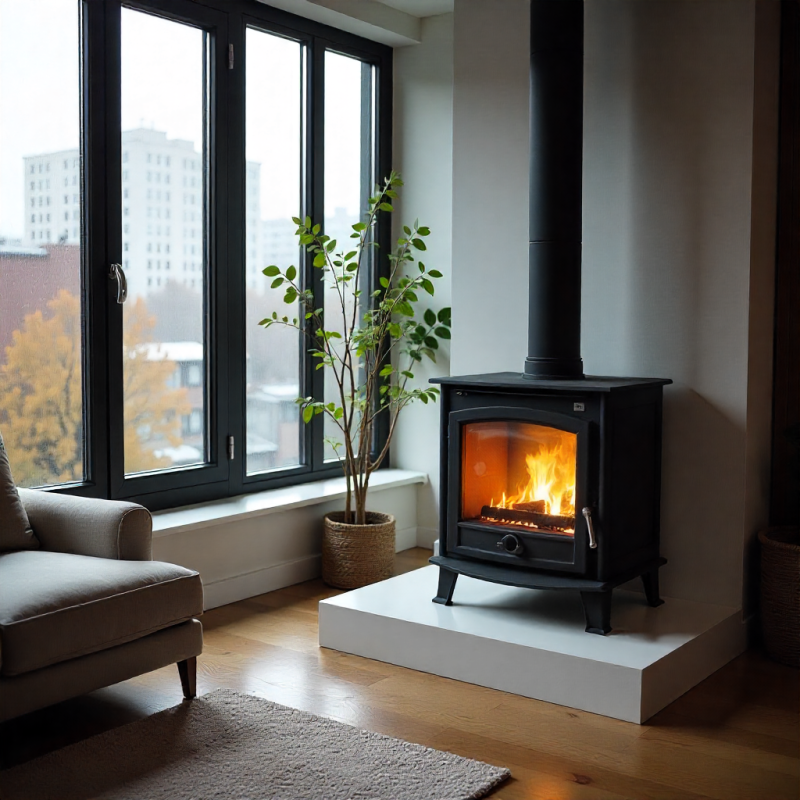
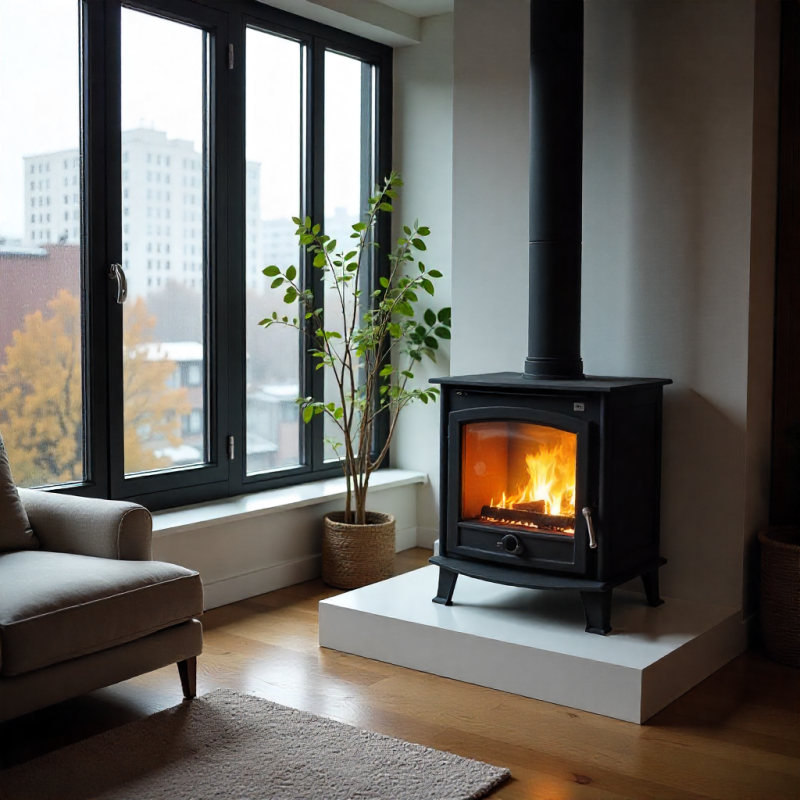
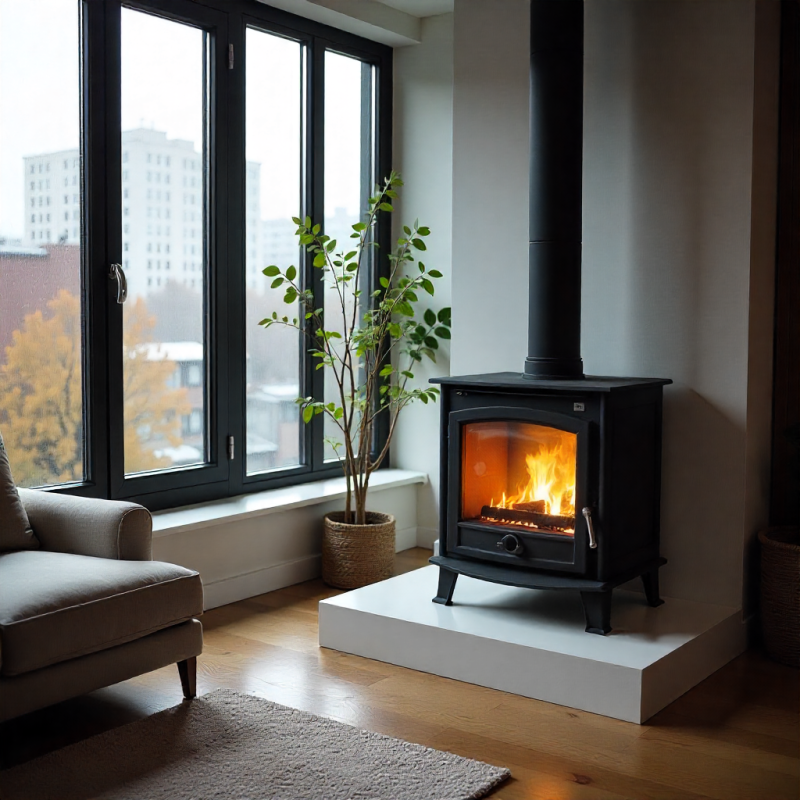
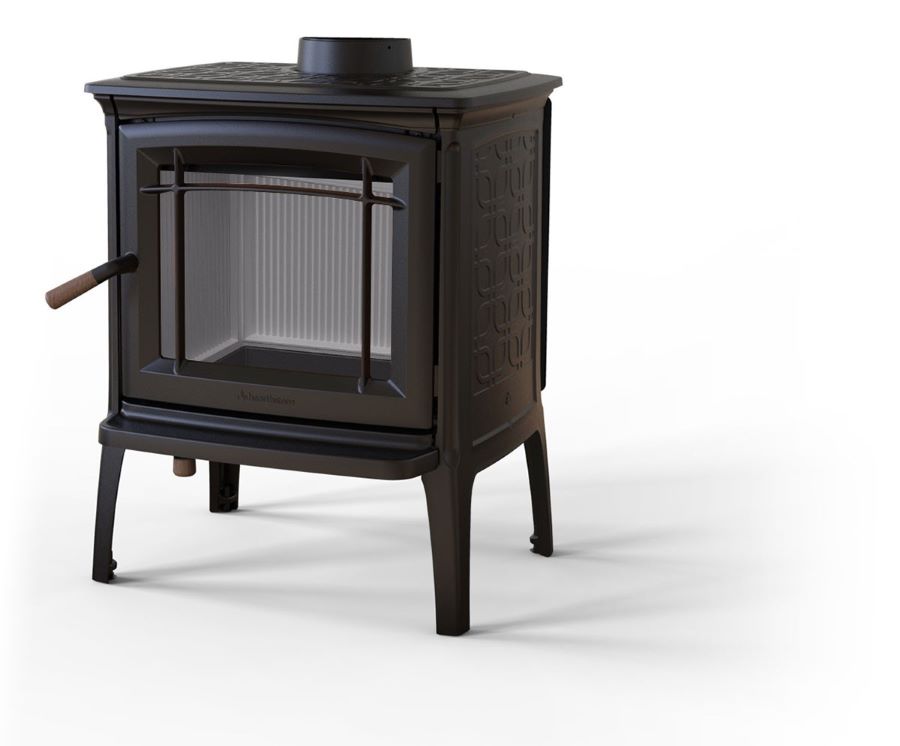
Modelled on the European cast-iron wood stove, these units have a tall body, four legs, and a viewing window at the front. The SAFire Baiona, one of the most popular locally available models, follows this format in both LPG and natural-gas configurations. They suit farmhouse, Cape Dutch, and period interiors well, and the compact footprint (typically 400–600 mm wide) means they work in smaller reception rooms.
2. Contemporary Cylinder or Column
Cylindrical free standing gas fires — sometimes called gas stoves or gas columns — feature 360° flame viewing through a full-height glass surround. They make a strong design statement in open-plan living areas and suit mid-century modern or industrial aesthetics. Heat output tends to be higher per model than traditional stove shapes, making them suited to larger spaces.
3. Panoramic Free Standing
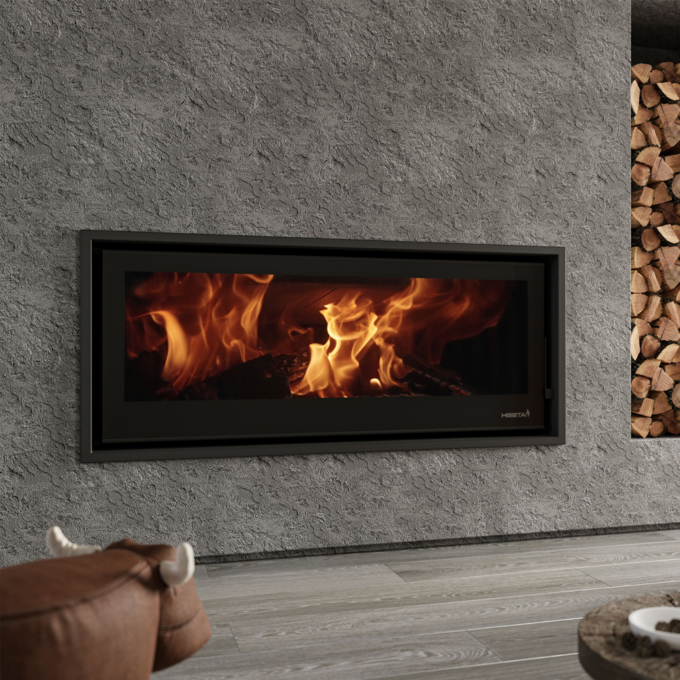
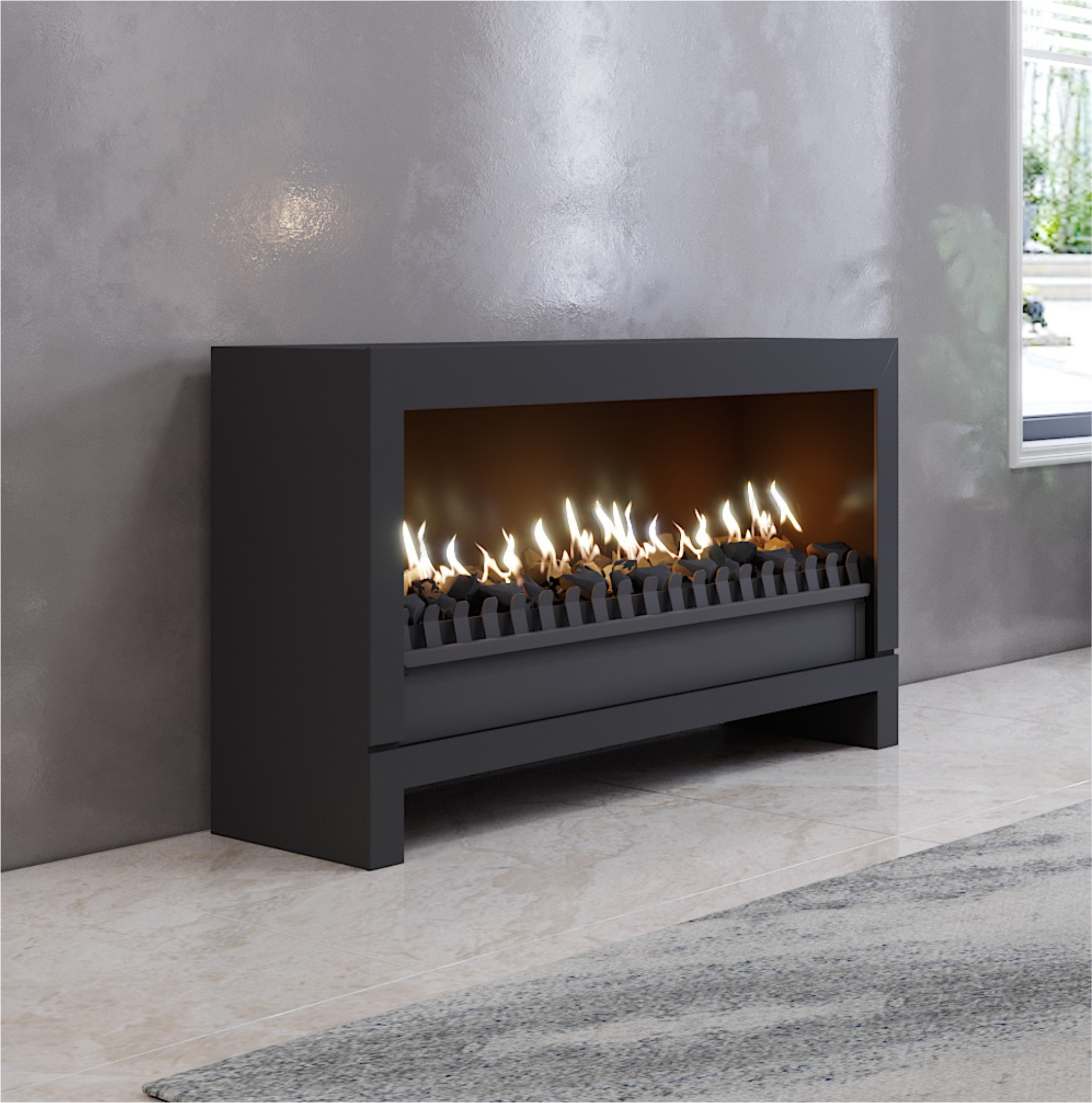
A newer category that blends free standing convenience with wide-format flame viewing. Units are typically low and wide (700–1 200 mm) on a floor plinth, giving a ribbon-flame effect without a wall recess. These suit contemporary single-storey homes and open-plan kitchens.
4. Flueless Free Standing Gas Models
A small category of decorative gas fires rated for supplementary heat in well-ventilated spaces. They require no flue pipe, connecting only to a gas supply, which makes installation simpler and cheaper. The caveat: South African building regulations require adequate room ventilation — typically a fixed opening of at least 1 cm² per 100 BTU of appliance output — and most gas safety bodies advise against using flueless models as a primary heat source in bedrooms. If you are weighing gas versus wood options in general, our gas vs wood-burning fireplaces guide covers the full trade-off.
Key Features to Look For
When comparing free standing gas fireplace models, these are the specifications that meaningfully affect daily satisfaction:
- Heat output (kW). Size this to the room. A practical rule for South African climate zones: allow approximately 1 kW per 10–12 m² for a well-insulated room, or 1 kW per 8 m² for a high-ceiling Cape Town home with sash windows. Most residential free standing gas models range from 3 kW to 12 kW.
- Thermostatic control. A built-in thermostat or compatibility with a remote thermostat allows the unit to maintain a set temperature and cycle the burner rather than running at full output continuously — a significant LPG saving over a winter.
- Electronic ignition. Pilot-free electronic ignition eliminates the standing pilot flame and reduces gas consumption by 5–10% versus an always-on pilot.
- Load-shedding performance. This is an SA-specific concern: most gas fireplaces require 220 V for the blower fan and ignition circuit. During load-shedding, units with battery-backup ignition or purely gas-driven convection (no fan) will still light. Confirm this specification before you buy.
- 304-grade stainless-steel flue compatibility. Coastal buyers in Cape Town, Hermanus, or Mossel Bay should specify 304 or 316 stainless-steel flue components rather than standard mild steel or aluminium, which corrode far faster in salt-air environments. Ask your supplier specifically about flue-pipe grade.
- LP gas versus natural gas rating. Most South African homes use LPG (from a bottle). Check that the burner is LP-rated or can be converted — not all imported models arrive factory-set for LPG at South African pressures.
Realistic Price Ranges in 2026 (South Africa)
Below are honest 2026 market ranges for free standing gas fireplaces in South Africa, supply only, excluding installation:
- Entry-level flueless decorative models: R 4 000 – R 9 000
- Mid-range flued free standing stoves (3–6 kW): R 12 000 – R 22 000
- Premium free standing stoves and cylinders (6–12 kW, thermostatic, remote): R 22 000 – R 45 000
- Designer panoramic free standing models: R 40 000 – R 85 000+
Installation costs sit on top of the unit price. A straightforward installation — single-skin flue through a standard ceiling and roof — typically adds R 6 000 – R 14 000 depending on flue height and roof type. Complex installs (double-storey, tiled roof penetration, double-wall insulated flue for coastal corrosion resistance) run R 15 000 – R 30 000. For a full breakdown of what drives these costs, see our fireplace installation cost guide.
Installation Requirements
A free standing gas fireplace is simpler to install than a fully built-in unit, but it still requires qualified trades. In South Africa, gas appliance installation must be done by a registered LP gas installer (SAQCC Gas registered), who will issue a CoC (Certificate of Compliance) on completion. Without a CoC your homeowner’s insurance may not cover gas-related incidents.
Key installation considerations:
- Flue routing. Most free standing gas units use a single-skin 100–150 mm diameter flue pipe that must terminate at least 600 mm above the roof line and maintain clearance from combustible materials. Longer flue runs benefit from insulated components to maintain draught — our article on insulated flues for your fireplace explains when the upgrade is worth it.
- Hearth protection. Even though gas produces no sparks, most manufacturers specify a non-combustible hearth pad extending at least 300 mm in front of the unit and 150 mm to each side.
- Gas supply line. A licensed plumber or gas installer will run a copper or stainless-steel gas line from your regulator or meter to the appliance connection point. Budget R 1 500 – R 4 000 for this, depending on distance and complexity.
- Ventilation check. Even flued models benefit from a ventilation assessment, particularly in modern, well-sealed homes. Your installer should verify that the room meets the appliance manufacturer’s minimum ventilation requirements.
Fire Flame Installers handle the full process — supply, flue installation, gas line, and CoC. To understand what professional fireplace installation involves from start to finish, or to get a fixed-price proposal for your specific home, read about our installation service.
Frequently Asked Questions
Can I use a free standing gas fireplace during load-shedding?
It depends on the model. Units that rely on 220 V for the igniter will not light during a power outage unless the home has a UPS or inverter. Some models — particularly traditional stove-style units with manual or battery ignition — will fire without grid power. Always confirm this with the supplier before purchase if load-shedding resilience matters to you.
How much LPG does a free standing gas fireplace use?
A 6 kW gas fire running at 70% output for three hours per evening will consume roughly 0.9–1.1 kg of LPG per evening. At mid-2026 Cape Town retail prices of approximately R 30–35/kg, that is R 27–38 per evening or R 840–1 180/month for nightly winter use. A thermostat-controlled unit that cycles the burner will often halve this figure in practice.
Do I need council approval to install a gas fireplace?
In most Cape Town and Western Cape municipalities, installation of a gas appliance does not require a building plan submission if the appliance is an approved factory-built unit and the installation is done by a registered SAQCC Gas installer. The CoC issued at completion is your compliance record. For new homes or alterations that affect the structure (e.g. cutting a flue through a fire-rated ceiling), check with your local municipality.
What is the lifespan of a free standing gas fireplace?
Well-maintained units from reputable manufacturers typically last 15–25 years. The main wear items are the burner venturi, igniter, and glass seal. Annual servicing by a qualified gas technician keeps the unit safe and efficient; in coastal areas, servicing every 12 months is strongly recommended due to salt-air corrosion of the burner assembly.
Making the Right Choice
A free standing gas fireplace is one of the more flexible heating investments a South African homeowner can make — it installs faster than a built-in, serves any room that can accommodate a flue pipe, and provides instant heat with a living flame at the press of a button. The key decisions are heat output sized to your room, gas-type specification for your LPG or natural-gas supply, flue-grade matched to your climate zone, and load-shedding compatibility if grid power is unreliable in your area.
Browse our full gas fireplace range to compare available models, or use our fireplace selection guide to narrow the options to your room size, style, and budget. When you are ready to move forward, request a free installation quote and our team will visit the site, specify the right flue route, and provide a fixed-price proposal.