
What Makes a Modern Stove So Much Better Than an Open Fire
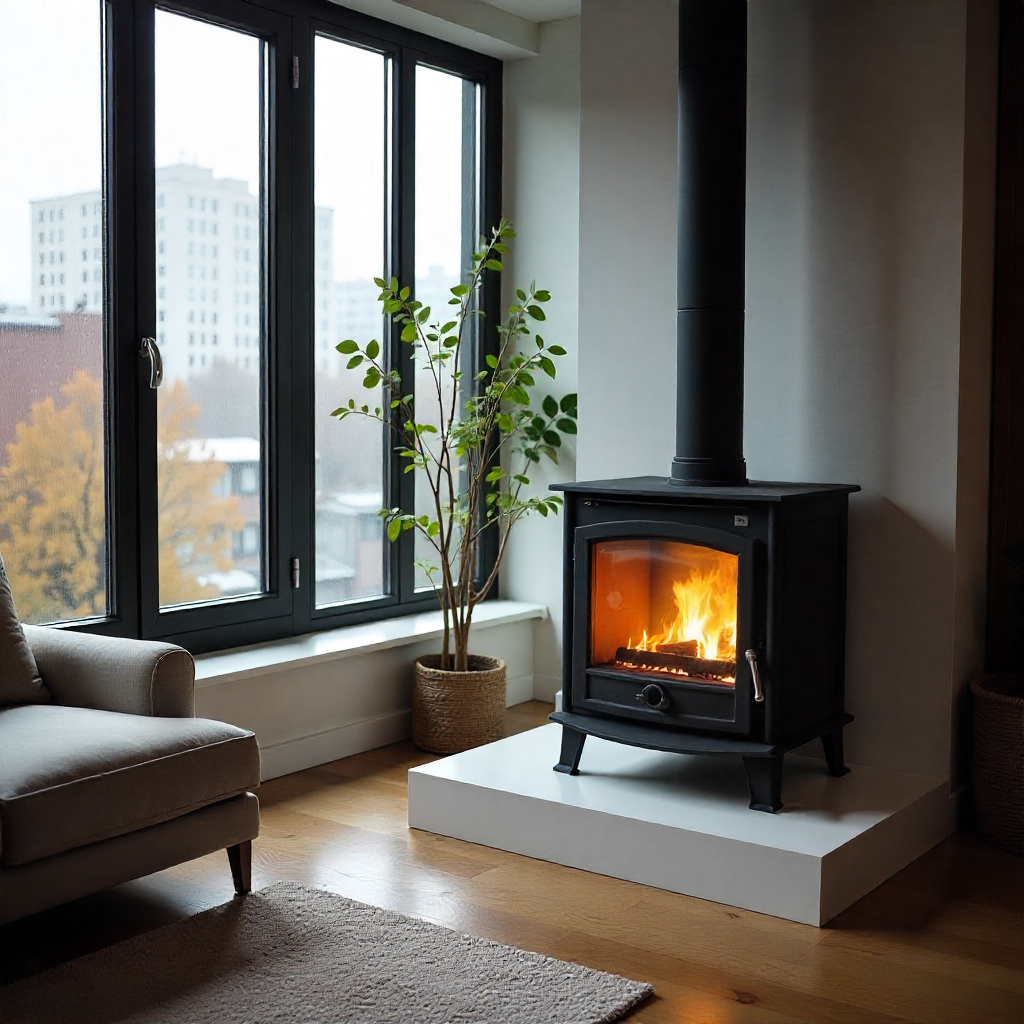
A modern stove captures and directs heat into your room rather than sending most of it up the chimney. Here's how closed-combustion stoves work, what to look for, and why the upgrade usually pays for itself.
A modern stove does something that open fireplaces were never designed to do: it captures the heat from your fire and pushes it into the room rather than sending most of it up the chimney. If your living room is cold despite a roaring fire, the appliance — not the fuel — is the problem. Here’s what changed in stove design, why it matters, and how to pick a freestanding fireplace that earns its keep through a proper Cape Town winter.
What Open Fireplaces Actually Do to Your Heat
A traditional open fireplace looks good in a sitting room. As a heating device, though, it’s surprisingly inefficient. Open fireplaces draw large volumes of room air to feed the combustion process, then expel the warm gases straight up the flue. The net thermal efficiency — the percentage of wood energy that actually stays in the room — sits somewhere between 10% and 20% for a standard open fire. In practice, for every R100 of firewood you burn, as little as R10–R20 worth of warmth reaches you.
Closed-combustion stove design resolved this problem decades ago. A sealed firebox, an air-wash system across the glass, and convection channels built into the body all work together to push radiant and convective heat forward into the living space. The result is the fireplace that actually heats your home rather than the exterior wall above it.
The Main Types of Modern Stove to Consider
The category of modern stove is broader than many buyers realise. The right type depends on your fuel preference, your flue situation, and how you use your heating.
Freestanding Closed-Combustion Stoves
The most popular modern stove format in South African homes. These units stand on a hearth or tiled floor, connect to a vertical flue that exits through the ceiling, and heat a room through a mix of radiant warmth from the body and convective airflow through channels in the casing. Entry-level models start around R8,000–R15,000. Mid-range units — better glass, air-wash systems, secondary burn chambers — run R18,000–R30,000. Premium models with convection fans and large glass panels reach R45,000–R70,000. Our Sentinel freestanding range covers the mid-to-premium tier and is designed specifically for Southern African conditions.
Built-In Closed-Combustion Inserts
If you have an existing open fireplace surround but want to upgrade its performance, a built-in fireplace insert is retrofitted into the opening. You keep the hearth and surround; the firebox is replaced with a high-efficiency sealed unit that connects to the existing chimney via a liner. It’s a cost-effective way to get closed-combustion efficiency without demolishing an otherwise good-looking fireplace wall.
Freestanding Gas Fireplaces
Where there’s no existing chimney or where wood storage is impractical, a gas freestanding unit offers a clean alternative. Installation requires a gas supply point and a wall-termination flue, but there’s no ash, no wood pile, and no smoke management. For load-shedding purposes, a gas stove running off LPG cylinders continues operating regardless of grid status — a meaningful advantage for South African winters.
Performance in a South African Context
A few local factors shape which modern stove works best for your specific home.
Load shedding compatibility. Wood-burning and gas stoves require no electricity to operate — you get full heat output even when the power is out. Some freestanding models include an optional convection fan (12V DC) that runs off a small battery or UPS for increased airflow, but the core heating function needs nothing from the grid. Our comparison of freestanding vs built-in fireplaces covers load-shedding suitability in more detail.
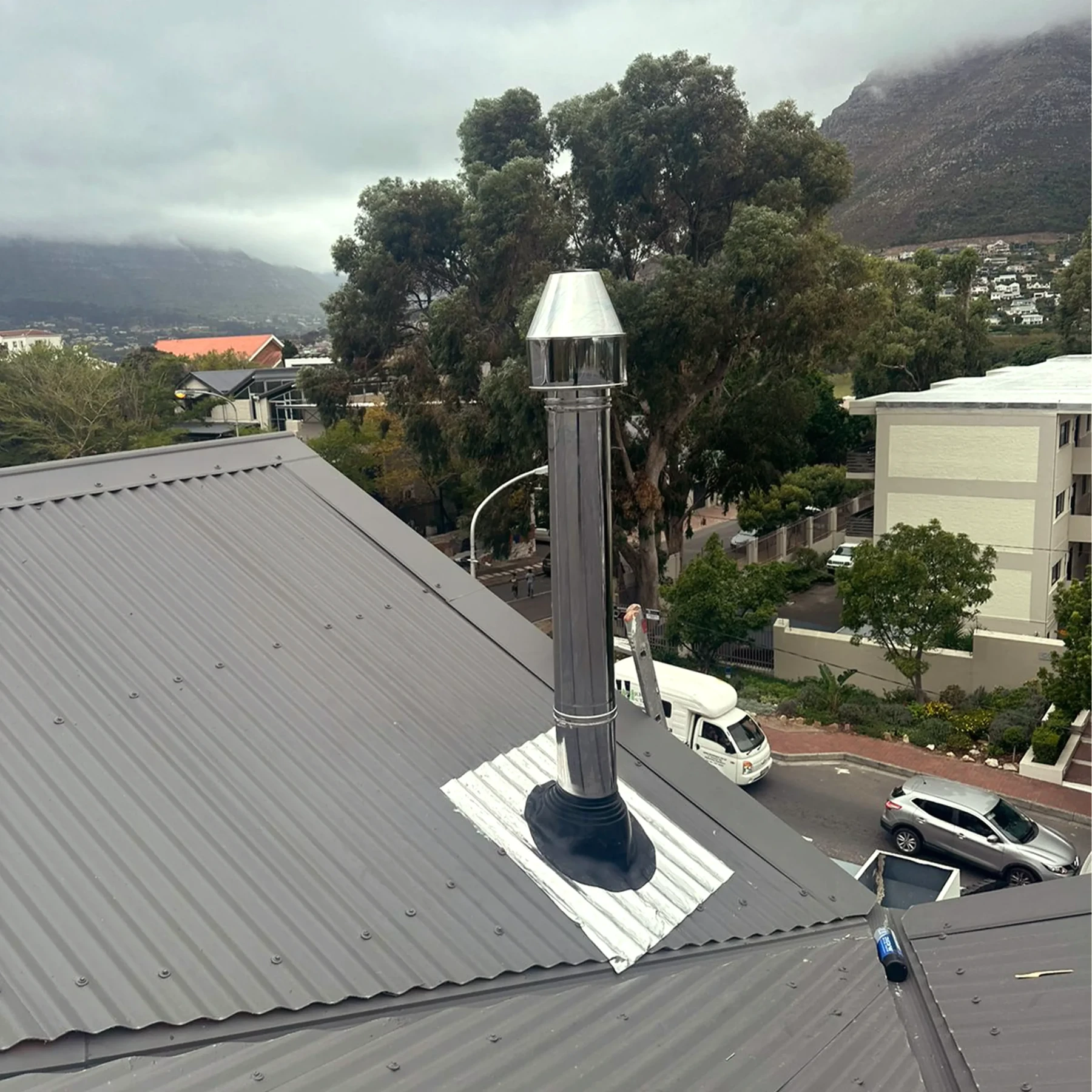
Coastal homes. Within about 5 km of the sea — the Cape Town Atlantic Seaboard, Blouberg, Simonstown, the Garden Route, the KZN coast — salt air degrades standard mild-steel flue components quickly. Specify 304-grade stainless steel for flue liners, pipe sections, and external cowls. This applies across all fireplace types, not just freestanding stoves.
Installation budget. The unit cost is only part of the picture. Fireplace installation in South Africa typically adds R5,000–R15,000 for the flue run, ceiling penetration, and hearth preparation. Single-storey homes with a straightforward vertical flue sit at the lower end; double-storey retrofits with a full twin-wall flue system push toward R15,000 and beyond.
For reference on gas installation compliance, the South African Bureau of Standards publishes SANS 10087, which sets the benchmark for gas appliance installation requirements — including what a registered practitioner must certify before a gas stove is commissioned.
7 Things to Check Before You Buy a Modern Stove
The wrong unit costs more to fix than to get right the first time. Work through these seven checks before committing to a purchase.
- Heat output in kW. A 6–8 kW stove suits a typical open-plan lounge of 40–60 m². Well-insulated smaller rooms need less; large, open, or poorly sealed spaces need more. Verify rated output against your room volume, not just the floor area.
- Fuel type. Wood is the cheapest heating fuel per kWh across most of South Africa. Gas is the most convenient where wood storage is difficult or a chimney isn’t available. Multi-fuel models also accept anthracite and biomass pellets as alternatives to firewood.
- Combustion efficiency rating. Look for a tested thermal efficiency above 70%. Quality closed-combustion stoves reach 78–85%. Every percentage point above that translates directly to more heat from less wood and fewer emissions.
- Flue route and type. A vertical flue through the ceiling gives the best draught and is the standard for freestanding stoves. Horizontal wall-exit flues are possible but require a longer run for adequate draw. Confirm the route before ordering the unit.
- Air-wash glass. A properly designed air-wash system keeps the viewing glass clean during normal operation. Budget models omit it; you’ll end up with a soot-blackened screen within a few burns.
- Marine-grade materials. Non-negotiable if you’re within 5 km of the ocean. Specify 304-grade stainless steel for all flue components and check the stove body’s finish for coastal suitability.
- Certificate of Compliance (CoC). Gas installations legally require a CoC from a registered gas practitioner. Some municipalities and insurers now require one for wood-burning installations too. Clarify this with your insurer before committing to a DIY installation.
If you’d rather have an expert assess your space before you purchase, our fireplace installation team can recommend the right output, fuel type, and flue configuration for your home.
Frequently Asked Questions About Modern Stoves
What does a modern stove cost in South Africa?
Budget for R8,000–R15,000 at entry level, R18,000–R35,000 for mid-range closed-combustion freestanding units, and R45,000–R70,000+ for premium or designer gas models. Installation adds R5,000–R15,000 depending on flue length and complexity. Our fireplace installation cost guide breaks this down by category.
How much more efficient is a modern stove vs an open fireplace?
Considerably more. An open fireplace operates at roughly 10–20% thermal efficiency; a sealed closed-combustion stove delivers 75–85%. In real terms, the same load of firewood heats your room two to four times longer in a sealed unit. The running cost saving over a winter can meaningfully offset the cost of upgrading.
Is a freestanding or built-in fireplace better?
It depends on your space and existing structure. A freestanding stove is easier to retrofit where no fireplace exists; a built-in insert is the better choice if you already have a masonry surround you want to keep. The full tradeoff — including cost, airflow, and aesthetics — is covered in our freestanding vs built-in fireplace guide.
Can a modern stove operate during load shedding?
Yes — wood-burning stoves and gas units running on LPG cylinders need no grid electricity. Browse our freestanding fireplace range to see which models include optional 12V convection fans for extra airflow during outages without depending on mains power.
Stop Feeding Heat to the Chimney
A modern stove converts the same firewood into noticeably more warmth — cleaner, with less smoke and less waste. If you’re still heating with an open fire, the upgrade typically pays for itself in wood savings within a few seasons. Request a free fireplace installation quote and one of our team will help you find the right stove for your home.
Related reading
- Can You Install a Fireplace in an Existing Home? Yes — Here's How
- Combustion Fireplace Installation: How It Works, Costs & Compliance
- Need it done professionally? See our fireplace installation in Cape Town service.
Planning this kind of work?
Call or WhatsApp with your suburb and photographs. Fire Flames can discuss your fireplace, braai or home project and quote.
Get A Quote →