
What Heating Solution Actually Works in a Cape Town Winter?
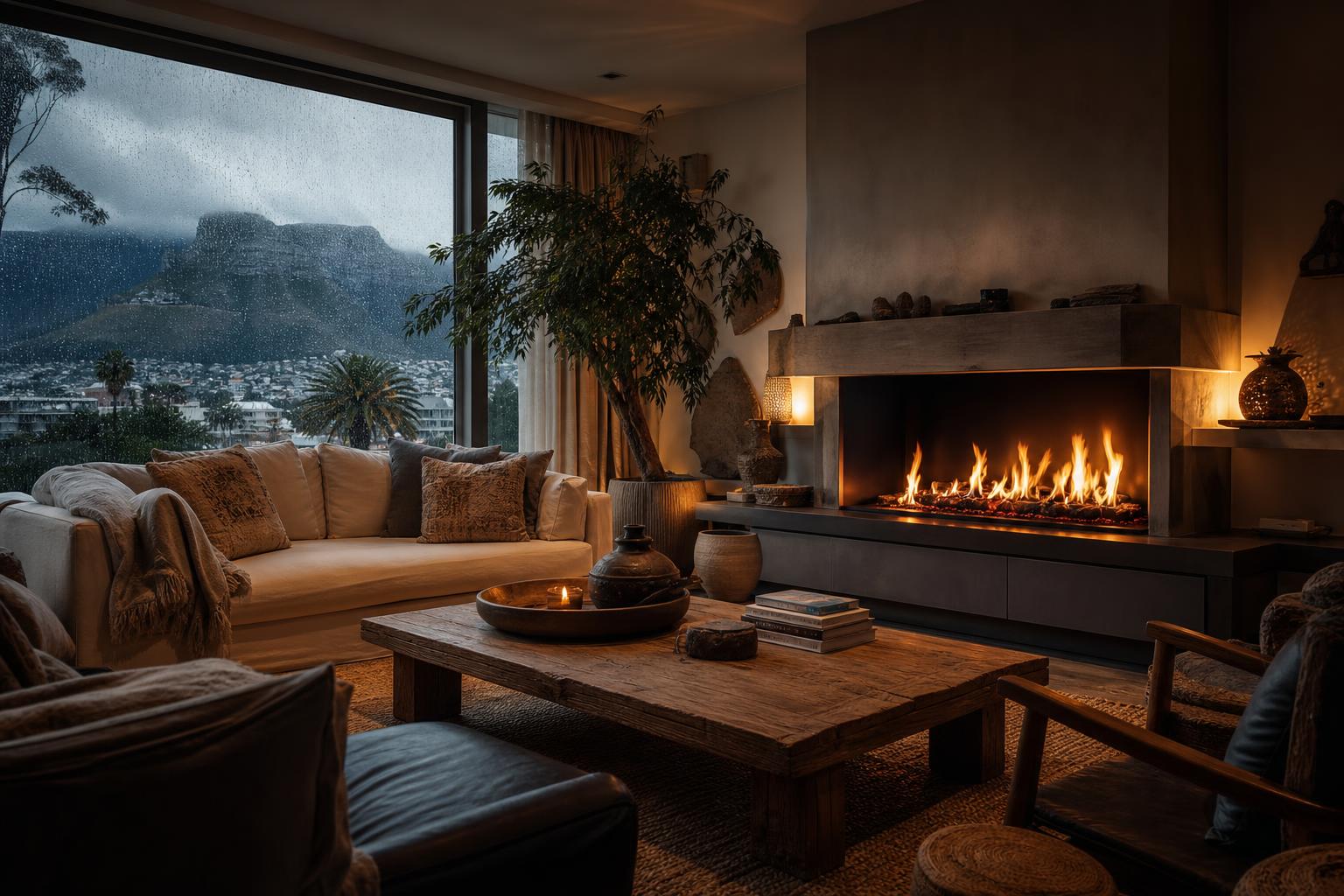
If you've been searching for on fire Cape Town heating expertise, this guide covers the five most effective fireplace solutions for Western Cape homes — with real Rand prices and honest installation advice.
If you’ve been searching for on fire Cape Town services, you already know what Cape Town winters demand: serious, reliable heat that does not buckle under damp cold, southeasters, or rolling load-shedding. The Mother City’s winters are wetter and more penetrating than most newcomers expect — temperatures regularly drop to 5–7°C at night, and a house that feels fine in summer can feel arctic by July without a proper heating solution. This guide covers five expert, affordable options that Cape Town homeowners actually use, along with what installation involves in practice.

Browse the full range of fireplaces if you want to jump straight to current stock and pricing.
Why Cape Town Heating Is Different
Cape Town homes present a specific challenge that Johannesburg or Pretoria homes do not. The coastal air is damp, which means cold permeates walls faster and dissipates more slowly. Many older homes — particularly in the Southern Suburbs, Atlantic Seaboard, and Winelands fringe — were built with minimal insulation and large, draughty rooms. An open fireplace in a Victorian semi is charming but largely ineffective; it creates ambience while most of the heat escapes up the chimney.
Add load-shedding to the equation and electric heating becomes unreliable precisely when it matters most. The result: Cape Town homeowners are increasingly turning to wood-burning and gas heating solutions that work independently of the grid — and demand for on fire Cape Town installation services has grown considerably since 2021.
On Fire Cape Town: 5 Expert Affordable Heating Solutions
1. Closed-Combustion Wood-Burning Stoves
The most popular choice in the Cape Winelands and Southern Suburbs. A closed-combustion wood stove burns at 65–80% efficiency versus 20–30% for a traditional open fireplace — meaning two to three times the heat from the same volume of wood. Cast-iron models hold thermal mass and continue radiating warmth for two to three hours after the fire dies down, making them excellent for overnight heating in living rooms and bedrooms.
Prices for quality units: R6,000–R18,000 for mid-range closed-combustion stoves, plus installation. Our freestanding wood-burning fireplaces range covers options from entry-level to premium European-spec models suited for open-plan Cape Town homes.
2. Gas Fireplaces
Gas fireplaces are particularly well suited to Cape Town apartments, cluster homes, and smaller townhouses where running a wood-burning flue through an upper floor or shared wall is not feasible. They heat instantly, require no firewood storage, and shut off cleanly — no coals to manage, no ash to clear.
Flueless gas models need no chimney at all, making them the most flexible installation option for Cape Town’s dense coastal suburbs. Flued gas fireplaces deliver higher heat output and are better suited to larger rooms. Compare your options in the gas vs wood-burning fireplaces guide, or browse our gas fireplace range to see current models and pricing.
3. Built-In Wood Fireplaces
For Cape Town homes where the fireplace is meant to be a permanent architectural feature — not just a winter appliance — a built-in fireplace delivers both visual impact and serious heating performance. These units are set into the wall with a custom surround, and a modern closed-combustion insert dramatically improves efficiency over the traditional open-hearth type.
Built-in installations require more planning and wall penetration work, but the result is a fireplace that adds genuine value to the property. Our built-in fireplace inserts range includes options for both new builds and retrofits into existing openings. The guide on freestanding vs built-in fireplaces is worth reading before committing either way.
4. Fireplace Inserts for Open Hearths
Many Cape Town heritage homes come with a working masonry chimney and an old open-hearth fireplace that loses most of its heat. A fireplace insert — a closed-combustion unit installed directly into the existing opening — transforms an inefficient open fire into an effective heater without touching the surrounding brickwork or period surround.
This is one of the most cost-effective upgrades for a Cape Town home with an existing chimney: you preserve the fireplace aesthetic, gain the full efficiency of a modern closed-combustion system, and avoid the cost of building a new flue. It is also one of the best ways to choose the right fireplace for your home without committing to a full renovation.
5. Outdoor Covered Braais and Fire Bowls
Cape Town’s outdoor culture does not disappear entirely in winter. A covered patio with a built-in braai or freestanding fire bowl provides usable outdoor heating through the cooler months. For homes with covered entertainment areas — common across the Winelands and Constantia Valley — an outdoor heating solution extends the usable season by two to three months each year. Explore the braai range for options that work year-round.
Choosing a Trusted Cape Town Fireplace Installer
The on fire Cape Town market has grown quickly, which means the range of installer quality has grown too. A few things to verify before committing:
- Certificate of Compliance (CoC): Any gas appliance installation in a residential property requires a CoC. Many insurers now also request one for wood-burning installations. If an installer cannot provide one, your home insurer may refuse related claims. Ask upfront.
- SANS compliance: South African National Standards for thermal and gas installations are governed by the South African Bureau of Standards (SABS). Reputable installers build to these standards as a matter of course.
- Flue expertise: The flue is as important as the fireplace unit itself. An undersized or incorrectly installed flue causes smoke back-puffing and creosote build-up. Verify that your installer works with properly rated flue components — read the guide on why insulated flues matter for more context.
- References and reviews: A Cape Town installer with a solid Google review history and verifiable project portfolio is a safer choice than one offering unusually low quotes without references.
Our professional fireplace installation service covers supply, installation, flue fitting, and Certificate of Compliance across the Cape Peninsula and surrounding areas.
What Does Fireplace Installation Cost in Cape Town?
Cape Town installation costs are broadly in line with national averages. A realistic budget guide:
- Freestanding wood stove: R11,000–R26,000 all-in (unit + flue + installation) for a mid-range setup.
- Gas fireplace installation: R11,000–R35,000 depending on unit and proximity to existing gas point.
- Built-in fireplace insert: R15,000–R45,000 depending on insert specification and whether a new chimney liner is required.
For a full breakdown of exactly what drives these costs, see the fireplace installation cost guide. After installation, budget R800–R1,500 per year for annual chimney sweeping services — essential for keeping flues clear and insurance-compliant.
FAQ — Cape Town Heating Questions Answered
Do I need building plan approval for a Cape Town fireplace installation?
For most freestanding stove installations using an existing chimney, a Certificate of Compliance suffices without formal building plan submission. New chimney structures that penetrate a roof or external wall may require building plan approval from the City of Cape Town. Your installer should advise on this at the site assessment. When in doubt, check with your local municipality before work starts.
What is the cheapest fuel for heating in Cape Town in winter?
Firewood remains the most affordable heating fuel. Rooikrans and Port Jackson hardwoods — invasive species cleared from fynbos — are widely available across the Cape and typically priced at R300–R550 per cubic metre. They burn hot and clean. Gas costs more per unit of heat, but offers convenience and cleaner combustion. See the gas vs wood-burning comparison for a running-cost breakdown.
Does load-shedding affect gas or wood fireplaces?
Neither wood-burning nor most gas fireplaces require electricity to operate. Wood stoves are entirely grid-independent. Most standing-pilot gas fireplaces light and operate without power. Electronically-ignited gas models may need a battery backup — check the specification before purchasing if load-shedding is a primary concern.
Can I get a fireplace installed in a Cape Town flat or apartment?
It depends on your body corporate rules and the building’s structure. Closed-combustion wood stoves require a flue through the roof, which most sectional title buildings won’t allow. A flueless gas fireplace may be an option in some apartments — though adequate ventilation is required. Ask your installer what’s actually viable in your specific building before assuming anything is ruled out.
Get the Right Heating for Your Cape Town Home
Whether you found us through a search for on fire Cape Town services or you simply want honest advice on heating your home this winter, our team is ready to help. We supply and install fireplaces across Cape Town, the Cape Peninsula, and surrounding areas — from Hermanus to Malmesbury.
Request a free installation quote with no obligation, or explore the full fireplace range to compare types, sizes, and price points before you decide.
Related Posts
Planning this kind of work?
Call or WhatsApp with your suburb and photographs. Fire Flames can discuss your fireplace, braai or home project and quote.
Get A Quote →