
5 Gas Flame Heater Mistakes That Cost You Warmth This Winter
A gas flame heater is load-shedding-proof heat — but buyers keep making the same costly mistakes. Here's what goes wrong and how to choose the right unit for your home.
A gas flame heater is one of the quickest wins for a cold South African home — no electrical circuit needed, load-shedding-proof heat, and visible flames that make a room feel genuinely warmer. But buyers keep making predictable mistakes that leave them with an underpowered, unsafe or wrong-type unit. Here are five of the most common errors, and exactly what to do instead.

Mistake 1: Buying a Gas Flame Heater That’s Too Small for the Room
The most common buying error. Shoppers spot an attractive portable gas flame heater at R2 500 and assume it’ll warm the lounge — only to find it barely takes the chill off one corner. Kilowatt output is what matters, and most compact portable units produce just 2–3 kW. That’s sufficient for a small bedroom or home office, but not for a typical South African open-plan living area.
A useful sizing guide for local homes:
- 3–5 kW: small bedroom or study (up to 25 m²)
- 6–9 kW: medium lounge or open kitchen-dining area (30–60 m²)
- 10–15 kW: large open-plan living space, or where heat must carry between rooms
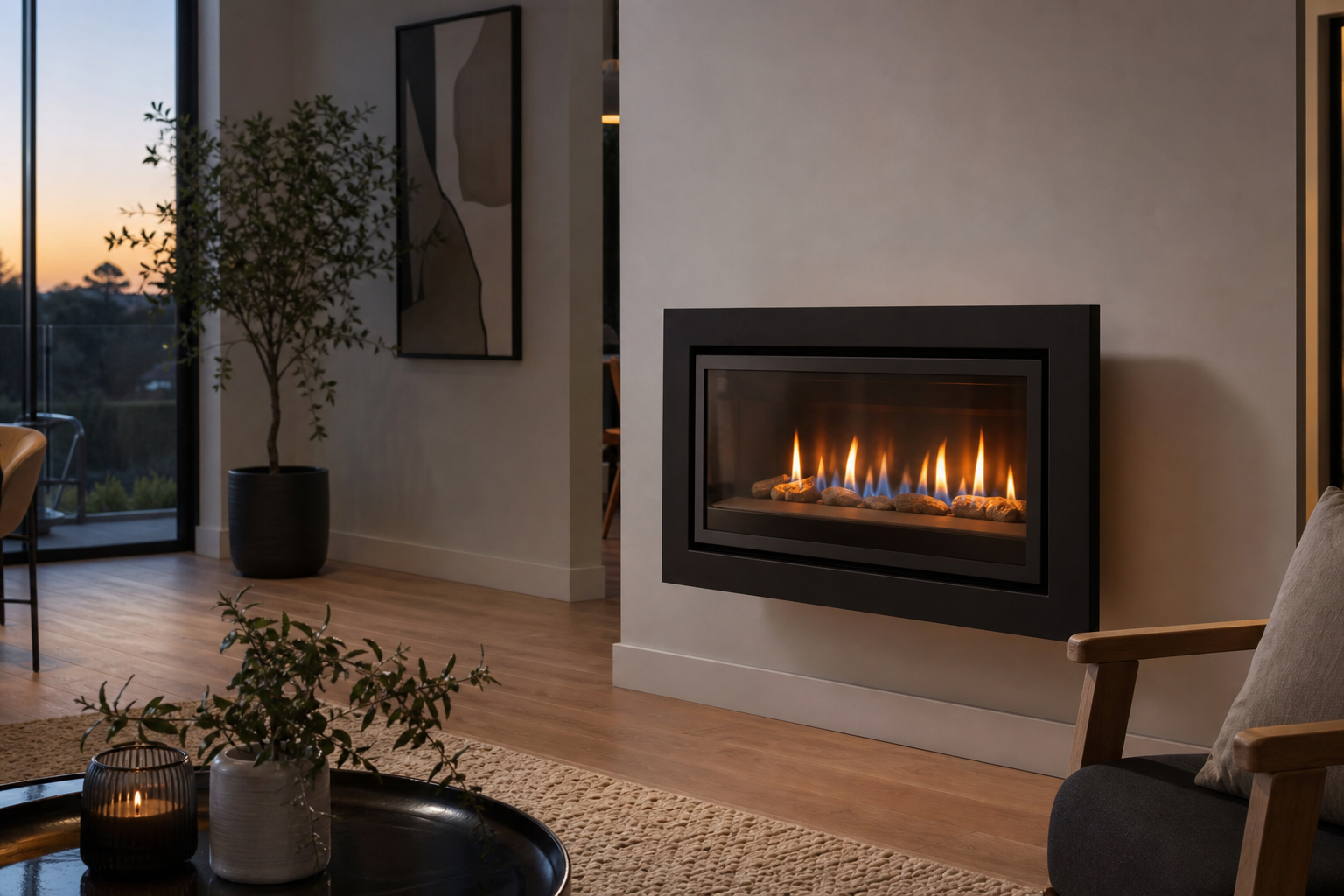
If you need serious heat for a family living room, a permanently installed gas fire — rather than a portable heater — gives you the kW output and the aesthetics in one unit. Our gas fireplace range includes units from 4 kW to 14 kW, with realistic flame effects and a choice of log or pebble beds.
Mistake 2: Choosing the Wrong Gas Type for Your Home
South Africa runs on LPG (liquefied petroleum gas — butane/propane in cylinders), not piped natural gas except in limited urban precincts. Most portable gas flame heaters are factory-set for LPG and will run directly off a standard gas cylinder. But some wall-mounted gas fires and higher-end gas fireplaces are configured for natural gas, and will need conversion fittings or separate infrastructure planning if your home isn’t plumbed.
Before any purchase, confirm:
- Which gas type the unit is designed for (LPG or natural gas)
- What cylinder size or pipe pressure rating it needs
- Whether a conversion kit is included in the price or is an additional cost
LPG portable heaters are the simpler route — they run from a standard cylinder with no permanent connection. But they need more ventilation than many buyers expect (more on that in Mistake 5 below). For context on the broader choice between gas and alternative heat sources, our post on comparing gas and wood-burning fireplaces covers real running costs side by side.
Mistake 3: Skipping Professional Installation on a Wall-Mounted Unit
Portable gas flame heaters need no installation — connect them to a cylinder and light them. But wall-mounted gas heaters, gas fires and gas fireplace inserts do require professional fitting, and this is where many buyers try to save money and end up regretting it.
In South Africa, all gas appliance installations must comply with SANS 10087 (the code governing LPG installation and use). Your installer should issue a gas compliance certificate on completion. Without one:
- Your household insurer can decline a claim arising from a gas-related incident
- You carry legal exposure if a visitor or tenant is harmed
- You may face remediation costs when selling the property
Professional installation of a wall-mounted gas flame heater or gas fire in the Cape Town area typically runs R3 500–R9 000 depending on complexity — a modest add-on against a unit that might cost R10 000–R40 000. Our professional fireplace installation services cover gas appliances and include full compliance certification and a post-installation inspection. For a broader picture of what installation adds to the total cost, our fireplace installation cost guide is worth a read before you budget.
Mistake 4: Treating a Portable Gas Flame Heater as a Permanent Heating Solution
A portable gas flame heater and a permanently installed gas fire serve different purposes. A portable unit offers flexibility — move it where it’s needed — but it delivers directional, short-range heat that dissipates as soon as you step away. It’s also a visible safety risk if children or pets are in the house and it can tip over.
If you’re heating a main lounge, dining room or master bedroom regularly, a permanently installed gas fire is the better investment. Units start from around R8 000–R15 000 for a small wall-hung flame panel (installed), rising to R25 000–R65 000 for a feature gas fireplace with a realistic log effect, decorative surround and blower system.
Not sure whether portable or permanent is right for your home? Our guide to choosing the right fireplace for your home walks through the decision clearly. The freestanding vs built-in fireplaces comparison is also directly relevant if you’re deciding between a freestanding gas fire and a built-in gas fireplace installation. Browse our full range of fireplaces to see what permanent options look like across different budgets.
Mistake 5: Ignoring Ventilation When Using an Indoor Gas Flame Heater
This is the most important mistake on the list — and the most dangerous. All gas flame heaters burning LPG or natural gas produce combustion by-products, including carbon dioxide and, if combustion is incomplete, carbon monoxide (CO). Carbon monoxide is colourless, odourless, and lethal at concentration.
Best-practice guidelines for South African homes include:
- Never operate an unflued portable gas heater in a fully sealed, airtight room
- Provide a minimum of 1 cm² of permanent ventilation per kW of heater output
- Install a carbon monoxide detector in any room where an unflued gas appliance is used regularly
- Shut off the unit and open windows if anyone in the room feels drowsy, nauseous or develops a headache
Flued gas fireplaces — those connected to a chimney or twin-wall flue system — are considerably safer for regular use because combustion gases vent directly outside. A portable unflued gas flame heater should be treated as short-term, attended, ventilated-room heat only. The LP Gas Association of South Africa publishes free safety guidelines that are worth reading before you operate any gas appliance indoors for the first time.
Gas Flame Heater Prices in South Africa
Realistic price bands for the current South African market:
- Portable LPG flame heaters — R1 500 to R4 500: Good for supplemental heating in specific rooms. Popular local-market brands include Totai, Cadac, and Megamaster. Factor in the ongoing cost of LPG cylinders (a 9 kg cylinder runs roughly R300–R400 depending on your area).
- Wall-mounted flued gas heaters — R5 000 to R18 000 (unit only): Plus R3 500–R9 000 for professional installation and flue connection. Better heat distribution and safer for regular indoor use.
- Installed gas fireplaces with realistic flame effect — R20 000 to R65 000 supply and install: Includes decorative finish options, blower system and full compliance certification. The right choice for a main living area where appearance and output both matter.
If you’re in the Cape Town area and want a no-obligation quote for a gas flame heater installation or a full gas fireplace, contact our installation team — we’ll assess your space, calculate the right output for your rooms, and recommend the most suitable unit and installation type.
Frequently Asked Questions
Does a gas flame heater work during load-shedding?
Yes — this is one of the biggest reasons South African buyers choose gas. Portable LPG heaters use no electricity whatsoever. Some wall-mounted gas fires and gas fireplaces draw a small amount of power for the blower or electronic ignition, but most have a manual ignition or battery backup that keeps them operational during outages. Confirm this with the supplier before buying if load-shedding resilience is a priority.
How long does an LPG cylinder last with a gas flame heater?
Output and runtime vary. A 5 kW heater running at full capacity burns roughly 380 g of LPG per hour. A standard 9 kg cylinder holds approximately 23–24 hours of full-output use. In practice, most users reduce the output setting, stretching a cylinder to 35–45 hours of use — about three to five weeks of evening heating depending on how cold the Cape winter gets.
What’s the difference between a gas flame heater and a gas fireplace?
“Gas flame heater” generally refers to a portable or simple wall-mounted unit focused on heat output. A gas fireplace is a permanently installed appliance, typically with a more realistic flame effect, a decorative surround, a flue connection and higher output capacity. Both burn gas — the difference is installation, permanence, and how much they look and feel like a real fireplace. For long-term use in a main room, a gas fireplace almost always delivers better value per rand.
What’s the safest gas flame heater for regular indoor use?
A flued unit — one where combustion gases vent outside via a chimney or flue pipe — is significantly safer for regular or overnight use. Unflued portable heaters are safe in well-ventilated spaces and for short periods, but should not run in airtight rooms or while people sleep. Whichever type you choose, install a carbon monoxide detector in the same room as the appliance.
Related reading
- Can You Install a Fireplace in an Existing Home? Yes — Here's How
- Combustion Fireplace Installation: How It Works, Costs & Compliance
- Need it done professionally? See our fireplace installation in Cape Town service.
Planning this kind of work?
Call or WhatsApp with your suburb and photographs. Fire Flames can discuss your fireplace, braai or home project and quote.
Get A Quote →