
Freestanding Stoves Explained: Heat Output, Styles and What to Pay
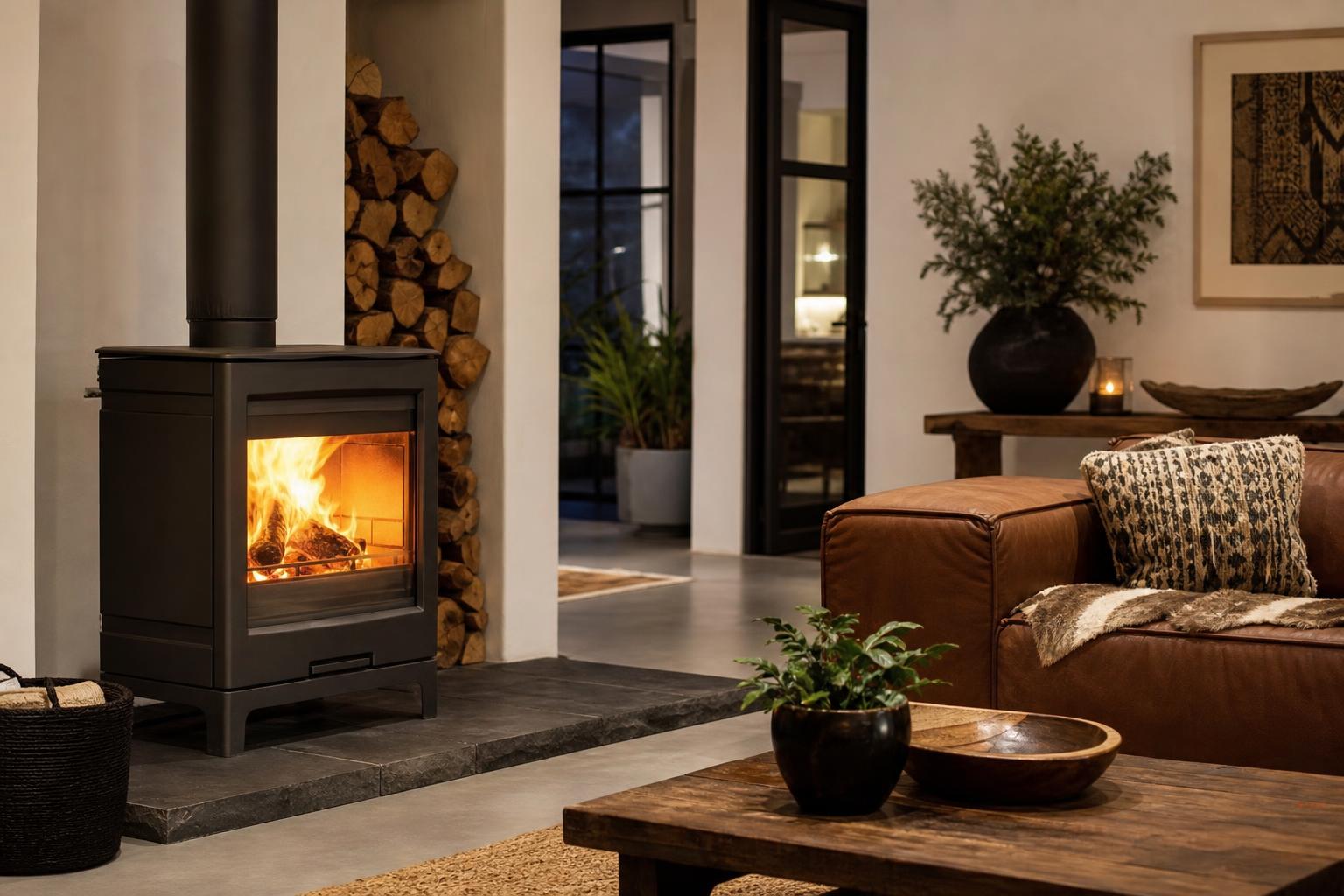
Freestanding stoves heat a room without structural work. This guide covers the 5 main styles, real SA price ranges and how to size one correctly for your space.
Freestanding stoves are one of the most flexible ways to add serious, reliable heat to a room — no structural work, no mason, no weeks of disruption. You pick a spot, run a flue to the ceiling or wall, and you’re heating from day one.
That flexibility is why they’ve become so popular across South African homes, especially since load-shedding made electric heaters unreliable. But “freestanding stoves” covers enormous ground. There’s a meaningful difference between a R6 000 open-front unit and a R40 000 closed-combustion model with convection channels — and choosing the wrong one means either under-heating the space or spending money you didn’t need to.
This guide breaks down the five main styles, what they actually cost in South Africa, and how to size one correctly before you commit to anything.

What Makes a Stove “Freestanding”?
A freestanding stove is a self-contained heating unit that stands on its own legs or base, rather than being recessed into a wall cavity. This gives you three practical advantages over a built-in installation:
- No structural modification — you don’t need to break walls, pour a slab or hire a mason (though you do need a non-combustible floor pad under the unit)
- Relocatable — if you move or renovate, the stove can come with you
- Faster installation — most freestanding stoves can be installed in a single day
The trade-off is visual integration. A built-in fireplace sits flush and looks architectural; a freestanding stove stands in the room and needs clearance from combustible walls. If aesthetics matter less than heat-per-rand, freestanding is usually the better value proposition.
Browse our freestanding fireplace range to compare models across different output ratings and price brackets.
5 Main Styles of Freestanding Stoves
Freestanding stoves come in several configurations, and the style you choose directly affects both heat output and cost:
1. Closed-Combustion Wood Stove (Most Efficient)
This is the workhorse of the freestanding world. A sealed firebox with a glass viewing door means combustion air is controlled — you extract significantly more heat from the same volume of wood, with far less smoke output. Closed-combustion models typically achieve 75–85% efficiency, versus the 25–35% of an open fire. For anyone serious about heating a room on a winter night in the Cape, this is where to start.
Price range: R8 000 – R45 000+
Solid mid-range models start around R12 000 – R20 000. Premium units from SA manufacturers like Hydrofire use convection channels to push warm air into the room faster, and their larger models can heat 60–80 m² on a single load of wood.
2. Open-Front Freestanding Fireplace
More of a traditional look — no glass door, fire burns with the opening exposed. These are easier to use and carry a lower entry price, but they burn wood quickly and inefficiently. They work reasonably well in large open-plan rooms where ambience and atmosphere matter alongside heat. For a bedroom, study or smaller lounge, a sealed unit is almost always better value over time.
Price range: R5 000 – R18 000
3. Cast Iron Wood Stove
Cast iron radiates heat slowly and evenly, continuing to warm the room well after the fire has burned down. These units are typically compact and suit smaller rooms — a 5–7 kW cast iron stove comfortably heats 25–40 m². They’re also genuinely durable: a quality cast iron stove outlasts a steel unit by decades if maintained properly, and many suit period or Cape Dutch home styles well.
Price range: R9 000 – R30 000
4. Multi-Fuel Freestanding Stove
Designed to burn wood, anthracite or coal, depending on what’s available and affordable in your area. Multi-fuel models have a raised grate that allows ash to fall clear, keeping combustion clean across fuel types. The fuel flexibility is worth it in areas where firewood is expensive or hard to source consistently.
Price range: R11 000 – R35 000
5. Gas Freestanding Stove
If wood storage, ash removal and fire-lighting aren’t your thing, a gas freestanding stove offers instant, controllable heat at the turn of a dial. Most run off LPG bottles — an important advantage during load-shedding — and modern models have ceramic logs and realistic flame effects that look genuinely convincing. For running cost comparisons, our breakdown of gas vs wood-burning fireplaces covers exactly what you’d spend per month on each.
Price range: R7 000 – R25 000
Freestanding Stoves: How Much Heat Do You Actually Need?
Stove output is measured in kilowatts (kW). For well-insulated homes in the Cape Town and Garden Route area:
| Room size | Output needed | Suitable stove type |
|---|---|---|
| Up to 25 m² | 4–6 kW | Small cast iron or compact closed-combustion |
| 25–50 m² | 6–10 kW | Mid-size closed-combustion or multi-fuel |
| 50–80 m² | 10–15 kW | Large closed-combustion unit |
| 80 m²+ / open-plan | 15 kW+ | High-output stove or multiple units |
Coastal Western Cape homes often have thinner insulation than cold-climate builds, so err toward more output, not less. A stove that’s slightly oversized is easy to manage — you simply burn at a lower draw. One that can’t keep up on a mid-July night in Cape Town is a frustrating and expensive mistake.
Ceiling height also matters: a high-ceilinged older home needs more output than a 2.4 m modern room of the same floor area because you’re heating a much larger air volume.
What Does Installation Actually Cost?
The stove price is only part of the budget. Installation adds a meaningful amount, primarily because of the flues and flue systems — a compliant flue run from the stove collar up through the ceiling and above the roofline is required by law. Twin-wall insulated flue pipe is the standard for freestanding installs; it’s cleaner-looking and safer than single-wall systems.
Typical all-in installed costs for freestanding stoves:
- Basic open-front stove, simple single-storey flue run: R10 000 – R18 000
- Closed-combustion mid-range unit, standard flue: R18 000 – R35 000
- Premium closed-combustion, two-storey or complex flue routing: R40 000 – R70 000+
For a full breakdown of what drives pricing — from flue length to hearth requirements — read our detailed fireplace installation cost guide.
All Fire Flame installations include a Certificate of Compliance (CoC), which is a legal requirement for solid-fuel appliance installations in South Africa. Your home insurer may ask for this document if you ever make a fire-related claim — it’s not optional.
Freestanding vs Built-In: Which Should You Choose?
If you’re still deciding between a freestanding unit and a built-in fireplace, the short version is this: freestanding is cheaper, faster and more flexible; built-in fireplace inserts look more integrated and add architectural value to the room. We’ve written a detailed comparison of freestanding vs built-in fireplaces if you want the full picture.
For renters, or anyone who doesn’t want to commit to a permanent structural change, freestanding is almost always the right call. For homeowners doing a renovation or building new — especially where they want a fireplace as a design feature — built-in is often worth the extra spend. Our guide to choosing the right fireplace for your home walks through the full decision tree.
Key Things to Check Before You Buy
Before committing to a specific freestanding stove, confirm these four things:
- Floor clearance — most stoves require a non-combustible hearth pad extending at least 300 mm in front of the door and 150 mm to each side
- Wall clearance — typically 200–500 mm from combustible walls, depending on the model and whether a heat shield is fitted
- Flue diameter and height — the stove’s collar size dictates the flue diameter; insufficient flue height creates poor draw and smoking problems
- Fuel quality — for any closed-combustion stove, dry hardwood with moisture content below 20% is essential. Burning wet wood voids most warranties and deposits dangerous creosote in the flue. A basic moisture meter from any hardware store lets you check before you load
If you’re unsure about any of these for your specific space, our team can assess the room before you buy anything. Explore our full range of fireplaces or book a consultation through our professional fireplace installation service page.
For an authoritative reference on solid fuel appliance standards in South Africa, the South African Bureau of Standards (SABS) publishes the SANS standards that govern compliant installations — your installer should be working to these.
Frequently Asked Questions About Freestanding Stoves
Can I install a freestanding stove myself?
Not legally in South Africa. Any wood-burning or gas appliance that connects to a flue system requires a Certificate of Compliance, which can only be issued by a registered installer. DIY installation also voids most manufacturer warranties.
Do freestanding stoves need a full masonry chimney?
No. Most freestanding stove installations use twin-wall insulated steel flue pipe, which is routed through the ceiling and roof using standard approved fittings. It’s a much simpler and faster process than building a brick chimney — and the result is often cleaner-looking too.
How long will a freestanding stove last?
A quality steel closed-combustion stove typically lasts 15–25 years with annual maintenance. Cast iron models last considerably longer — some brands carry lifetime structural warranties on the firebox. Annual chimney sweeping is the most important ongoing maintenance task.
What’s the best wood fuel for a freestanding wood stove?
Dry, seasoned hardwood with a moisture content below 20% is the standard benchmark. In South Africa, sekelbos and rooikrans are excellent choices — dense, hot-burning and widely available in the Western Cape. Never burn treated, painted, resinous or green (freshly cut) wood. A cheap moisture meter from a hardware store is the easiest way to check your wood before loading.
Ready to choose the right unit? Request a free installation quote and our team will size the correct stove for your space and provide a clear all-in price with no surprises.
Related reading
- Can You Install a Fireplace in an Existing Home? Yes — Here's How
- Combustion Fireplace Installation: How It Works, Costs & Compliance
- Need it done professionally? See our fireplace installation in Cape Town service.
Planning this kind of work?
Call or WhatsApp with your suburb and photographs. Fire Flames can discuss your fireplace, braai or home project and quote.
Get A Quote →