
Brick Paving for Driveways and Patios: Designs and Costs
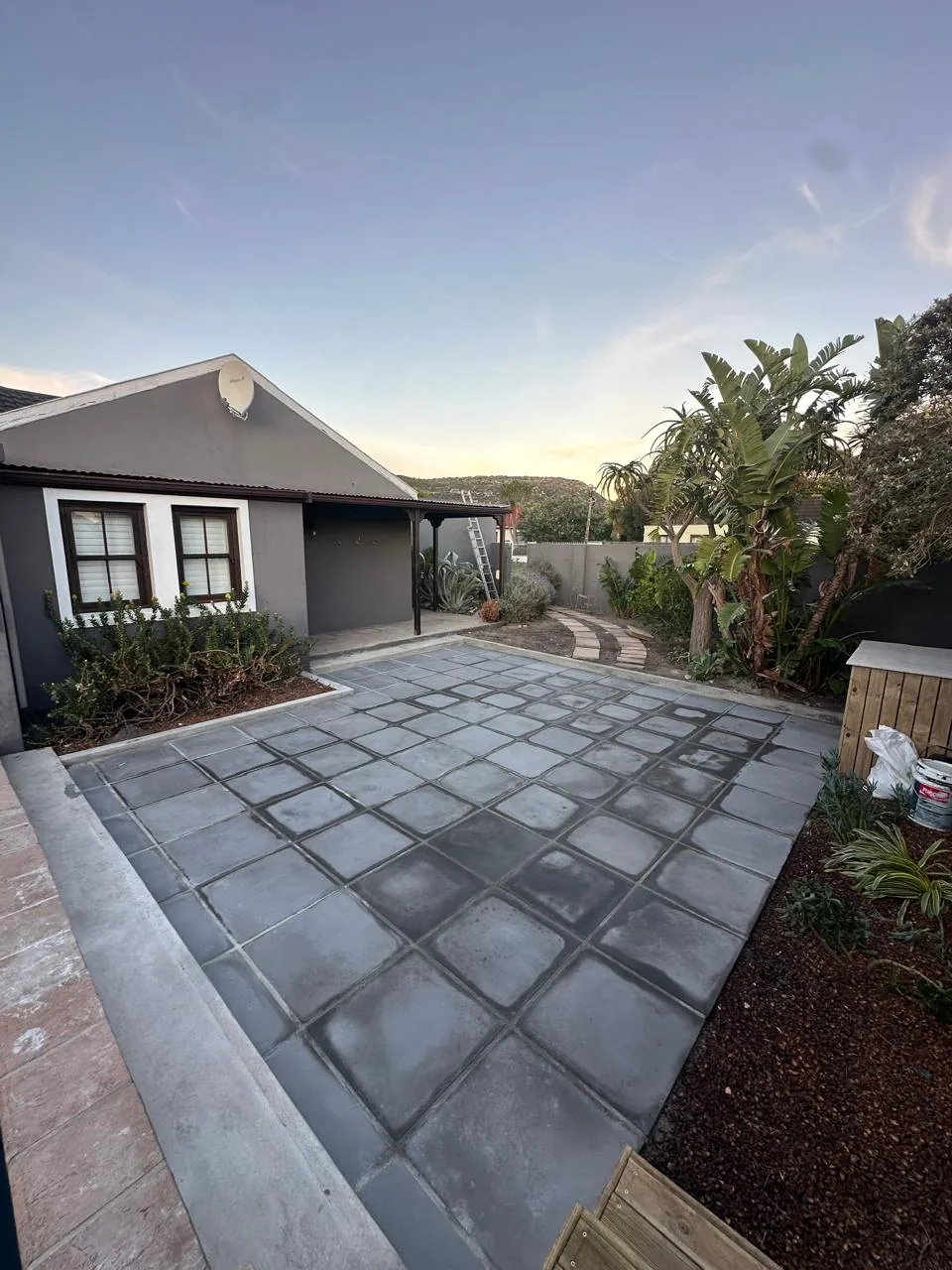
Good brick paving is mostly hidden under the surface. Here is how to choose a paving design for a driveway or patio, how paving should be laid so it stays flat, and what changes the price.
Quick answer
For a driveway, choose a strong paver laid in a herringbone pattern on a well compacted base, with solid edges so the bricks cannot spread. For a patio, you have more freedom: clay bricks, concrete pavers or large slabs all work if the ground is prepared properly and the surface falls away from the house. The price depends far more on the ground work, access and pattern than on the bricks themselves, so ask our team for a written quote.
Brick paving is one of the most common outdoor upgrades we do. A neat driveway or patio makes a home look finished, stops mud being walked inside in winter and gives you a level space for a car, a table or a braai.
Most paving problems we are called out to fix have nothing to do with the bricks. They come from a thin base, no edge restraint or water with nowhere to go. Below, our team explains the paving designs that work, how paving should be laid, and what affects the cost.
What Brick Paving Is and Where It Works Best
In South Africa, “brick paving” is used for any small paving unit laid on a sand bed with sand-filled joints. There are a few main types, and each suits a different job.
Clay brick pavers
Fired clay in reds, browns and blends. The colour runs right through, so it does not fade. A classic look for older homes and face brick houses.
Concrete pavers
Made in many shapes, including interlocking and cobble styles. Strong, even in size and well suited to driveway paving.
Concrete slabs
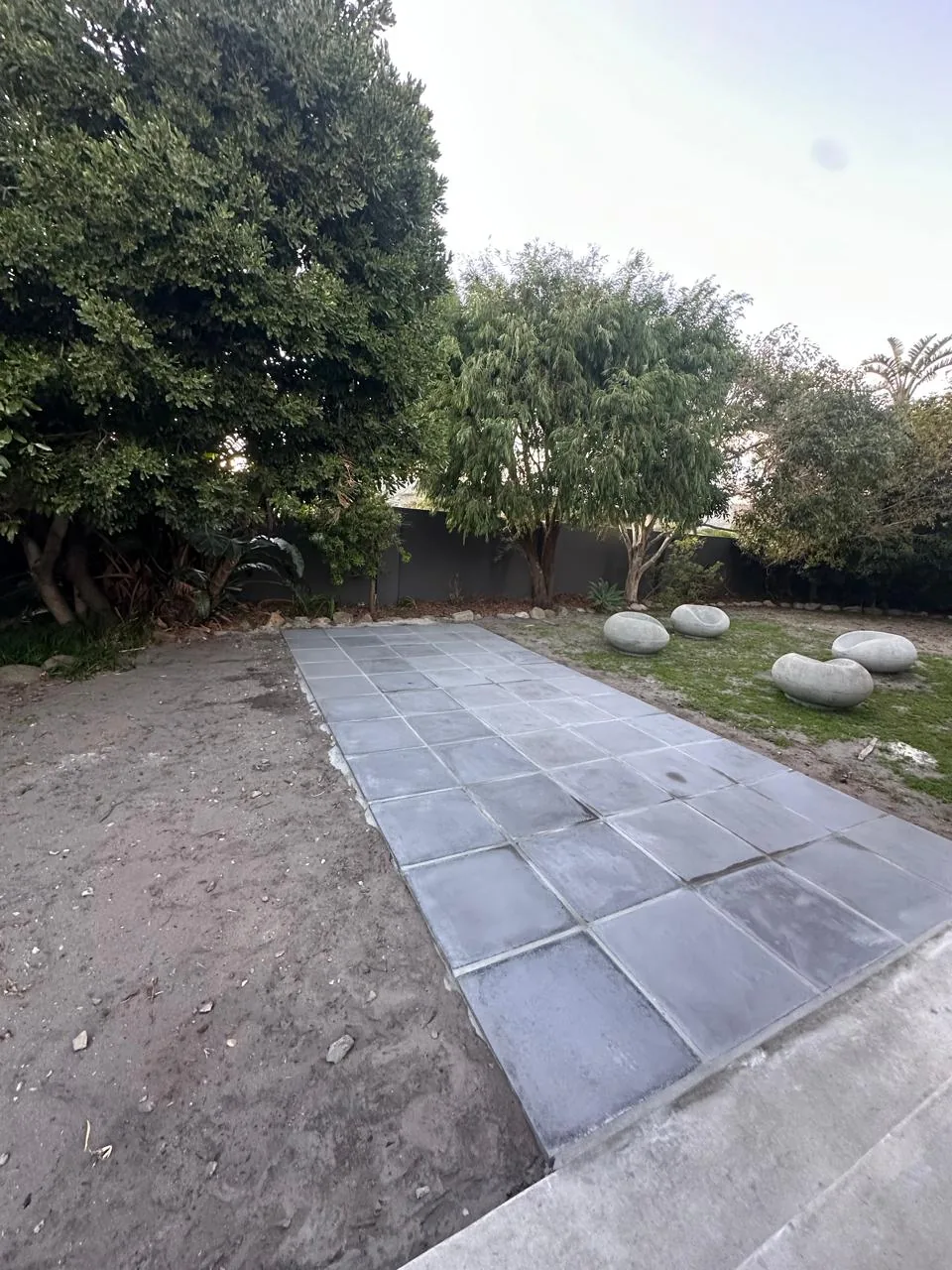
Large, flat units for patios, paths and pool areas. Quick to lay and clean looking, but not meant for cars unless they are made for it.
Natural stone
Sandstone, slate and similar. Beautiful, but uneven in thickness, so it takes more time and skill to lay level.
A driveway needs a paver made for vehicle loads. A patio, path or pool surround can use almost anything, so the choice comes down to looks, comfort underfoot and how slippery it gets when wet.
Popular Brick Paving Designs and Patterns
The pattern is not only about looks. On a driveway, the way the bricks lock together decides whether they stay put when a car turns on them.
| Paving design | Best for | Good to know |
|---|---|---|
| Herringbone (45 or 90 degrees) | Driveways and parking areas | The strongest interlock. Bricks resist turning tyres, but there are more cuts at the edges. |
| Stretcher bond (running bond) | Paths, patios, narrow driveways | Simple and neat. Lay it across the direction of traffic on a driveway. |
| Basket weave | Patios and courtyards | Traditional look. Weaker under cars, so keep it for foot traffic. |
| Stack bond or slab grid | Modern patios and pool areas | Clean lines. Only for foot traffic, and it shows any poor levelling. |
| Borders and soldier courses | Any design | A row of bricks on the edge frames the paving and helps hold it in. |
Mixing two colours, adding a border or setting a circle into a patio can lift a plain area. Just keep it simple on a driveway, where strength matters more than detail. If the paving will run up to a braai, our braai area ideas guide shows layouts that work well together.
Driveway Paving vs Patio Paving: What Changes
The method is the same, but driveway paving has to carry far more weight. That changes the base, the paver and the edges.
- A deeper base. A driveway needs a thicker layer of compacted crushed stone under the sand bed. A patio can use a lighter base on firm ground.
- A thicker paver. Driveway pavers are thicker and stronger than those for a path or patio.
- Strong edges. Kerbs or bricks set in concrete stop the paving from spreading under car tyres.
- The right pattern. Herringbone works best where cars turn and brake.
- Falls and drainage. Both need a slope to shed water, but a driveway often needs a channel drain at the gate or garage.
If you are paving a new braai patio, think about where the braai will go before the bricks go down. Our braai area design team can plan the paving, the braai and the drainage as one job.
How to Lay Brick Paving That Stays Flat
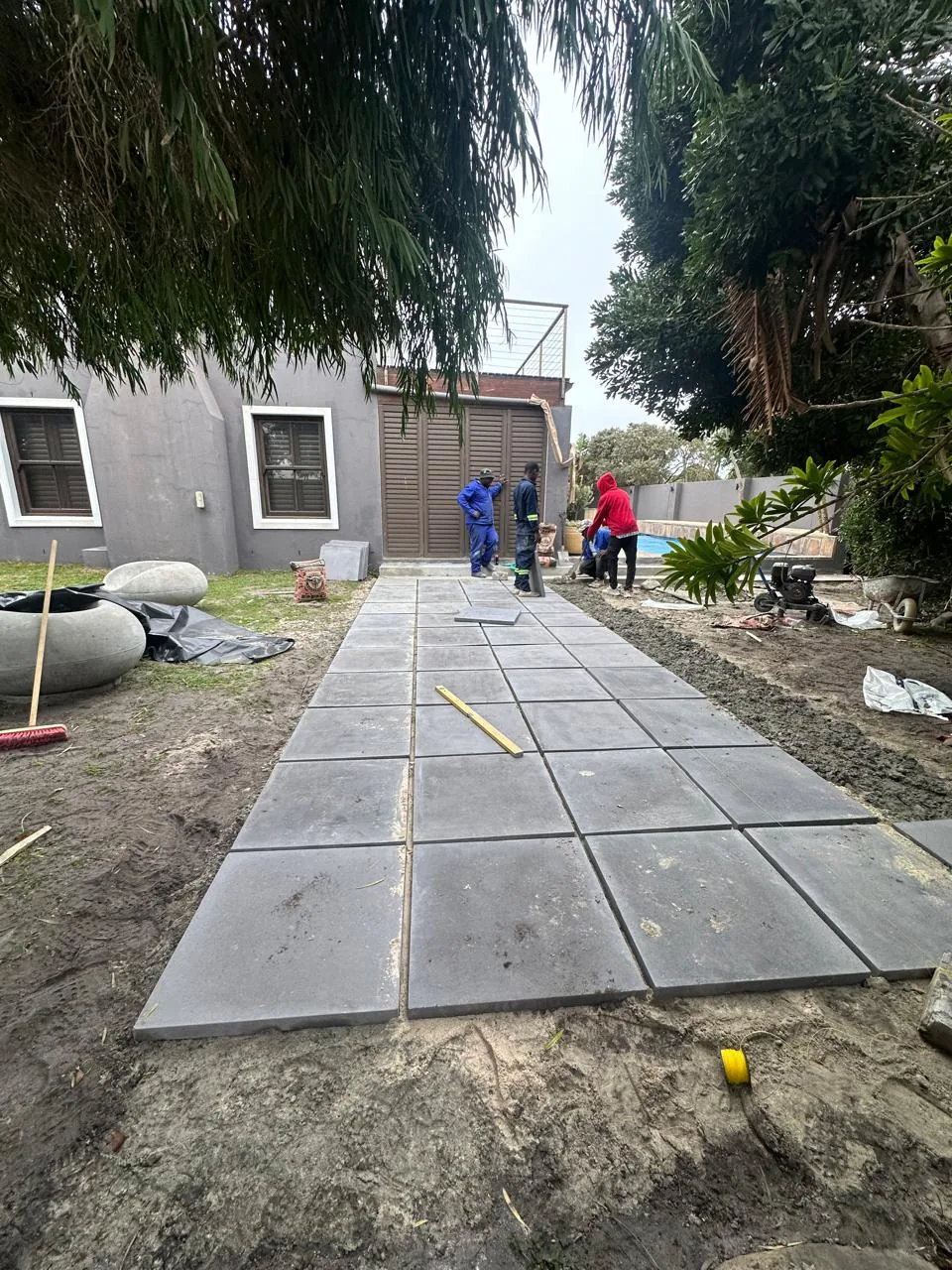
If you are wondering how to lay paving so it lasts, this is the order our team follows. Each step matters, and skipping one is what causes dips and loose bricks later.
Plan the levels
We set the finished height and a gentle fall away from the house, gates and garage doors so rain runs off, not in.
Dig out
We remove grass, roots and soft soil to the right depth for the base, the sand bed and the paver.
Build and compact the base
Crushed stone is laid in layers and compacted with a plate compactor. This layer carries the load.
Fix the edges
Kerbs or edge bricks are set in concrete so the paving cannot creep outwards.
Screed the sand bed
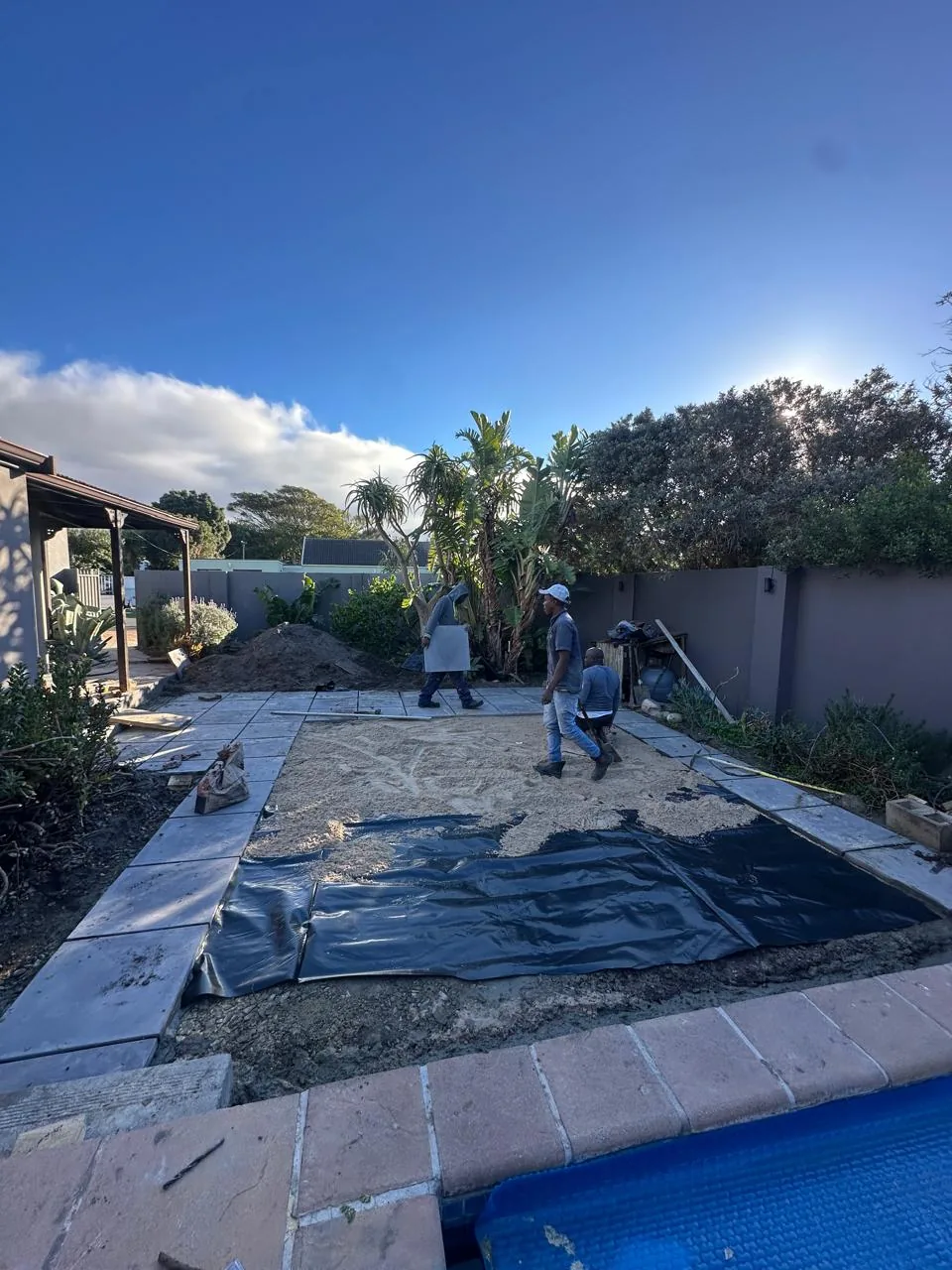
A thin, even layer of bedding sand is screeded flat. It is not walked on once it is level.
Lay and cut
Pavers are laid in the chosen pattern with even joints, then cut neatly to fit the edges.
Compact and fill
The paving is compacted, then joint sand is swept in until the joints are full.
On sandy ground, or where weeds are a problem, we may also lay a membrane before the bedding sand. If you are doing a small path yourself, the same rules apply: a firm base, solid edges and a fall for water.
Brick Paving in Cape Town: Rain, Sand and Wind
Local conditions are hard on paving, and a good installer plans for them from the start.
Winter rain
Heavy rain finds every low spot. Without a proper fall, water ponds, softens the base and the paving sinks.
Sandy ground
Many coastal and Cape Flats gardens sit on loose sand. It must be dug out or compacted well, or the paving will move.
The south-easter
Strong summer wind can blow dry joint sand out. Topping up the joints keeps the bricks locked together.
Tree roots
Roots lift paving over time. We plan around big trees rather than paving right up to the trunk.
Salt air near the sea can leave a white bloom on some pavers. It is usually harmless and often fades. Your installer can advise on a paver and sealer that suit a seaside home.
What Drives the Cost of Brick Paving
Two driveways of the same size can be priced very differently. These are the things that change the price most.
What changes the price of a paving job
- ✓The size of the area and how easy it is to reach with a bakkie and a compactor
- ✓Removing old paving, concrete or a lawn, and carting away the rubble
- ✓How deep the dig is and how much base material is needed
- ✓The paver itself: clay, concrete, slabs or stone, and its thickness
- ✓The pattern: herringbone, curves and borders mean more cutting
- ✓Kerbs, edging, steps and changes in level
- ✓Drainage, such as channel drains or extra falls
A cheaper quote often means a thinner base or no edge restraint, and that shows up as sunken bricks after one wet winter. Ask what the quote includes. Our team will give you a written quote that lists the base, the paver and the edging. Our building and renovations page shows more of our paving in Cape Town.
Looking After Your Paving
Well laid paving needs very little care. A few habits keep it looking new for longer.
- ✓Sweep regularly and top up joint sand when the joints look low.
- ✓Pull weeds early, before the roots open up the joints.
- ✓Clean oil marks on a driveway quickly, before they soak in.
- ✓Keep gutters and downpipes flowing away from the paving, not onto it.
- ✓Lift and relay any sunken area early. Small dips grow if water keeps sitting there.
Paving around a braai gets grease and ash on it, so a sealed paver or a smooth slab is easier to keep clean. If your paving sits under a covered braai, read our guide on braai area waterproofing as well. And if you are adding a brick braai or a fire pit, it is best to plan it with the paving, so the base and levels are right from day one.
Planning a new driveway or patio, or fixing paving that has sunk? Send us a few photos and rough measurements of the area, and our team will tell you what it needs. You can also book building renovations online.
Brick Paving: Common Questions
What is the best paving design for a driveway?
Herringbone is the strongest pattern for a driveway, because the bricks lock together and resist turning tyres. It must be laid on a deep, compacted base with solid edges.
Can I lay paving straight onto sand?
Paving is laid on a thin bed of sand, but that sand must sit on a firm, compacted base. Laying pavers straight onto loose ground is the main reason paving sinks and moves.
Why is my brick paving sinking?
Usually because the base was too thin, the ground was not compacted, or water is getting under the paving. The pavers in that area need to be lifted, the base fixed and the bricks relaid.
Do I need to seal brick paving?
It is not essential, but a sealer can help resist stains, especially on a driveway or around a braai. It needs to be redone from time to time, and some sealers make paving more slippery when wet.
How long does brick paving last?
Good paving on a proper base can last for many years. The bricks rarely wear out. Most problems come from the base, the edges or poor drainage, which is why preparation matters most.
Planning this kind of work?
Call or WhatsApp with your suburb and photographs. Fire Flames can discuss your fireplace, braai or home project and quote.
Get A Quote →