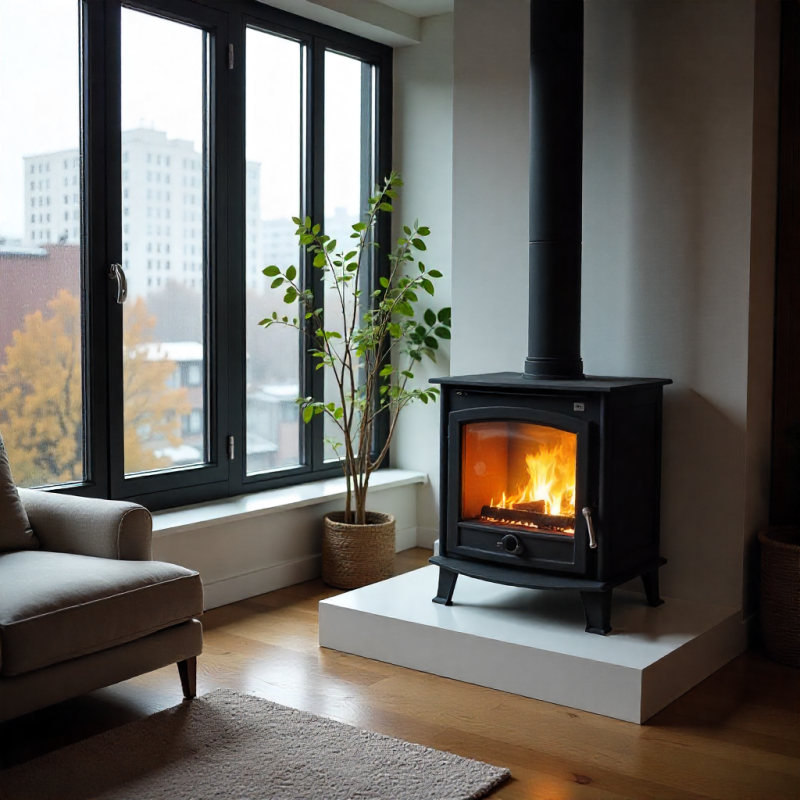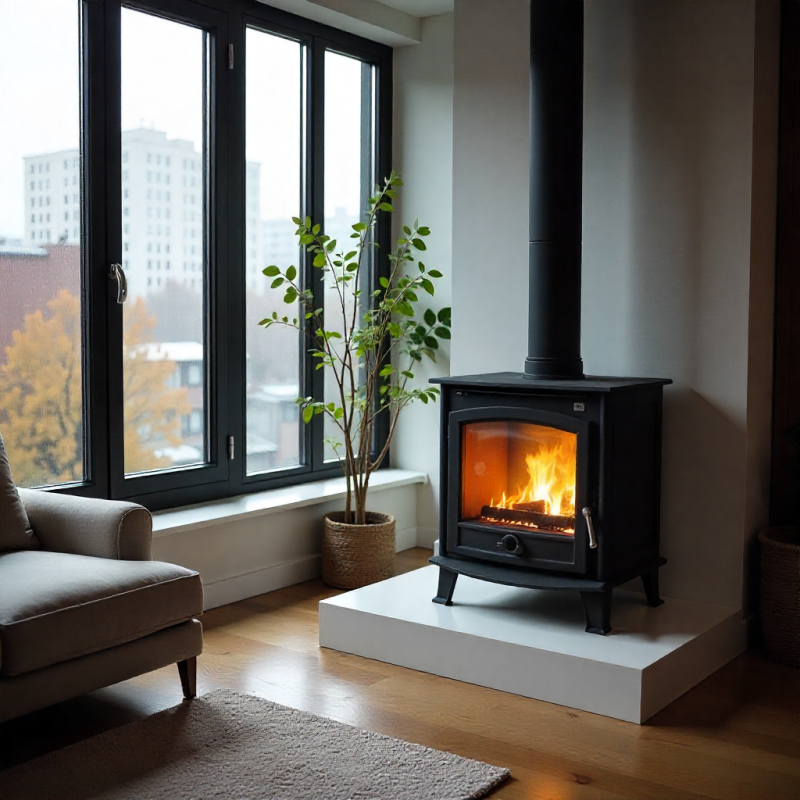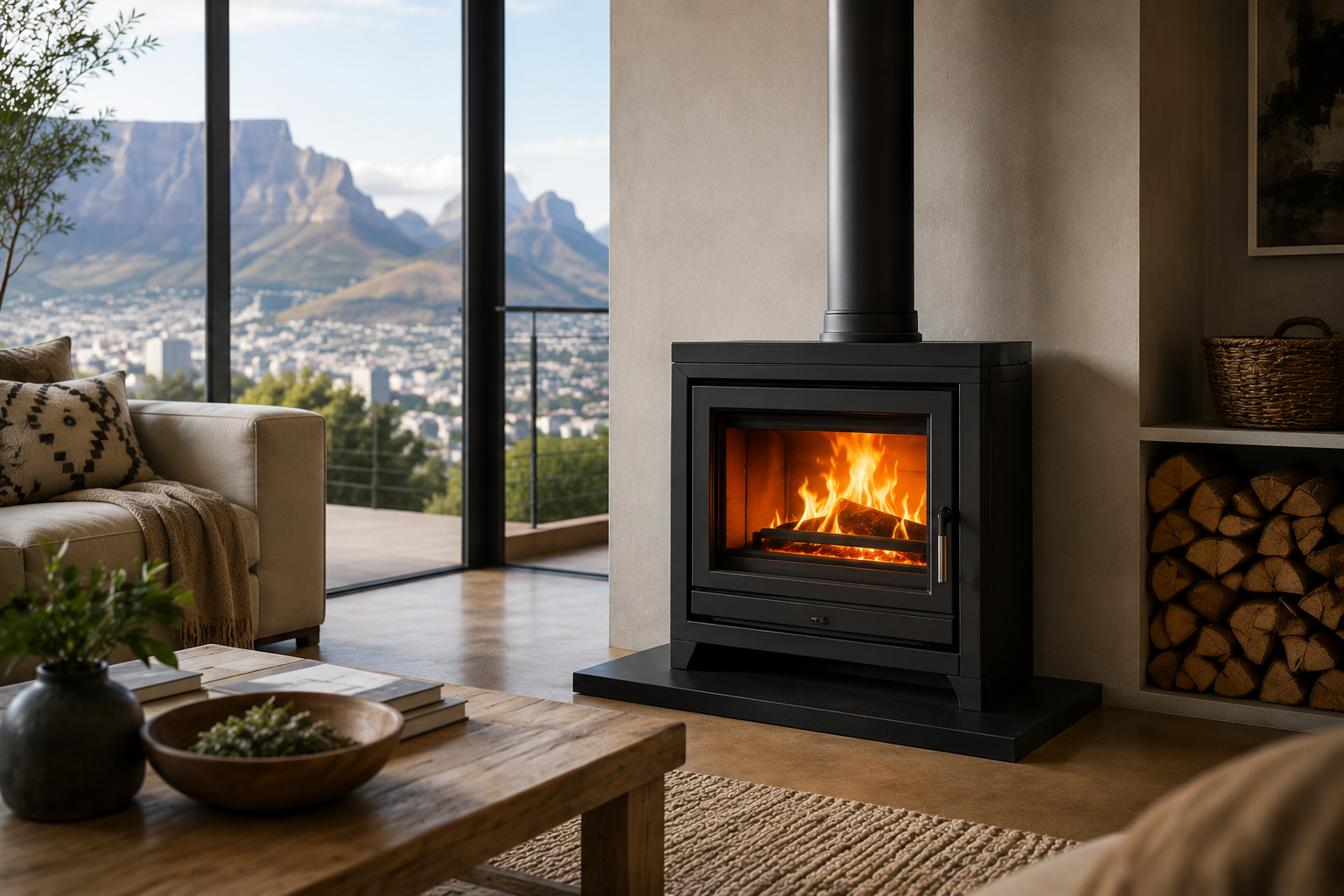

An indoor wood fireplace is one of the most practical and visually rewarding upgrades you can make to a South African home. With load shedding a near-constant reality and winter temperatures plunging across the Highveld and Western Cape, a wood-burning fireplace does something no electric heater can: it heats your living space reliably even when the grid is down, and it looks genuinely beautiful doing it. Browse our full range of freestanding wood-burning fireplaces to see what’s available — but read this guide first, so you choose the right type for your home.
Why South Africans Are Investing in Indoor Wood Fireplaces Right Now
The appeal of a wood fireplace has always been aesthetic — flames, warmth, atmosphere. But over the past few years, practical necessity has overtaken aesthetics as the primary motivator for many buyers. Load shedding has made grid-independent heating a genuine priority rather than a luxury, and a closed combustion wood fireplace delivers 6–12 kW of radiant heat with zero dependence on Eskom.
There is also a long-term cost argument. Quality hardwood — leadwood, black wattle, or kiaat — burns efficiently in a well-sealed firebox. Running an indoor wood fireplace for 4–5 hours an evening costs roughly R30–R60 in wood (depending on your supplier and region), compared to R80–R150 for a comparable electric space heater running on inverter or generator power. Over a six-week Cape Town winter that difference adds up fast.
Finally, there is property value. A well-installed wood fireplace is a selling feature in virtually every South African market, from Sea Point apartments to Stellenbosch wine-estate homes. It signals craftsmanship, permanence, and comfort in a way no plug-in heater ever could.
Types of Indoor Wood Fireplaces
Freestanding Wood Fireplaces
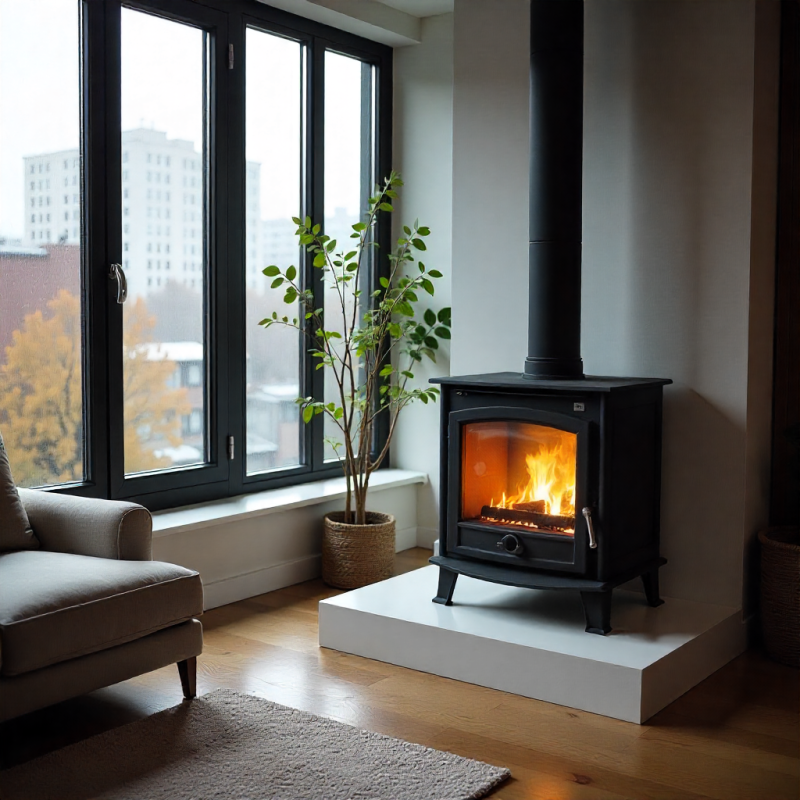
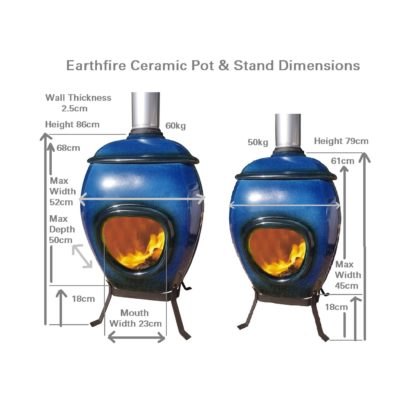
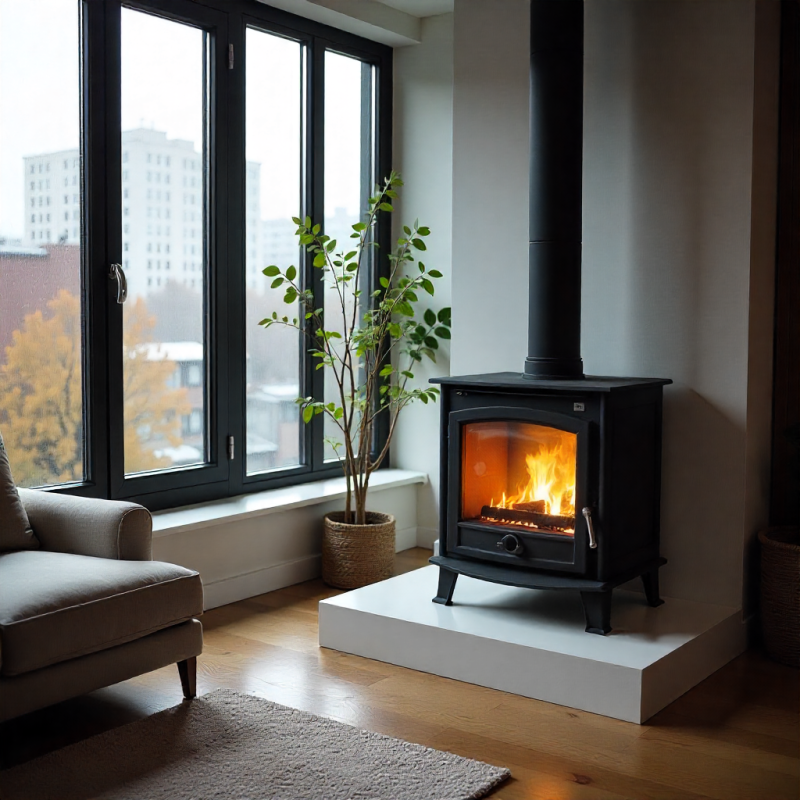
A freestanding model — the classic “pot-belly” stove or the sleeker modern slab-sided burner — sits on a hearth pad and connects to an insulated flue that runs up through the ceiling or out through the wall. These are the easiest type to retrofit into an existing room because they do not require structural changes to walls. They are available in a wide range of outputs (4 kW to 15 kW) and styles, from traditional cast-iron designs to minimalist powder-coated steel units.
Freestanding fireplaces are the most popular choice for South African homeowners adding heating after construction. If you are comparing your options, our guide to choosing between freestanding and built-in fireplaces walks through the trade-offs in detail.
Built-in Wood Fireplaces and Inserts
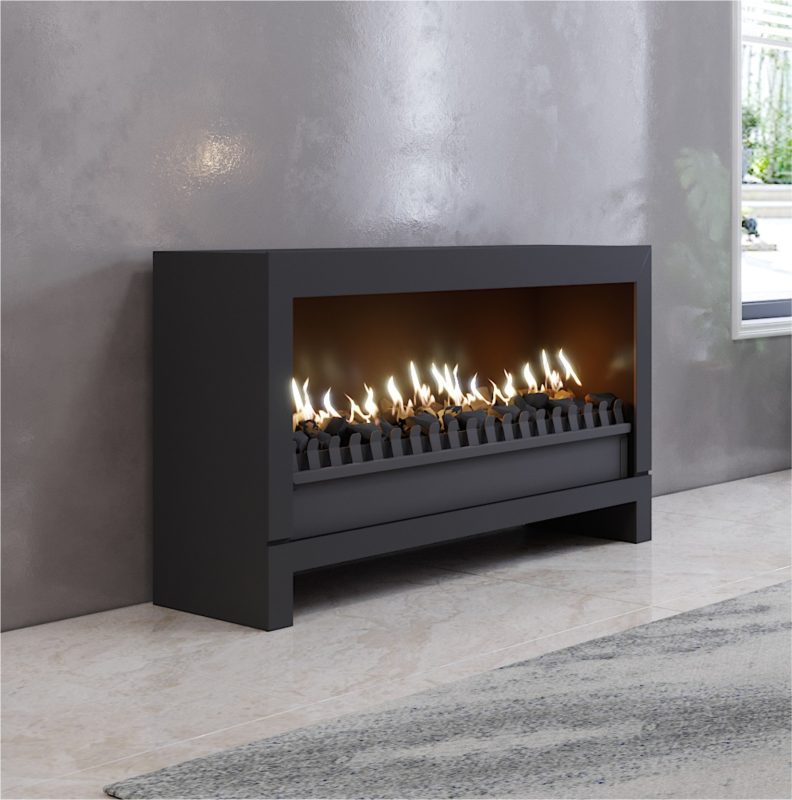
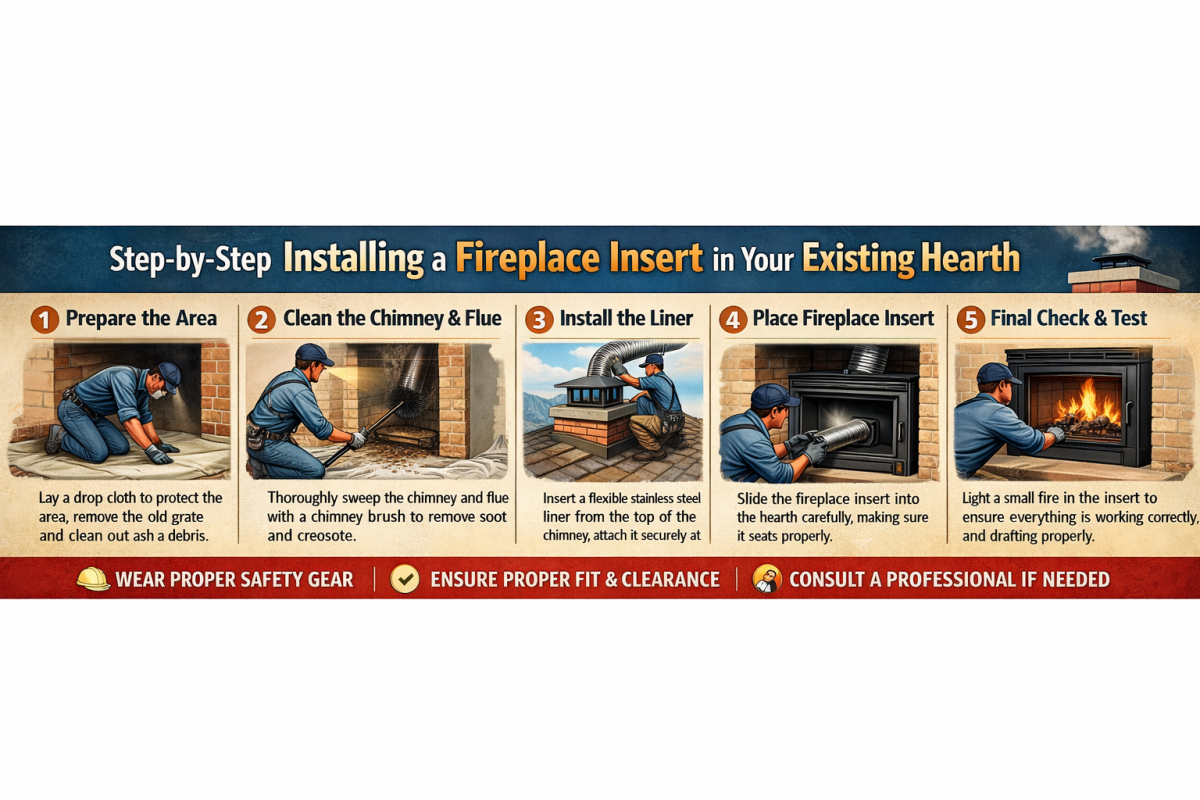
A built-in fireplace is recessed into the wall or cavity during construction or renovation. It creates a clean, architectural look — the firebox flush with the wall, often with a custom plaster or tile surround. If your home has an existing open hearth (common in older Cape Dutch or Georgian-revival homes), a built-in fireplace insert can convert it into a far more efficient closed-combustion unit without losing the charm of the original opening.
The trade-off is installation complexity: built-in units require precise wall preparation, correct lintel sizing, and proper flue routing from the outset. They are harder to move if you renovate later, and typically cost more to install than freestanding models.
Closed Combustion vs Open Hearth
Most modern indoor wood fireplaces sold in South Africa are closed combustion — meaning the firebox is sealed and air intake is controlled via adjustable dampers. This matters for two key reasons. First, efficiency: a closed combustion unit converts 65–80% of the wood’s energy into usable heat, versus 15–25% for a traditional open hearth (where most of the heat literally goes up the chimney). Second, safety: a sealed firebox dramatically reduces the risk of sparks landing on carpets or curtains.
Open-hearth fireplaces still have their place — a large farmhouse inglenook or an outdoor-facing wall opening — but for a practical indoor wood fireplace in a modern South African home, closed combustion is almost always the right choice.
How to Choose the Right Size (kW Output)
Fireplace output is measured in kilowatts. Getting the sizing right is the single most important technical decision you will make. Too small and the room never gets warm; too large and you are opening windows in mid-July.
A rough rule of thumb widely used in South Africa: allow approximately 1 kW per 10–15 m² of well-insulated floor space, or 1 kW per 8 m² in older homes with poor ceiling insulation. So a typical open-plan lounge-dining of 50 m² needs a 5–6 kW unit in a well-insulated home, or 6–7 kW in a drafty older house.
Other factors to weigh:
- Ceiling height: rooms with 3 m+ ceilings need more output than the floor-area formula suggests — add 15–20% for every extra metre of height.
- Glazing: large glass walls or sliding doors lose heat fast. A coastal Cape Town home with a north-facing glass wall will need more kW than the floor area implies.
- Coastal vs inland: Western Cape winters are damp and wind-driven; Highveld winters are dry but feature extreme overnight cold. Coastal buyers should err toward more output; Highveld buyers should ensure the unit handles sustained sub-zero conditions.
- 304 stainless steel components: if you live within 5 km of the coast, insist on 304-grade stainless for any exposed components (flue collars, cowls, chimney caps) — standard mild steel corrodes rapidly in salty coastal air.
If you want a comprehensive walkthrough of the full selection process, choosing the right fireplace for your home covers every variable in depth.
What Does an Indoor Wood Fireplace Cost in South Africa?
Here are realistic 2026 price ranges for the full supply-and-install package (unit + flue + installation). All figures include VAT and assume a standard single-storey installation with a straight vertical flue run.
- Entry-level freestanding (4–6 kW): R18,000–R32,000 installed. Suitable for a bedroom or small lounge. Basic steel or cast-iron construction.
- Mid-range freestanding (6–10 kW): R32,000–R60,000 installed. The sweet spot for most South African living rooms. Good glass area, sturdy steel or cast-iron firebox, insulated twin-wall flue.
- Premium freestanding or built-in (10–15 kW): R60,000–R110,000 installed. Larger output for open-plan spaces, architectural inserts, or double-sided designs. Often features larger viewing glass, programmable air controls.
- Double-sided / see-through fireplace: R75,000–R150,000+ installed. Requires structural support in shared walls. Striking visual impact when dividing two rooms.
Installation costs alone (without the unit) typically run R5,000–R15,000, depending on flue length, roof penetration complexity, and finish. For a detailed breakdown of every cost line, read our fireplace installation cost guide — it covers what you should and should not pay for.
Want to know how a wood fireplace compares to a gas model over time? Our gas vs wood-burning fireplaces comparison runs the numbers on running costs, convenience, and upfront investment so you can make a fully informed choice.
Installation: What to Expect
A standard freestanding fireplace installation typically takes one full day for an experienced team. The process involves positioning the unit on a non-combustible hearth pad (tile, slate, or polished concrete), cutting the ceiling and roof penetration, fitting the insulated twin-wall flue through a fire-collar, and finishing with a cowl or rain cap at the top.
Correct flue sizing and routing is critical — a flue that is too small causes poor draw and smoke backflow; one that runs horizontally for too long loses draft. Our installers always assess roof pitch, prevailing wind direction (important in the Cape), and proximity to any ridge or obstruction before specifying the flue configuration.
After installation, you should plan for annual chimney and flue maintenance — a professional sweep removes creosote build-up, which is a fire hazard if left unchecked. Burn only dry, well-seasoned hardwood (moisture content below 20%) and you will significantly reduce creosote accumulation and maximise heat output. If you are tracking the latest fireplace design trends, integrated heat-storage surrounds and slim-profile steel fireplaces are currently popular in new South African builds.
Frequently Asked Questions
Can I install an indoor wood fireplace in a Cape Town rental or sectional-title property?
In a freestanding rental, you would need the landlord’s written permission and a compliant flue installation. In a sectional-title scheme, the Body Corporate must approve any structural penetration (roof or exterior wall). Many sectional-title owners opt for a freestanding unit with a twin-wall flue exiting through a side wall rather than the roof, which is faster to approve and less invasive. Always check your sectional-title rules before purchasing.
Is a wood-burning fireplace safe to use during load shedding?
Yes — this is one of its strongest selling points. A closed combustion wood fireplace operates entirely without electricity. No fan, no igniter, no electronic controls. As long as you have dry wood and a functioning flue, your fireplace works regardless of the grid status. Many South African families have made their indoor fireplace their primary lounge heating specifically because it is load-shedding-proof.
How much does it cost to run a wood fireplace in South Africa?
Running costs depend entirely on your wood source and species. Delivered hardwood (leadwood, blue gum, or black wattle) typically costs R400–R800 per 100 kg bag in the Western Cape and Gauteng. A 6 kW fireplace burning for 4–5 hours per evening will use approximately 4–6 kg of dry hardwood, putting your daily running cost at R20–R48. Coastal buyers paying higher delivery costs may spend more; Highveld buyers sourcing locally grown blue gum often pay less.
Do I need planning permission to install a wood fireplace in South Africa?
A freestanding fireplace installation is generally considered a minor works project and does not require formal building plan approval in most South African municipalities — but a compliant installation (correct flue specification, certified installer) is essential for insurance purposes. Built-in fireplaces that involve wall or structural changes typically do require municipal sign-off. Our professional fireplace installation service handles all compliance documentation for you.
Ready to Add a Wood Fireplace to Your Home?
Whether you are drawn to the reliable heat, the load-shedding independence, or simply the look and feel of real wood flames, an indoor wood fireplace is one of the most enduring home improvements you can make in South Africa. Explore our full fireplace collection — or better yet, request a free installation quote and one of our installers will assess your space, recommend the right unit and output, and give you a transparent supply-and-install price.