
Roof Waterproofing: Torch On, Membrane or Waterproofing Paint?
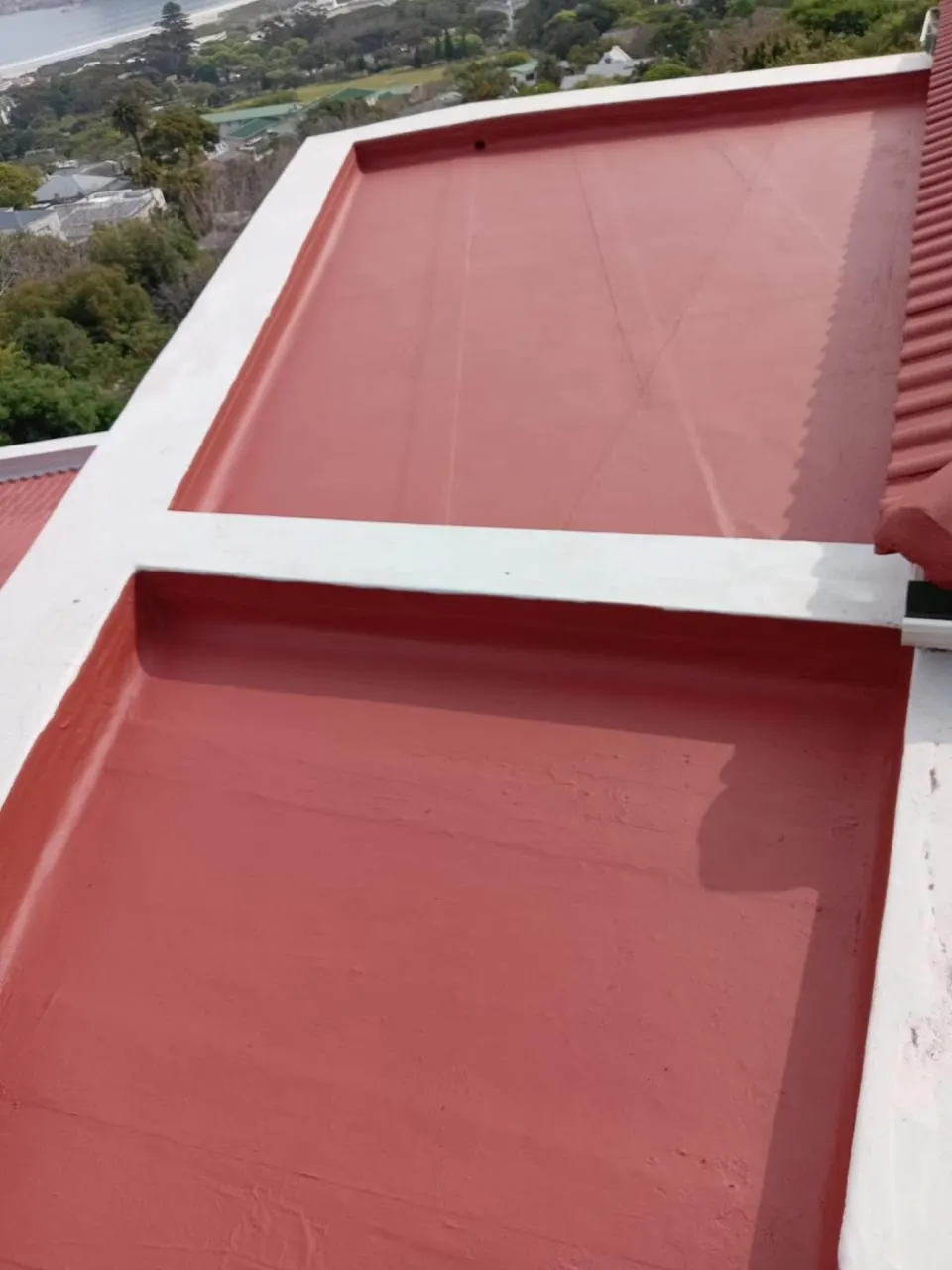
Flat roofs, parapets and box gutters are where most Cape Town leaks start. Here is how torch on, membrane waterproofing and waterproofing paint compare, and how to choose the right one for your roof.
Quick answer
For most flat concrete roofs, torch on waterproofing or a liquid membrane system is the right choice. Torch on is a thick bitumen sheet that is bonded to the roof with heat and suits large, simple flat areas. Membrane waterproofing is a liquid coat with a reinforcing fabric built into it, and it works well on parapets, upstands and awkward shapes. Waterproofing paint on its own only suits sound surfaces with no active leaks. Whichever you choose, the leak has to be found and the surface repaired first.
Pitched tile roofs shed water quickly. Flat roofs, parapet walls, box gutters and balconies do not. Water sits on them, finds the smallest crack and works its way into the ceiling below. In Cape Town, that usually shows up as a damp patch or a drip in the first heavy winter rain.
Our team waterproofs flat roofs, parapets and problem walls across Cape Town. Below we compare the three main options, explain how the work is done, and list the signs that your roof needs attention before the rain comes.
Signs Your Flat Roof Needs Roof Waterproofing
Most of these signs can be seen from inside the house or from a window that looks over the roof. You do not need to climb up to check.
Warning signs on a flat roof
- ✓Damp patches, brown rings or bubbling paint on the ceiling below a flat roof
- ✓Water that stays on the roof for a day or more after rain (ponding)
- ✓Cracks along the top of parapet walls or where the roof meets a wall
- ✓Old torch on sheets that are lifting, blistered or split at the joins
- ✓Waterproofing paint that is cracked, peeling or worn down to the concrete
- ✓Blocked outlets or box gutters that overflow in heavy rain
A leak inside does not always come from directly above it. Water can travel along a slab or inside a wall before it shows, which is why we look at the whole roof and not just the spot above the stain.

Torch On, Membrane or Waterproofing Paint?
Each system has its place. The right one depends on the shape of the roof, what is on it now and whether people will walk on it.
Torch on waterproofing
Torch on is a roll of bitumen sheet with a reinforcing core. It is laid over a primer and bonded to the roof by heating the underside with a torch, with the joins overlapped and sealed. It forms a thick, tough layer and is a common choice for large flat concrete roofs. Most torch on is finished with a reflective coating to protect it from the sun.
Membrane waterproofing
Membrane waterproofing is a liquid system. A coat of waterproofing compound goes on, a fabric membrane is pressed into it, and further coats are applied over the top. Because it is applied wet, it follows corners, parapets, upstands and outlets without joins. It is a good choice for smaller roofs, parapet walls and roofs with lots of details.
Waterproofing paint
Waterproofing paint is a thick, flexible coating. On its own it works best as a protective top layer, or on surfaces that are still sound and only need sealing. It will not bridge open cracks or stop an active leak by itself.
| Option | Best for | Keep in mind |
|---|---|---|
| Torch on | Large, simple flat concrete roofs | Needs a reflective top coat. Joins and edges must be sealed well. |
| Membrane (liquid with fabric) | Parapets, upstands, small or complex roofs | Needs the right number of coats and dry weather to cure. |
| Waterproofing paint | Sound surfaces and as a protective top coat | Not a fix for active leaks or open cracks. |
How Roof Waterproofing Is Done on a Flat Roof
The product matters, but the prep and the details matter more. When waterproofing fails, it is usually at an edge, a join or an outlet, not in the middle of the roof.
Find the cause
We check parapets, wall junctions, outlets, flashings and old repairs to find where the water is getting in.
Remove what has failed
Loose, blistered or split waterproofing is cut out or stripped so the new system bonds to a sound surface.
Repair the surface
Cracks are opened and filled, and low spots that hold water are built up so the roof drains to its outlets.
Prime
A primer goes on the clean, dry surface so the waterproofing grips properly.
Do the details first
Corners, upstands, outlets and pipe penetrations are reinforced before the main area is covered.
Waterproof and protect
The torch on or membrane system is applied, then finished with a protective coat that reflects the sun.
Where a fireplace flue passes through a flat roof, the seal around it needs special care because the flue gets hot. We check that it is flashed properly before the waterproofing is finished around it. Outdoor entertainment areas have their own weak spots too, and our guide to braai area waterproofing covers those.

Roof Waterproofing and Cape Town Weather
Our winters are wet and windy, and our summers are hot and bright. Both are hard on a flat roof.
Winter rain
Long spells of rain find any weak spot. Book waterproofing in late summer or autumn so it is done before the wet season.
Summer sun
Sun dries out bitumen and coatings over time. A reflective top coat slows this down and keeps the roof cooler.
The south-easter
Strong wind lifts loose edges and blows grit and leaves into outlets. Edges must be sealed and outlets kept clear.
Salt air
Near the sea, metal flashings and fixings corrode faster. They should be checked when the roof is waterproofed.
After the job, a quick check each year keeps it working. Clear leaves from outlets and gutters before winter, and look for cracks on parapets. Our handyman services in Cape Town include gutter and downpipe clearing, which takes care of the most common cause of overflowing box gutters.
Roof Work Is for a Trained Team
⚠ Safety first
Do not go onto a roof alone or work from a ladder at the roof edge. Flat roofs often have no rail, parapets can be lower than they look, and wet surfaces are slippery. Roof waterproofing should be done by a team with safe access and fall protection, and torch on work needs trained people because of the open flame.
Balconies and roof decks that are tiled need waterproofing under the tiles, not on top of them. If the tiles have to come up, our tiling services in Cape Town can relay them once the new waterproofing is in.
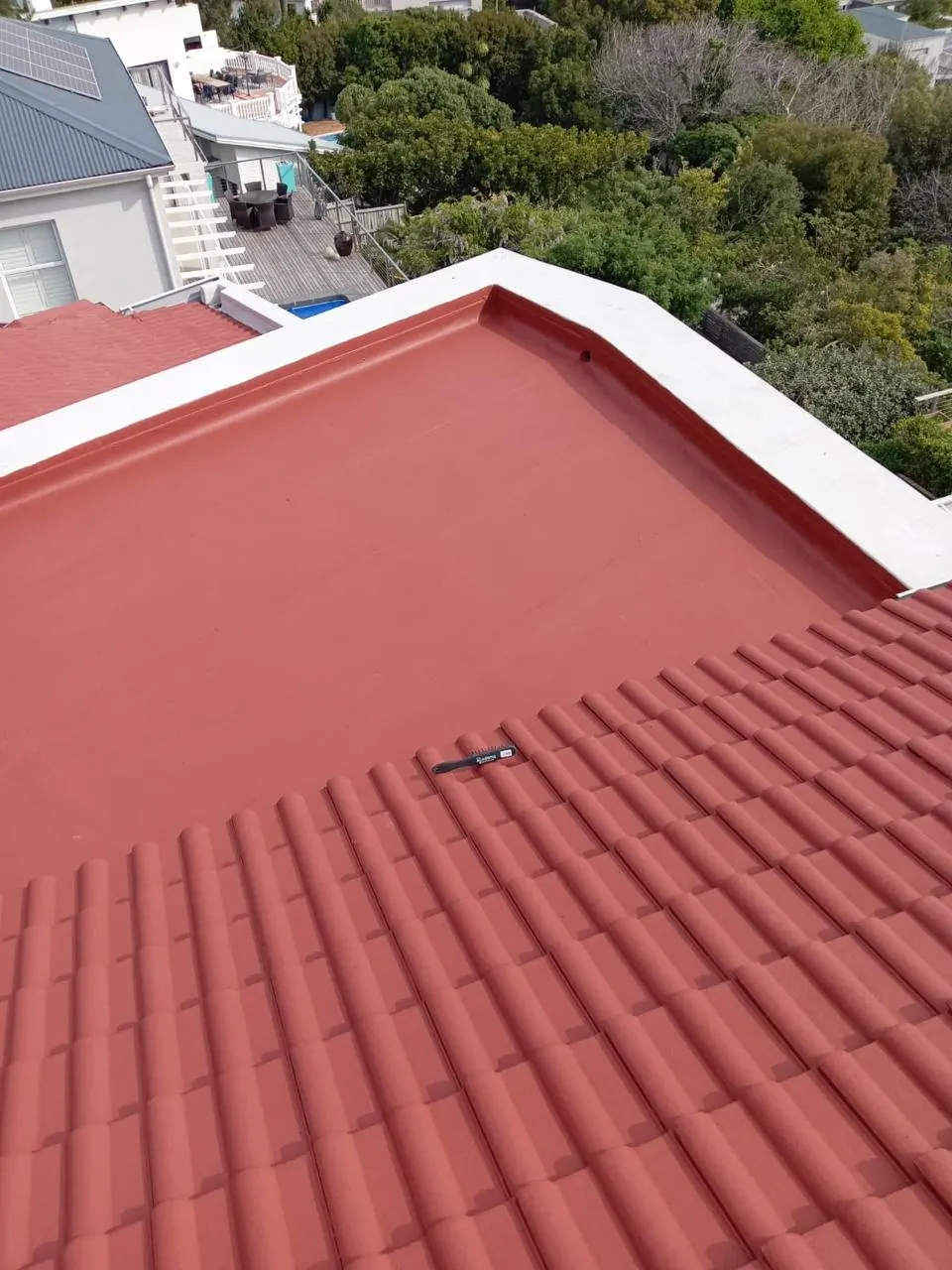
What Drives the Cost of Roof Waterproofing
We quote every job after a site visit, because two roofs of the same size can need very different work. These are the main things that change the price.
- ✓The size of the roof and how many parapets, upstands and outlets it has
- ✓Whether old waterproofing must be stripped off first
- ✓How much crack repair and levelling the surface needs
- ✓The system chosen: torch on, membrane or a coating
- ✓Access and height, such as double-storey walls or tight sites
- ✓Flues, pipes and fixings that must be sealed around
Ask our team for a written quote that sets out the repairs, the system and the finish. Our team does waterproofing in Cape Town as part of our building and renovation work, and once the roof is sealed we can also handle roof painting in Cape Town on the pitched sections so everything matches.
Got a damp patch or a roof that holds water? Send us photos of the stain inside and the roof above it, plus your suburb, and our team will tell you what it needs. You can also book building renovations online.
Roof Waterproofing: Common Questions
Which is better, torch on or membrane waterproofing?
Neither is better for every roof. Torch on suits large, simple flat concrete roofs. Liquid membrane waterproofing suits parapets, upstands and roofs with lots of corners and outlets. Our team recommends a system after seeing the roof.
Can I use waterproofing paint on a leaking flat roof?
Not on its own. Waterproofing paint is a protective coating for sound surfaces. An active leak needs the cause found and repaired, and usually a torch on or membrane system over it.
When is the best time for roof waterproofing in Cape Town?
Late summer and autumn, before the winter rain. The surface must be dry and the weather settled for the products to bond and cure properly.
How long does roof waterproofing last?
It depends on the system, the prep and how well the roof is looked after. A reflective top coat, clear outlets and a yearly check all help it last longer. The manufacturer of the system gives a guide for its product.
Why does my flat roof still leak after it was painted?
Paint is not the same as waterproofing. If the cracks, joins and outlets were not repaired and reinforced, water still gets in under the coating. The roof needs a proper waterproofing system.
Planning this kind of work?
Call or WhatsApp with your suburb and photographs. Fire Flames can discuss your fireplace, braai or home project and quote.
Get A Quote →