
5 Proven Lava Braai Options for Serious Outdoor Cooks
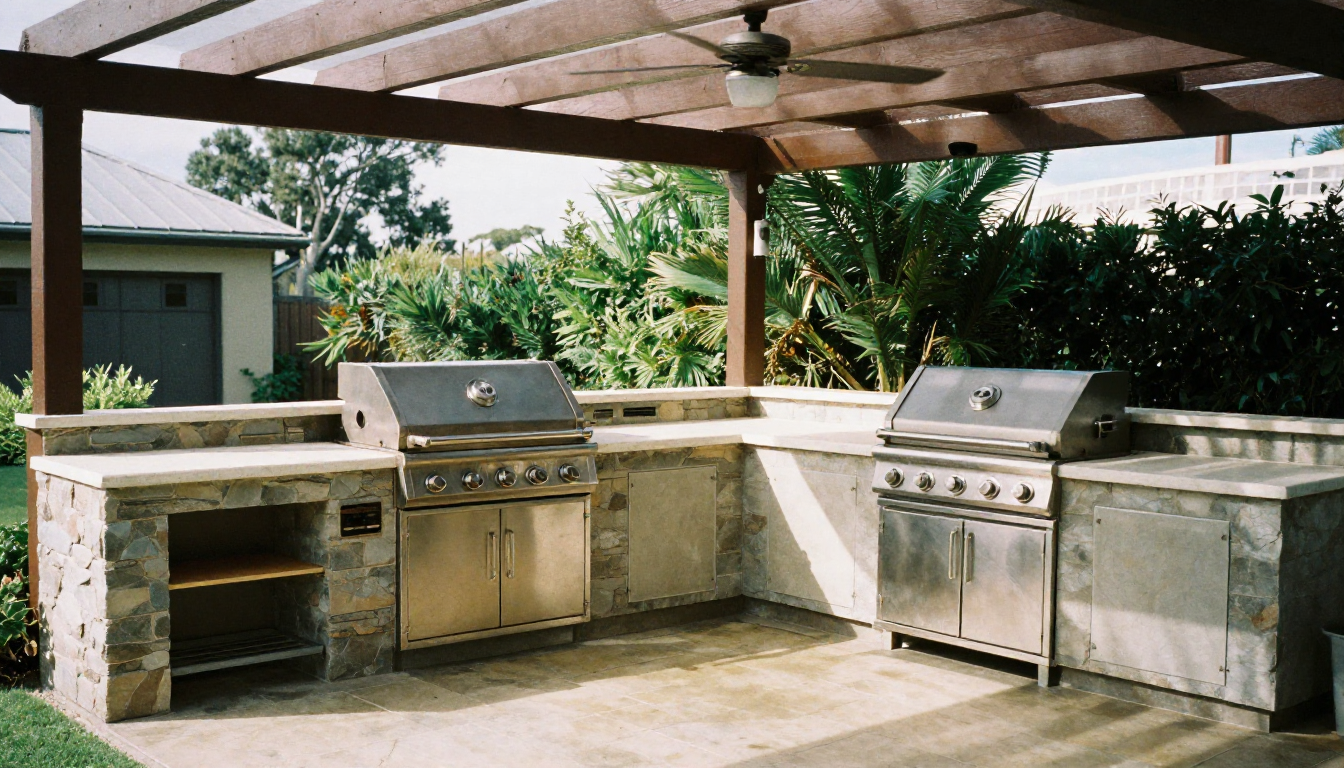
Lava braais deliver even heat, fewer flare-ups and genuine braai flavour through gas convenience. Here are the five options — from compact countertop units to full commercial setups — and what each one gets right.
Lava braais have earned their place in serious South African outdoor kitchens for good reason: they deliver even, intense heat, fewer flare-ups and that genuine braai flavour — all through gas convenience. Browse our range of braais to see how lava models compare, then use this guide to decide which style makes sense for your space and budget.

The term “lava braais” covers any braai unit — almost always gas — that uses volcanic lava rocks as an intermediary heat source. The rocks sit directly above the burner and, once preheated for 10–15 minutes, radiate heat more evenly than a direct flame. They also vaporise meat drippings into flavour-rich smoke instead of allowing fat to flare. Lava rocks last one to two seasons before needing replacement — typically R200–R500 for a domestic refill.
Five distinct configurations exist, each suited to a different space, budget and cooking frequency. Here is what separates them.
Option 1: The Built-In Lava Gas Braai
The built-in lava gas braai is the permanent-installation choice — set into masonry, a steel frame or an outdoor kitchen countertop, and plumbed to either natural gas or an LPG line. It is designed to stay put, which makes it the right choice for homeowners who braai regularly and want a setup that adds lasting value to the property.
Widths range from 600mm to 1,200mm. At the upper end, you can cook four large steaks, a full rack of chops and a tray of vegetables simultaneously. Quality built-in models use infrared lava rock burners that sustain surface temperatures above 400°C — the threshold for a proper sear without drying out the cut. In SA, expect to pay R18,000–R45,000 fully installed (unit R8,000–R22,000; installation and gas line work R10,000–R23,000 depending on complexity).
If you are already planning an outdoor entertaining area, read our guide to designing your outdoor kitchen to get the layout right before committing to a braai position.
Option 2: The Freestanding Lava Gas Braai
Freestanding lava gas braais come on a wheeled cabinet base, connect to a portable LPG cylinder stored inside the cabinet, and require no masonry or permanent installation. This format suits renters, homeowners with existing paved patios who cannot accommodate construction, and anyone who wants the option to reposition their cooking station.
Quality 3-burner freestanding lava gas braais typically cost R8,000–R18,000; 5- and 6-burner models built for large gatherings run to R22,000–R35,000. Our post on the best freestanding braai for your outdoor space compares current top-performing models in detail.
One practical note: if you braai more than twice a week, a freestanding unit on a 9kg cylinder will need frequent refilling. Budget for a 19kg cylinder or consider a semi-permanent LPG connection.
Option 3: The Countertop Lava Braai
Countertop lava braais are compact, self-contained units — roughly the size of a large chopping board — with a lava rock bed, one or two burners and a grill grid. They connect to a small camping canister or a standard 9kg cylinder via regulator.
These suit apartment balconies, smaller households who braai once or twice a month, or as a secondary cooking station during a large gathering. Price range: R1,500–R5,500. The trade-off is output: fewer rocks and lower-wattage burners mean slower heat recovery after a thick cut. For a household of two they are excellent; for six or more guests, step up to a freestanding or built-in unit.
Option 4: The Lava Stone Cooking Surface
Lava stone braais take the concept a step further — instead of cooking on a grill grid above rocks, you cook directly on a thick polished volcanic stone slab. The stone (typically basalt, 25–40mm thick) preheats over a gas burner for 20–30 minutes and reaches 300–400°C, acting as a radiant flat-top cooking surface.
Fat renders slowly into the porous stone rather than dripping onto a burner — no flare-ups, no grid marks, and the stone retains heat long after a cold cut is placed on it. Fish, chicken, thin steaks and vegetables all cook exceptionally well. Built-in lava stone setups cost R12,000–R28,000 installed; freestanding units run R3,500–R9,000. The stone needs periodic reseasoning and replacement every 2–4 years. For a technical reference on volcanic cooking stone grades, Napoleon’s outdoor cooking range provides a useful benchmark on material specifications.
Option 5: The Commercial Lava Braai
Commercial lava braais are engineered for high-volume cooking — restaurants, guesthouses, event venues or large entertaining spaces that regularly host 30 or more guests. These units are built from heavy-gauge 304-grade stainless steel (essential for Cape Town’s coastal salt air, which pits inferior grades within a season), run 4kW+ burners per zone and connect to a permanent gas supply line rather than a cylinder.
A permanent gas line is non-negotiable at commercial scale. For this reason, professional braai installation services are a requirement here, not a convenience. Budget: R45,000–R90,000 fully installed, including gas line and Certificate of Compliance. Our team handles both supply and full compliance paperwork.
Which Lava Braai Works Best for Your Setup?
For most Cape Town homeowners with a garden or covered patio, a built-in lava gas braai gives the best long-term return — especially as part of a wider outdoor kitchen. Browse our built-in braais range to see what different price points buy. If you are thinking about a complete outdoor kitchen, our guide to custom braai islands shows what a finished setup looks like with countertops, lighting and prep areas included.
Renters and anyone who needs flexibility will get more from a freestanding unit — see our freestanding braais range for current models. If you are planning a new outdoor entertaining space from scratch, read about outdoor braai installation in Cape Town to understand the full process, timeline and what a professional build includes.
Lava Braai FAQ
How long do lava rocks last in a braai?
Most lava rocks last one to two seasons of regular use. Signs it is time to replace them: persistent flare-ups from fat pooling rather than vaporising, uneven heating, or visible crumbling. Replacement bags cost R200–R500 for a domestic braai refill.
Can I use a lava braai during load-shedding?
Yes — gas lava braais operate entirely off the grid. Most modern units have battery-powered ignition, so all you need is gas in the cylinder and a working igniter (or a lighter as backup). This is one of the strongest practical arguments for gas over electric cooking in South African conditions.
What is the difference between lava rocks and ceramic briquettes?
Both sit above the burner and distribute heat by radiation. Lava rocks are natural volcanic basalt — affordable and effective, but they absorb fat over time and break down faster. Ceramic briquettes offer greater heat consistency and a longer lifespan (3–5 years) at a higher upfront cost. Either works well; ceramic briquettes suit high-frequency commercial use better.
Does a gas lava braai need a Certificate of Compliance in South Africa?
Any permanent gas appliance installation — including a built-in gas braai plumbed to a gas line — requires a CoC from a registered LPG installer. Freestanding braais running off a portable cylinder generally do not, but the cylinder and regulator setup must comply with SANS 1237. Our team will confirm what applies to your setup during the quoting process.
Whether you are after a compact countertop unit or a custom built-in outdoor kitchen centrepiece, our team can spec the right model for your space. Explore our full range of gas braais or request a free installation quote today — and we will match you to the right lava braai for your setup and budget.
Planning this kind of work?
Call or WhatsApp with your suburb and photographs. Fire Flames can discuss your fireplace, braai or home project and quote.
Get A Quote →