
In-Built Gas Heater: 4 Proven Steps to Choose the Best Option
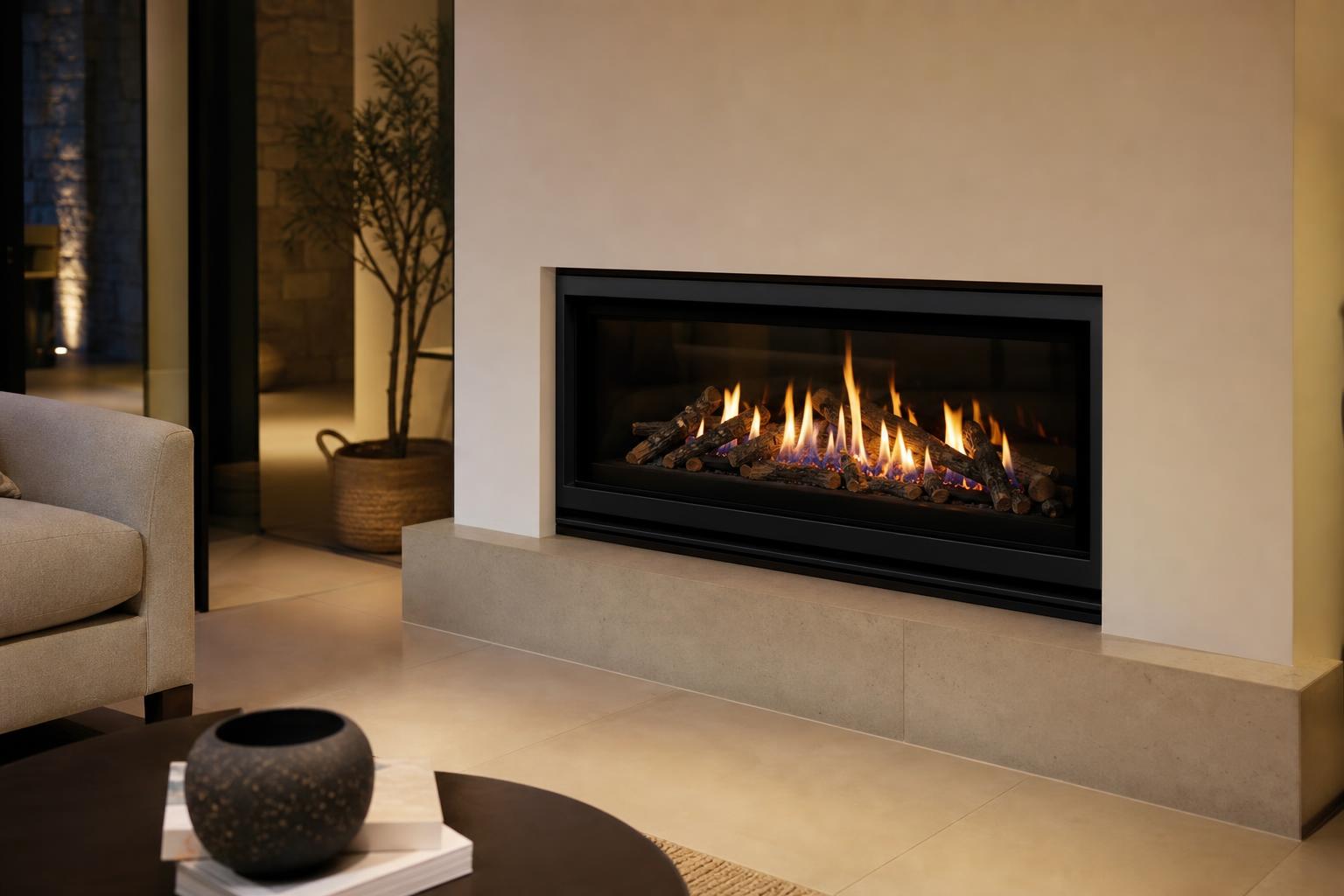
An in built gas heater offers clean, load-shedding-proof warmth with no firewood. Here's how to pick the right output, ventilation type and installation for your SA home.
An in built gas heater is one of the cleanest, most convenient ways to add reliable warmth to a room — no firewood to source, no ash to clean up, and no dependency on Eskom electricity during load-shedding. It’s little wonder that built-in gas units have become one of the most popular heating choices among Cape Town and Western Cape homeowners in recent winters. But choosing the right one involves more than picking a model you like the look of. Our gas fireplace range spans several configurations, each with different installation requirements, ventilation rules, and running costs — and getting these details right before you buy saves you money, frustration and potential safety issues later.

This guide walks you through four practical steps — from calculating the heat output you actually need, choosing between flueless and flued ventilation, budgeting for installation and gas running costs, to specifying features that suit the South African context. Work through these four steps and you’ll arrive at a buying decision you won’t second-guess.
What Is an In-Built Gas Heater?
An in built gas heater — also called a built-in gas fire, gas insert or gas fireplace insert — is a gas-burning unit designed to sit flush inside a wall cavity or within a fireplace surround. Unlike a freestanding unit that stands on the floor, a built-in heater is recessed into the architecture of the room, giving a cleaner, more permanent look with the visual appeal of real flames behind a sealed glass panel.
Most South African installations run on LPG (liquid petroleum gas supplied from a cylinder), since piped natural gas infrastructure is limited outside major urban centres. LPG is widely available in Cape Town, Johannesburg, Pretoria and most smaller towns. Because the heat source is entirely independent of the electricity supply, an in-built gas heater continues operating through any stage of load-shedding — a practical advantage that becomes very real during a Stage 6 winter evening.
There are two core installation types: flueless and flued. This choice drives much of the rest of your installation plan, so it’s worth understanding clearly before you look at specific models.
Step 1 — Calculate the Heat Output You Actually Need
Gas heaters are rated in kilowatts (kW). As a starting point, a moderately insulated South African room needs approximately 0.07–0.10 kW per square metre to feel comfortably warm. A 25 m² lounge typically needs 2–3 kW; an open-plan living and dining area of 50–60 m² may need 5–6 kW to keep comfortable on a cold Cape Town night.
Insulation matters significantly here. Older homes — especially period houses with high ceilings, single-glazed windows and minimal ceiling insulation — can need up to double the theoretical kW. If you’re in a high-ceilinged Victorian or Edwardian house in De Waterkant, Gardens or the Southern Suburbs, err toward a higher-output unit. It’s far better to run a 5 kW heater at 60% than to run a 3 kW heater flat-out and still feel cold.
Also consider how the heat will move through your space. A well-positioned in-built gas heater in a defined lounge will heat that room effectively, but an open-plan home where the lounge flows into the kitchen and hallway may need a higher-output unit or a supplementary approach. If warming two adjacent rooms is the goal, a double-sided fireplace designed to radiate into both spaces may offer better value than two separate heaters.
Step 2 — Choose Between Flueless and Flued Installation
This is the step that most buyers underestimate — and it has the biggest impact on your installation cost and which rooms the heater can legally go into.
Flueless In-Built Gas Heaters
Flueless units burn with very high efficiency and release combustion by-products (water vapour, CO₂ and small amounts of CO) directly into the room. Under South African standard SANS 10087-4, they are permitted in habitable living areas with a minimum air volume of 14 m³ per kW of rated output. A 3 kW flueless heater, for example, requires at least 42 m³ of room volume — roughly a 4 m × 4 m room with 2.7 m ceilings. Flueless units are not permitted in bedrooms or small, poorly-ventilated spaces.
On the plus side, flueless installation is comparatively simple: you need an alcove or recess, a gas line run to the unit, and a finishing surround. No chimney, no flue pipe, no external penetrations — which keeps installation costs lower.
Flued In-Built Gas Heaters
Flued units vent all combustion gases outside via a balanced-flue system (a sealed concentric pipe passing through an external wall) or a conventional rising flue. They can be installed in smaller rooms and bedrooms where flueless units are prohibited, and there is no impact on indoor air quality. The trade-off is installation complexity: you’ll need to run a proper flue system through the wall or ceiling, which adds cost and requires careful planning.
According to the South African Bureau of Standards, all indoor gas appliance installations must comply with SANS 10087 and must be carried out by a registered gasfitter who issues a Certificate of Compliance (CoC). Your insurer requires this document, and it is mandatory for any property resale. Do not cut corners on this step.
If your home is near the coast — Bloubergstrand, Milnerton, the Atlantic Seaboard — specify 304-grade stainless steel for all external flue components. Salt air corrodes standard mild steel rapidly, and a flue that starts leaking after a single winter is both a safety hazard and an expensive replacement. It’s worth asking explicitly about stainless specifications when getting your quote.
Step 3 — Budget for Installation and Running Costs
The total spend on an in built gas heater breaks into three parts: the unit, the installation, and ongoing gas consumption.
Unit costs: Entry-level built-in gas fires with basic thermostatic control start at around R8,000–R12,000. Mid-range units with realistic log-effect burners, remote controls and wider glass panels run R15,000–R30,000. High-end designer models from European brands can reach R45,000–R65,000 before installation.
Installation costs: A straightforward flueless installation into a purpose-built alcove with a gas line already nearby typically runs R3,000–R6,000 in labour. A flued installation requiring a balanced-flue penetration through brick or concrete, or a full chimney liner inside an existing masonry fireplace, typically costs R6,000–R15,000 depending on complexity and height. For a complete fireplace installation cost breakdown, a site-specific quote is always the most reliable guide.
Running costs: A 4 kW in-built gas heater running for four hours each evening burns roughly 1.1–1.5 kg of LPG per session. At current LPG retail prices of approximately R25–R28 per kilogram, that works out to R110–R168 per week of evening heating — or roughly R900–R1,300 per month through the Cape Town winter. This compares very favourably to electric panel heaters or oil-filled radiators at peak Eskom tariffs. Our detailed comparison of gas vs wood-burning running costs breaks this down further if you’re still deciding between fuel types.
Also factor in the cylinder logistics: a 19 kg LPG bottle holds approximately 580 kWh of energy. Running a 4 kW heater for four hours a day, you’ll go through roughly one 19 kg cylinder every five to six weeks in winter. Ensure you have a safe, ventilated external storage location for your cylinder as required by SANS 10087-3.
Step 4 — Match the Specs to Your Home and Lifestyle
A few South Africa-specific factors worth confirming before you finalise your choice:
- Load-shedding compatibility: Most in-built gas heaters with electronic ignition use standard AA batteries for the igniter — they don’t need mains power to run. Some higher-end models use mains power for backlights, fans or thermostat displays while still heating without electricity. Confirm this detail with your installer before purchase if load-shedding resilience is a priority.
- Coastal corrosion: As noted above, specify 304-grade stainless or quality powder-coated steel for all external components within 5 km of the coast. This applies to flue components and, in some installations, the firebox frame.
- LPG bottle access: Your installer will run a flexible gas line from the wall to your external cylinder storage point. Make sure you’ve thought through where the cylinder will sit — it must be outside, on a level surface, with adequate ventilation around it. Most installers will include this in their site assessment.
- Surround and finishing: The in-built gas heater itself is only part of the finished look. Budget for the surround (tiled, stone-cladded or plastered), the hearth if applicable, and any internal wall finishing around the recess. A complete built-in installation that looks great typically adds R3,000–R10,000 to the project cost beyond the unit and basic installation.
If you want to compare the installed cost and heat output of a gas unit versus a wood-burning option, our guides on freestanding vs built-in fireplaces and built-in fireplace inserts cover the main differences clearly.
Frequently Asked Questions
Can I install an in-built gas heater myself?
No — and it’s illegal to do so. South African law under SANS 10087 requires all gas appliance installations to be completed by a registered gasfitter who can issue a Certificate of Compliance. DIY gas work voids your home insurance and creates a serious risk of gas leak, fire or CO poisoning. Always insist on a signed CoC at project completion.
Does an in-built gas heater need a chimney or flue?
It depends on the type. Flueless models vent combustion gases into the room within permitted air-volume limits — no chimney needed. Flued models require a balanced-flue pipe through an external wall or a conventional rising flue. Our team can assess which setup suits your room configuration and recommend the correct flue and ventilation solution.
How much gas does an in-built heater use each month?
A 4 kW unit running four hours per evening through winter uses roughly 1.1–1.5 kg of LPG per day, or approximately 4–6 kg per week. On a 19 kg bottle, you can expect five to six weeks of daily evening use. Running costs typically land between R900–R1,300 per month at current LPG prices in the Western Cape.
Is a flueless gas heater safe for an open-plan home?
Yes, provided the total air volume of the connected space meets the SANS 10087-4 minimums (14 m³ per kW of output). Open-plan homes often have more than enough volume — but your installer should calculate this explicitly and document it. If the connected space is too small for the rated output, a flued unit is the correct choice.
Ready to move forward? Browse our full gas fireplace range to compare models, outputs and glass sizes, or request a free installation quote and our team will recommend the right in-built gas heater for your room, home and budget.
Related reading
- Can You Install a Fireplace in an Existing Home? Yes — Here's How
- Combustion Fireplace Installation: How It Works, Costs & Compliance
- Need it done professionally? See our fireplace installation in Cape Town service.
Planning this kind of work?
Call or WhatsApp with your suburb and photographs. Fire Flames can discuss your fireplace, braai or home project and quote.
Get A Quote →