
Fireplace Wood Stove Insert vs Open Fireplace: Which Heats Better for Less?
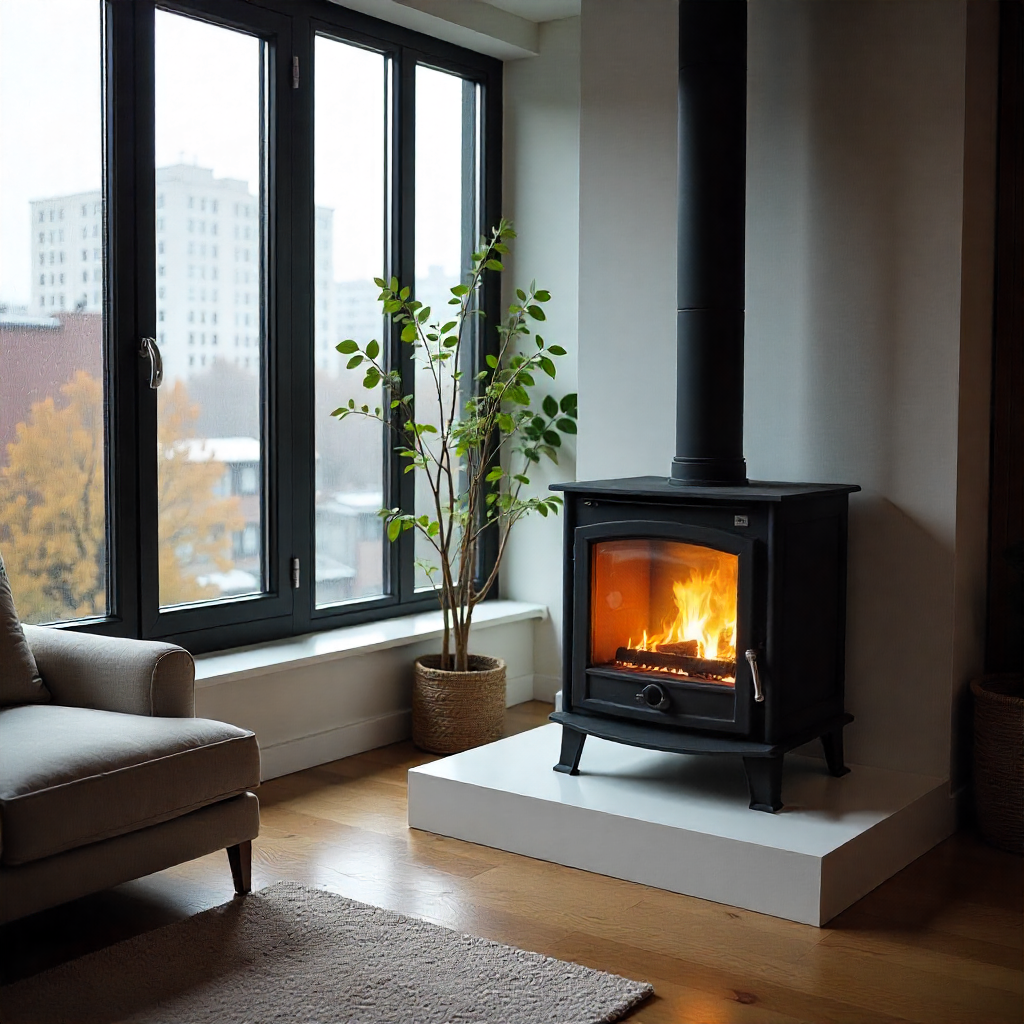
A fireplace wood stove insert can turn a draughty, inefficient open fireplace into a serious heat source — here's how to pick the right size, style and brand for your home.
A fireplace wood stove insert is one of the smartest upgrades you can make to an underperforming fireplace — and it costs far less than a full rebuild. Instead of staring at an open grate that loses most of your heat straight up the chimney, an insert is a sealed closed-combustion unit that slots into the existing opening, uses your existing flue, and turns a decorative hole in the wall into a genuine heat source. Our freestanding fireplace range includes options that slot directly into standard cavity sizes, and questions about inserts are among the most common we get heading into Cape Town winters. This guide walks you through exactly how inserts differ from open fireplaces, how to measure your opening, what to budget, and what the installation actually involves.

What Is a Fireplace Wood Stove Insert?
An insert is a steel or cast-iron firebox — almost always a closed-combustion design — built to fit inside an existing masonry or prefabricated fireplace cavity. The front face (the surround or fascia plate) covers the gap between the unit and the original opening so no cold air bypasses the stove. Inside, a glass door and an air-wash system keep the glass clear while the closed combustion chamber forces air through in a controlled way that maximises heat output and minimises smoke production.
The efficiency difference is significant. Open fireplaces typically deliver 10–20% heat efficiency — the rest vanishes up the chimney. A quality closed-combustion insert reaches 65–80% efficiency. In practical terms: you burn 30–50% less wood for the same warmth, or the same wood to heat a considerably larger area.
If your home has a conventional brick fireplace built before sealed combustion units became common — typical in older Cape Town homes from the 1970s through to the early 2000s — a fireplace wood stove insert is very likely the most cost-effective heating upgrade available to you without touching the walls or chimney structure.
Fireplace Wood Stove Insert vs Open Fireplace: The Honest Comparison
Most buyers asking about inserts already have a working fireplace. The real question is whether the upgrade is worth the cost. Here is what the comparison looks like across the factors that matter most:
| Factor | Open Fireplace | Wood Stove Insert |
|---|---|---|
| Heat efficiency | 10–20% | 65–80% |
| Wood consumption | High | 30–50% lower |
| Heat control | None | Controllable via damper and air vents |
| Glass door | No | Yes — watch the fire safely |
| Load-shedding proof | Yes | Yes |
| Requires chimney | Yes | Yes (uses existing) |
| Installation disruption | None (existing) | Half to full day |
| Cost (supply + install) | Existing | R12,000–R50,000+ |
Neither an open fireplace nor an insert needs electricity, which is the core appeal when load shedding hits. But the insert wins on every heating metric. For a detailed breakdown of what full installation costs across different fireplace types, the fireplace installation cost guide has current Rand figures and explains what drives prices up or down.
Sizing a Fireplace Wood Stove Insert: 3 Measurements That Matter
Getting the sizing wrong is the most common reason inserts either don’t fit or don’t perform as expected. Before you look at any specific model, take three measurements:
1. Opening width and height. The insert’s fascia plate must be wider and taller than the opening to cover the gap cleanly, while the firebox itself must fit inside the cavity. Typical residential openings run 600–900mm wide. Get the exact dimension — a 20mm discrepancy can mean a fascia that doesn’t cover the gap or a firebox that won’t slide in.
2. Firebox depth. Inserts need 350–500mm of depth from the front face to the back wall of the cavity. Shallow fireplaces — common in some mid-century Cape Dutch homes — are the limiting factor that rules out most inserts. If yours measures under 300mm deep, discuss this with your supplier before committing to a model.
3. Flue diameter and condition. Most older SA homes have a 150mm or 200mm circular liner, or a larger rectangular masonry flue. The insert’s flue collar must connect to this. If your existing flue is unlined brick — which was standard before stainless liners became common — a new stainless liner may need to be retrofitted, and that cost should be factored in from the start.
Once you have all three numbers, a supplier can confirm compatibility in minutes. Our team can also help you decide if you are weighing up freestanding vs built-in fireplaces rather than an insert — sometimes the cavity isn’t suitable and a freestanding unit connected to the existing chimney is the better answer.
What a Fireplace Wood Stove Insert Costs to Buy and Install
Prices vary by brand, heat output rating, and whether a flue liner is required. Here is a realistic picture for 2026:
- Entry-level insert (6–8kW output): R8,000–R14,000 unit + R4,000–R8,000 installation = R12,000–R22,000 installed
- Mid-range closed-combustion insert (8–12kW): R14,000–R22,000 unit + R6,000–R10,000 installation = R20,000–R32,000 installed
- Premium cast-iron or designer insert (12kW+): R25,000–R45,000 unit + installation = R30,000–R55,000 installed
Flue lining adds R3,000–R8,000 depending on chimney height and condition. For context, a full new built-in wood fireplace from scratch typically starts at R25,000 installed — so an insert into an existing cavity remains the lower-disruption, lower-cost route for most existing homes.
Brand matters on quality and service support. Established closed-combustion brands available through South African suppliers include Hydrofire, Dovre, Morso, and Northern Flame. Dovre, a Norwegian manufacturer with a well-established local dealer network, publishes technical data for their stove and insert range including tested heat output figures, which is useful when comparing models. For a broader look at choosing the right fireplace for your home — including when an insert is the right call versus a full new installation — that guide covers the decision tree in full.
The Installation Process: What Actually Happens
A fireplace wood stove insert installation is typically a half-day to full-day job for an experienced team. Here is the sequence:
- Opening preparation. The existing grate, fireback and any ash pan are removed. If there is a damper plate, it is either removed entirely or permanently fixed open to allow unrestricted flue draw.
- Flue liner (if required). A stainless steel liner is dropped from the chimney pot at the top and connected to the insert’s flue collar at the base. This is the most variable part of the job — clean, straight chimneys take an hour; older chimneys with bends or debris may need sweeping first.
- Insert placement. The unit is slid into the opening. Most inserts weigh 80–150kg, so this requires two people and a moving dolly on uneven flooring.
- Fascia fitting. The surround plate is measured, trimmed if necessary, and sealed or fixed to cover the gap between the insert body and the surrounding wall.
- Break-in fire and commissioning. A small initial fire burns off protective coatings before the unit goes into regular use. The installer checks draw, confirms seals, and shows you how to operate the air controls.
Before any insert installation, the chimney should be inspected and swept if there is any creosote or debris present. Our chimney sweeping services are routinely booked ahead of insert installations — it avoids surprises on installation day and ensures the new flue liner connects to a clean chimney.
If you are comparing a wood insert to a gas alternative, the gas vs wood-burning fireplace comparison is worth reading — gas inserts also exist and suit different situations, particularly where firewood sourcing is inconvenient.
To see what is available before committing, browse our full fireplace collection or speak to our team about your specific cavity dimensions and budget.
Frequently Asked Questions About Fireplace Wood Stove Inserts
Can any open fireplace take a wood stove insert?
Most can, but the firebox depth and flue condition are the main variables. Very shallow cavities (under 300mm depth) and unlined, damaged flues can rule out standard inserts or require additional liner work. A site visit — or photos plus measurements sent to a supplier — will confirm suitability quickly without any commitment.
Will a fireplace wood stove insert work during load shedding?
Yes, completely. A wood stove insert is entirely independent of electricity. It burns wood, uses natural chimney draw for ventilation, and produces heat regardless of whether the grid is up. This makes it one of the most genuinely resilient heating options available in South Africa right now.
Does an insert installation require any compliance documentation?
Wood-burning inserts are not subject to the same Certificate of Compliance requirements as gas appliances, but a professional installation ensures the flue connection, combustible clearances, and hearth protection all meet local building standards. Reputable installers document their work and can advise on any building regulation requirements specific to your municipality.
How often does the chimney need sweeping after fitting an insert?
With a closed-combustion insert burning dry, well-seasoned hardwood, once per year is typically sufficient — compared to two or more sweeps a year for an open fire. Burning wet or green wood accelerates creosote build-up significantly, so wood quality matters as much as sweep frequency.
Not sure whether a fireplace wood stove insert or a full new wood fireplace is the better call for your home? Request a free installation quote — our team assesses your existing opening and flue, tells you what will work, and gives you an honest cost estimate before you spend anything.
Related Reading
Planning this kind of work?
Call or WhatsApp with your suburb and photographs. Fire Flames can discuss your fireplace, braai or home project and quote.
Get A Quote →