
Chimney Leaking When It Rains: Why and How It Gets Fixed
Water dripping into the fireplace or a damp patch on the ceiling after a storm usually means the chimney is letting rain in. Here is where leaks start, what you can check from the ground, and how our team fixes them for good.
Quick answer
A chimney leaking when it rains is nearly always caused by one of four things: failed flashing where the chimney meets the roof, a missing or damaged cap or cowl, cracked plaster or mortar on the stack, or a flue collar that has perished. The fix depends on where the water gets in, so the first step is a proper inspection on the roof, not a tube of sealant.
A damp patch on the chimney breast, water stains on the ceiling or drips landing in the grate after a storm are all signs that rain is getting in somewhere. It is easy to ignore in summer, but every winter front that comes through Cape Town pushes more water into the same gap. Over time that means rotten roof timbers, flaking paint, rusted fireplace parts and mould on the walls.
Our team fixes chimney leaks on all kinds of roofs, from old brick stacks to modern stainless flues. Below we explain where leaks start, how to narrow down the cause from inside the house, and what a lasting repair looks like.
Seeing water after rain? Send us a photo of the damp patch and the chimney on the roof, and we will arrange a visit and quote the repair.
Why Is My Chimney Leaking?
A chimney is a tall, open structure that pushes through your roof. That means it has more joins, more exposed surfaces and more places for water to sit than any other part of the roof. Wind driven rain, which Cape Town gets plenty of in winter, finds every weak spot.
Leaks also tend to show up far from where the water actually gets in. Water can run down a roof timber or along the outside of a flue pipe and appear on a ceiling a metre away. That is why guessing the cause from inside the house so often leads to the wrong repair.
Where a Chimney Leaking When It Rains Usually Starts
Flashing that has lifted, cracked or come loose
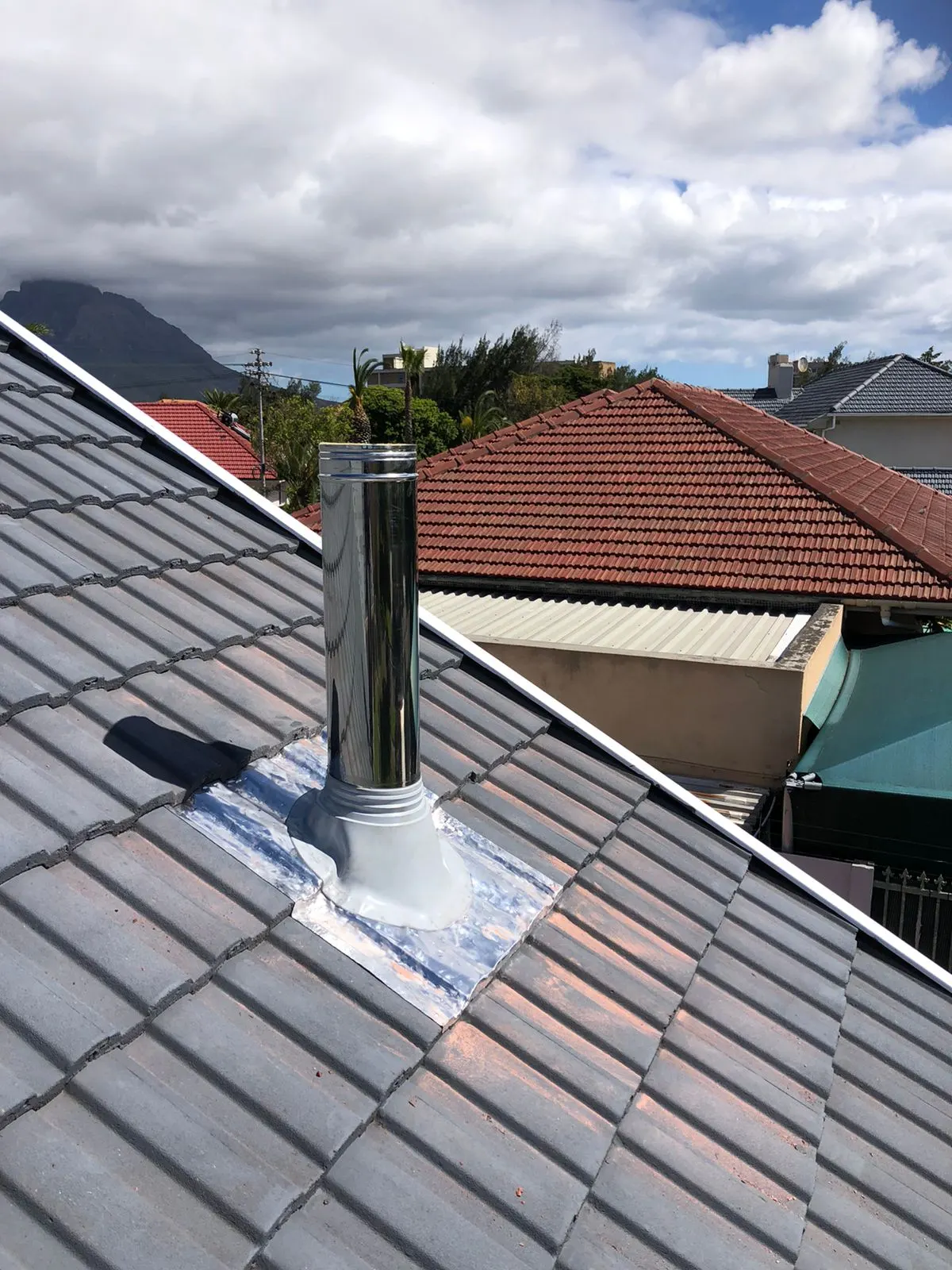
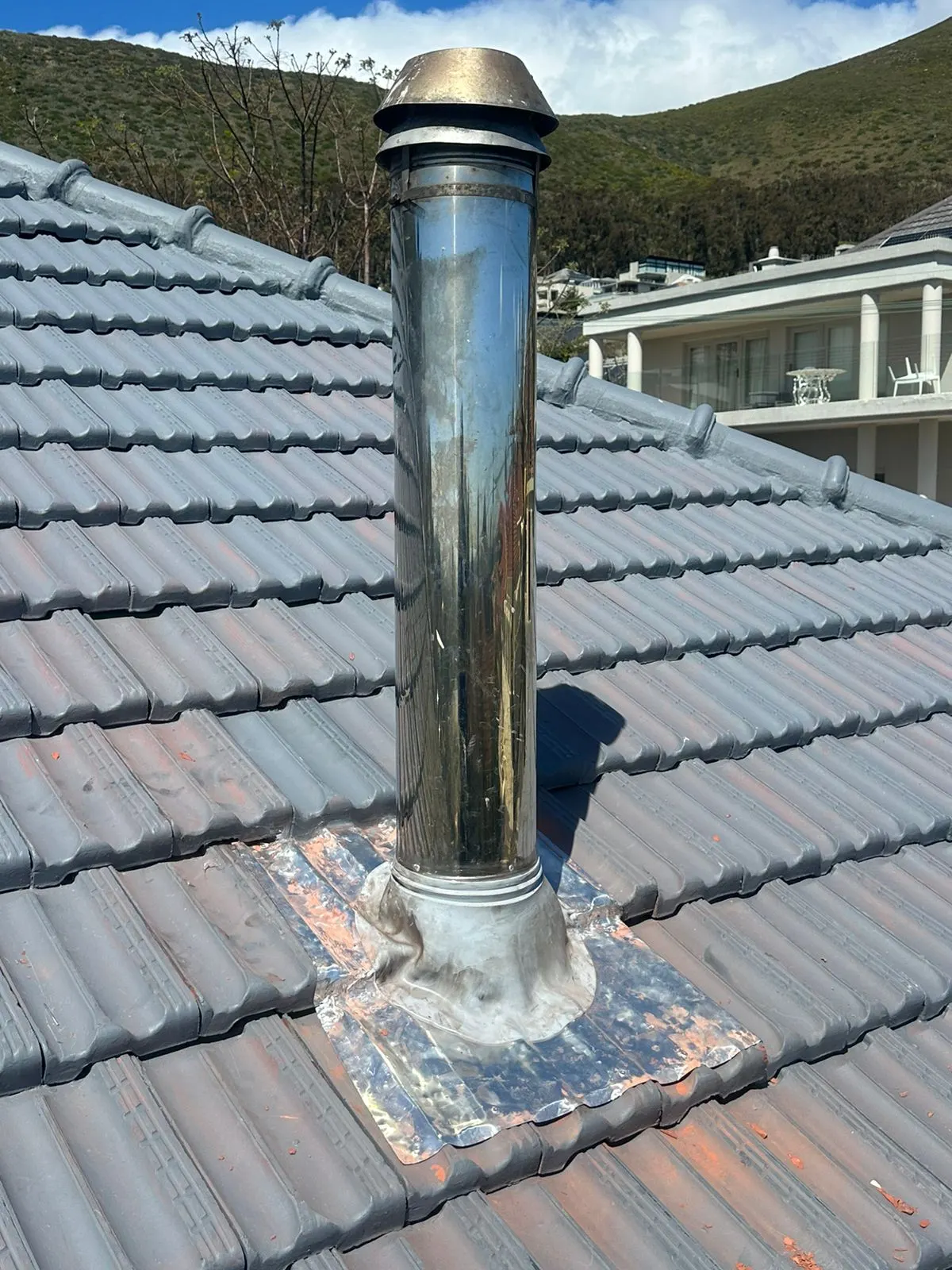
Flashing is the metal or lead strip that seals the gap between the chimney and the roof tiles or sheeting. It is the most common cause of a chimney leak we see. Old flashing lifts in the wind, the sealant behind it dries out and cracks, or it was never dressed properly into the tiles in the first place.
A missing or damaged chimney cap or cowl
An open chimney is a funnel for rain. Without a cap or cowl, water falls straight down the flue, into the fireplace and onto the hearth. A chimney rain cowl keeps the rain out while still letting the smoke escape. Our post on chimney covers that stop rain explains the options.
Cracked plaster, brickwork or mortar
Brick and plaster soak up water like a sponge. Once the plaster cracks or the mortar joints start to crumble, rain gets into the stack and runs down inside it. You often see this as a damp patch high on the chimney breast that spreads after each storm.
A cracked crown or flaunching on top of the stack
The concrete crown on top of a brick chimney sheds water away from the flue. When it cracks, water sits in the gaps and seeps straight into the brickwork below. These cracks are hard to spot from the ground.
A perished storm collar on a flue pipe
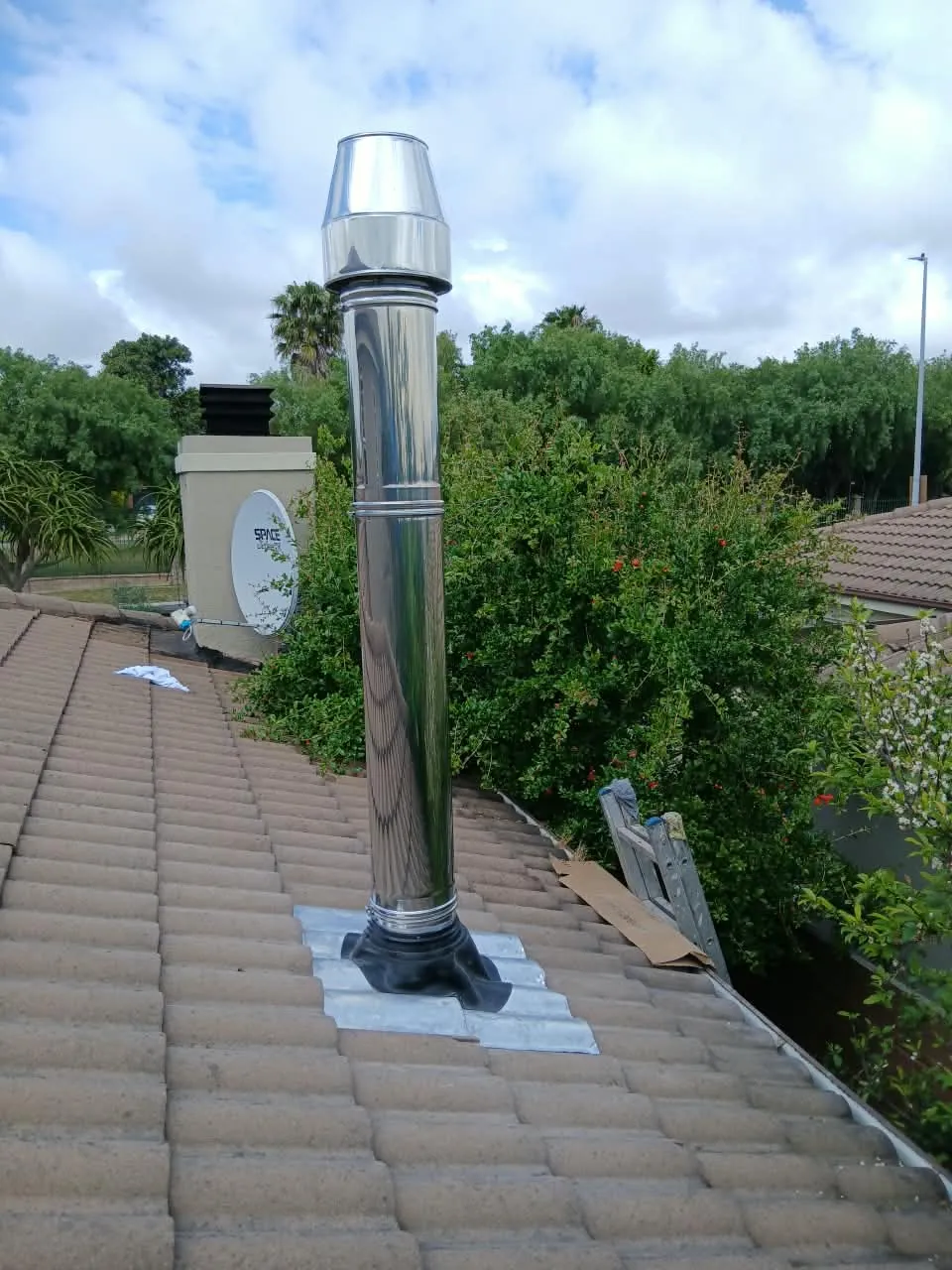
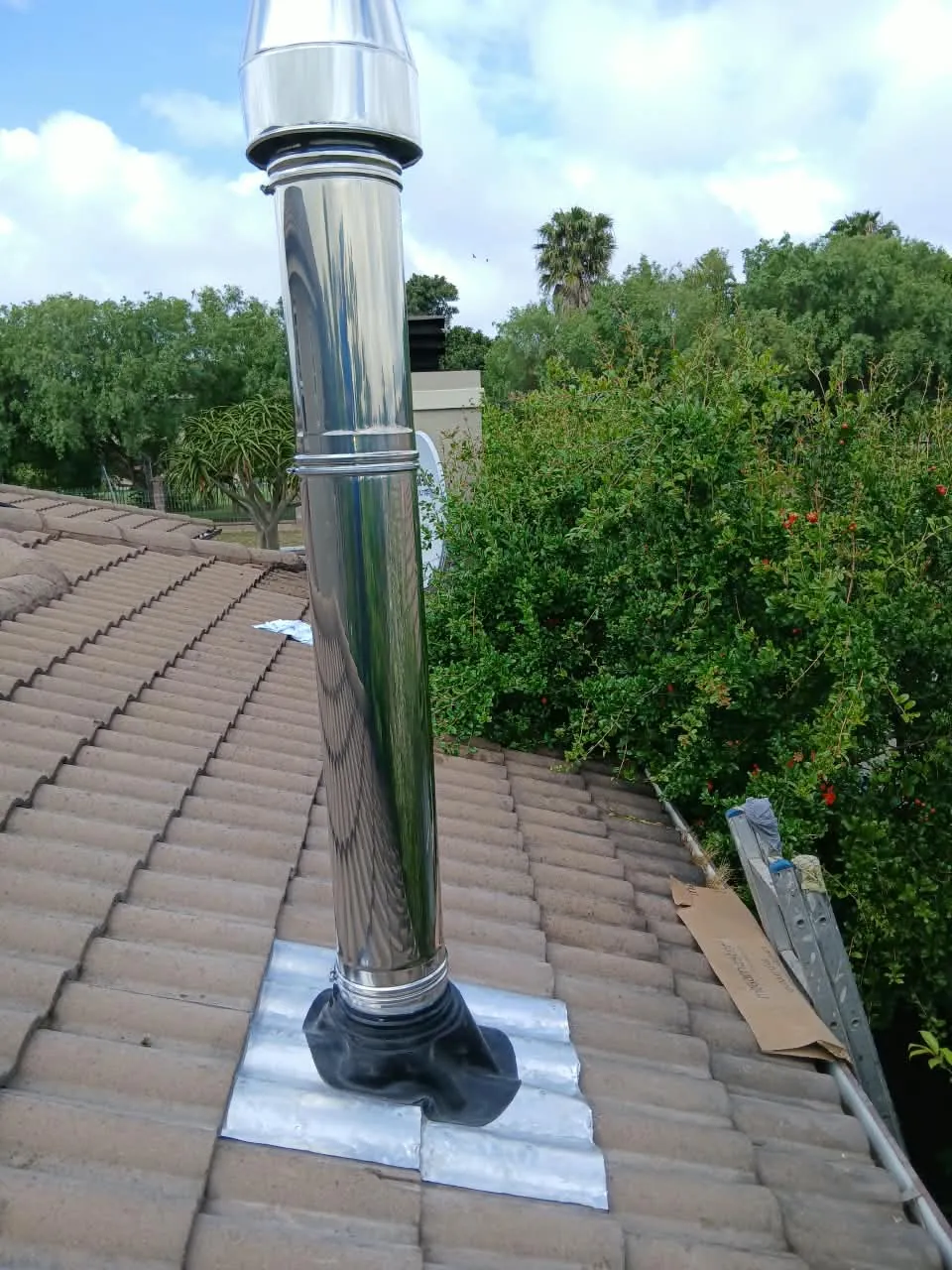
On homes with a stainless steel flue, the rubber or steel storm collar and the flashing plate around the pipe do the sealing. Sun and heat break down old rubber collars, and a gap of a few millimetres is enough for a steady drip.
Condensation inside the flue
Not every wet chimney is a rain leak. A flue that is too cold or too big for the fire can collect condensation, which runs down as brown, tarry water. If the wet patches appear when the fire is burning rather than after rain, this may be the cause.
Signs Your Chimney Leaking Is Causing Damage
Some signs are obvious, others creep up slowly. Look out for these inside and outside the house:
Warning signs of a leak
- ✓Water dripping into the firebox or pooling on the hearth after rain
- ✓Brown or yellow stains on the ceiling near the chimney breast
- ✓Paint bubbling or plaster flaking on the chimney wall
- ✓A damp, musty smell from the fireplace, worse in winter
- ✓Rust on the damper, grate, stove body or flue pipe
- ✓Mould on the wall or ceiling beside the chimney
- ✓Damp or dark marks on roof timbers in the ceiling space
If you are seeing several of these, it is worth getting the chimney looked at before the next cold front. Our list of signs your fireplace needs professional repairs covers other problems that often show up alongside water damage.
Rather have it checked properly? Our team will get on the roof, find exactly where the water is coming in and send you a written quote.
How a Chimney Leaking Problem Gets Fixed
The right repair depends on the cause, which is why we always inspect before we quote. Here is how we match the fix to the problem:
| Where the water gets in | What we do |
|---|---|
| Flashing around the chimney | Lift old flashing, fit new lead or metal flashing and dress it into the roof |
| Open top of the flue | Fit a chimney rain cowl or cap sized to the flue |
| Cracked plaster or mortar | Cut out and repair cracks, repoint joints, replaster where needed |
| Cracked crown on a brick stack | Repair or recast the crown so it sheds water |
| Perished flue storm collar | Replace the collar and reseal the flashing plate |
| Porous brick or plaster | Apply a breathable chimney waterproofing treatment |
Chimney flashing repair
Most leaks are sorted here. We remove the failed flashing, check the roof underneath for rot, and fit new flashing that tucks under the tiles above and laps over them below. This is part of the chimney repairs our team carries out across Cape Town.
Chimney waterproofing
For brick and plaster stacks that soak up rain, we repair the cracks first and then apply a breathable waterproofing coating. It keeps rain out of the masonry but still lets trapped moisture dry out. The same thinking applies to outdoor fire areas, as we explain in our guide to waterproofing your outdoor braai area.
Fitting a chimney rain cowl
A good cowl stops rain going straight down the flue and helps with wind and birds too. If you have been searching for chimney cowl installers near me, our team supplies and fits cowls to suit both brick chimneys and stainless flues.
Repairing or replacing the flue
If water has rusted through an old flue pipe, or the liner has cracked, patching the outside will not stop the leak. In that case we quote for a new section of flue or a full replacement with proper flashing and a storm collar. It is also a good time to book a chimney sweep, so we can see the inside of the flue clearly.
What Not to Do About a Chimney Leaking
It is tempting to grab a tube of silicone and a ladder. Please be careful. Sealant smeared over flashing usually fails within a season, and it can trap water behind it so the damage gets worse out of sight. Roof work is also dangerous, especially on steep or wet tiles. Do not keep lighting a fireplace that has water in the firebox either, because wet fire bricks can crack when they heat up.
Why Cape Town Homeowners Choose Fire Flames
Our team works on chimneys, flues and fireplaces all over Cape Town, from the wet, windy southern suburbs and the Constantia valley to the coastal homes on the Atlantic side, where salt air and winter storms are hard on flashing and plaster. If you are looking for chimney repairs near me, we inspect the roof first, explain what is causing the leak and give you a written quote after a site visit. No guesswork and no patch jobs.
Send us a photo of the leak and the chimney, and tell us roughly when it started. We will come out, find the cause and quote the repair.
Chimney Leaking: Common Questions
What causes a leaking chimney?
Most chimney leaks come from failed flashing where the chimney meets the roof, a missing cap or cowl, cracked plaster or mortar, a cracked crown on top of the stack, or a perished storm collar on a flue pipe. Condensation inside the flue can also look like a leak.
How do you stop a chimney from leaking?
First find where the water gets in, then fix that point: new flashing, a rain cowl, crack repairs and waterproofing, or a new flue collar. Sealant on its own rarely lasts. Our team inspects the roof and quotes the right repair after a site visit.
Can a leaking chimney cause damp and mould?
Yes. Water that gets into the brickwork spreads into the walls and ceiling around the chimney, causing damp patches, peeling paint and mould. The longer it goes on, the more drying out and repair work is needed.
How much does it cost to fix a chimney leaking?
It depends on the cause, the roof type and how much damage the water has done. Resealing flashing is a very different job to rebuilding a crown or replacing a flue. We quote after a site visit so the price matches the actual repair.
Is a chimney leak covered by insurance?
Some policies cover sudden water damage but not leaks caused by wear and tear or poor maintenance. Check your policy wording and speak to your insurer. A written report of the cause from your repairer can help with any claim.
Planning this kind of work?
Call or WhatsApp with your suburb and photographs. Fire Flames can discuss your fireplace, braai or home project and quote.
Get A Quote →