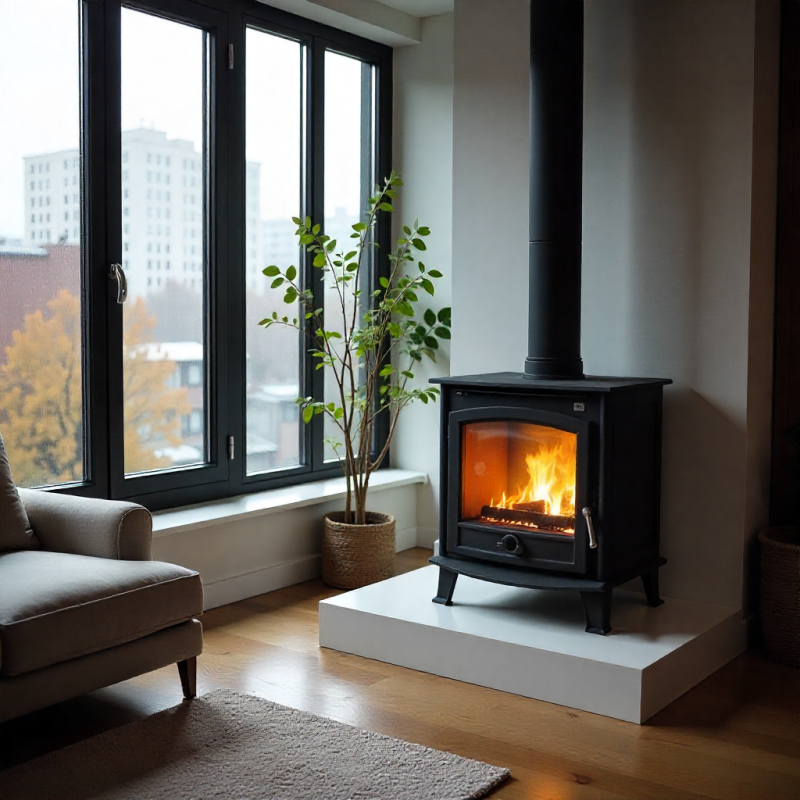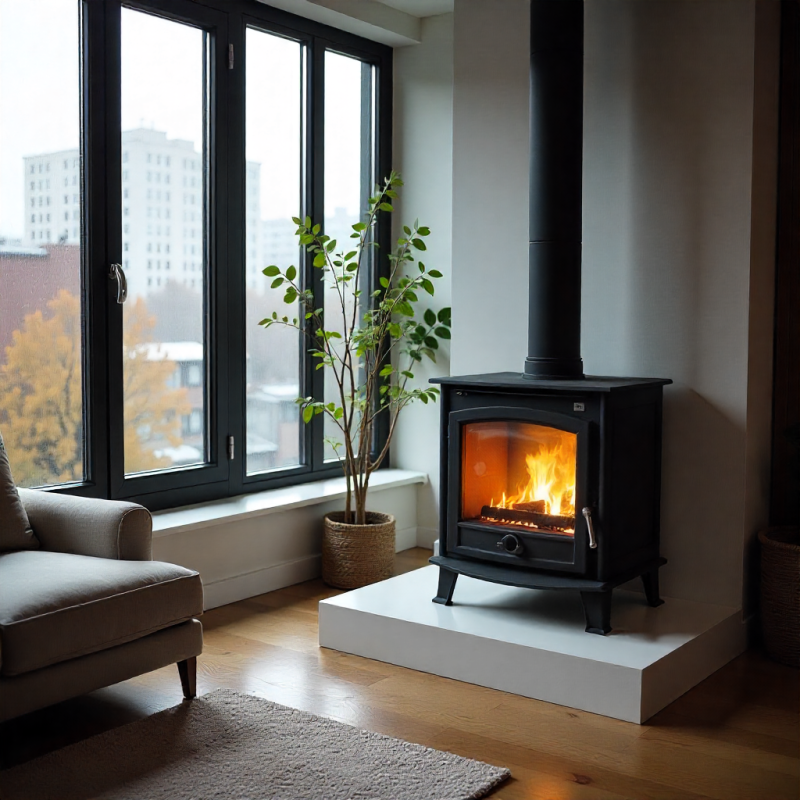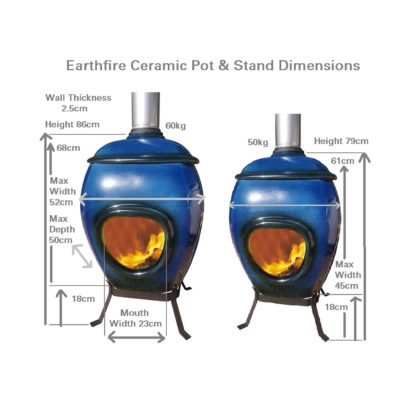

A closed fireplace offers something a traditional open fire simply cannot: real, sustained heat that stays in the room rather than escaping up the chimney. If you’re choosing between the two — or just trying to understand whether the upgrade is worth it — here’s what actually makes the difference, plus a clear look at the types, sizes, and costs involved before you commit.
What Is a Closed Fireplace?
A closed fireplace — sometimes called a closed combustion fireplace or slow combustion fireplace — uses a sealed firebox with a glass door and a controlled air-intake damper. Instead of letting room air rush past the fire and carry heat straight up the flue, you control how much oxygen the fire receives. Restrict the air and you get a slow, long burn; open it wider and the fire heats up fast.
That control is the entire point. A well-designed closed combustion unit converts 70–80% of the wood’s energy into usable room heat. A standard open hearth manages 15–25% at best — the rest disappears up the chimney. Over a full Cape Town or Overberg winter, that efficiency gap translates directly into wood bills and comfort.
Closed Fireplace vs Open Fireplace: 4 Differences That Matter
Open fireplaces look dramatic, but they perform poorly as heaters. Here’s where the gap shows up in practice:
- Heat output: A closed unit rated at 10 kW keeps 60–80 m² comfortably warm. An equivalent open fire heats the immediate area and little else.
- Wood consumption: You’ll use roughly 40–50% less wood with a closed combustion design over a winter season because combustion is more complete and less heat is lost to the flue.
- Load-shedding resilience: A closed fireplace needs zero electricity. No fan, no ignition, no pump. During a 4-hour or 6-hour blackout, a single load of hardwood will keep the room warm for the entire stage — making it one of the most practical heating solutions for South African winters.
- Safety: The sealed glass front prevents sparks from landing on carpets or children, and the glass stays cool enough to touch safely on most modern units.
Once you’ve decided on a closed combustion unit, the next question is which format fits your space. See our comparison of freestanding vs built-in fireplaces for a deeper look at that decision.
5 Types of Closed Fireplace — and What Each One Is Best For
The closed fireplace category covers several distinct formats. Knowing the difference saves you from buying the wrong unit for your room.
1. Freestanding Closed Combustion Fireplace
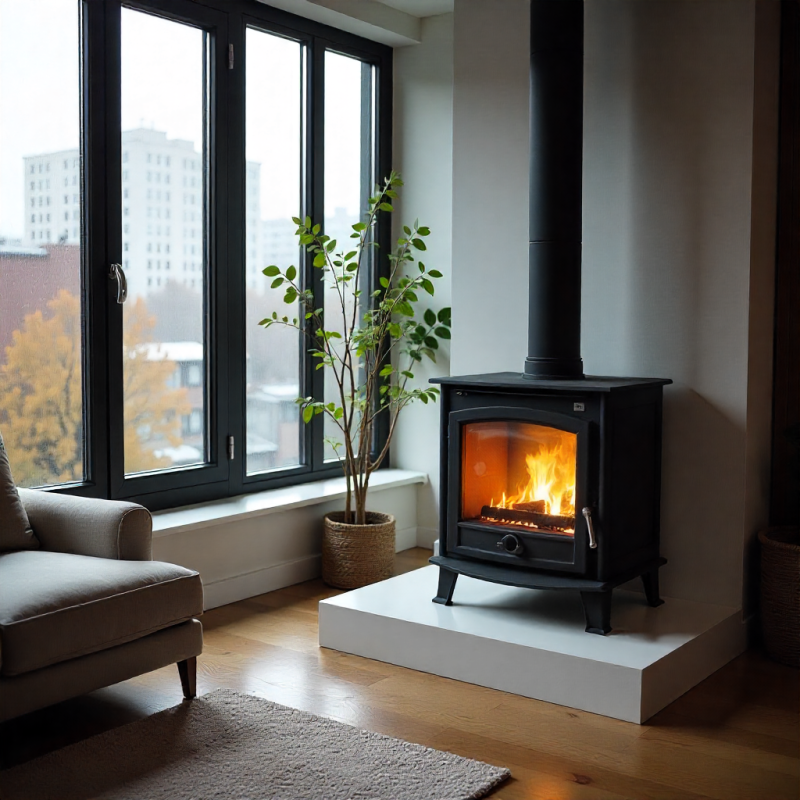
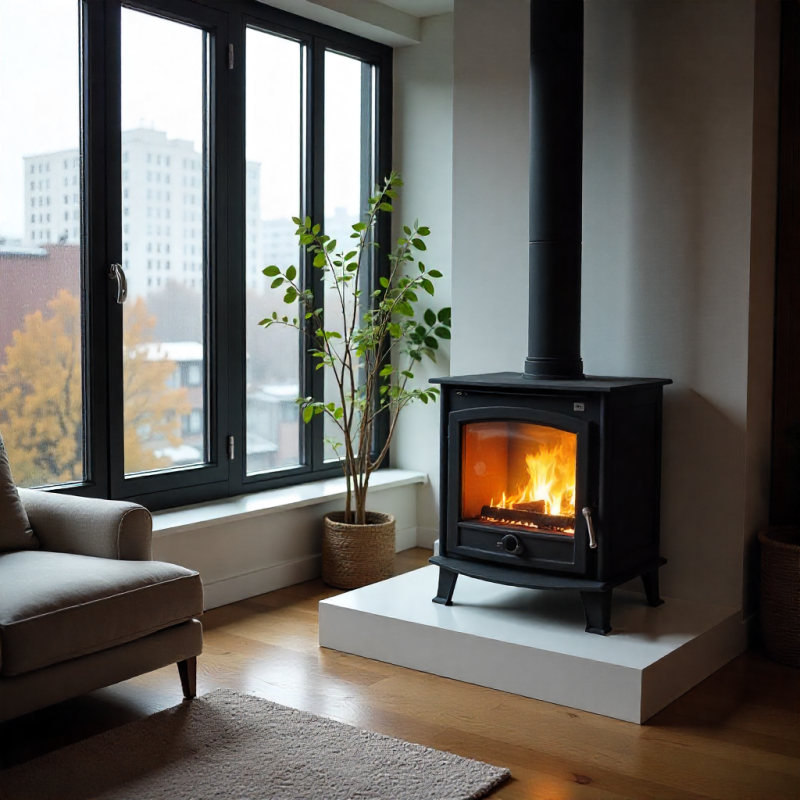
The most popular choice for South African homeowners. A freestanding unit sits on a hearth pad, connects to a flue through the ceiling or wall, and can be positioned almost anywhere in a room. Installation is relatively straightforward and — because the unit radiates heat from all four sides — it’s often the most effective heater per rand spent. Browse our freestanding fireplaces for available sizes and output ratings.
2. Built-In Closed Fireplace (Insert)
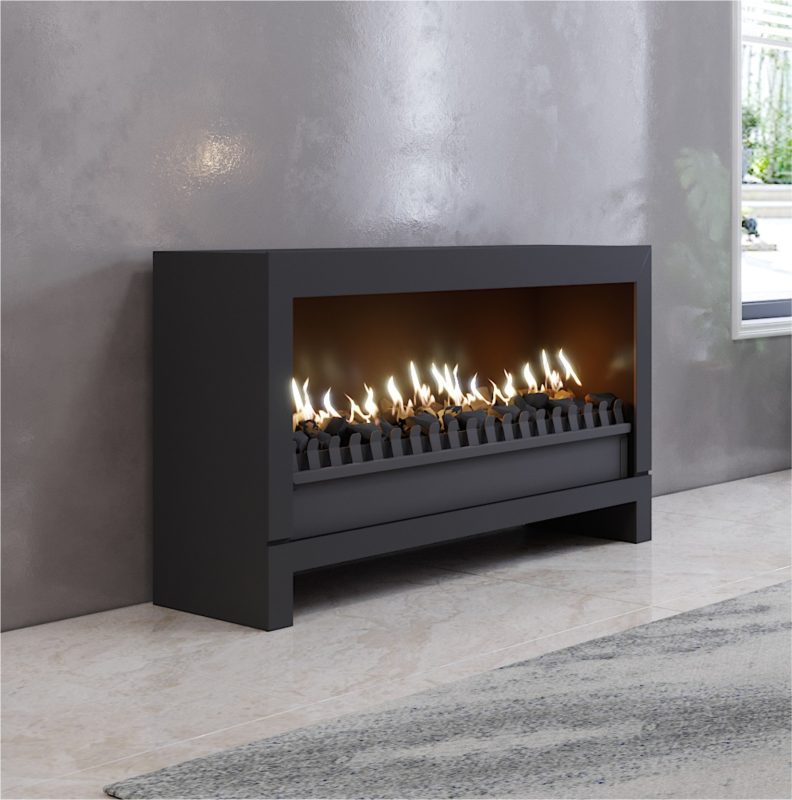
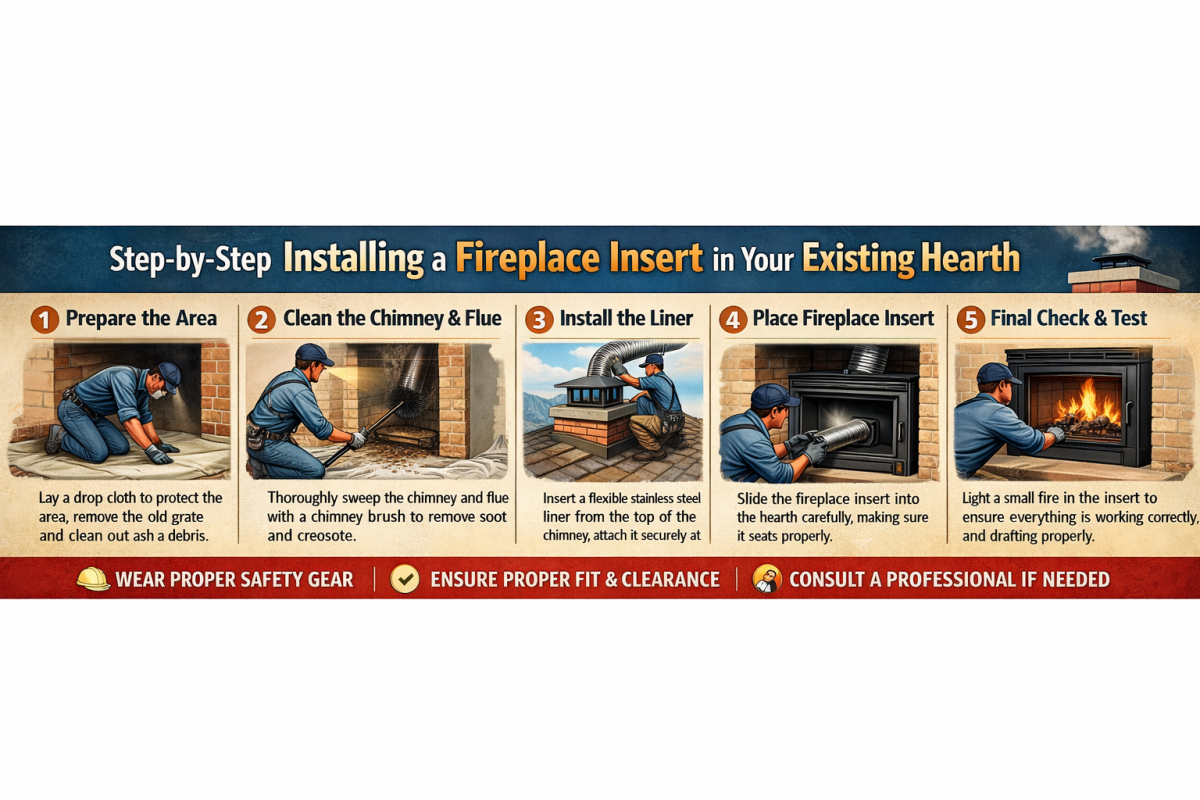
Built-in or insert fireplaces sit inside a brick or steel surround, flush with the wall. They suit open-plan rooms where a projecting unit would dominate the space, and they’re a natural fit for homes that already have an open-hearth recess that needs upgrading. Our built-in fireplaces include both standard and high-output insert models.
3. Double-Sided Closed Fireplace
A double-sided unit sits in a dividing wall and heats two rooms simultaneously from a single fire. It’s an efficient solution for lounge-dining room combinations or open-plan kitchen areas where you need warmth on both sides of a partition. See our double-sided fireplaces for wood-burning and gas options.
4. Slow Combustion Cast Iron Fireplace
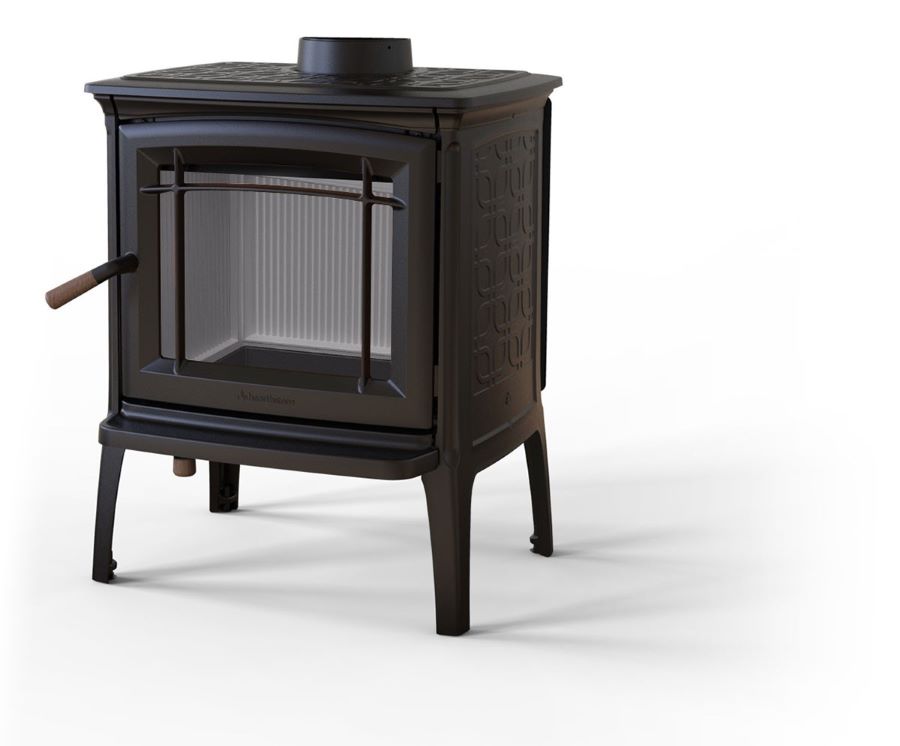
Cast iron units are heavier and take longer to heat up, but once at temperature they hold and radiate a steady, even warmth that lasts hours after the fire dies down. They suit bedrooms, studies, and smaller rooms where sustained low-level heat is more useful than rapid high output.
5. Multi-Fuel Closed Combustion Fireplace
Some models — including the Sentinel range — are rated for wood, coal, or a combination. Useful in areas where quality firewood is harder to source consistently, or where coal is more readily available. For a full overview of our range of fireplaces including multi-fuel options, visit the product pages.
What Size Closed Fireplace Do You Need?
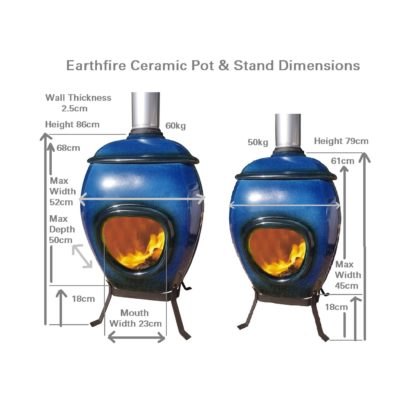
Output is measured in kilowatts (kW). As a practical guide for South African homes:
- 4–6 kW: Bedrooms, studies, and small lounges up to 30 m².
- 8–12 kW: Standard open-plan lounge and dining areas of 50–80 m².
- 14–20 kW: Large open-plan spaces, double-volume rooms, or homes where the fireplace is the primary heat source through winter.
Ceiling height and insulation quality matter as much as floor area. A poorly insulated room with high ceilings — common in older Cape Dutch and Victorian homes — needs a unit at the upper end of its kW range. For a more detailed breakdown of sizing, read our guide to choosing the right fireplace for your home.
It’s also worth checking efficiency certification. European-manufactured units carry EN 13240 or Ecodesign 2022 ratings, which verify both heat output accuracy and emission levels independently. HETAS, the UK’s recognised solid fuel certification body, publishes useful consumer guidance on what these ratings mean and what to look for on a specification sheet.
What Does a Closed Fireplace Installation Cost?
In South Africa, a complete installation — unit, flue, hearth pad, and labour — typically falls in these ranges:
- R15,000–R25,000: Entry-level freestanding unit with a basic single-wall flue.
- R25,000–R45,000: Mid-range unit with an insulated twin-wall flue system, which improves draught and efficiency — particularly valuable in coastal homes where humidity is higher.
- R45,000–R80,000+: Premium built-in or designer unit with custom surround, tiled hearth, and a fully insulated flue through a plastered chimney breast.
For a full breakdown of what drives the variation, the fireplace installation cost guide covers every factor in detail. If you’re still weighing wood against gas, our comparison of gas vs wood-burning fireplaces runs the numbers on running costs side by side.
6 Things to Check Before You Buy
- Output rating vs room size. Use the kW ranges above and don’t undersize — a fireplace that can’t heat the room will run flat-out all night and still leave you cold.
- Flue route. A straight vertical flue draws better than any offset or horizontal run. Discuss the route with your installer before choosing a unit position.
- Glass quality. Ceramic glass (not tempered) handles rapid temperature changes without risk of shattering and stays cleaner over time.
- Air wash system. A well-designed air wash directs clean air across the inside of the glass to keep it clear. Constant sooting usually means wet wood or an inadequate air wash — not a problem with the unit itself.
- Ash pan. A removable ash pan makes daily cleaning far faster, which matters when you’re using the fireplace every night through a Cape winter.
- Certificate of Compliance (CoC). In South Africa, fireplace installations require a CoC from a qualified tradesperson. Our professional fireplace installation includes a full CoC as standard — don’t accept an installation without one.
Frequently Asked Questions
Is a closed fireplace safe to leave burning overnight?
Yes — provided you load it correctly. Use seasoned hardwood (blue gum, rooikrans, or black wattle are all widely available in the Western Cape), close the air intake to its minimum setting, and confirm the flue damper is open. Quality units are designed to burn safely for 6–8 hours on a full load with restricted air. Never fully close the air intake: the fire needs some oxygen and the flue needs draught to remove combustion gases from the room.
Can a closed fireplace heat my home during load-shedding?
Completely — and this is where it genuinely outperforms gas heaters and plug-in alternatives. A closed combustion fireplace needs no electricity at all. A 10 kW unit on a full load of hardwood will comfortably heat an open-plan living area through a 6-hour Stage 6 slot without any intervention once the fire is established.
Does a closed fireplace need a brick chimney?
No. Most modern installations use a twin-wall insulated flue pipe that runs through the ceiling and roof — a much faster and cheaper option than building a masonry chimney. The flue must exit the roofline vertically and above surrounding obstacles to create adequate draught, but the look of a traditional chimney breast can still be achieved using a steel or plasterboard boxing around the pipe.
Is wood in a closed fireplace cheaper to run than gas?
For most South African households, yes. Seasoned hardwood typically costs R500–R900 per 100 kg depending on species and supplier. A 10 kW closed combustion fireplace burning for four hours uses around 4–6 kg of wood. Comparable LPG usage at current prices (roughly R28–R35/kg) usually costs 30–50% more per hour of equivalent heat — and gas prices track the Rand/Dollar exchange rate, while local firewood is largely insulated from currency swings.
Ready to find the right unit? Browse our fireplace collection to compare models across output ranges and formats, or request a free installation quote and our team will size and recommend the right closed combustion fireplace for your space.