
The right heating fireplace transforms a cold room into the warmest spot in the house — but the wrong one just looks pretty while your space stays chilly. Whether you’re fitting out a newly built home in Cape Town, replacing an inefficient open fire in Johannesburg, or adding winter warmth to a load-shedding-prone property, choosing the right unit from the start saves you money and regret.
This guide breaks down the five main types of heating fireplace available in South Africa, explains how to match kW output to your room size, and covers what you should budget before committing. Browse our full range of fireplaces once you know what you’re looking for.
What Actually Makes a Heating Fireplace Work?
A heating fireplace earns that label when it converts most of its fuel into usable room heat rather than losing it up the chimney. Open fires — the traditional brick kind with a wide open mouth — are famously inefficient, pushing 80–90% of their heat straight out of the flue. Modern closed-combustion units flip that ratio, achieving 70–85% efficiency. The practical effect: a 12 kW closed-combustion fireplace genuinely heats a 60–80 m² open-plan space, while an open fire of the same nominal rating might barely warm you from three metres away.
Efficiency ratings, kW outputs, flue requirements, and fuel type all factor into which unit is right for your home. Below are the five types our customers most commonly ask about.
5 Types of Heating Fireplace Worth Knowing
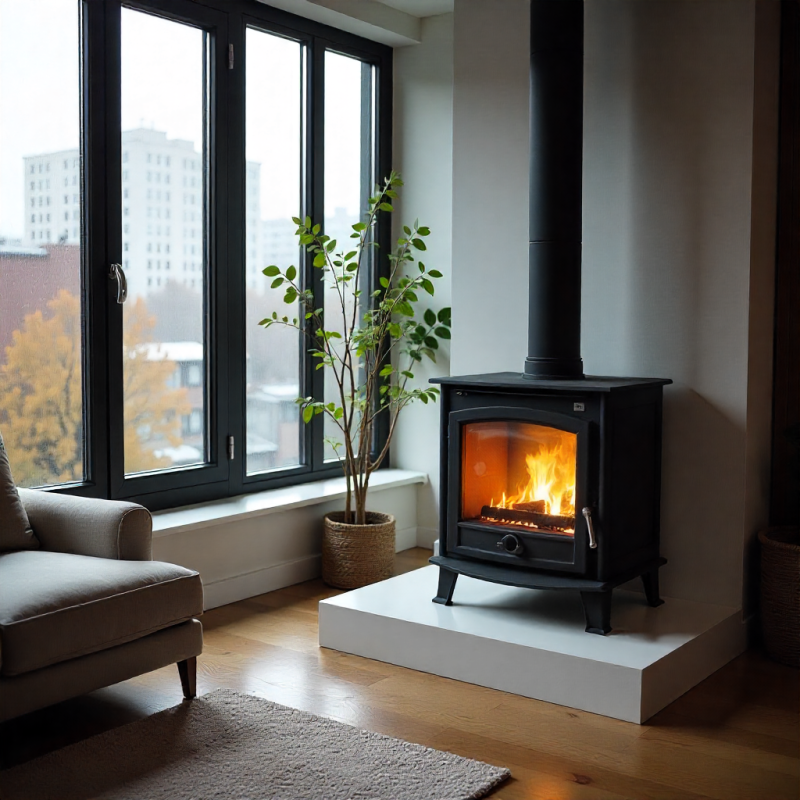
1. Closed-Combustion Freestanding Wood Fireplace
The most popular choice for South African homeowners wanting serious heat output. A sealed glass door and a controlled air-intake damper let you regulate the burn rate — meaning a well-stocked fire at midnight is still producing warmth at 2 AM without a reload. These freestanding fireplaces connect to a twin-wall flue that routes through the ceiling or an external wall, making them retrofittable into almost any home.
Typical output: 8–16 kW. Typical installed cost: R18 000–R45 000 depending on unit and flue run.
Best for: medium to large rooms (35–90 m²), families who enjoy managing a real wood fire, homes with an existing chimney or space for a new flue.
2. Closed-Combustion Built-In Fireplace Insert
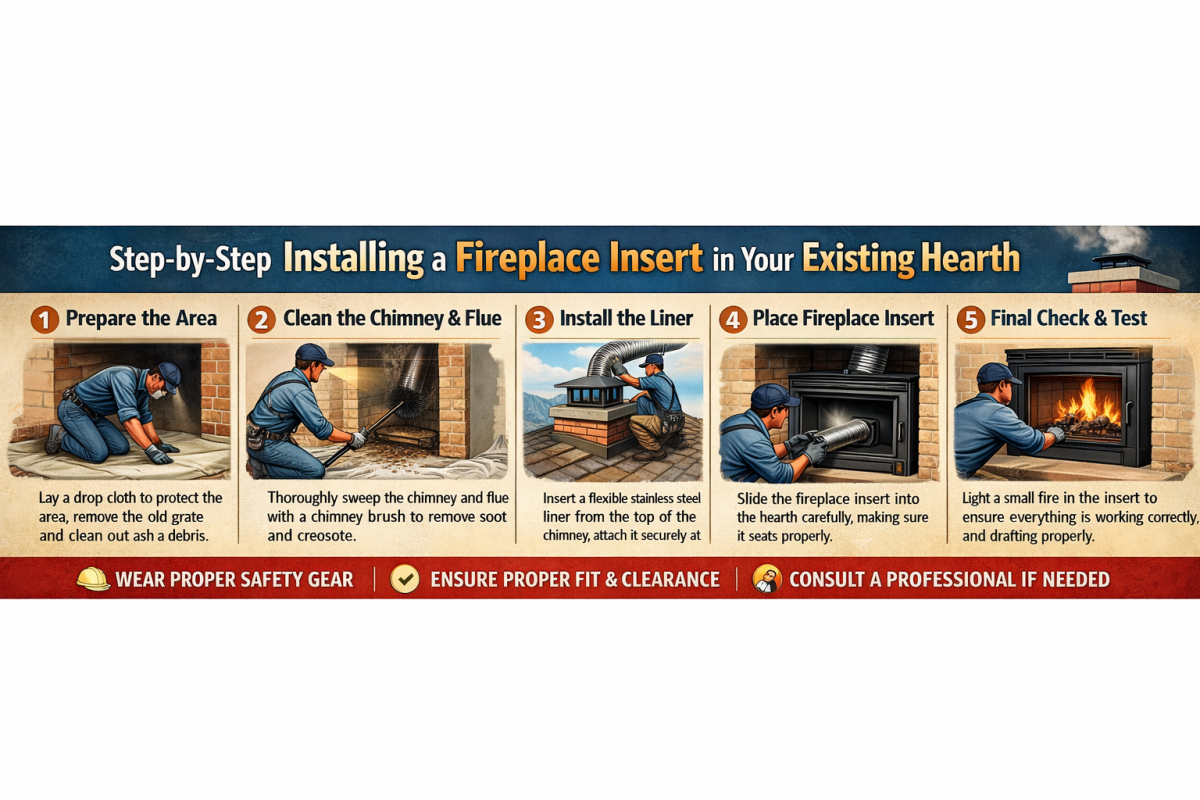
A built-in insert sits flush with the wall or inside a fireplace box, giving you the clean architectural look of a traditional hearth with the efficiency of a modern sealed unit. These built-in fireplaces are typically installed during a renovation or new build, though a skilled installer can retrofit one into an existing masonry opening with the right flue work.
Typical output: 10–22 kW. Installed cost: R25 000–R80 000+ depending on cladding complexity and finish.
Best for: new builds, major renovations, homeowners who want a focal point that integrates into the architecture rather than standing in front of a wall.
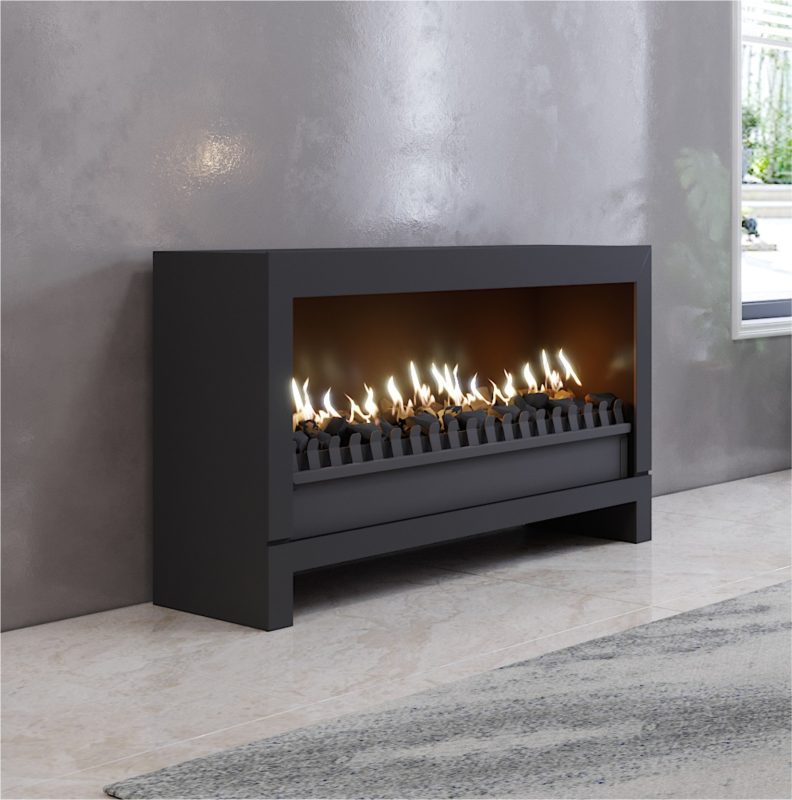
3. Gas Fireplace
A gas fireplace runs on LPG (most common in SA) or natural gas where it’s available. It lights with a switch, requires no firewood storage, and — critically — works during load-shedding if it has a standing pilot or battery ignition. The trade-off is an ongoing fuel cost and a gas compliance certificate from a registered installer. Explore the full gas fireplace range for both flueless and flued options. For a detailed cost comparison, our guide on gas vs wood-burning fireplaces covers running costs per hour at current LPG prices.
Typical output: 5–12 kW (flueless) to 15 kW+ (flued). Installed cost: R20 000–R55 000.
Best for: apartments, lock-up-and-go homes, households that prioritise convenience over the wood-fire ritual.
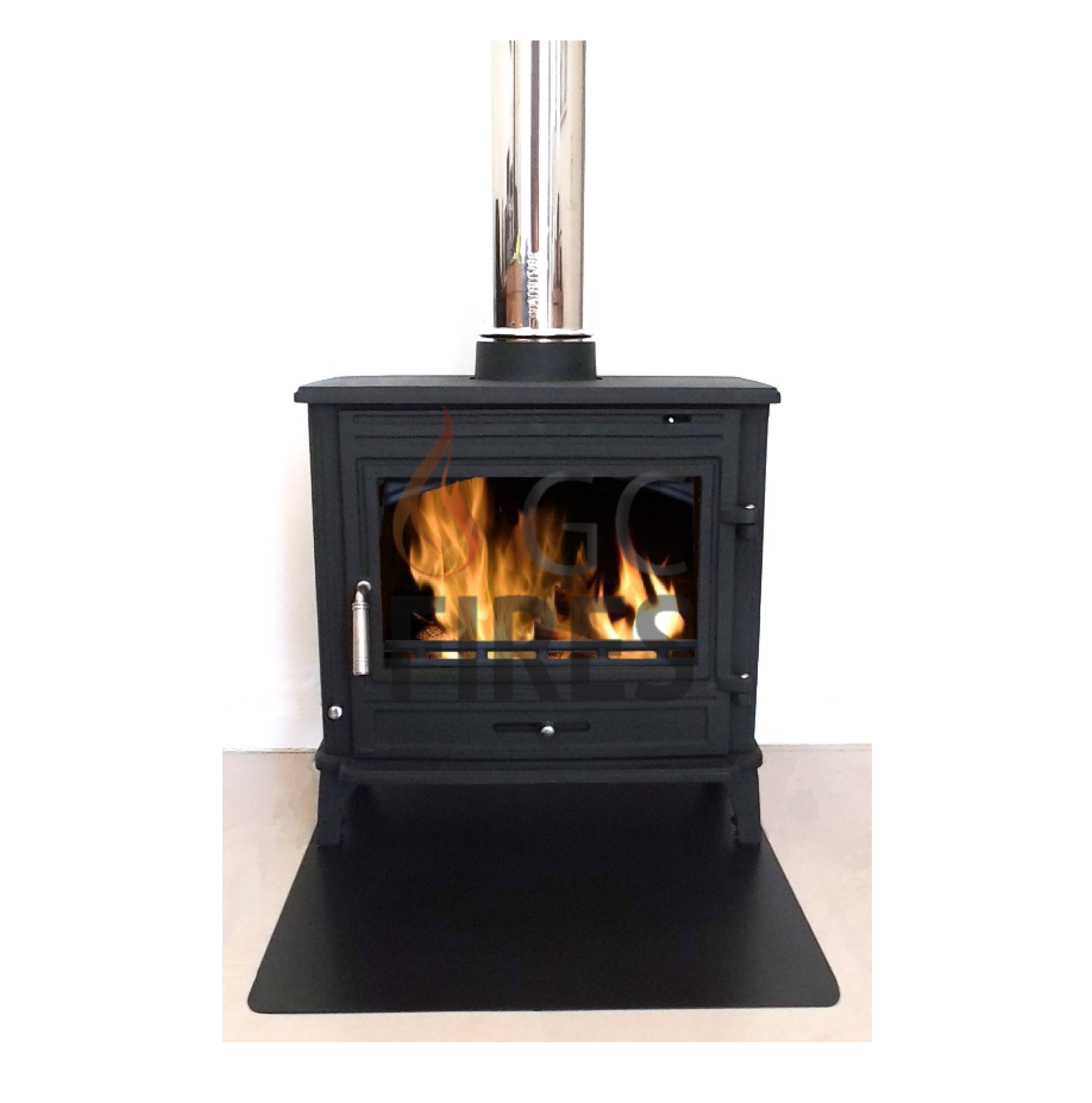
4. Freestanding Wood-Burning Stove
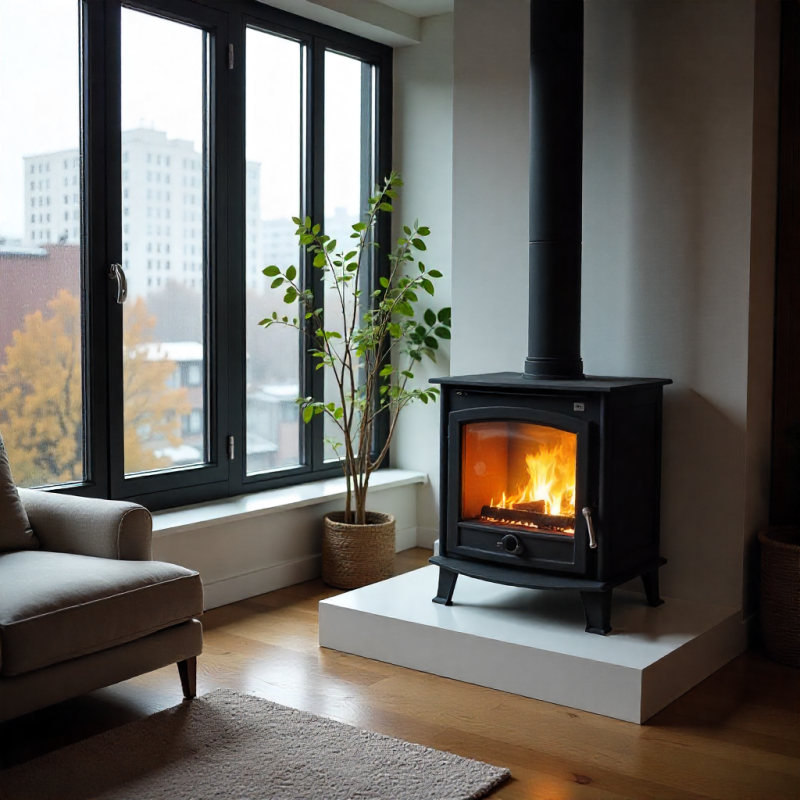
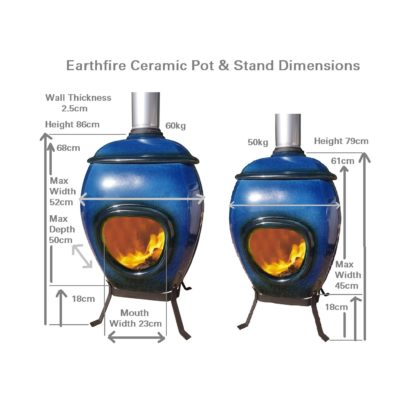
The classic cast-iron or steel wood stove sits on legs or a plinth and connects to a twin-wall flue. These units are particularly popular in the Western Cape where load-shedding has made grid-independent heating attractive. Cast iron retains heat longer after the fire dies down; steel heats the room faster. Either way, a well-rated stove in the 8–12 kW range will comfortably heat a 40–60 m² living area through a cold Cape winter night.
Typical output: 5–14 kW. Installed cost: R15 000–R40 000.
Best for: smaller rooms (20–50 m²), cottages, farm homes, or anyone who wants a unit they can potentially relocate if they move.
5. Double-Sided Fireplace
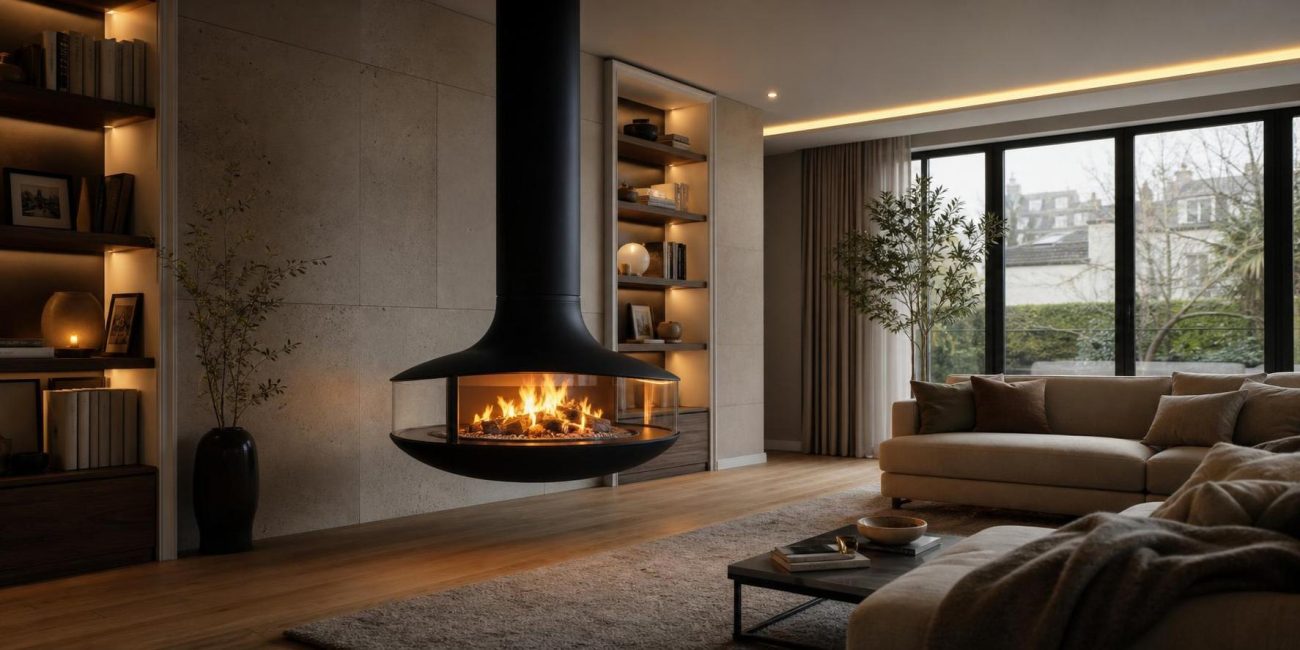
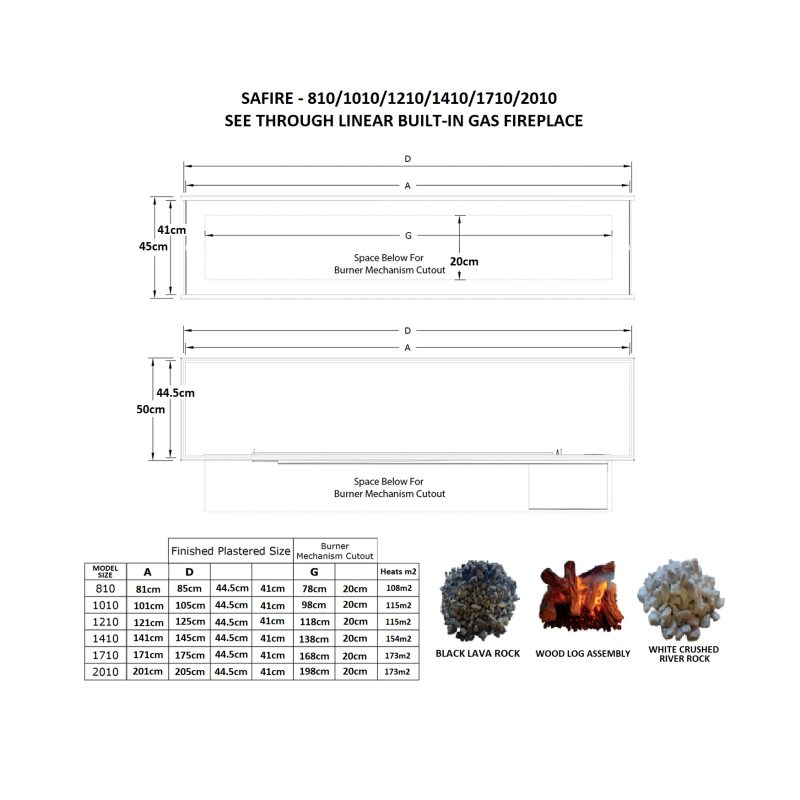
A double-sided fireplace — sometimes called a see-through or tunnel fireplace — sits in a dividing wall and radiates heat into two rooms simultaneously. This makes it one of the most efficient uses of a single heating source. A 14 kW double-sided unit can comfortably warm a lounge and dining room that together total 80+ m², while becoming the visual centrepiece of both spaces.
These are built-in by nature and require structural planning, but the result is dramatic and genuinely functional as a primary heat source.
Best for: open-plan homes with a dividing wall, properties where the fireplace should serve two rooms at once.
How to Size a Heating Fireplace for Your Room
A rough but reliable rule: 1 kW per 10 m² of floor space in a standard-height, reasonably insulated room. Add 20–30% if the room has high ceilings, is poorly insulated, or opens directly onto a covered patio you also want to keep warm.
- 25 m² bedroom: 3–4 kW — a small freestanding stove does the job.
- 50 m² open-plan lounge/kitchen: 6–8 kW — a mid-range closed-combustion unit.
- 80 m² great room: 10–14 kW — choose a large built-in or double-sided.
Also consider the thermal mass of the room: concrete floors and large glass panels lose heat faster than carpeted rooms with insulated walls. For a deeper look at matching a unit to your layout, read our guide on choosing the right fireplace for your home.
What to Budget: Heating Fireplace Costs in SA
Installation cost depends on three variables: the unit itself, the flue run length, and the complexity of the fit. Our fireplace installation cost guide breaks this down in full detail, but here’s a quick orientation for 2026 pricing:
| Type | Unit cost | Installation | Total range |
|---|---|---|---|
| Small freestanding stove | R8 000–R18 000 | R5 000–R12 000 | R13 000–R30 000 |
| Closed-combustion freestanding | R18 000–R35 000 | R8 000–R18 000 | R26 000–R53 000 |
| Built-in fireplace insert | R25 000–R60 000 | R12 000–R30 000 | R37 000–R90 000 |
| Gas fireplace | R15 000–R40 000 | R8 000–R20 000 | R23 000–R60 000 |
Prices are indicative. Coastal installations in Cape Town and Hermanus may require 304-grade stainless steel flue components to resist corrosion — budget an additional R3 000–R8 000 depending on the run. Whether you go freestanding or built-in also affects total cost significantly; our breakdown on freestanding vs built-in fireplaces helps you weigh the trade-offs.
Installation: What the Regulations Say
All wood and gas fireplaces in South Africa require a Certificate of Compliance (CoC) issued by a registered installer after the work passes inspection, as governed by SABS standard SANS 10400-T for fire protection. Gas appliances additionally require a gas CoC under SANS 10087-3.
This is not optional — insurers can and do refuse fire-damage claims on properties where the fireplace was installed without a valid CoC. Make sure your installer is registered and issues the certificate on completion. Our professional fireplace installation team handles all certification as part of every job.
Frequently Asked Questions
How many kW does a heating fireplace need to warm a lounge?
For a typical 40–50 m² South African lounge with standard 2.4 m ceilings, an 8–10 kW unit is usually sufficient. Open-plan spaces with kitchen and dining areas attached need 12–16 kW. Always err slightly higher — you can always dial back a damper, but you can’t add output to an undersized unit.
Can a single fireplace heat an open-plan home?
Yes — but only if it’s sized correctly for the total floor area. Good air circulation helps: a ceiling fan on low setting distributes warm air that would otherwise pool near the ceiling. A double-sided or high-output closed-combustion fireplace placed centrally in a large open-plan works best. For loads over 16 kW, two freestanding units placed strategically can outperform one large built-in.
Gas or wood — which is better for load-shedding?
Both work without grid electricity if specified correctly. A wood fireplace needs no power at all. A gas fireplace needs a standing pilot or battery ignition — check the spec before buying. Wood is fully grid-independent and uses a widely available fuel; gas is more convenient but ties you to cylinder refills. Read our full breakdown on comparing gas and wood-burning running costs for the numbers.
Do all fireplaces need a flue?
Flueless gas fireplaces are the exception — they burn cleanly enough to vent combustion gases into the room (in small, ventilated spaces only). All wood-burning units and most gas fireplaces require a dedicated flue. The flue run length directly affects installation cost, so factor this in early when planning placement.
Ready to stop guessing and pick a heating fireplace with confidence? Request a free installation quote from our team — we’ll assess your space, recommend the right output, and give you a fixed price before any work begins.
Related reading
- Can You Install a Fireplace in an Existing Home? Yes — Here's How
- Combustion Fireplace Installation: How It Works, Costs & Compliance
- Need it done professionally? See our fireplace installation in Cape Town service.