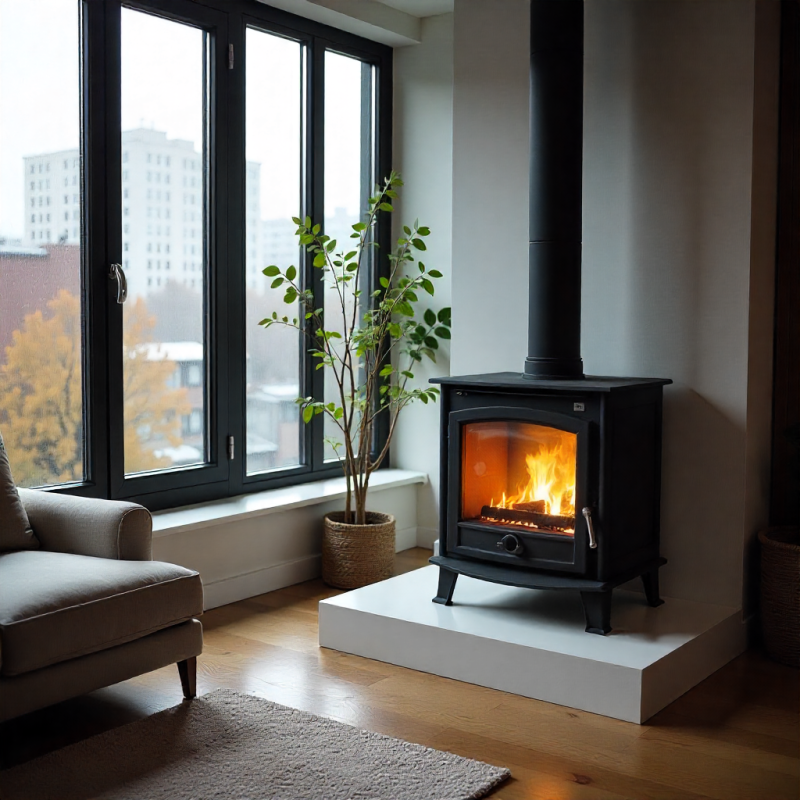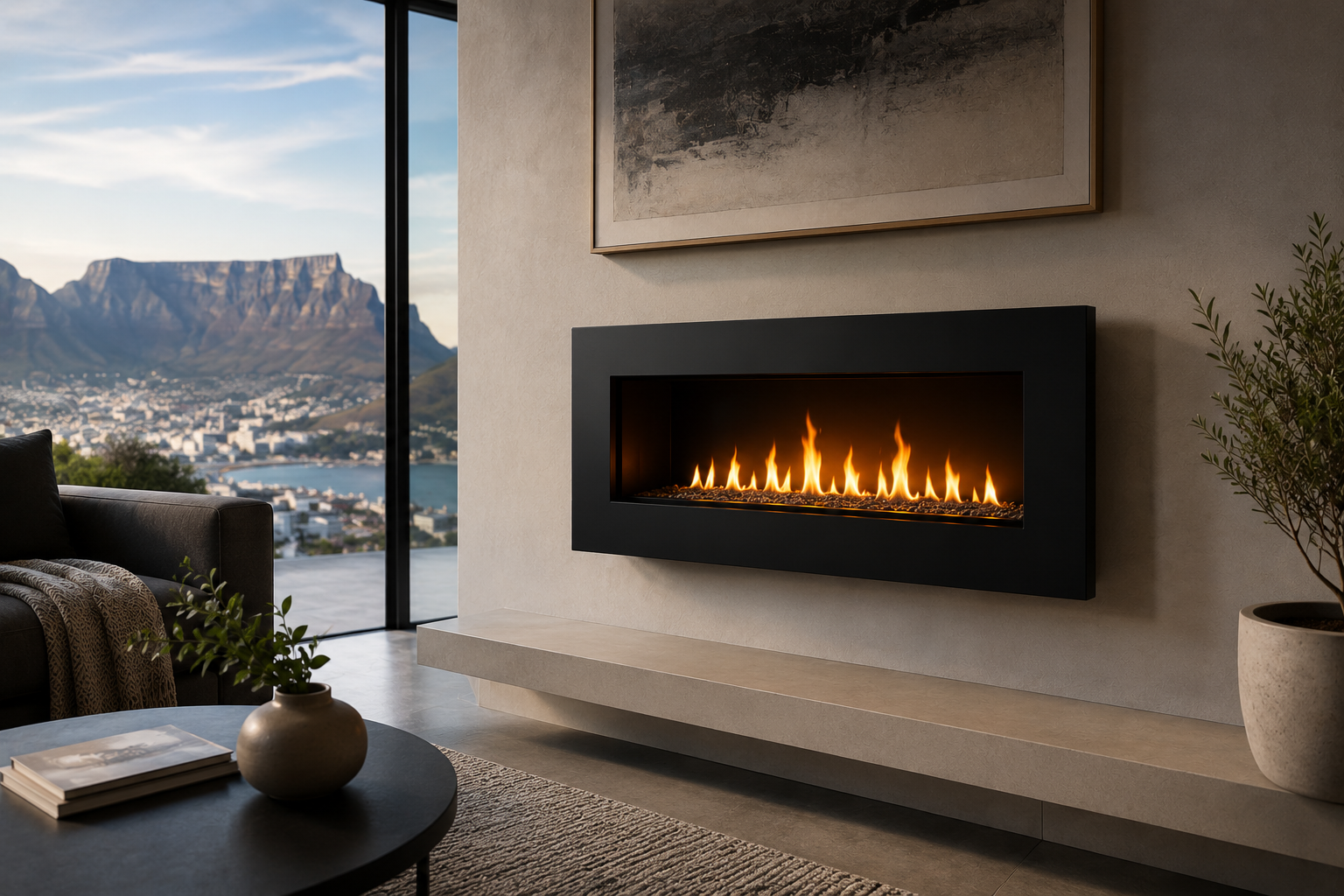
Wall Mounted Fireplace South Africa: A Practical Buyer’s Guide (2026)

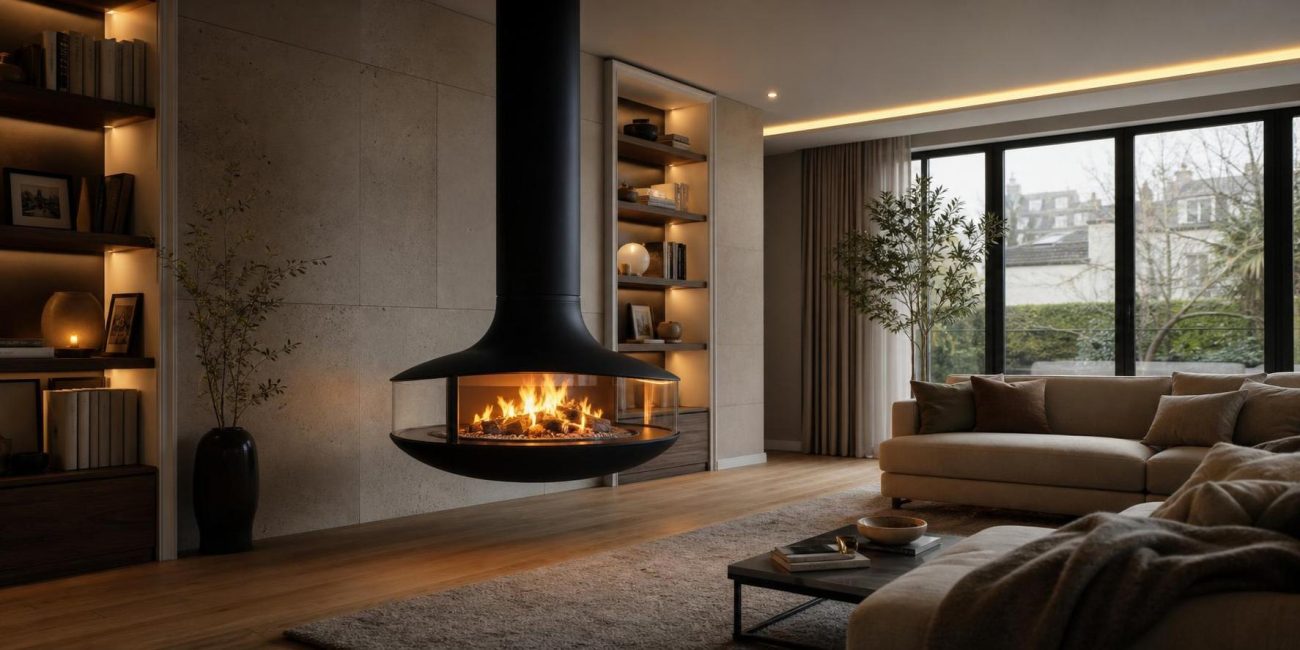
A wall mounted fireplace is one of the most dramatic upgrades you can make to a South African home. It sits flush against the wall, creates an instant focal point, and — if you choose gas — keeps working right through load-shedding. But with dozens of models on the market and installation costs that vary wildly depending on your home’s construction, choosing the right unit takes more than scrolling through product photos.
This guide walks you through the key decisions: fuel type, sizing, cladding for coastal homes, realistic Rand price ranges, and what to expect on installation day. Whether you’re renovating a Cape Town apartment or finishing a new-build in the Northern Suburbs, by the end you’ll know exactly what to ask your installer.
Gas vs Electric: Which Wall Mounted Fireplace Is Right for You?
The first fork in the road is fuel. South Africa’s grid realities make this a more meaningful choice than it is in Europe or the UK.
Gas wall mounted fireplaces
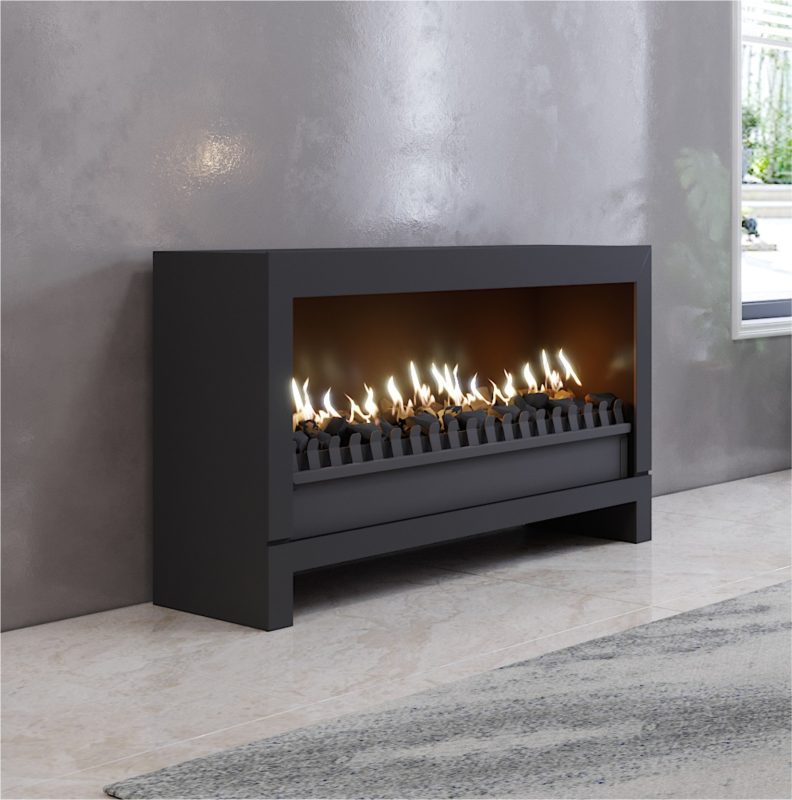
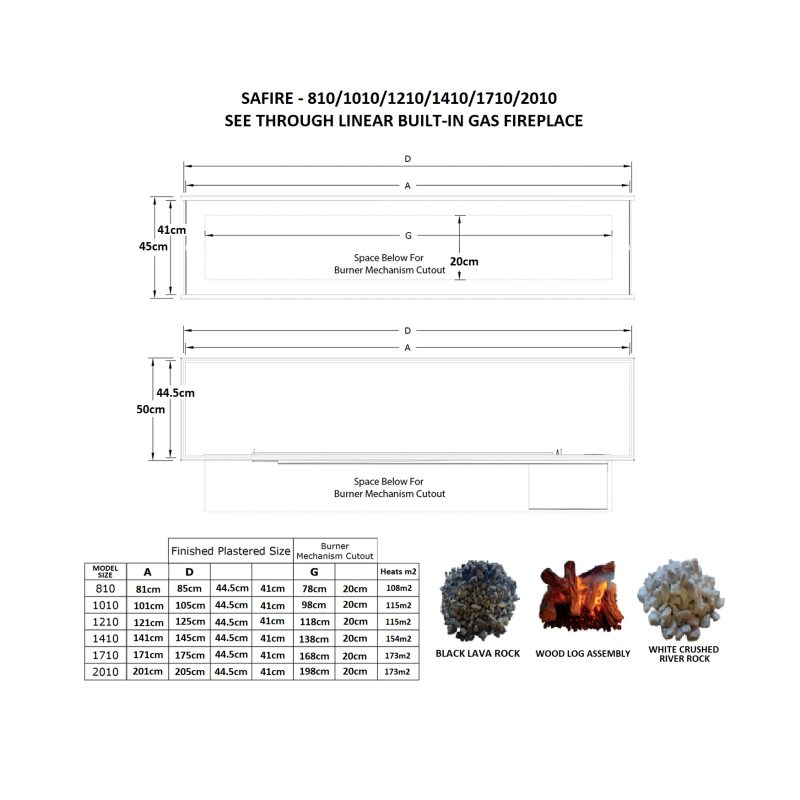
Gas units produce real, radiant heat — the kind that warms a room in minutes rather than slowly cycling air. Crucially, they run off a 9 kg LPG cylinder or a piped natural gas connection and keep burning regardless of load-shedding. If you’re in a suburb that experiences Stage 4–6 cuts through winter, that alone can justify the higher upfront cost. South African brands like SAFire’s WallArt and Chanterie series are purpose-built for local conditions, available in stainless-steel finishes suited to coastal salt air, and come in widths from 900 mm to 1 500 mm to suit everything from a study nook to an open-plan living area.
Running costs are competitive too. A typical 6 kW gas wall-mounted fireplace uses roughly 0.45 kg of LPG per hour at full heat — about R5–R8 per hour at current cylinder prices. That’s significantly less than resistive electric heating at Eskom’s 2026 tariffs. For a deeper comparison of the two fuel types, read our guide on gas vs wood-burning fireplaces to see where each fuel shines.
Electric wall mounted fireplaces
Electric units are cheaper to buy (R3 000–R8 000 for entry-level models) and dead-simple to install — most are little more than a plug-in or hardwired unit with a 3D LED flame effect. They’re a sensible choice for a bedroom, home office, or rental property where aesthetics matter more than serious heating. The downside is obvious: no grid, no flame. In South Africa’s current load-shedding environment, an electric fireplace in the main living area is a frustrating investment.
For most homeowners asking us about a wall mounted fireplace for their lounge or family room, gas is the better long-term decision. The rest of this guide focuses primarily on gas units, though the sizing and installation principles apply broadly.
What Size Wall Mounted Fireplace Do You Need?
Sizing is where most buyers go wrong — either choosing a unit that looks undersized against a large wall, or overpowering a small room. Two factors matter: heat output (kW) and visual proportions.
Heat output
A rough rule of thumb for South African homes, which tend to be less insulated than their northern-hemisphere counterparts: you need about 1 kW per 10 m² of well-insulated floor space, or 1 kW per 8 m² in older brick homes with no ceiling insulation. A 45 m² open-plan kitchen-lounge therefore needs roughly 5–6 kW. Most mid-range wall-mounted gas fireplaces in SA fall between 4 kW and 9 kW, which covers the majority of residential rooms.
Visual proportions
The general design guideline is that the fireplace face should span at least one-third of the wall it’s mounted on. On a standard 3.6 m living-room wall, that means a minimum 1 200 mm wide unit. Going narrower looks like a screen that’s been installed rather than a fireplace that belongs. Models in the 1 100–1 500 mm range tend to look proportionate in most South African lounge configurations.
If you’re still deciding between a wall-mounted unit and a freestanding alternative, our comparison of freestanding vs built-in fireplaces lays out the practical trade-offs side by side.
Wall Mounted Fireplace Costs in South Africa (2026)
Budgeting is the question every SA buyer asks first, and the answer has a wide range because units, installation complexity, and cladding choices all vary significantly.
Unit prices (gas)
- Entry-level (900 mm, basic flame effect): R8 000–R14 000
- Mid-range (1 100–1 200 mm, realistic flame, remote control): R18 000–R35 000
- Premium (1 500 mm, panoramic glass, multiple flame settings, 304 stainless): R38 000–R75 000+
For a broader breakdown of what drives fireplace pricing — including the installation and cladding components — see our fireplace installation cost guide. It covers wood and gas units across all mounting styles.
Installation costs
A wall-mounted gas fireplace requires a flue — typically a twin-wall insulated flue that exits through a wall or roof. Installation costs in Cape Town and greater South Africa currently run:
- Simple straight-run flue through an external wall: R4 000–R7 000
- Longer flue run with bends (internal rooms, upper floors): R8 000–R16 000
- Gas line connection (if no existing LPG point): R2 500–R5 000 additional
Total installed budget for a quality wall-mounted gas fireplace: R25 000–R55 000 covers the majority of residential projects. Our professional fireplace installation team can provide an accurate quote once we know your room layout and preferred unit.
Coastal South Africa: Stainless Steel and Corrosion Resistance
If your home is within 5 km of the Atlantic or Indian Ocean seaboard — which covers a substantial portion of Cape Town, the Garden Route, and the East Coast — salt-air corrosion is a real concern for fireplace hardware. Mild steel frames will rust within a few years in these environments.
Specify 304-grade stainless steel for the firebox surround and any exposed metalwork. Most reputable SA-manufactured wall-mounted gas fireplaces in the premium tier use 304 stainless as standard; some budget imports use powder-coated mild steel that looks identical but behaves very differently after 18 months near the coast.
The same principle applies to the flue system. Insulated twin-wall stainless flues are standard for good reason — not just thermally, but because the inner liner resists condensate and the outer jacket resists coastal weather. Our guide on why insulated flues are worth the investment explains the technical reasons in detail.
Installation: What to Expect
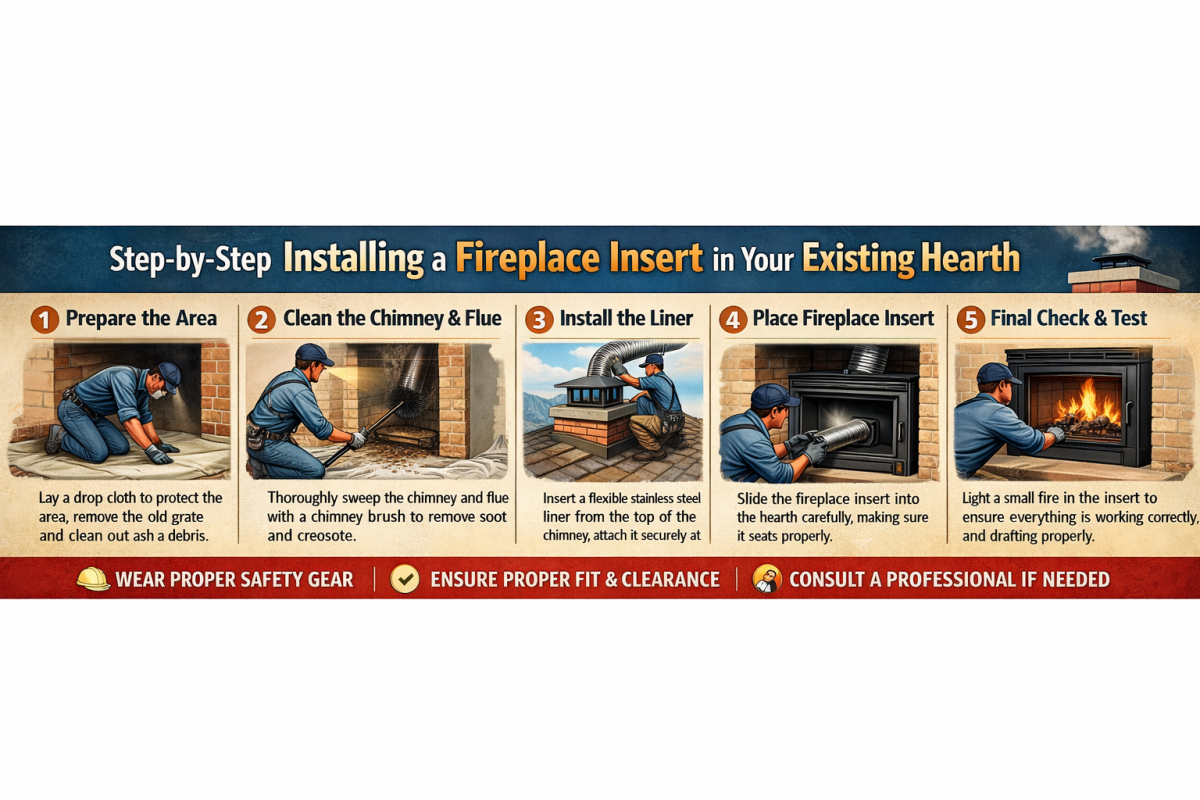
A professional wall-mounted fireplace installation typically runs across one day for straightforward projects, two days if cladding work or a longer flue run is involved. Here’s what the process looks like:
- Site assessment: Your installer checks the wall structure (brick, drywall, or timber frame), identifies the flue exit point, and confirms the gas connection plan.
- Fireplace mounting: The unit is secured to wall studs or a purpose-built steel bracket. Wall-mounted fireplaces are heavy — a 1 500 mm gas unit can weigh 60–80 kg — so the mounting structure must be engineered for the load.
- Flue installation: The flue runs from the unit’s exhaust port to the exit point. All joints are sealed and the flue is tested for draw before the fireplace is commissioned.
- Gas connection and commissioning: A certified gas installer connects the LPG line, performs a pressure test, and runs the fireplace through its operating range.
- Cladding (optional): Many homeowners choose a surround — natural stone, plaster, or timber shelving — which is typically done by a separate contractor after the fireplace is in place.
If you want to understand your full range of options before settling on wall-mounted, it’s worth reading our guide to choosing the right fireplace for your home — it covers built-in, freestanding, and wall-mounted formats side by side.
Frequently Asked Questions
Does a wall mounted gas fireplace work during load-shedding?
Yes — gas fireplaces run entirely on LPG or natural gas with no dependency on the electrical grid. The electronic ignition requires a small amount of power (usually a battery or a 12 V transformer), so if your ignition is mains-powered, keep a battery backup handy during load-shedding. The flame itself and all heat output are completely independent of Eskom.
Can a wall mounted fireplace be the primary heat source for a room?
For well-sized rooms (up to about 40–50 m²) with reasonable insulation, yes. A 6–8 kW gas wall-mounted unit produces enough radiant and convective heat to maintain a comfortable temperature through a Cape Town or Highveld winter night without supplementary heating. In larger or poorly insulated spaces, treat it as a primary comfort-heat source rather than a whole-room heating solution.
Is planning permission required in South Africa?
A wall-mounted gas fireplace installation is classified as a minor building work alteration in most municipalities. In practice, this means your installer should obtain a Certificate of Compliance (CoC) for the gas installation from a registered gas practitioner — this is a legal requirement under SANS 10087. In some heritage overlay zones (parts of the Cape Town bowl, for instance), additional approval may be needed for any external penetration through an approved facade. Your installer will flag this at the site assessment stage.
How do I maintain a wall mounted gas fireplace?
Annual servicing is recommended: clean the glass, inspect the burner and thermocouple, check flue integrity, and test gas connections. Coastal installations — especially within 3 km of the sea — benefit from a six-monthly clean of salt deposits on the glass and external hardware. The flue should be inspected every two years for condensate build-up or blockage; our guide on chimney and flue maintenance covers what that inspection involves.
Ready to Choose Your Wall Mounted Fireplace?
Browse our full selection of wall-mounted fireplaces — including the SAFire WallArt and Chanterie series available in sizes from 900 mm to 1 500 mm — or explore the broader gas fireplace range if you’re still weighing up mounting styles. Once you’ve found a unit that fits your space and budget, request a free installation quote from our Cape Town team and we’ll assess your home, confirm the flue routing, and give you a fixed-price installation cost with no hidden extras.