Combustion Fireplace in Cape Town: Types, Prices & Installation Guide

Cape Town winters are mild compared to the interior plateau, but the damp south-easter wind and persistent grey skies make a roaring fire feel essential rather than decorative. A combustion fireplace — also called a closed combustion or wood-burning stove — is, for many Western Cape homeowners, the most efficient, load-shedding-proof heat source they can install. No electricity required. Real warmth, real ambience, real value to your property.
This guide covers everything you need to know before buying: the difference between combustion and open fireplaces, the main types available, what heat output you actually need, 2026 Rand price ranges, Cape Town coastal considerations, and what the installation process looks like from start to finish. If you already know what you want, browse our freestanding combustion fireplaces or read on to make sure you choose the right unit for your space.
What Is a Combustion Fireplace?
An open fireplace — the traditional brick hearth — draws a huge volume of room air up the chimney. Most of the heat escapes with it. Efficiency is typically below 20%.
A closed combustion fireplace works differently. The firebox is sealed behind a glass door. Air intake is controlled by one or two dampers, which you adjust to manage the burn rate. Because combustion happens in a contained chamber, efficiency climbs to 60–80% in quality units. You get more heat from the same amount of wood — a significant saving when good hardwood costs R800–R1,400 per cubic metre in Cape Town.
The other big advantage in South Africa right now: a combustion fireplace is completely off-grid. No inverter, no battery, no generator. During load-shedding, it keeps your living space genuinely warm. That practical reality has driven a sharp increase in demand over the past three winters, and it shows in every installer’s order books.
If you’re weighing wood heat against other fuel options, our article on gas vs wood-burning fireplaces breaks down running costs and suitability honestly — some homes genuinely suit gas better.
Types of Combustion Fireplaces
Freestanding Fireplaces (Stoves)
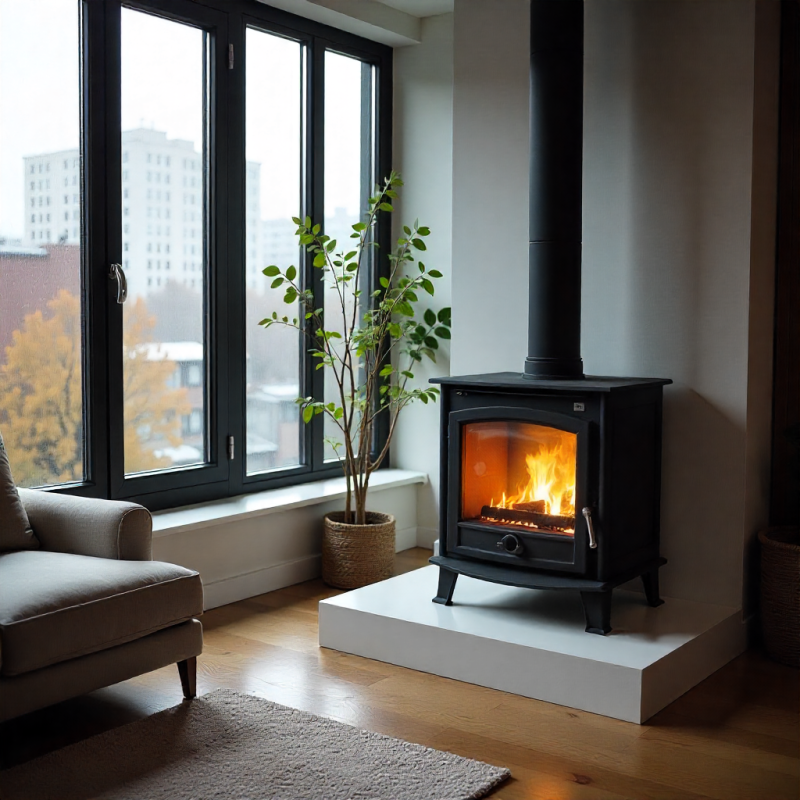
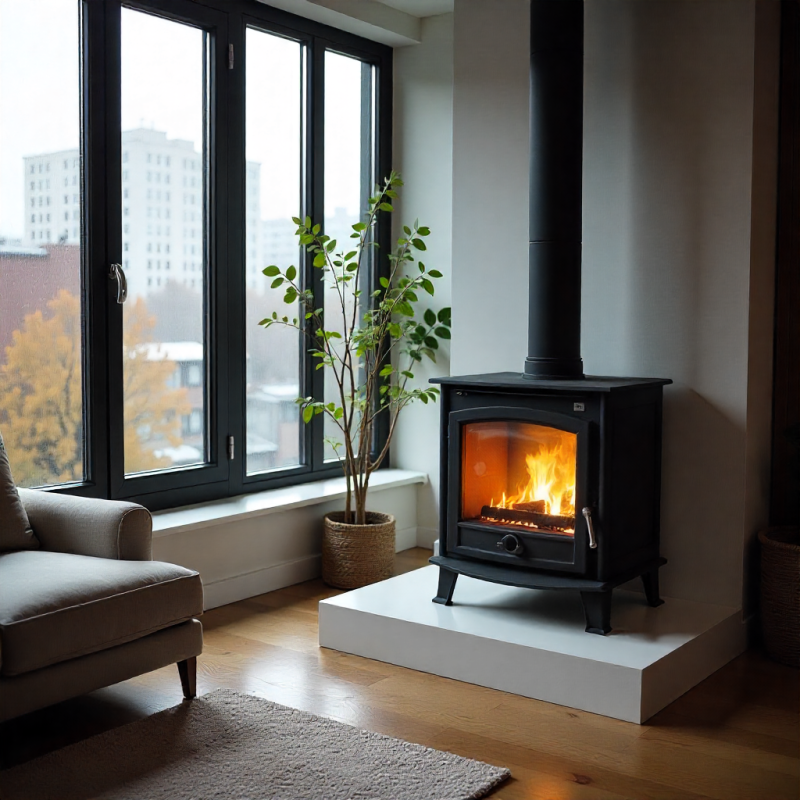
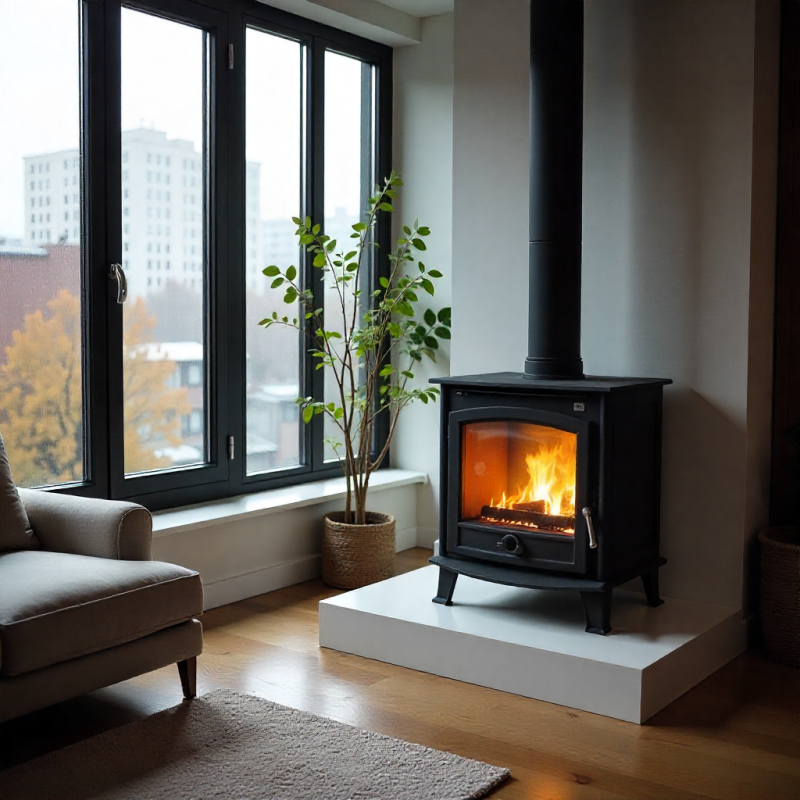
A freestanding combustion fireplace — the classic cast-iron or steel stove — sits on its own legs and connects to a flue pipe that exits through the ceiling or wall. It is the most affordable and versatile option: it can be positioned almost anywhere a flue can be routed, moved during a renovation, and installed without major structural work. Our freestanding fireplace range includes units from compact 6kW bedroom stoves to large 20kW living-area models capable of heating open-plan homes.
Built-in (Insert) Fireplaces
A built-in combustion fireplace is recessed into a wall cavity or surround, giving a flush, architectural finish. It looks more permanent and typically commands a higher resale-value premium. The trade-off is cost: wall preparation, a steel or masonry surround, and a concealed flue system add to the installation price. See our built-in fireplace options if a seamless wall finish is the priority for your renovation. Our guide on choosing between freestanding and built-in fireplaces walks through the cost and lifestyle trade-offs in detail.
Fireplace Inserts
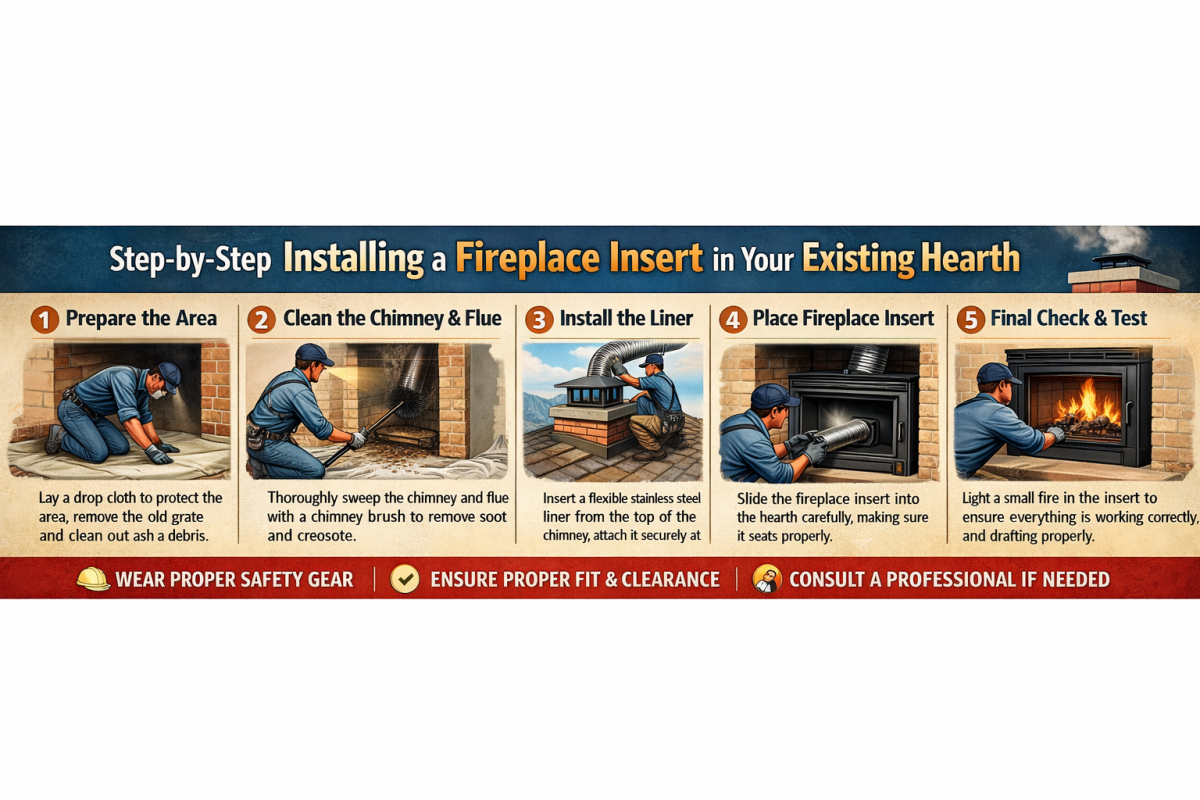
An insert is a closed-combustion firebox that slides into an existing open fireplace cavity. If you already have a brick fireplace that burns inefficiently, an insert is often the most cost-effective upgrade — the existing chimney breast and hearth remain, and you gain all the efficiency benefits of a sealed firebox.
Choosing the Right Combustion Fireplace
Heat Output (kW)
The most common sizing mistake is buying too large. An oversized unit runs on a permanently restricted air supply, which reduces efficiency and accelerates tar build-up in the flue. A rough rule: allow 1kW per 10–12 m² for a well-insulated room with standard ceiling height. An open-plan Cape Town home with high ceilings and aluminium-framed windows may need 1kW per 8 m² or more.
- Bedroom or study (up to 20 m²): 4–6 kW
- Standard living room (20–35 m²): 8–12 kW
- Large open-plan (35–60 m²): 12–18 kW
- Very large open-plan or double-volume: 18–22 kW
Fuel Type: Wood or Anthracite?
Most closed-combustion units in South Africa burn hardwood (rooikrans, sekelbos, or oak). Some multi-fuel models also accept anthracite coal, which burns hotter and longer — useful in Johannesburg’s cold highveld winters but less critical in the Cape, where overnight lows rarely drop below 6–8°C on the coast. Check that any unit you shortlist is rated for the fuel you plan to use.
Cape Town Coastal Considerations: 304 vs 430 Stainless Steel
This is where many Cape Town buyers get caught out. Cheaper freestanding units use 430-grade stainless steel for internal components and flue pipes. In a coastal environment — roughly anywhere within 5 km of the ocean — the salt-laden air accelerates corrosion of 430-grade steel significantly. If you are in Blouberg, Camps Bay, Gordon’s Bay, Strand, or anywhere along the False Bay coast, insist on 304-grade stainless steel flue components. The premium is typically R1,500–R3,000 on the flue system, and it is absolutely worth it for longevity.
For more on flue options and why insulation matters in the Cape’s humid conditions, read our detailed post on insulated flues for your fireplace.
Combustion Fireplace Prices in South Africa (2026)
The price range is wide because quality, heat output, and brand vary enormously. Below are realistic 2026 market ranges for supply only — installation is additional.
- Entry-level freestanding stove (4–8 kW): R4,500–R9,000. Often imported units with thinner steel. Adequate for a bedroom or small room.
- Mid-range freestanding stove (8–14 kW): R9,000–R18,000. The most popular bracket in Cape Town. Brands like Hydrofire and Home Fires sit here. Expect 5–8mm firebox steel, quality glass, and a multi-year warranty.
- Premium freestanding stove (14–22 kW): R18,000–R35,000. Cast-iron or heavy-gauge steel, longer burn times, better air-wash systems. Brands like Dovre, Jøtul, and Morso.
- Built-in / insert fireboxes: R12,000–R45,000 for the unit alone, depending on size and double-sided glazing.
For a complete breakdown of what you should budget end-to-end, including flue, hearth, and labour, read our fireplace installation cost guide.
Installation: What to Expect in Cape Town
A professional combustion fireplace installation typically involves: positioning the unit, fitting and sealing the flue system (through ceiling or wall), installing a register plate to seal any existing chimney opening, positioning a hearth pad if required by the unit’s heat-to-floor specification, and commissioning the first burn.
For a straightforward freestanding stove with a new single-wall flue in a standard Cape Town home, allow R4,000–R9,000 for installation. Built-in fireplaces with wall chasing, plastering, and concealed insulated flues typically cost R10,000–R22,000 installed, depending on complexity. Properties that already have a masonry chimney may reduce flue costs but will need a chimney inspection and possibly a liner.
All installed flues should be swept and inspected annually. Our professional chimney sweeping service covers the full Cape Peninsula and Winelands. If you’d like help choosing the right fireplace for your home, our team can do a site visit and recommend a unit and flue configuration based on your room size, ceiling height, and coastal exposure.
Browse our full range of fireplaces or speak to our team through our fireplace installation services page to get a sense of what’s available at each price point.
Frequently Asked Questions
Is a combustion fireplace the same as a closed combustion fireplace?
Yes. “Combustion fireplace,” “closed combustion fireplace,” and “wood-burning stove” are used interchangeably in South Africa to describe a sealed firebox with a glass door and controlled air dampers. All three terms refer to the same product type, as opposed to an open (traditional) fireplace that has no front door.
Do I need planning permission to install a combustion fireplace in Cape Town?
For most residential installations you do not need formal planning permission, but you do need the installation done by a qualified professional who can certify that the flue and firebox meet SANS 10400 Part T (fire protection) requirements. Some sectional-title bodies and HOAs have additional rules, so check with your body corporate before ordering.
What wood should I burn in my combustion fireplace?
Use well-seasoned hardwood with a moisture content below 20%. In the Cape, rooikrans (an invasive acacia species) is widely available, burns hot, and is a good choice. Avoid treated timber, chipboard, MDF, painted wood, or wet green wood — all of these damage the firebox, produce excessive tar, and release harmful emissions. Kiln-dried wood sold in bags at hardware stores is convenient but expensive per unit of heat.
How often does a combustion fireplace flue need to be swept?
At minimum once a year, before the start of winter. If you burn daily through a Cape Town winter (May–August), twice a year is better practice. A blocked or tar-clogged flue is a chimney fire risk. Book your annual chimney sweep in March or April, before the rush.
Ready to Choose Your Combustion Fireplace?
Whether you are fitting a cosy 6kW stove in a cottage bedroom or a 16kW freestanding unit to heat a double-volume open-plan, Fire Flame Installers can supply, deliver, and professionally install a combustion fireplace anywhere in the Cape Town metro and Winelands. We have been doing this for years and we know the quirks of coastal installations, coastal flue requirements, and what actually keeps Western Cape homes warm through a wet Cape winter.
Request a free installation quote and one of our team will be in touch within one business day.