
TV Mounting: Choosing a TV Bracket for Your Wall Type
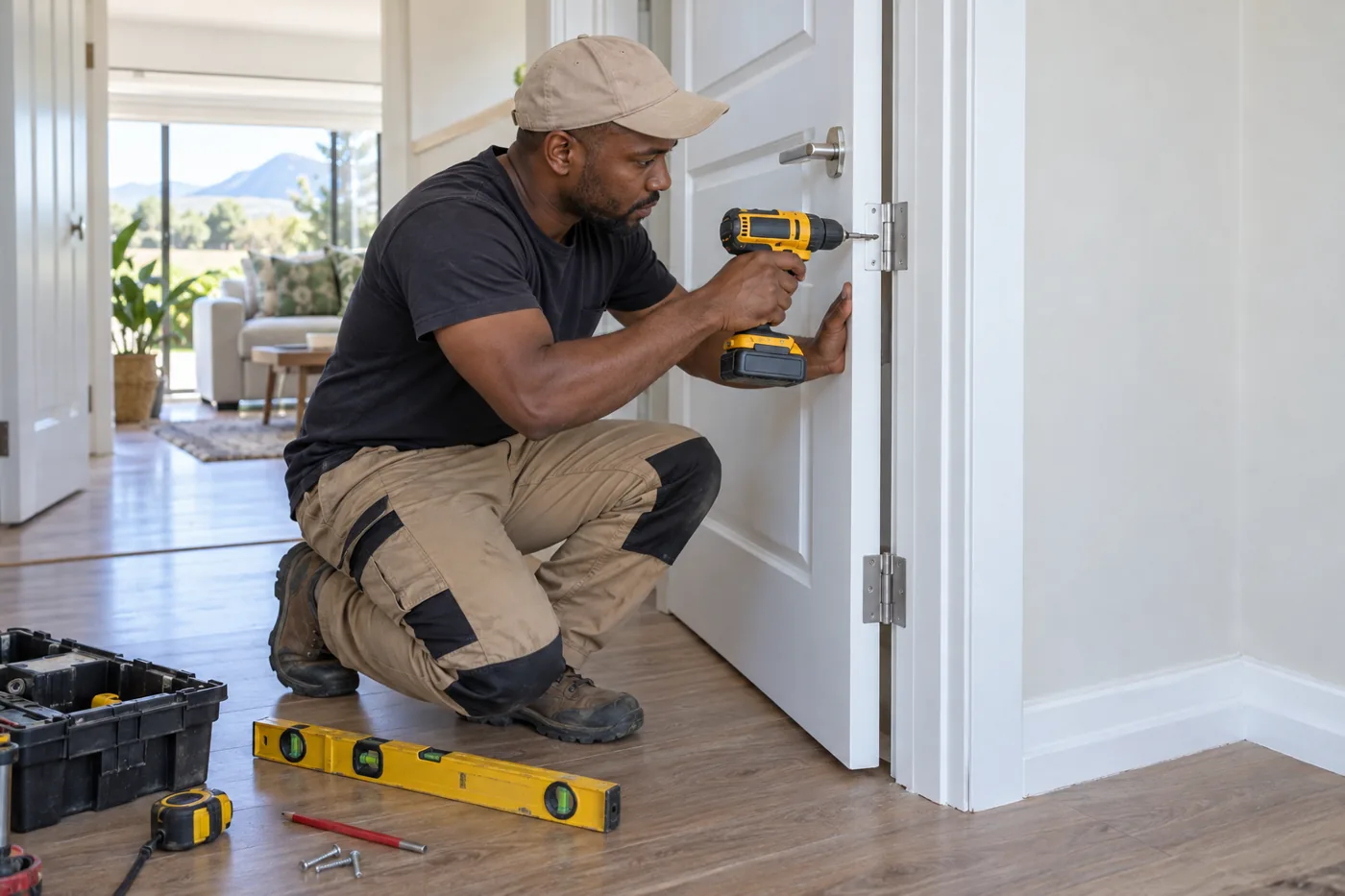
A TV on the wall looks great until the bracket sags or the cables hang loose. Here is how to choose the right TV bracket, fix it safely to brick or drywall, set the height and finish the job neatly.
Quick answer
Safe TV mounting comes down to three things: a TV bracket rated for your TV’s weight and screen size that matches the holes on the back of the TV, fixings that suit your wall, and a check for hidden pipes and cables before drilling. On brick or concrete, the bracket is anchored into solid masonry. On drywall, it must be fixed into the studs or a proper backing board, not just the board itself. Mount the TV so the middle of the screen sits near eye level when you are seated.
A wall-mounted TV saves space, keeps it out of reach of small children and pets, and makes a lounge look neater. But a TV is heavy, and it hangs off a few screws. If the bracket or the fixings are wrong for the wall, it can sag, pull out or fall.
Fitting TV brackets is one of the most common small jobs our team does. Below we explain how to choose a bracket, how different walls are fixed, where to put the TV and how to hide the cables.
TV Mounting Starts With the Right TV Bracket
Every TV bracket has a weight limit, a range of screen sizes and a hole pattern it fits. Check all three against your TV’s manual before you buy. The holes on the back of the TV are often called the VESA pattern.
Fixed bracket
Holds the TV flat against the wall. It is the neatest look and the simplest fit, best when you sit straight in front of the screen.
Tilting bracket
Lets the screen tilt down a little. Useful when the TV has to go higher than eye level, or to cut glare from a window.
Full motion bracket
An arm that swings out and turns. Good for corners and open-plan rooms, but it puts much more strain on the wall fixings.
Ceiling or pole mount
For walls that cannot take the load, or for bars and shops. These need a solid fixing above.
Choose a bracket with some headroom on the weight rating, especially for full motion arms. When the arm is pulled out, the force on the top fixings is far greater than the weight of the TV alone.
TV Mounting on Brick, Concrete and Hollow Walls
The wall matters as much as the bracket. Most Cape Town homes have brick walls inside, but newer homes and renovations often have drywall partitions, and older homes can have soft or loose plaster.
| Wall type | How the bracket is fixed | Watch out for |
|---|---|---|
| Solid brick | Masonry anchors and screws set into the brick, not just the plaster | Mortar joints are weaker than the brick. Fixings should land in solid brick. |
| Hollow or face brick | Anchors made for hollow masonry, or chemical anchors | Ordinary plugs can spin in the hollow cores and never grip. |
| Concrete | Heavy duty masonry anchors | Steel reinforcing inside the concrete. The drill may hit it. |
| Drywall (board on studs) | Screwed into the studs, or into a backing board fixed across the studs | Board on its own cannot hold a TV safely, except very small ones on rated fixings. |
| Tiled wall | Drilled through the tile with the right bit, then anchored behind | Tiles crack if you use the hammer setting or drill too close to the edge. |
If the plaster sounds hollow when you tap it, or crumbles when drilled, it may need repairing before anything is hung on it. That is part of our brickwork and plastering work. And if a tile does crack while drilling, our tilers in Cape Town can replace it with a matching one if you have a spare.
Mounting a TV on Drywall the Safe Way
Drywall is a board fixed to a frame of timber or metal studs. The board is fine for pictures and light shelves, but a TV needs to hang from the frame behind it.
- Find the studs. A stud finder or small test holes show where the frame is. The bracket is then screwed into at least two studs.
- Use a backing board if the studs do not line up. A strong board fixed across the studs gives the bracket a solid base where you want it.
- Plan ahead in renovations. If the wall is still open, extra timber can be fitted between the studs exactly where the TV will go.
- Be careful with full motion arms. On drywall they need a very solid fixing. A fixed or tilting bracket is often the safer choice.
Cavity anchors made for drywall have their own weight ratings. They can work for a small, light TV, but for most TVs our team fixes into the studs or a backing board.

TV Mounting Height and Viewing Angle
The most common mistake is hanging the TV too high. For a lounge, the middle of the screen should sit roughly at eye level when you are seated on the couch. In a bedroom, where you watch lying down, it can go a little higher with a tilting bracket.
- ✓Sit on the couch and look straight ahead. That is roughly where the middle of the screen should be.
- ✓Tape a sheet of cardboard the size of the TV to the wall and live with it for a day before drilling.
- ✓Check where the light from windows falls during the day to avoid glare.
- ✓Leave room above a TV unit for a soundbar or decoder if you use one.
A TV above a fireplace is popular, but heat and smoke rising from the fire can damage the screen, and the TV usually ends up far too high to watch comfortably. If you want both on one wall, plan the layout with your fireplace cladding and mantel so the TV sits well clear of the heat, and check the clearances in the manual for your wall mounted fireplace or insert.
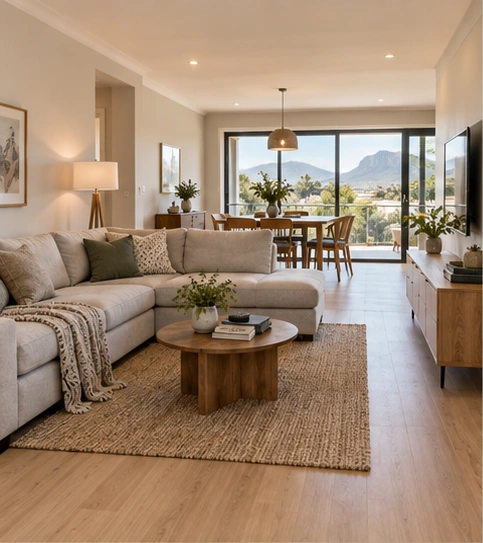
Tidy Cables: Finishing the TV Mounting Job
Loose cables hanging below a TV spoil the look. There are a few ways to hide them, depending on the wall and how much work you want done.
Cable cover
A slim channel stuck or screwed to the wall and painted to match. Quick, neat and no chasing needed.
Through the drywall
On a hollow wall, cables can run inside the wall cavity between an entry and exit plate.
Chased into brick
A groove is cut in the plaster for a conduit, then plastered and painted over. The neatest result on brick walls.
TV unit below
Mount the TV just above a cabinet so the cables drop straight down behind it.
If you want a new plug point behind the TV, that is electrical work and must be done by a qualified electrician. We can plan the bracket position around it. Moving a TV later leaves holes behind, and our painters in Cape Town can fill and repaint the wall so it looks new.
How Our Team Does TV Wall Mounting
Check the TV and bracket
We confirm the TV’s weight, size and hole pattern, and that the bracket is rated for it.
Check the wall
We find out what the wall is made of, test the plaster and scan for pipes and cables before drilling.
Mark and level
The height is agreed with you, then the bracket position is marked and levelled.
Fix the bracket
We drill and fix with anchors made for that wall, into brick, studs or a backing board.
Hang and test
The TV is hung, levelled and locked onto the bracket. Tilt and swing arms are tested through their full movement.
Tidy up
Cables are hidden the way you chose, and the area is cleaned before we leave.
⚠ Safety first
Before drilling any wall, check for hidden water pipes and electrical cables. They often run straight up or down from plug points, switches and taps. A TV that falls can seriously injure a child, so never hang one on fixings you are unsure of. If a bracket is loose, sagging or pulling away from the wall, take the TV down and call our team or a qualified handyman.
TV mounting is part of our handyman services in Cape Town, and we often fit a TV, shelves and curtain rails in the same visit. Send us a photo of the wall, your TV model and your suburb, and our team will tell you what bracket and fixings it needs. You can also book a handyman in Cape Town online.
TV Mounting: Common Questions
Can you mount a TV on drywall?
Yes, if the bracket is screwed into the studs behind the board or into a backing board fixed across them. The board on its own is not strong enough for most TVs.
How high should a TV be mounted?
In a lounge, the middle of the screen should be roughly at eye level when you are seated. In a bedroom it can go a little higher, with a tilting bracket angled down towards the bed.
Which TV bracket do I need?
Choose a bracket rated for your TV’s weight and screen size that matches the hole pattern on the back of the TV. Fixed brackets are the neatest, tilting brackets help with glare and higher positions, and full motion arms suit corners.
Is it safe to mount a TV above a fireplace?
It is often not a good idea. Heat and smoke from the fire can damage the TV, and it usually ends up too high to watch comfortably. If you want both on one wall, keep the TV well clear of the heat and follow the clearances in the fireplace manual.
How do you hide TV cables on a brick wall?
The neatest way is to chase a groove in the plaster for a conduit, then plaster and paint over it. A slim cable cover painted to match the wall is a quicker option with no chasing.
Planning this kind of work?
Call or WhatsApp with your suburb and photographs. Fire Flames can discuss your fireplace, braai or home project and quote.
Get A Quote →