
Cracks in Walls: When to Worry and the Right Wall Crack Filler

A fine crack in the plaster is usually nothing to worry about. A wide, growing or stepped crack can be. Here is how to read the cracks in your walls, how they are repaired and when to get an engineer to look.
Quick answer
Fine hairline cracks in plaster, and cracks that run from the corners of windows and doors but stay thin, are usually cosmetic. They are fixed by opening the crack, filling it with the right wall crack filler and repainting. Worry when a crack is wider than a few millimetres, keeps getting longer or wider, runs in a staircase pattern through brickwork, is wider at one end, or comes with doors and windows that start to stick. Those cracks need a structural engineer to look before anything is filled.
Almost every house gets cracks in its walls at some point. Plaster shrinks as it dries, walls move a little with heat and cold, and the ground under a house swells and shrinks with the seasons. Most of these cracks are only skin deep.
The trick is knowing which ones are. Below, our team explains the common types of wall cracks, why they appear, which ones need an expert, and how a cosmetic crack is repaired so it does not come straight back.
Types of Cracks in Walls and What They Mean
The shape, direction and width of a crack tell you a lot. Use a torch held flat against the wall to see it clearly.
| Type of crack | What it usually means | Level of concern |
|---|---|---|
| Fine hairline cracks in the plaster | Plaster or paint shrinking as it dried | Low. Fill and paint. |
| Spider web or map cracks | Plaster that dried too fast or was mixed too strong | Low, but the plaster may be weak in that area |
| Thin diagonal cracks from window or door corners | Normal stress at openings, small movement | Low if thin and not growing |
| Straight vertical crack where two walls meet | Movement at a joint, often where new work meets old | Low to medium. Needs a flexible filler. |
| Stepped cracks along brick joints | Movement in the wall or foundation | Medium to high. Monitor and get advice. |
| Horizontal cracks, or cracks wider at one end | Pressure on the wall or uneven settlement | High. Get a structural engineer. |
Width matters too. A crack you can barely see is very different from one you can push a coin into. If you are not sure, measure it and take a dated photo with a ruler held next to it.
Cracks in Walls You Should Worry About
Some cracks are signs that the structure is moving. Filling and painting them only hides the problem for a while.
Get a structural engineer to look if you see
- ✓Cracks wider than a few millimetres, or that you can see daylight through
- ✓Cracks that get longer or wider over weeks or months
- ✓Stepped cracks running through the brick joints like a staircase
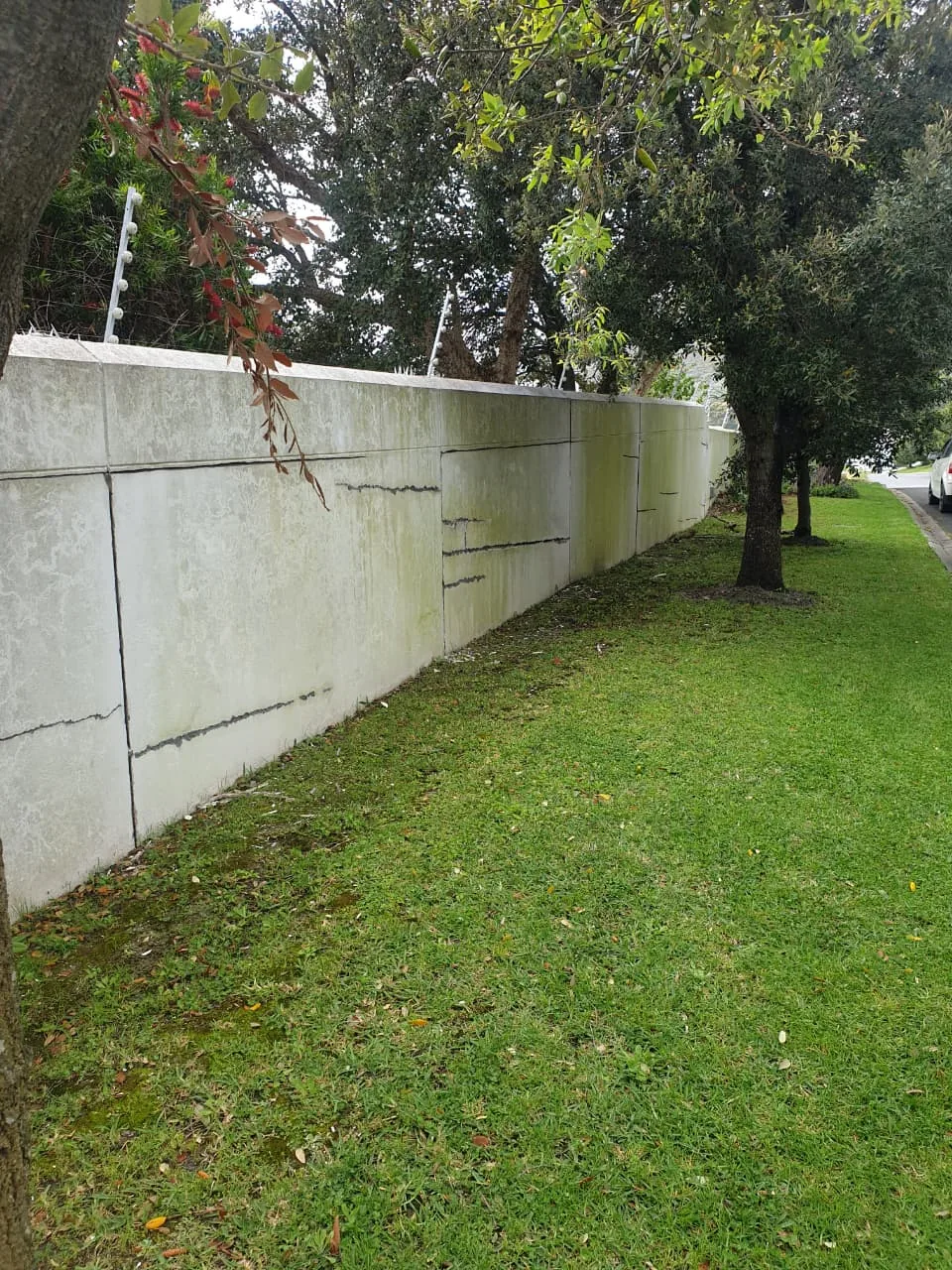
- ✓Horizontal cracks in a boundary wall or retaining wall, or a wall that leans
- ✓Doors and windows that suddenly stick or no longer close properly
- ✓Cracks that appear on both the inside and outside of the same wall
- ✓Gaps opening between the wall and the floor or ceiling
For any of these, have a structural engineer assess the wall before repairs are done. Structural repairs must meet SANS 10400 and may need plans approved by your local municipality, so confirm with the council and your insurer before work starts. We cannot say whether a crack is structural from a photo, and we will not fill one that an engineer should see first.
⚠ Safety first
If a wall is leaning, bulging or has cracks that are opening quickly, keep people and cars away from it and get an engineer out as soon as possible. Boundary and retaining walls can fall without much warning.
Why Cracks in Walls Are Common in Cape Town Homes
Our weather and our housing stock both play a part.
Wet winters, dry summers
Where the soil has clay in it, the ground swells in winter rain and shrinks in summer, moving foundations a little each year.
Older homes
Many older homes have shallow foundations and lime plaster that cracks easily as it ages.
Extensions
Where a new room is joined to an old wall, the two parts settle differently and a crack often opens at the joint.
Leaks and gutters
Overflowing gutters and leaking pipes soak the ground next to the house, which can make it settle unevenly.
Wind-driven rain from the north-wester and the drying south-easter also make outside plaster expand and shrink more than inside walls. That is why exterior cracks often come back faster if they are filled with the wrong product.

Choosing a Wall Crack Filler
There is no single wall crack filler for every job. The right one depends on whether the wall is inside or outside, and whether the crack still moves.
| Filler | Best for | Not for |
|---|---|---|
| Powder or ready-mixed interior filler | Hairline cracks and small holes on inside walls | Outside walls or cracks that move |
| Flexible acrylic crack filler | Cracks that open and close a little, joints at walls, frames and ceilings | Large gaps or crumbling plaster |
| Exterior filler or patching plaster | Wider cracks and damaged plaster on outside walls | Joints that move, which will crack it again |
| Mesh tape with filler | Cracks that keep coming back in the same place | Structural cracks |
| Flexible sealant | Movement joints between walls or different materials | Areas that will be sanded smooth |
A hard filler in a moving crack will simply crack again. A soft sealant on a flat wall will show through the paint. Matching the filler to the crack is most of the job.
Wall Crack Repair: How Cosmetic Cracks Are Fixed
This is how our team repairs hairline and plaster cracks that an engineer is not needed for.
Open the crack
The crack is raked out into a small V shape so the filler has something to grip. Loose plaster is cut back to a sound edge.
Clean and prepare
Dust is brushed out and the crack is dampened or primed, depending on the filler, so it does not dry out too fast.
Fill in layers
The filler is pressed in firmly. Deep cracks are filled in layers, letting each one set.
Bridge if needed
For cracks that keep coming back, mesh tape is set into the filler to spread the movement.
Sand and prime
Once dry, the patch is sanded flush and primed so it does not show through the paint.
Paint
The wall is painted, ideally the whole wall, so the repair blends in.
If a crack comes back within a few months, it is still moving. If this happens, do not keep refilling it. Call our team or have an engineer check what is causing the movement.
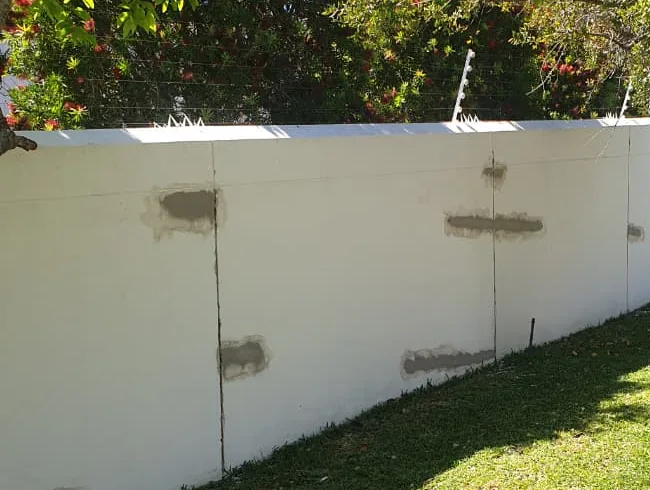
Exterior Cracks in Walls and Damp
A crack outside is more than a looks problem. Rain gets in, soaks the plaster and brick, and shows up inside as damp patches and bubbling paint. In older homes with lime plaster, water in a crack can also loosen the plaster around it.
- Fill outside cracks before winter. Dry autumn weather is the best time.
- Use exterior products. Exterior fillers and flexible coatings cope with sun and rain far better than interior filler.
- Fix the water source. Leaking gutters and downpipes keep feeding damp into a wall, so sort them out at the same time.
- Hollow plaster must come off. If the plaster sounds hollow when tapped, it needs to be cut out and replastered, not just filled.
Larger plaster repairs are part of our brickwork and plastering in Cape Town work, and once the walls are sound we can do the exterior painting in Cape Town with a paint made for coastal weather. Cracks in a chimney breast or around a fireplace are a different matter, because heat and smoke are involved, so book those in for fireplace repairs instead. If cracks run into the floor and break the tiles, our tilers in Cape Town can replace them once the cause has been dealt with.
Not sure about a crack? Send us a close-up photo with a ruler next to it, a photo of the whole wall and your suburb, and our team will tell you whether it looks like a quick repair or needs a site visit or an engineer. Small crack repairs are part of our home repairs in Cape Town, and you can book a handyman in Cape Town online.
Cracks in Walls: Common Questions
Are hairline cracks in walls normal?
Yes. Fine hairline cracks in plaster are very common and usually come from the plaster shrinking as it dried or small seasonal movement. They can be filled and painted.
When should I worry about cracks in walls?
Worry when a crack is wider than a few millimetres, keeps growing, runs in a stepped pattern through brickwork, is horizontal, or comes with sticking doors and windows. Have a structural engineer look at those before any repair.
What is the best wall crack filler?
It depends on the crack. Interior filler suits hairline cracks inside. Flexible acrylic filler suits cracks that move a little. Exterior filler or patching plaster suits outside walls. Cracks that keep returning need mesh tape as well.
Why do cracks keep coming back after painting?
Usually because the crack is still moving and was filled with a hard filler, or it was not opened up and prepared first. Use a flexible filler or mesh tape, and if it still returns, have the cause checked.
Does insurance cover cracks in walls?
It depends on your policy and the cause of the crack. Some policies exclude gradual settlement. Ask your insurer before repairs start, and keep dated photos of the crack.
Planning this kind of work?
Call or WhatsApp with your suburb and photographs. Fire Flames can discuss your fireplace, braai or home project and quote.
Get A Quote →