
Wooden vs Composite Decking: Upkeep and Lifespan
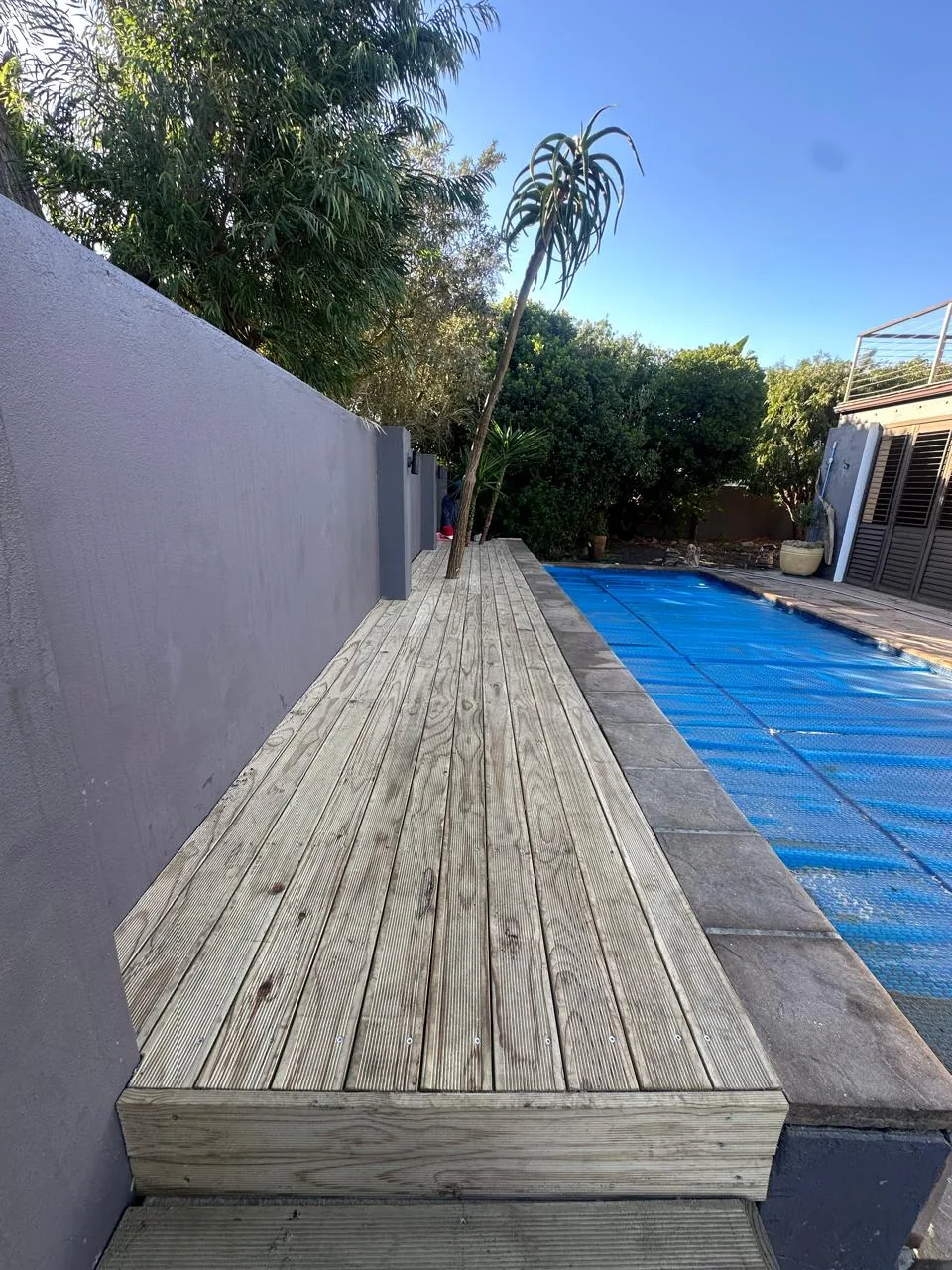
A wooden deck looks warm and natural but needs oiling. Composite decking needs less care but has its own quirks. Here is how the two compare on upkeep, lifespan and the Cape Town weather.
Quick answer
Choose a wooden deck if you want a natural look and do not mind cleaning and oiling it every year or so. Choose composite decking if you want less upkeep: it does not need oiling and will not splinter, but it gets hotter in direct sun, can fade a little and usually costs more to buy. Either one will only last if the frame underneath is built well, kept off wet ground and allowed to breathe.
Decking is one of the easiest ways to turn a sloping garden, a pool edge or a bare patch outside the lounge into usable space. The first big choice is the board: real timber or composite.
Our team builds and repairs decks as part of our renovation work, and we see how both types age. Below we compare them honestly on upkeep, lifespan, the local weather and what drives the cost.
Wooden Deck vs Composite Decking at a Glance
| Wooden deck | Composite decking | |
|---|---|---|
| Look | Natural grain, turns silver grey if left unoiled | Even colour and texture, some styles copy wood grain |
| Upkeep | Clean and oil or seal regularly | Wash a few times a year, no oiling |
| Splinters | Possible as the wood dries and weathers | No splinters |
| Heat in sun | Stays fairly comfortable underfoot | Can get very hot, darker colours most of all |
| Repairs | Boards can be sanded, patched or swapped | Damaged boards are replaced, not sanded |
| Upfront cost | Usually lower, depending on the timber | Usually higher for the boards |
Neither is better for every home. The right decking depends on where it goes, how much sun it gets and how much time you want to spend looking after it.
What Composite Decking Is Made Of
Composite decking boards are made from wood fibre mixed with plastic, or in some newer ranges, mostly plastic with a tough outer shell. They come in set colours and lengths and are fixed with hidden clips or screws.
Capped boards
A hard outer layer protects the core from stains, scratches and fading. These usually hold their colour better.
Uncapped boards
The core is exposed. They are often cheaper, but can stain and fade more easily.
Hollow boards
Lighter and easier to handle, but the ends need covering and they flex more between joists.
Solid boards
Heavier and stiffer, with a feel closer to timber underfoot.
Composite boards still sit on a frame. That frame is often treated timber, so composite decking does not remove the need for good wood underneath. Some systems use steel or aluminium joists instead.
Wooden Deck Options in South Africa
Most timber decks here use one of two broad groups of wood.
- Treated pine. The most common choice. Pressure treated for outdoor use, easy to work with and the lowest cost. It needs regular oiling to stay looking good.
- Hardwoods. Dense timbers such as balau. Heavier and harder wearing, with a rich colour, but they cost more and still need oiling.
Whatever the wood, the frame and anything near the ground must be treated for ground contact. Use stainless steel or coated screws, so they do not rust or leave black stains. One important safety note: never burn treated decking offcuts in a fireplace or braai. The chemicals in the wood give off harmful fumes when burnt.
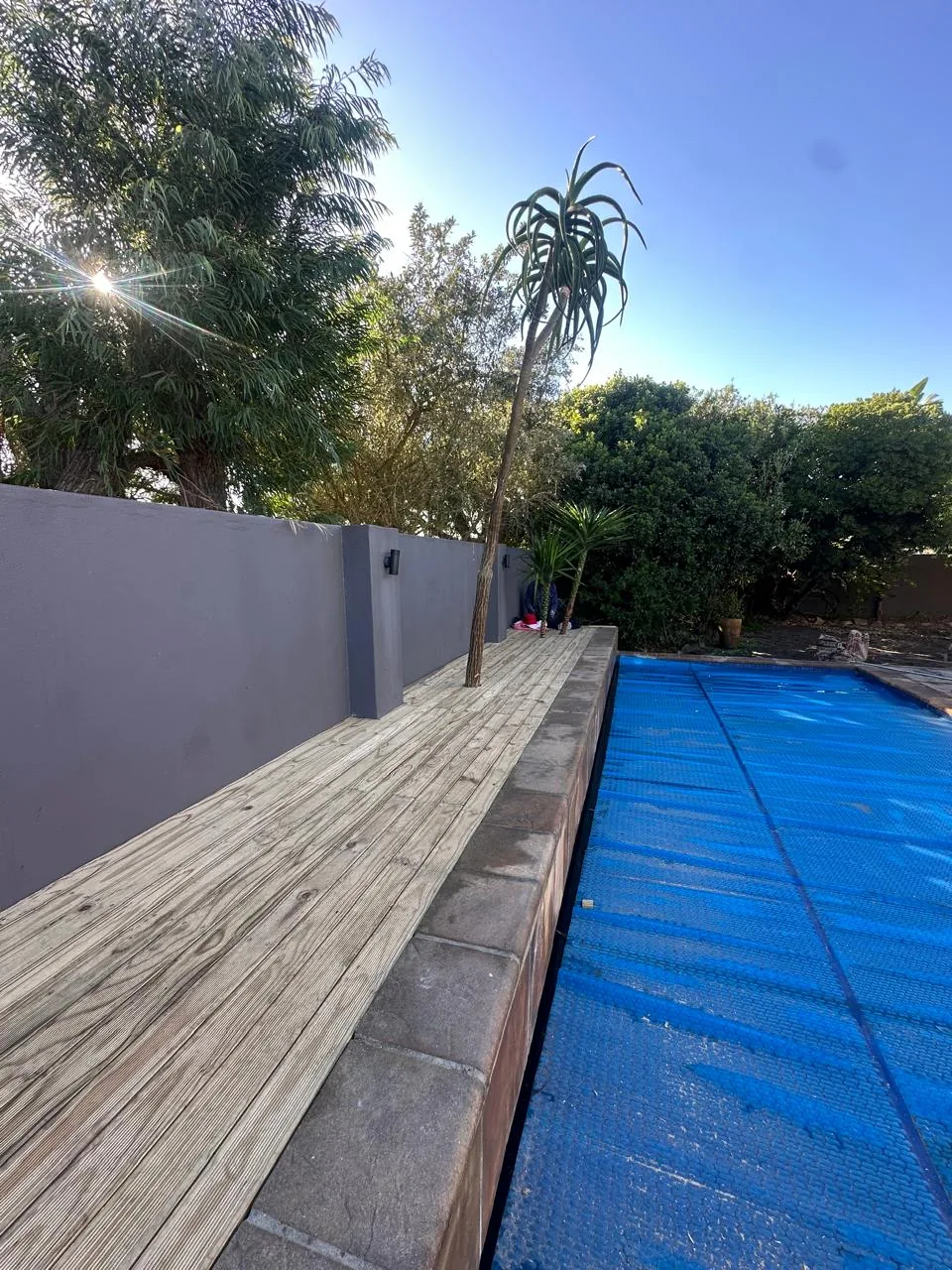
Deck Maintenance: Wood vs Composite Decking
This is where the two differ most. A wooden deck needs regular work. Composite needs much less, but it is not zero maintenance.
Simple deck maintenance routine
- ✓Sweep leaves and sand off often, especially between the boards.
- ✓Wash the deck with a mild deck cleaner and a soft brush. Avoid high pressure close to the wood.
- ✓Oil or seal a wooden deck when water stops beading on the surface.
- ✓Check for loose boards, raised screws and soft spots every season.
- ✓Keep plant pots on feet so water does not sit under them.
- ✓Clean mould or green spots on composite boards in shady, damp corners.
Deck maintenance on timber is mostly about keeping water out. Once the wood dries, greys and cracks, it soaks up rain and starts to rot. A yearly clean and oil, or more often on a deck in full sun, keeps it sound. For loose boards or a wobbly step, our home repairs team can fix it before it becomes a trip hazard.
How Long a Wooden Deck and Composite Decking Last
Lifespan depends far more on how a deck is built and kept than on the board label. A well built, well kept timber deck can last for many years. A neglected one can start to rot within a few winters.
Composite boards do not rot like wood, and many makers offer long product warranties. Read what the warranty actually covers, such as fading, staining or structural failure, and what it asks of the installer. In both cases, the frame is often what fails first.
Ground clearance
Joists sitting on damp soil rot quickly. Leave space for air to flow under the deck.
Board gaps
Gaps between boards let water drain and allow for movement. Composite expands and shrinks with heat.
Joist spacing
Composite boards need joists closer together than many timber boards, or they will sag.
Water off the house
A deck must not trap water against the house walls or block air bricks.
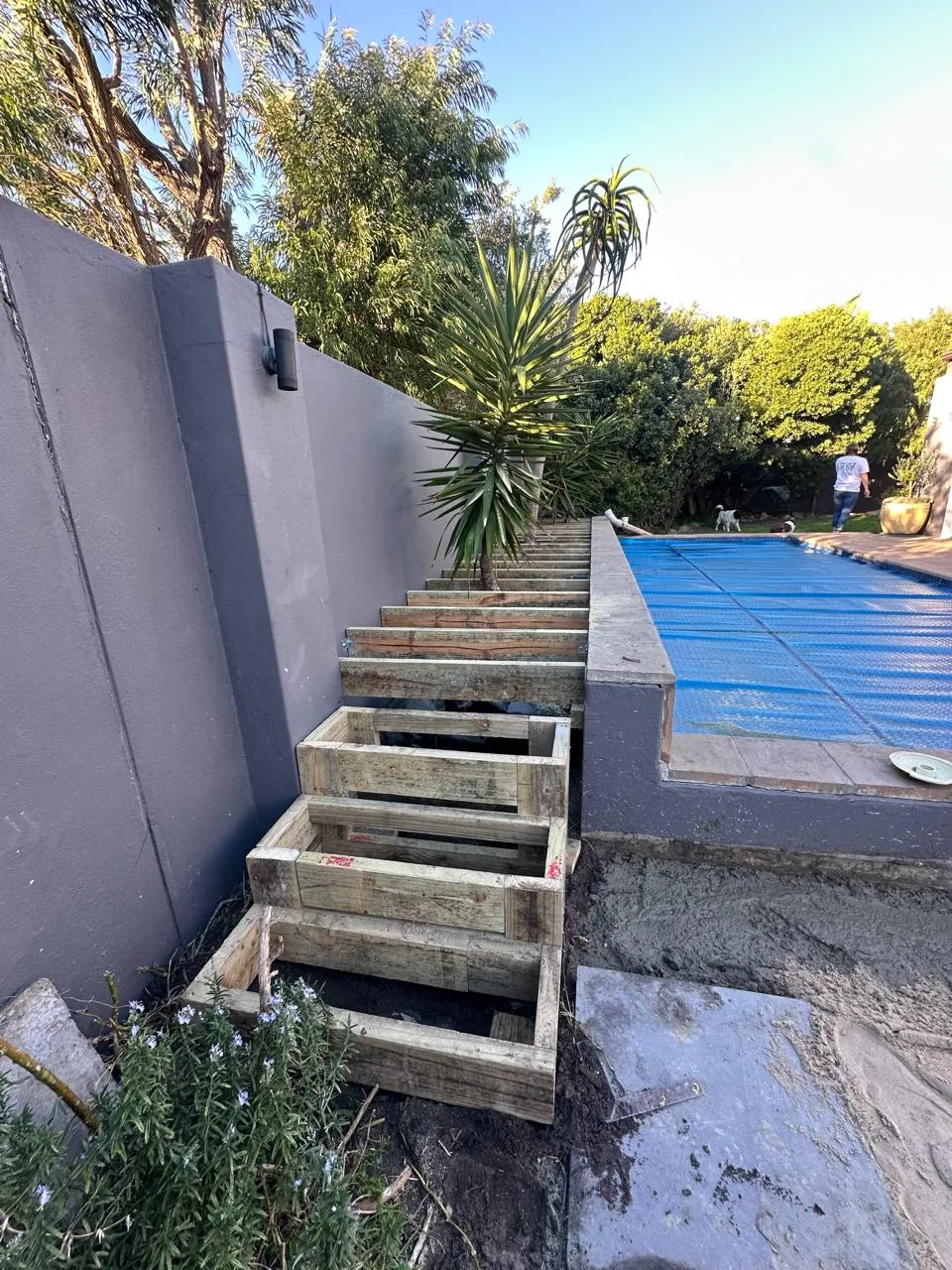
Composite Decking and Timber in the Cape Town Weather
Our weather tests decks hard, and each material copes in its own way.
- Summer sun. Strong sun greys and dries timber fast. It also heats composite boards, so pick a lighter colour for a deck in full sun, especially near a pool where people walk barefoot.
- Winter rain. Long wet spells are hard on timber in shady spots. Good drainage and airflow under the deck matter more than the board.
- Salt air. Near the coast, fixings rust fast. Use stainless steel screws and brackets.
- The south-easter. Wind dries timber out and blows sand into the gaps. Sweep it out so it does not hold moisture.
Decks also make great braai and entertainment spaces, but fire and decking need care. A freestanding braai must stand on a non-combustible base, well clear of the boards. If you want a permanent setup, an outdoor braai area built on paving next to the deck is usually the safer plan.
What Drives the Cost of Decking
We do not give prices online, because every deck is different. These are the things that change the price of decking the most.
What changes the price of a deck
- ✓The size of the deck and its shape, as angles and curves mean more cutting
- ✓The board: treated pine, hardwood or composite, and the brand and range
- ✓How high the deck sits off the ground, and whether it needs posts, bracing or steps
- ✓The frame material and how many joists are needed
- ✓Balustrades, handrails and lighting
- ✓Access to the site and removing an old deck
Composite decking usually costs more upfront, while a wooden deck costs more in upkeep over time. Ask our team for a written quote for both options if you are unsure.

Which Decking Suits Your Home?
A wooden deck suits you if you like natural timber, enjoy a weekend of upkeep, or want the lowest upfront cost. Composite decking suits a holiday home, a busy family or anyone who would rather wash a deck than oil it. In a hot, unshaded spot, timber or a light composite colour is kinder on bare feet.
Decks are part of our home renovations Cape Town work, alongside paving and boundary walls. If the walls around the deck need a refresh at the same time, our exterior painting team can do both together. And if you are thinking bigger, read our guide to outdoor kitchen layouts first.
Thinking about a new deck or fixing an old one? Send us a photo of the area, rough measurements and whether you lean towards timber or composite, and our team will advise. You can also book building renovations online.
Composite Decking and Wooden Decks: Common Questions
Is composite decking better than wood?
It is not better for every home. Composite decking needs less upkeep and will not splinter, but it costs more upfront and gets hotter in the sun. A wooden deck looks natural and can be sanded and repaired, but needs regular oiling.
How often should a wooden deck be oiled?
Usually about once a year, and more often for a deck in full sun or near the sea. A simple test is to splash water on it. If the water soaks in instead of beading, it is time to clean and oil.
Does composite decking get hot?
Yes. Composite boards can get much hotter than timber in direct sun, especially darker colours. For a sunny pool deck, choose a lighter colour or add shade.
Can you put a braai on a wooden deck?
Only with care. A braai needs a non-combustible base and a safe distance from the boards and any walls. Hot coals and sparks can burn or melt decking, so a paved braai area next to the deck is often a better plan.
Why is my deck rotting?
Most rot starts where water sits: joists on wet soil, boards with no gaps, or wood that has not been oiled. The damaged parts must be replaced and the cause fixed, or the rot will spread.
Planning this kind of work?
Call or WhatsApp with your suburb and photographs. Fire Flames can discuss your fireplace, braai or home project and quote.
Get A Quote →