
Regrouting Tiles: When Grout for Tiles Fails and How It Is Fixed

Grout that is cracked, crumbling or black with mould can usually be cut out and replaced without lifting a single tile. Here is how to tell when regrouting is enough, and when the problem is deeper than the grout.
Quick answer
Regrout when the grout is cracked, crumbling, missing in places or stained so deeply that cleaning does not help, but the tiles themselves are still firm. The old grout is cut out, the joints are cleaned, and new grout for tiles is pressed in and sealed. If tiles are loose, sound hollow when tapped, or water is showing up on the other side of a shower wall, regrouting will not fix it. That needs the tiles lifted and the waterproofing checked.
Grout is the thin line of filler between your tiles. It looks like a small detail, but it holds the tile edges, stops dirt and water from sitting in the gaps, and finishes the look of a floor or wall. When it fails, a bathroom or kitchen starts to look tired very quickly.
The good news is that cracked grout is often the easiest tiling problem to fix. Below, our team explains why grout fails, how to tell a grout problem from a bigger one, and what a proper tile grout repair involves.
What Grout for Tiles Actually Does
Most people think of grout as the thing that makes tiles look neat. It does more than that.
It locks the edges
Grout fills the joint so tile edges do not chip or knock against each other when people walk on the floor.
It keeps dirt out
An open joint collects soap, food and dirt. Filled joints are much easier to keep clean.
It spreads small movement
Floors and walls move a little with heat and weight. Grout helps the tiles move together rather than one by one.
It is not a waterproof seal
Normal cement grout lets some water through. The waterproofing in a shower sits behind and under the tiles, not in the grout.
That last point matters, and we come back to it below. Many homeowners regrout a leaking shower and are surprised when the leak carries on.
Signs the Grout for Tiles in Your Home Has Failed
Walk around your bathroom, kitchen and passage floors with good light. Press on a few joints with a fingernail or a wooden skewer.
What to look for
- ✓Fine cracks running along the joints, or lines of grout that have popped out
- ✓Grout that crumbles or turns to powder when you scratch it
- ✓Low spots where the grout has washed out below the tile edge
- ✓Black or pink marks that come back a few days after cleaning
- ✓Grout that has gone dark in one area and stays damp
- ✓Tiles that move, rock or sound hollow when you tap them
The first four signs are usually a grout problem. The last two point to something underneath, such as water getting behind the tiles or adhesive that has let go.
Why Cracked Grout Happens in Cape Town Homes
Grout rarely fails for no reason. These are the causes we see most often.
- No flexible joints at corners. Where a wall meets the floor, or the bath meets the wall, the joint should be flexible silicone. Hard grout in these spots cracks first.
- A floor that flexes. Tiles laid on a suspended timber floor or a weak base move more than grout can handle.
- Too much water in the mix. Grout mixed runny is weaker once it dries and wears away faster.
- Damp from behind. Water that gets behind tiles keeps the grout wet, which feeds mould and slowly breaks it down.
- Older homes settling. Many older houses have small, ongoing movement. Long cracks that run through the tiles themselves, not only the grout, can be a sign of this.
- Harsh cleaning. Strong acid cleaners and hard scrubbing eat away cement grout over time.
Long, damp winters also play a part. Bathrooms that do not dry out between showers stay humid for days, and grout that never fully dries is where mould gets a foothold.
Regrouting Tiles or Replacing Them: How to Decide
This is the question that decides the cost and the size of the job. Use this as a rough guide.
| What you see | Likely cause | Usual fix |
|---|---|---|
| Cracked or crumbling grout, tiles firm | Old or weak grout | Regrouting tiles |
| Mould that will not clean off, tiles firm | Damp, porous grout | Regrout and seal, improve ventilation |
| Cracks only at corners and edges | Hard grout where silicone should be | Cut out and replace with silicone |
| Tiles loose or hollow sounding | Adhesive has let go | Lift and re-lay those tiles |
| Water stains next door or below the shower | Waterproofing failure | Strip tiles, waterproof, retile |
| Cracks running through tiles across the room | Movement in the floor or wall | Find the cause first, then repair |
If cracks run through several tiles in a line, or you notice cracks in the walls nearby, do not just regrout. Have the floor or wall checked first. Where there are signs of structural movement, an engineer should look at it before any tiling is redone.
Grout for Tiles in Showers Is Not Waterproofing
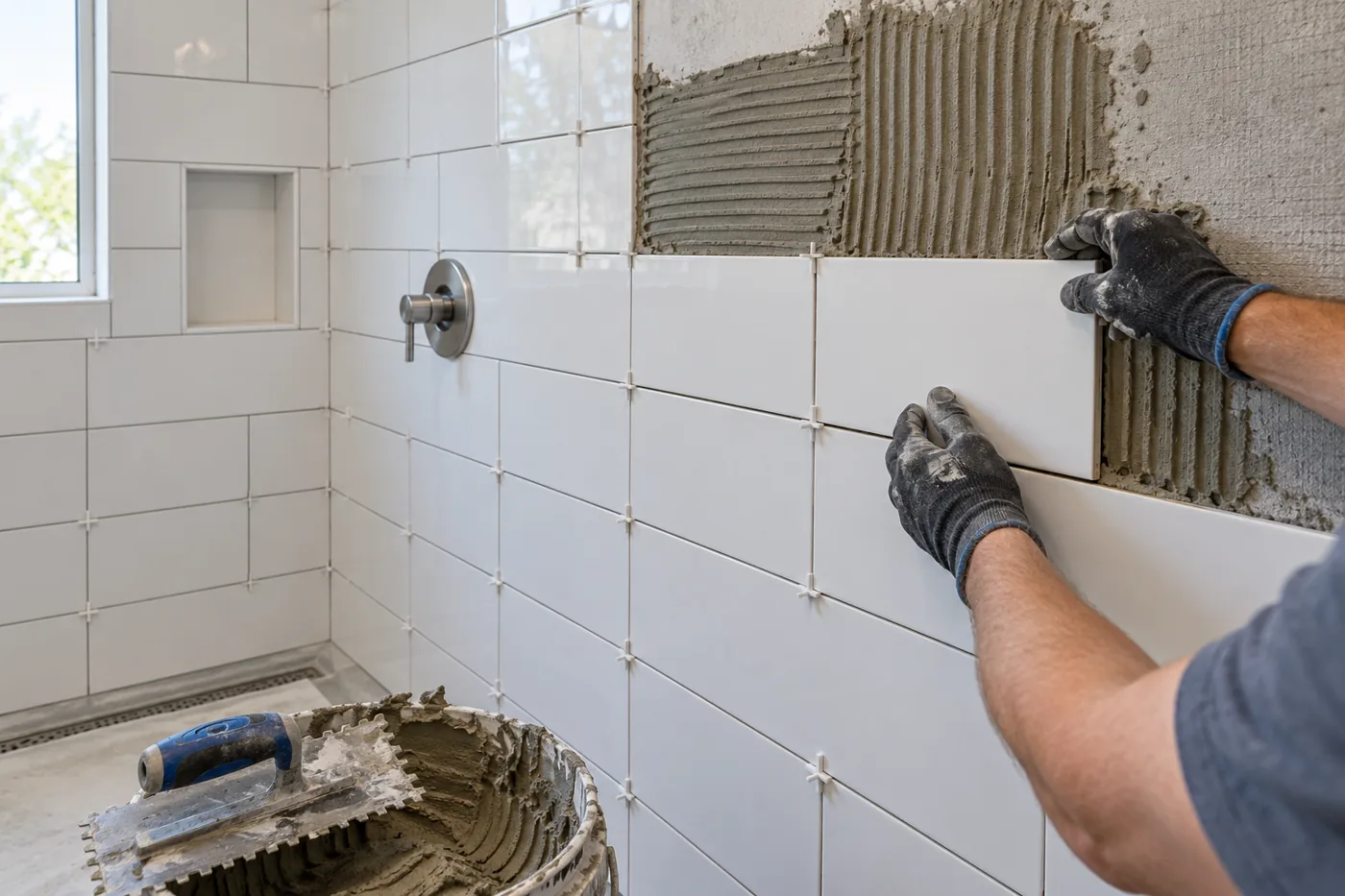
This is the most common misunderstanding we deal with. Standard cement grout is porous. In a shower, some water always passes through the joints. A properly built shower handles this with a waterproofing layer on the walls and floor behind the tiles, which carries the water to the drain.
So if your shower is leaking into the next room or through the ceiling below, new grout may slow the leak for a while, but it does not fix the cause. The waterproofing has to be checked, and that usually means lifting tiles. Our waterproofing Cape Town work covers showers and wet areas as part of a bathroom repair.
⚠ Safety first
Do not mix cleaning products when you scrub old grout. Bleach and acid based cleaners together give off harmful fumes. Open a window, wear gloves and eye protection, and rinse well between products.
How Our Team Handles a Tile Grout Repair
Regrouting tiles is slow, careful work. Most of the time goes into getting the old grout out without chipping the tiles.
Check the tiles first
We tap the tiles to find any that are loose or hollow, and look for signs of water behind them.
Cut out the old grout
The old grout is removed to a good depth with hand tools or a fine oscillating blade, keeping clear of the glazed tile edges.
Clean and dry the joints
Dust and loose bits are vacuumed out, and mould is treated. The joints must be clean so the new grout bonds.
Pack in the new grout
New grout is pressed firmly into the joints at an angle so there are no air gaps, then the surface is tooled smooth.
Clean off and seal
The haze is wiped off the tiles. Once the grout has cured, cement grout is sealed. Corners and edges get silicone, not grout.
If the grout cracks again soon after a careful regrout, something is moving or wet underneath. If this does not fix it, call our team and we will look for the cause rather than grouting over it again. This kind of repair is part of our bathroom tiling Cape Town service, and small jobs can be added to a home repairs Cape Town visit.
Choosing Grout for Tiles: Cement, Flexible or Epoxy
Not every grout suits every room. The right choice depends on the tile, the joint width and how wet the area gets.
Cement grout
The standard choice for most walls and floors. Affordable and easy to match in colour, but porous, so it should be sealed in wet areas.
Flexible cement grout
Has added polymers so it handles slight movement better. A good fit for large floors, underfloor heating and outside areas.
Epoxy grout
Very hard, stain resistant and does not soak up water. Popular for showers and kitchen counters, but it sets fast and needs skill to apply cleanly.
Silicone, not grout
Every change of direction, such as wall to floor, bath to wall and around basins, should be sealed with silicone that can flex.
Joint width matters too. Very narrow joints suit fine grout, while wider floor joints need a coarser grout that will not shrink and crack. Colour is a personal choice, but mid greys and beiges hide everyday marks better than bright white on a floor.

How to Make New Grout Last Longer
- ✓Run the extractor fan or open a window after every shower so the room dries out.
- ✓Squeegee shower walls after use. Less standing water means less mould.
- ✓Clean with a mild, pH neutral cleaner. Avoid strong acids on cement grout.
- ✓Reseal cement grout in showers and kitchens from time to time, as the sealer maker suggests.
- ✓Replace split or mouldy silicone at corners as soon as you see it.
- ✓Fix dripping taps and leaking shower doors quickly so water does not sit on the grout.
If a damp bathroom has left marks on the ceiling or walls, those can be sorted once the cause is fixed. Our painters Cape Town team uses paint suited to wet rooms, and you can see the rest of our services for the home on one page.
Not sure if your grout needs a regrout or something bigger? Send us a few clear photos of the tiles and joints, including any stains or loose tiles, and our team will tell you what we see. You can also book tiling Cape Town work online for a site visit and a written quote.
Regrouting Tiles and Grout for Tiles: Common Questions
Can you regrout over old grout?
Not properly. A thin layer of new grout on top of old grout does not bond well and soon flakes off. The old grout needs to be cut out to a good depth so the new grout has room to grip.
How long does regrouting tiles take?
It depends on the size of the area and how hard the old grout is to remove. A small shower can often be done in a day, while a large floor takes longer. Grout then needs time to cure before it gets wet or is sealed.
Will regrouting stop my shower from leaking?
Usually not on its own. Grout is not the waterproof layer in a shower. If water is leaking through a wall or ceiling, the waterproofing behind the tiles needs to be checked, which often means lifting tiles.
Why does my grout keep cracking?
Repeated cracking usually means movement or water underneath. Common causes are a floor that flexes, hard grout in corners where silicone should be, or tiles that have come loose from their adhesive.
Should I seal grout for tiles?
Cement grout in showers, kitchens and busy floors benefits from a sealer once it has cured, as it helps resist stains and water. Epoxy grout does not need sealing.
Planning this kind of work?
Call or WhatsApp with your suburb and photographs. Fire Flames can discuss your fireplace, braai or home project and quote.
Get A Quote →