Built-In Wood Fireplaces: How to Choose, Size and Install One That Lasts

A built in wood fireplace is one of the most enduring investments you can make in a South African home. It holds its heat through load-shedding, adds genuine resale value, and creates the kind of ambience no electric panel heater can touch. But unlike a freestanding unit you can move around, a built-in fireplace is a structural decision: once it’s in, it stays. Getting the choice right from the start saves you money, frustration, and a potentially dangerous reinstallation down the line.
This guide covers everything from sizing to surround materials, installation requirements, and realistic price ranges — so you can walk into a showroom (or call an installer) knowing exactly what you need.
Built-In vs Freestanding: What’s Actually Different?
A built-in wood fireplace sits recessed into a wall or custom-built surround. The firebox is integrated into the structure, the surround is finished with tile, stone or plaster, and the flue runs up through the wall cavity or ceiling. It reads as architecture, not furniture.
Freestanding wood-burning fireplaces, by contrast, stand independently. They connect to a flue pipe that exits through the wall or ceiling, but the unit itself can be repositioned or removed. For a permanent home where you want a seamless, integrated look, built-in is almost always the better investment. For a rental property, or if you’re not committed to a layout, freestanding gives you more flexibility. Our detailed guide on freestanding vs built-in fireplaces covers that trade-off in full.
The Two Main Types of Built-In Wood Fireplace
Open fireplaces are the classic kind — a masonry or steel firebox open directly to the room. They look spectacular with a stone surround and a crackling fire. The downside is efficiency: only about 20–30% of the wood’s energy actually heats the room; the rest goes up the chimney. They also draw cold air into the room through gaps in doors and floors when burning, which partly cancels the warmth.
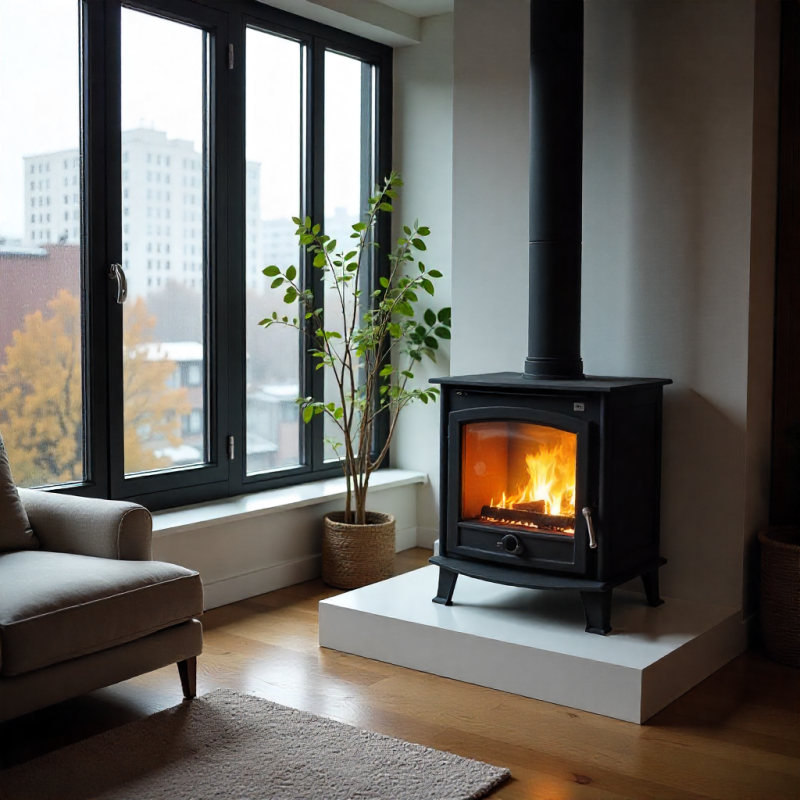
Closed combustion fireplaces (often called slow combustion or insert fireplaces) use a glass door and controlled air vents to manage the burn rate. A quality closed combustion unit converts 70–80% of wood energy into room heat — roughly triple the efficiency of an open fire. For homes where the fireplace is a primary heat source through winter, closed combustion is the practical choice.
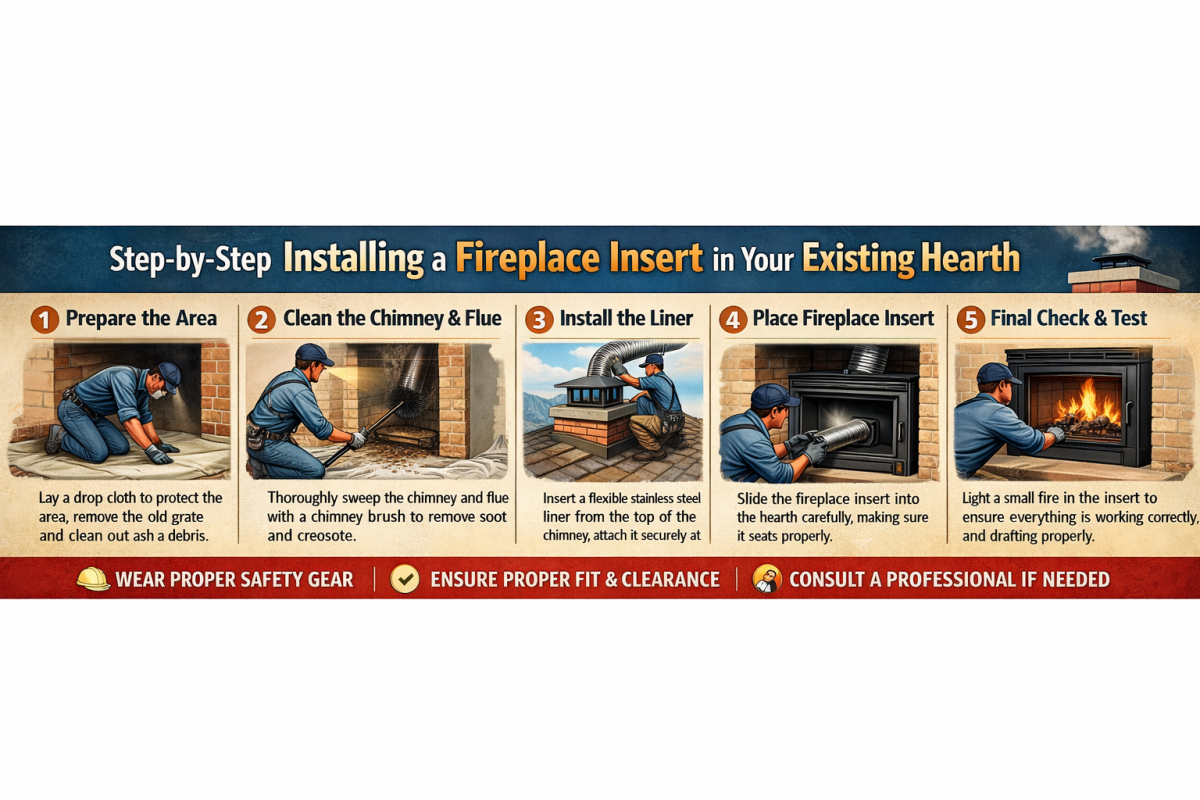
You can also retrofit a closed combustion insert into an existing open fireplace opening — one of the most cost-effective upgrades in an older home. And if your layout allows it, double-sided fireplaces can heat two adjoining rooms from a single built-in unit.
How to Size a Built-In Wood Fireplace
This is the most common mistake. An undersized unit won’t heat the room adequately; an oversized one will overheat the space and tempt you to starve the airflow — which causes incomplete combustion and creosote accumulation in the flue.
A practical sizing guide for South African conditions:
- Up to 15 m² — 5–7 kW output
- 20–30 m² — 8–12 kW
- 35–50 m² — 12–18 kW
These figures assume ceiling heights of 2.4–2.7 m and moderate insulation. If you’re in a coastal Cape Town home with high ceilings and single-glazed windows, size up. If your home is well-insulated and modern, size down. Open-plan spaces that flow into passages and kitchens need more capacity than the floor area alone suggests.
Always tell your installer the total area you want to heat — not just the room the fireplace is in. A good supplier will ask. A poor one won’t.
Surround Materials and Clearances
The firebox is functional; the surround is where design choices happen. Common materials in SA homes:
- Natural stone (slate, quartzite, sandstone) — suits Cape Dutch, farmhouse and rustic aesthetics
- Ceramic or porcelain tile — durable, easy to clean, works in contemporary homes
- Marble or granite — premium choice for formal living rooms
- Plastered and painted masonry — minimal and clean, ideal for modern interiors
Whatever material you choose, your installer must comply with the minimum clearances between the heat source and any combustible materials as set out in SANS 10400 Part V (Fire Protection), the South African National Standard governing building fire safety. A qualified installer will know these numbers. You shouldn’t have to calculate them yourself, but it’s useful to understand why a larger hearth projection is sometimes required on certain designs.
What the Installation Process Looks Like
Installing a built in wood fireplace is a multi-day trade job, not a DIY weekend project. The typical process involves:
- Structural opening — cutting into the wall, installing a lintel, building or lining the firebox
- Flue installation — either a new masonry chimney (new builds) or a twin-wall stainless steel flue system (retrofits)
- Surround and hearth finishing — tiling, stonework or plasterwork
- Testing and Certificate of Compliance (CoC) — legally required for all solid-fuel appliances in South Africa
The CoC is critical and often overlooked until the moment a home is sold. Without a valid CoC, household insurers may decline fire-related claims. Always use a qualified professional fireplace installation service that issues the CoC as part of the job — it should never be an optional extra.
A standard built-in installation with a new flue typically takes 2–4 days. Custom builds with bespoke stonework or structural changes can run a week or more.
What Does It Cost? Real Price Ranges
Installed prices (unit + labour + flue + basic surround) in South Africa currently look like this:
| Budget | What you get |
|---|---|
| R15,000–R25,000 | Entry-level closed combustion insert, basic tile surround, existing chimney or short flue run |
| R30,000–R50,000 | Mid-range unit (Sentinel, Dovre, HWAM), stone or custom tile surround, full twin-wall flue |
| R60,000+ | Premium Scandinavian unit, bespoke stone surround, gas-start ignition or double-sided configuration |
For a full breakdown of what drives the final number — flue height, access, surround complexity — our fireplace installation cost guide goes into detail.
Wood, Maintenance and Long-Term Performance
A built-in wood fireplace only performs as well as the fuel you put in it. Wet or green wood delivers roughly half the heat of dry hardwood, produces far more smoke, and accelerates creosote deposits in the flue. Practical rules:
- Use local hardwoods where possible — bluegum, rooikrans and sekelbos are widely available in the Western Cape
- Wood should be seasoned for at least 12 months (2 years is better)
- Target moisture content below 20% — a basic moisture meter costs around R200 and quickly pays for itself
- Sweep your chimney at least once per season; twice if you burn most nights
If you’re still working through the broader question of which type of fireplace suits your home, our guide to choosing the right fireplace covers the full decision from scratch.
Frequently Asked Questions
Does a built-in wood fireplace add value to my home?
Yes — consistently. In Cape Town and Johannesburg listings, a built-in fireplace is a noted selling feature. Buyers in colder suburbs will pay a premium for it. The key is professional installation with a CoC: a poorly installed unit without paperwork can do the opposite and complicate a sale.
Can I install a built-in fireplace in a room without an existing chimney?
Yes. A twin-wall stainless steel flue system can be run up through the ceiling cavity and exit through the roof — this is a standard retrofit and doesn’t require a masonry chimney. It needs to be correctly routed with proper clearances at every penetration point.
How much wood will I use per winter?
A typical Cape Town household burning 4–5 evenings a week from May to August uses roughly 2–3 cubic metres of hardwood per season. Hardwoods burn longer and hotter than softwoods, so the overall volume is lower even if the per-load price is higher.
Is a Certificate of Compliance (CoC) legally required?
Yes. Under South African building regulations, solid-fuel appliance installations must comply with SANS 10400. A qualified installer is required to issue a CoC. Without one, your household insurance may not cover fire-related claims and you may face difficulties when selling the property.
Ready to move forward? Browse our fireplace range to see what’s available, or request a fireplace installation quote from our team — we’ll advise on the right unit, flue configuration and surround for your specific home.