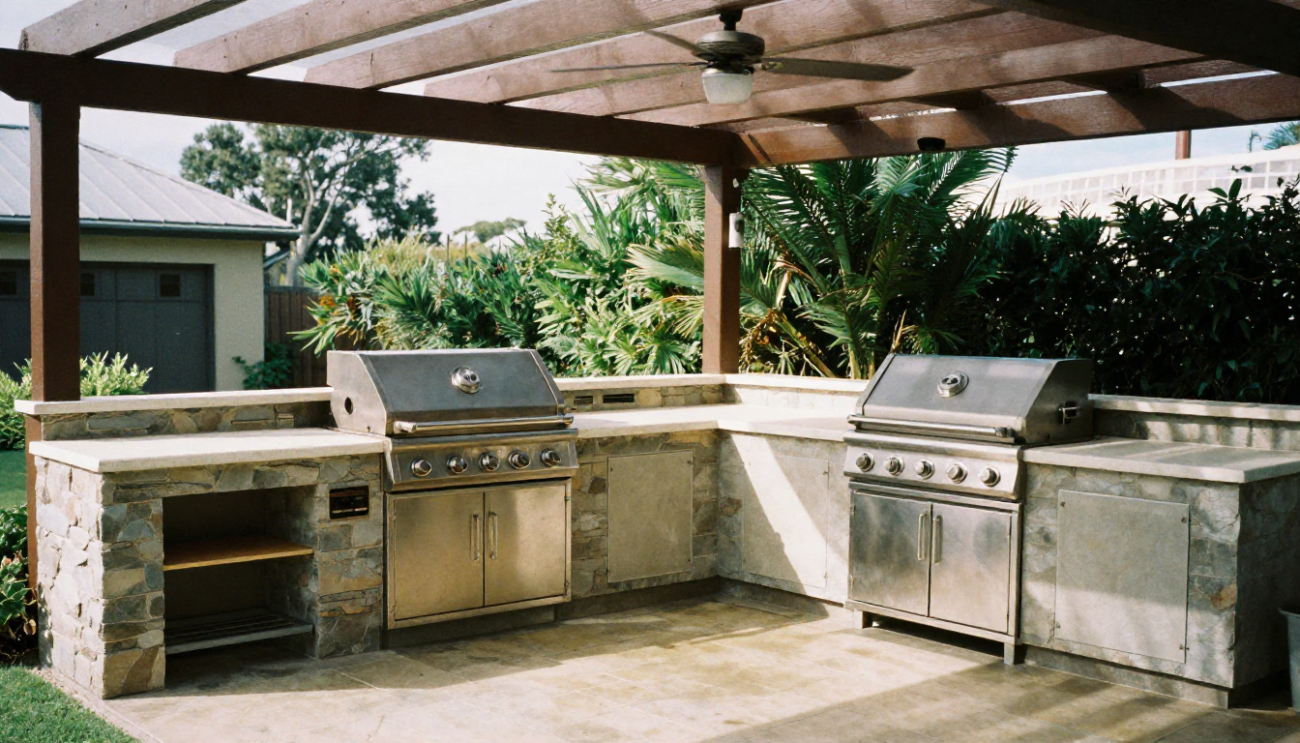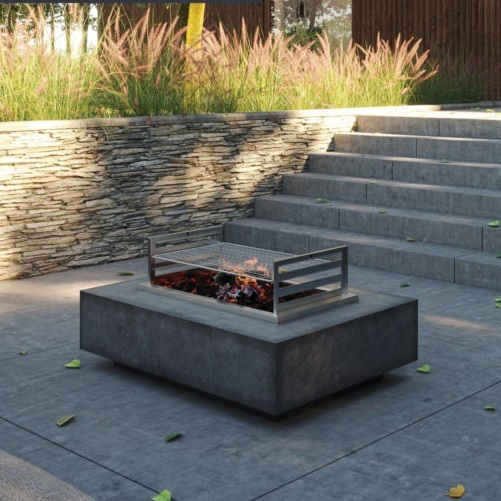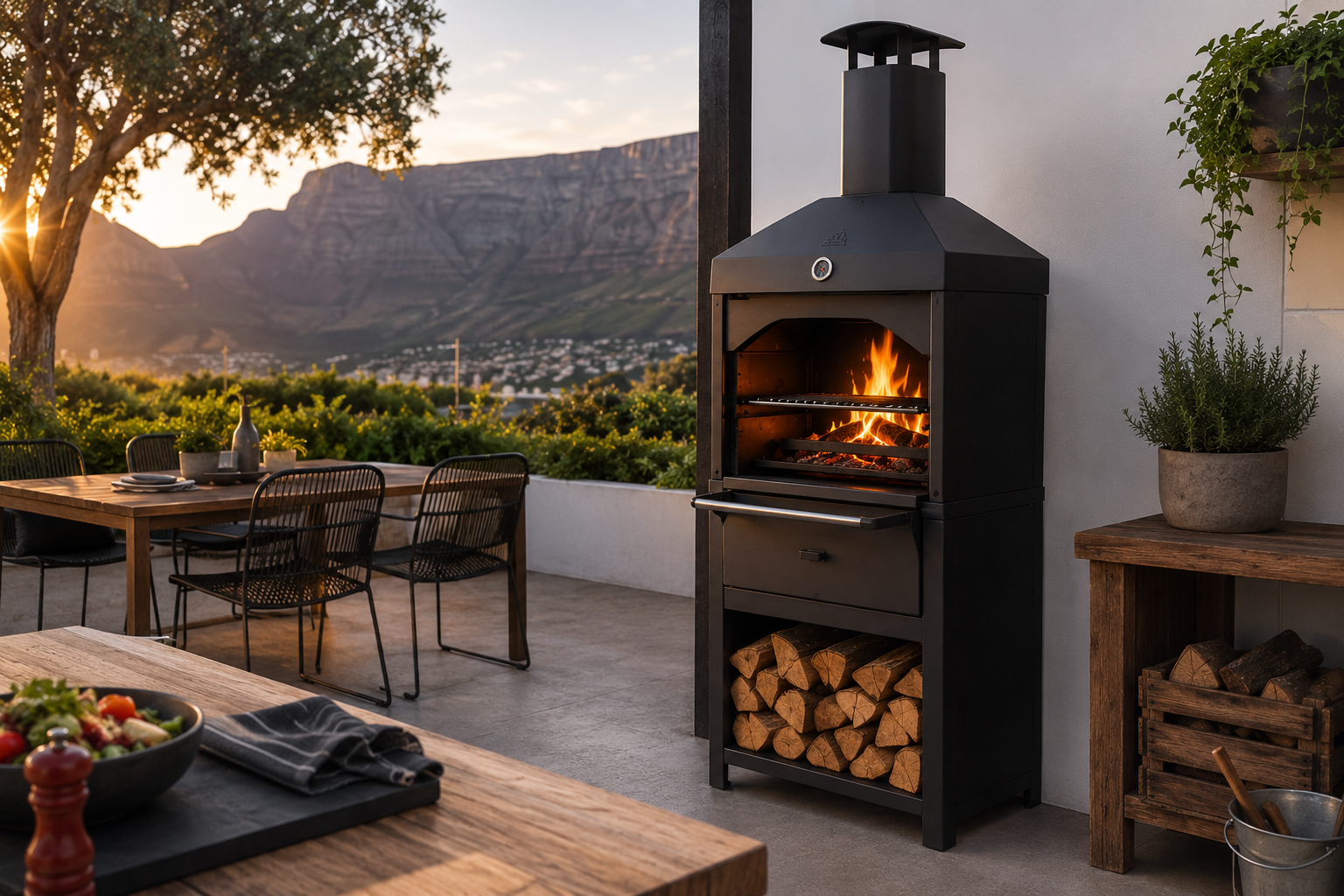

A free standing braai is South Africa’s most versatile outdoor cooking solution. Unlike a built-in braai set into a wall or countertop, a freestanding unit stands on its own legs, can be repositioned on your patio, and starts earning its keep from day one — no bricklaying, no waiting for concrete to cure. For renters, for buyers who want flexibility, or for anyone who simply wants a great fire going this weekend, a quality freestanding braai is often the smartest choice.
But “freestanding braai” covers an enormous range — from a simple R3,500 kettle braai to a R25,000+ stainless-steel island unit with a side burner and rotisserie. This guide breaks down exactly what to look for, what you’ll spend, and which setup suits your outdoor space in 2026.
Why Choose a Free Standing Braai?
South Africans love their braais — 14,960 searches a month for braai-related terms confirm this is a national obsession, not a hobby. The appeal of a freestanding design comes down to three practical advantages:
- No installation required. Arrive, position, light. There are no builders, no permits, and no mess. You can have your first braai the same afternoon it arrives.
- Portability. Renting? Moving? Taking it to the farm for a long weekend? A freestanding braai moves with you. This is something a built-in simply cannot match.
- Load-shedding proof. Gas and wood freestanding braais need no electricity whatsoever. When Cape Town or Johannesburg is at Stage 6, your braai is still at Stage 10.
Types of Free Standing Braai: Wood/Charcoal vs Gas
The first fork in the road is fuel. Both wood/charcoal and gas freestanding braais are wildly popular in South Africa, and neither is objectively better — it depends entirely on how you cook and how much effort you enjoy putting in.
Wood and Charcoal Freestanding Braais
These are the classic South African braai experience. Hardwood or charcoal, a proper flame, the smell of the fire — nothing replaces it for a Sunday afternoon at home. Wood-burning freestanding braais range from basic open-grid designs to enclosed drum braais and larger drum-and-hood units with temperature control.
Typical price range: R3,500 – R18,000 depending on size, material, and brand.
Best for: Anyone who enjoys the ritual of the braai, who cooks irregularly (weekend warriors), or who wants to avoid gas cylinder logistics.
Trade-off: Longer to heat up (30–45 minutes with decent hardwood), requires more hands-on management, and generates ash that needs clearing. In a windy Cape Town coastal garden, an enclosed lid is almost non-negotiable.
Gas Freestanding Braais
Gas braais have grown enormously in popularity — especially in urban Johannesburg and Cape Town apartments with compact patios. Turn a knob, and you’re cooking in under five minutes. Our gas braai range includes single, double, and triple-burner options that cover everything from a family of four to a large outdoor entertaining setup.
Typical price range: R5,000 – R25,000+ for freestanding gas with hood and side burner.
Best for: Weeknight cooking, families who braai more than twice a week, those who want consistent heat control, and anyone who wants to entertain with less babysitting of the fire.
Trade-off: You sacrifice some of the wood-smoke flavour (smoker chips can help), and you need to keep a spare LPG cylinder on hand. For a detailed look at long-term running costs, read our gas vs wood braai running-cost comparison — the numbers may surprise you.
Materials: What Your Braai Is Made Of Matters
In South Africa, especially along the Cape coastline, material quality is not a minor consideration — it determines whether your braai lasts 2 years or 20.
304 Stainless Steel — The Cape Town Choice
If you live within a few kilometres of the ocean (think Blouberg, Milnerton, Sea Point, Strand, Gordon’s Bay), 304-grade stainless steel is the minimum you should consider. Coastal air is salt-laden and merciless on mild steel or even powder-coated surfaces. A good 304 stainless braai will handle the marine environment without rusting or pitting.
This is why South Africa’s most respected braai brands — Northern Flame, Megamaster, Masterbraais — offer their flagship ranges in 304 stainless. You’ll pay more upfront (expect R8,000–R18,000 for a quality 304 stainless freestanding braai), but replacement cost over 10 years makes it the cheaper option.
Mild Steel with Powder Coating
Inland (Pretoria, Johannesburg, Bloemfontein), mild steel powder-coated units perform well and cost less — typically R3,500–R9,000 for a solid mid-range freestanding braai. The key is keeping them dry and re-seasoning the grates regularly. Avoid leaving mild steel units uncovered during Highveld thunderstorm season.
Cast Iron
Cast-iron grates are beloved for heat retention and those classic grill marks. They’re more often found as grate components on stainless or steel braais rather than the structure itself. If you’re serious about texture and sear marks, prioritise cast-iron grates as a feature — they hold heat far better than stainless grates when properly seasoned.
Size: How Big a Freestanding Braai Do You Need?
The most common mistake South African buyers make is going too small. Here’s a practical size guide:
- Small (40–50 cm grate): Couples and 2–3 people. Fine for an apartment balcony. Budget R3,500–R7,000.
- Medium (55–65 cm grate): Families of 4–6. The most popular size for suburban backyards. Budget R6,000–R14,000.
- Large (70 cm+ grate): Entertaining 10+, commercial use, or restaurant settings. Budget R12,000–R25,000+.
A common rule of thumb: allow roughly 100 cm² of grate area per person. For 8 guests, you want at least a 55 × 55 cm grate — and if you frequently host, go bigger. You will never regret extra grate space; you will absolutely regret running out of it when 14 people arrive unexpectedly.
For commercial applications — a butchery, a restaurant with an outdoor terrace, or a sports club — see our full braai range including heavy-duty commercial models built for daily use.
Features Worth Paying For
Once you’ve settled on fuel type, material, and size, here are the features that genuinely improve the braai experience and justify a higher price point:
- Adjustable grate height: Lets you control heat by raising or lowering the cooking surface relative to the coals. Critical for indirect cooking and slow-roasting.
- Hood/lid with thermometer: Converts an open braai into an oven for roasts, whole chickens, and potjie-style indirect cooking. Essential for gas, very useful for wood.
- Side shelf and prep area: Priceless when you’re managing a large braai alone. Keeps plates, tongs, and sauces within reach without a side table.
- Rotisserie attachment: The upgrade that turns a freestanding braai into a full outdoor kitchen. Spit-roast lamb, whole chickens, and suckling pig with less effort than you’d think.
- Wheels and locking casters: If you’ll be repositioning your braai (to follow shade, shelter from wind, or move for a party), proper lockable casters are non-negotiable. Cheap plastic wheels break; rubber-tyred metal casters last.
What Does a Quality Free Standing Braai Cost in South Africa?
Here’s an honest 2026 price breakdown across the main tiers:
- Entry-level (R3,000–R6,000): Mild steel or basic stainless, smaller grate, minimal features. Fine for occasional use, not ideal for coastal gardens or frequent entertainers.
- Mid-range (R6,000–R12,000): Quality 304 stainless or heavy-gauge mild steel, medium-to-large grate, lid, adjustable height. This is the sweet spot for most South African households.
- Premium (R12,000–R20,000): Full 304 stainless construction, large cooking area, gas or wood, side burner, integrated prep area. Built to last 15+ years with basic maintenance.
- High-end / commercial (R20,000–R30,000+): Restaurant-grade, heavy-duty 316 stainless or bespoke fabrication. Often includes rotisserie, multiple burners, and commercial-grade wheels.
Installation is not required for a freestanding braai — but if you’re considering a transition to a permanent built-in braai or an outdoor kitchen setup with integrated prep counters, our team can plan that upgrade with you from the start.
Maintenance: Keeping Your Braai in Top Shape
A freestanding braai — especially a quality stainless-steel one — is not maintenance-free. Follow these simple habits and yours will still be going strong in 2040:
- Brush the grates while warm after every braai session. Built-up carbon is much harder to remove once it cools and hardens.
- Empty the ash catcher after every wood/charcoal session. Wet ash trapped in the body causes corrosion even on stainless steel.
- For coastal braais, wipe down stainless surfaces with a damp cloth weekly and apply a stainless-steel protector spray monthly during winter.
- Cover your braai when not in use — a purpose-made cover dramatically extends its life, especially in Cape Town’s wet winter months.
- Season cast-iron grates with cooking oil after cleaning; this prevents rust and improves non-stick performance.
Freestanding vs Built-In: Which Is Right for You?
The freestanding vs built-in decision ultimately comes down to permanence and budget. A freestanding braai gives you outdoor cooking today, with full flexibility. A built-in setup — integrated into a patio wall or outdoor kitchen island — adds permanent value to your property and is often the better long-term investment if you own your home and entertain frequently. Many of our clients start with a quality freestanding unit, then upgrade to a built-in braai feature two or three years later when the budget and plans are in place. The freestanding braai continues in service alongside the built-in — one for everyday use, one for big occasions.
If you’re thinking about a more ambitious outdoor setup, read our guide to custom braai islands with lighting and countertops — it’s what a mid-term upgrade could look like.
Frequently Asked Questions
What is the best free standing braai for a small Cape Town patio?
For small patios — especially coastal ones — a compact 304 stainless steel gas braai (double burner, hood, 50–55 cm grate) is the practical choice. It takes up minimal space, handles the sea air, and is ready to cook in five minutes. Expect to spend R7,000–R12,000 for a unit that will last a decade with basic care. If the open-fire experience matters to you, a compact kettle braai in heavy-gauge 304 stainless is the wood-burning equivalent.
Is a gas or wood braai cheaper to run in South Africa?
For frequent braaiing (3+ times a week), gas works out cheaper per session once you factor in hardwood prices and time. A standard 9kg LPG cylinder costs roughly R200–R250 and delivers about 15–20 cooking sessions. For occasional weekend braais where the ritual matters, wood is comparable in cost and arguably more satisfying. Our detailed gas vs wood running-cost guide breaks this down session by session.
Do I need planning permission for a freestanding braai in South Africa?
No. A freestanding braai requires no planning permission or municipal approval in South Africa — it’s a moveable item, not a permanent structure. If you’re building a fixed braai into a wall or constructing a full outdoor kitchen with a roof, you may need approval depending on your municipality. Our braai installation team handles all compliance questions for built-in projects.
How long does a quality freestanding braai last?
A well-maintained 304 stainless steel freestanding braai should last 10–20 years in inland conditions, and 8–15 years in coastal environments. Mild steel units in coastal areas typically last 3–7 years before corrosion becomes a problem. The upfront price difference between a R5,000 mild-steel braai and a R12,000 stainless braai is often recovered within five years of not needing to replace it.
Ready to Find Your Ideal Braai?
Fire Flame Installers supplies and installs braais across Cape Town and the Western Cape, from compact freestanding units to full custom outdoor kitchen builds. Browse our complete braai range online, or if you’re thinking about a built-in braai or outdoor kitchen upgrade, request a free installation quote and one of our team will advise you on the best setup for your garden, budget, and lifestyle.
We’ve been helping South Africans build better outdoor living spaces since our founding — and nothing makes us happier than a great braai well installed.