
Why Freestanding Braais Are the Ultimate Backyard Upgrade?
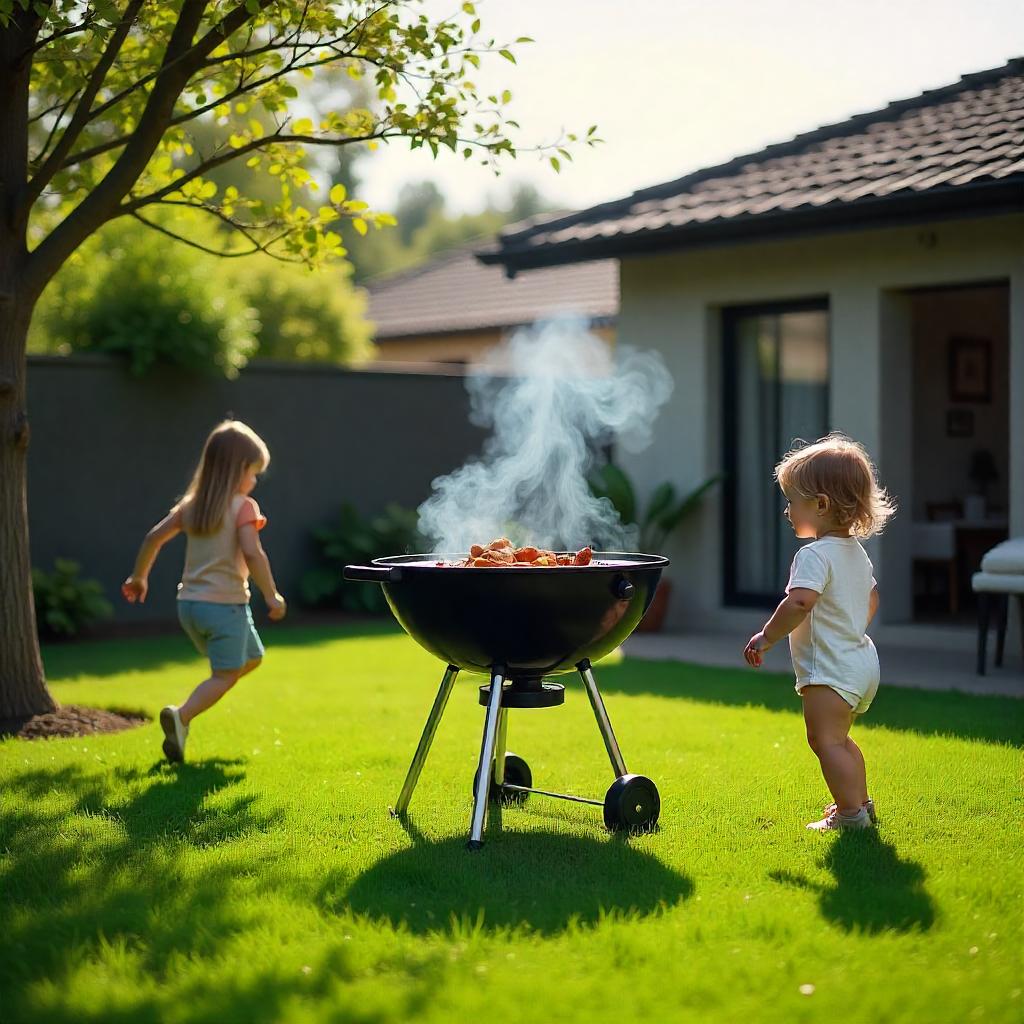
Why a freestanding braai beats a built-in for most South African homes Here’s the thing about built-in braais that nobody mentions until it’s too late: they’re permanent. You’re committing to that exact spot, that...
Why a freestanding braai beats a built-in for most South African homes
Here’s the thing about built-in braais that nobody mentions until it’s too late: they’re permanent. You’re committing to that exact spot, that exact layout, and that exact size for as long as you own the house. We’ve pulled out plenty of built-in braais in Constantia and Rondebosch because the homeowner’s needs changed, and let me tell you, removing a brick braai is not a fun weekend project.
A freestanding braai gives you options. Move it to catch the wind. Shuffle it around when you redo the patio. Take it with you when you move. It’s not a compromise — it’s flexibility that actually matters in a country where outdoor living is half the reason you bought the house. South Africans braai like nowhere else on earth, and having a braai that adapts to your life instead of the other way around? That matters.
We’ve installed hundreds of braais across Cape Town, from small Hout Bay courtyards to sprawling Stellenbosch estates. And in most cases? The freestanding option is what people end up happiest with a year later. When you want a braai that works with your life — not against it — freestanding models are where it’s at.
Recommended Freestanding Braais by Budget
Browse our most popular freestanding braais at every budget — live in-stock pricing, each linked to its product page for full specs.
Entry-level — under R11,000
- Home Fires – 580 Table braai — R3,737
- Home Fires – JanBraai kit complete — R4,576
- Home Fires – KampBraai — R10,878
Mid-range — R11,000–R25,000
- Home Fires – 800 freestanding braai — R20,297
- Home Fires – 1000 freestanding braai — R24,232
Premium — R25,000 and up
- Home Fires – 1200 freestanding braai — R25,192
- SAFire – Plateau Wood Firepit & Braai — R25,995
- SAFire – Modi Freestanding Braai — R59,995
Tell us what you need and we’ll send a free, no-obligation quote — fast.
Request a Free Braai Quote
Freestanding braai ideas for every backyard size
Not everyone has a quarter-acre plot in the Helderberg with room for a full outdoor kitchen. Most Cape Town backyards are modest, and that’s fine. You don’t need a massive built-in to cook properly. Here’s what actually works.
Small courtyard? These compact units work
If your outdoor space is limited — which covers a lot of homes in Gardens, Observatory, and the City Bowl — you want something in the 600mm to 700mm range. The Sentinel 600 and Home Fires 600 both fit comfortably in tight spaces and still give you enough grill area to cook for four to six people. When you’ve got limited space, these braai units are the answer.
We’ve installed compact units on apartment balconies in the Waterfront area (with landlord permission, obviously) and tiny backyards in Tamboerskloof. The key is making sure you’ve got enough space on all sides from anything flammable. Don’t squeeze it in and hope for the best — that’s how gutters melt.
For free standing braai ideas in small spaces, think about placement near a wall on one side only, with the chimney or flue pointing away from the house. A well-designed 700mm braai tucked into a corner can be easy to move when you need to rearrange. These freestanding models are versatile enough to handle whatever your available space throws at them.
Some compact units are even foldable — legs that collapse so you can pack the braai into a boot for a weekend away. Portability is one of those things you don’t think about until you need it, and then it becomes the reason you’re glad you didn’t go built-in.
Big family? Go wide, not tall
Here’s a mistake we see constantly: people with big families buy a tall braai because it looks impressive. Then they can’t reach the back of the grill without a step ladder. Don’t do that.
If you’re regularly cooking for eight or more people, go for a 900mm to 1000mm wide freestanding braai. The Northern Flame 1000 and SAFire 900 are both solid choices that give you serious grill real estate without the height issue. You’ll fit 15-20 chops, a couple of braai grids of boerewors, and still have space for veg. That kind of total cooking space means you’re not queuing meat like a braai assembly line.
Width matters more than height for cooking capacity. A larger braai lets you manage different heat zones — coals on one side for direct heat, nothing on the other for indirect. That’s how you cook proper braai. Height just makes things harder to reach.
Gas, charcoal, or wood — which type of braai should I buy?
This is the debate that never ends, so here’s our honest take after installing all three types across the peninsula.
Wood: Nothing beats the flavour of charcoal-grilled meats on real wood, and in Cape Town you’ve got access to good rooikrans and bluegum. But wood takes 45-60 minutes to get to cooking temperature. If you’re a weekend braaier who plans ahead, wood is the way to go. The Sentinel 700 and Earthfire units both handle wood brilliantly. Some people add a smoker box to their wood braai for slow-cooked ribs and brisket — worth it if you’ve got the patience.
Charcoal: Faster than wood (20-30 minutes), cleaner burn, and you still get that real fire taste. Most charcoal braais in the R10,000-R18,000 range work well for this cooking style. It’s the middle ground — not as instant as gas, not as slow as wood.
Gas: We install gas freestanding braais, and we’re honest about what they are. They’re convenient. You turn a knob on a burner, you’re cooking in 10 minutes. The ease of use is hard to argue with. But you’re trading flavour for speed every single time. If you braai three times a week and don’t care about the smoky taste, a gas braai makes sense. If you braai once a week and want it to be an event, go wood or charcoal.
Some people buy hybrid units. The Hydrofire range has models with two stainless steel burners for gas ignition with wood cooking on the side. Best of both worlds, but they cost more. Worth it if your budget stretches.
Are you a traditionalist who relishes the smoky flavours of charcoal-grilled meats, or do you prefer the convenience and control of a gas braai? Neither answer is wrong — but knowing which camp you’re in before you buy saves you from an expensive mistake.
What we’ve learned installing braais in Cape Town
We’re not a shop that sells braais from a catalogue. We drive to your house, look at your outdoor area, and tell you what’ll actually work. After years of doing this from Gordon’s Bay to Durbanville, here’s what we know.
The brands that survive a Cape winter
Cape Town winters are wet, windy, and corrosive. That salt-laden air coming off the Atlantic eats cheap steel for breakfast. We’ve seen braais rust through in under two years because someone bought on price alone. Home Fires is your answer if you want something that handles the elements without constant upkeep — their flue system means smoke exits top and back, and with Home Fires on your side, you’ve got build quality that holds up.
Here’s what holds up:
- Sentinel: Built like a tank. Thick 3mm and 4mm steel on most models. The powder-coated and enamel finishes last 8-10 years in coastal areas if you cover it when not in use. We install more Sentinel units than anything else, and there’s a reason for that. Their top of the range models come in a range of sizes from 600mm to 1200mm.
- Northern Flame: Excellent quality, nice designs, but their lighter models need more care near the coast. The heavy-duty range is fine for Helderberg and Stellenbosch. For beachside properties in Blouberg or Muizenberg, stick with the heavier gauge options. Their stainless steel models resist corrosion better than mild steel.
- Home Fires: Their selling point is the flue system — smoke exits top and back, so you don’t always need a chimney. Clever design. Build quality is solid, and the 6mm steel on their premium range handles coastal conditions well.
- SAFire: Good mid-range option. Not as heavy-duty as Sentinel, but at the price point (R8,000-R14,000), they’re reasonable value. Just expect to replace it sooner in salty air.
- Earthfire: Their potjie-style units are practically indestructible. The cast iron takes anything the Cape throws at it. Many come with a potjie hook for cooking potjie alongside your braai. Great for people who want something that’ll outlast them.
Size mistakes we see all the time
The most common error? Buying too big. Someone with a 4m patio orders a 1200mm braai because bigger is better, right? Then they can’t move around it, can’t open the patio door properly, and the braai dominates the entire space. We’ve had clients in Durbanville ask us to swap a too-large unit for something smaller within three months.
Measure your space properly. Here’s our rule of thumb: the braai should take up no more than one-third of your usable patio or entertainment area. You need room for people to stand, plates to go down, and kids to run past without getting burned.
The second mistake: going too cheap. A R3,000 braai from a hardware store is not the same as a R12,000 purpose-built unit. The thin steel warps after six months of regular use. The braai grid bends. The ash pan cracks. You’ll spend more replacing it than if you’d bought right the first time. A proper braai is designed to last — cheap ones aren’t.
Look for features that actually matter: an ember maker built into the base to get coals going faster, a cowl on the chimney to prevent wind blowing smoke back down, a vent at the bottom for airflow control, and warming racks to keep food hot while the rest finishes cooking. These are the details that separate a braai you’ll love from one you’ll tolerate.
Freestanding vs built-in braais: when each one wins
Freestanding vs. built-in braais: which one is perfect for you? We get asked this all the time, so here’s a straight answer.
Choose freestanding if: you rent, you plan to move in the next 5-10 years, your outdoor area isn’t finished yet, you want flexibility, or your budget is under R20,000. A good freestanding braai does 90% of what a built-in does at half the cost and zero construction. The braai comes ready to use — no builders, no brickwork, no mess. Freestanding braais offer versatility that built-ins simply can’t match.
Choose built-in if: you own the property, your outdoor space is permanently laid out, you’re building a full outdoor kitchen, and you want something custom. Built-ins look fantastic when done right and can add resale value to your home. But you’re looking at R30,000-R80,000+ once you factor in the brickwork, installation, and the braai unit itself.
For most people, especially in established suburbs where the patio is already done, a freestanding braai with chimney is the smarter call. You get the performance without the construction headache. If your braai entertainment area is going on the road with you — caravanning, camping trips, weekends at the coast — a freestanding unit is the only option that makes sense. A portable gas braai is also worth considering if you split your time between home braaing and cooking away.
If you’re weighing up options, our guide on outdoor braais in South Africa breaks down the full comparison with real pricing.
How much does a good freestanding braai cost in South Africa?
Let’s talk actual numbers. These are realistic prices for 2026 based on what we sell and install:
- Budget (R5,000-R8,000): Entry-level SAFire and similar brands. 500-600mm width, 2-3mm steel. Fine for occasional use inland. Will struggle on the coast long-term.
- Mid-range (R10,000-R18,000): This is where most people should be looking. Sentinel 700, Home Fires 700, Northern Flame mid-range. 3-4mm steel, proper flue systems, 10+ year lifespan with basic care.
- Premium (R20,000-R35,000): Heavy-duty Sentinel, premium Northern Flame, top-end Hydrofire. 4-6mm steel, premium finishes, features like adjustable grates, warming racks, and side tables. These units genuinely last 15-20 years.
Installation usually adds R2,000-R4,500 depending on whether you need a flue/chimney fitted, a concrete slab poured, or gas lines run. We include installation in our pricing, so there are no surprises.
Don’t forget the cover. A decent UV-resistant braai cover costs R400-R800 and adds years to your unit’s life. Non-negotiable if you’re within 5km of the coast.
How to make your outdoor braai setup work harder
Ready to upgrade your outdoor braai area to the max? Here’s how to elevate your setup without spending a fortune.
Start with the braai itself — if yours is old, warped, or rusted, nothing else matters until you fix that. A good freestanding braai is the best braai investment you can make for your outdoor cooking setup. Add a prep surface next to it — even a stainless steel trolley does the job. Proper lighting helps if you’re braaing into the evening. And if you’re looking at getting a built-in braai installed down the line, starting with a freestanding unit lets you figure out exactly what cooking needs you have before committing to something permanent.
Frequently asked questions
Is a freestanding braai the best option for my home?
For most homes in South Africa, yes. Unless you’re building a dedicated outdoor kitchen and know you won’t move, a freestanding braai gives you the same cooking performance with way more flexibility. We’ve installed them in rental properties, small courtyards, and large estates — they work everywhere.
What’s the difference between a freestanding and built-in braai?
A freestanding braai is self-contained. It sits on its own legs or base, you can move it, and it requires no construction. A built-in braai is permanently installed into a brick or steel enclosure as part of your outdoor structure. Built-ins look more integrated but cost significantly more and can’t be moved.
Built-in, freestanding, or portable — which is right for you?
It depends on your lifestyle. Portable models suit campers and people who move often. Freestanding braais work for most homeowners who want flexibility. Built-ins suit permanent homes with finished outdoor areas and bigger budgets. Think about where you’ll be in five years before committing.
Do I need a chimney on a freestanding braai?
Not always. Some models, like the Home Fires range, have flue systems that exit from the top and back of the unit, so smoke is directed away without needing a full chimney stack. However, if you’re using the braai under a covered patio or low roof, a chimney or flue extension is non-negotiable — both for smoke direction and fire safety. Is your braai area sheltered from the elements? That matters for chimney decisions too.
Can I use a freestanding braai under a covered patio?
Yes, but with conditions. You need at least 1.5m clearance between the top of the braai and the roof or ceiling. You need a chimney or flue that extends above the roofline. And the area needs ventilation — enclosed patios with no airflow are a fire risk regardless of the braai type. We’ve seen what happens when someone braais under a low canvas awning. Don’t be that person.
How long do freestanding braais last?
Depends entirely on the quality and where you live. A cheap 2mm steel braai might last 3-5 years before rusting through. A good quality 4mm unit like a Sentinel or premium Northern Flame will easily go 15-20 years with a cover and basic maintenance (wipe it down, oil the grid, clear ash). Near the coast, subtract about 20-30% from those numbers unless you’re diligent about covering it. We’ve got clients in the Helderberg who are still using the same braai we installed 12 years ago.
What should I keep in mind when browsing for a freestanding braai?
Think about your cooking style first. Gas, charcoal, or smoker — each suits a different routine. Then look at the size of your outdoor area, your budget, and the quality of steel. A 3mm or thicker body with a good cowl, proper vent, and solid braai grid will outlast anything thinner. Don’t buy on looks alone.
Ready to find the perfect braai?
We stock freestanding braais from Sentinel, Home Fires, Northern Flame, SAFire, Hydrofire, and Earthfire. Whether you want to upgrade your current setup, replace a dying unit, or start fresh — we’ll help you pick the right braai for your space and budget. Get in touch and we’ll come to you.
Rather have it done properly? Fire Flame installs built-in and freestanding braais across Cape Town — transparent pricing, compliant workmanship and same-day quotes. See our braai installation Cape Town service.
Planning this kind of work?
Call or WhatsApp with your suburb and photographs. Fire Flames can discuss your fireplace, braai or home project and quote.
Get A Quote →