

A wall hanging gas fireplace is one of the most practical heating choices available right now — and it has moved well beyond just looking good. These wall-mounted units take up zero floor space, deliver instant heat at the flick of a switch, and suit modern South African homes where load-shedding makes lighting a wood fire less appealing every evening. Before you commit, though, there are a few things worth understanding about how they work, what installation really involves, and where the costs can surprise you.
What Exactly Is a Wall Hanging Gas Fireplace?
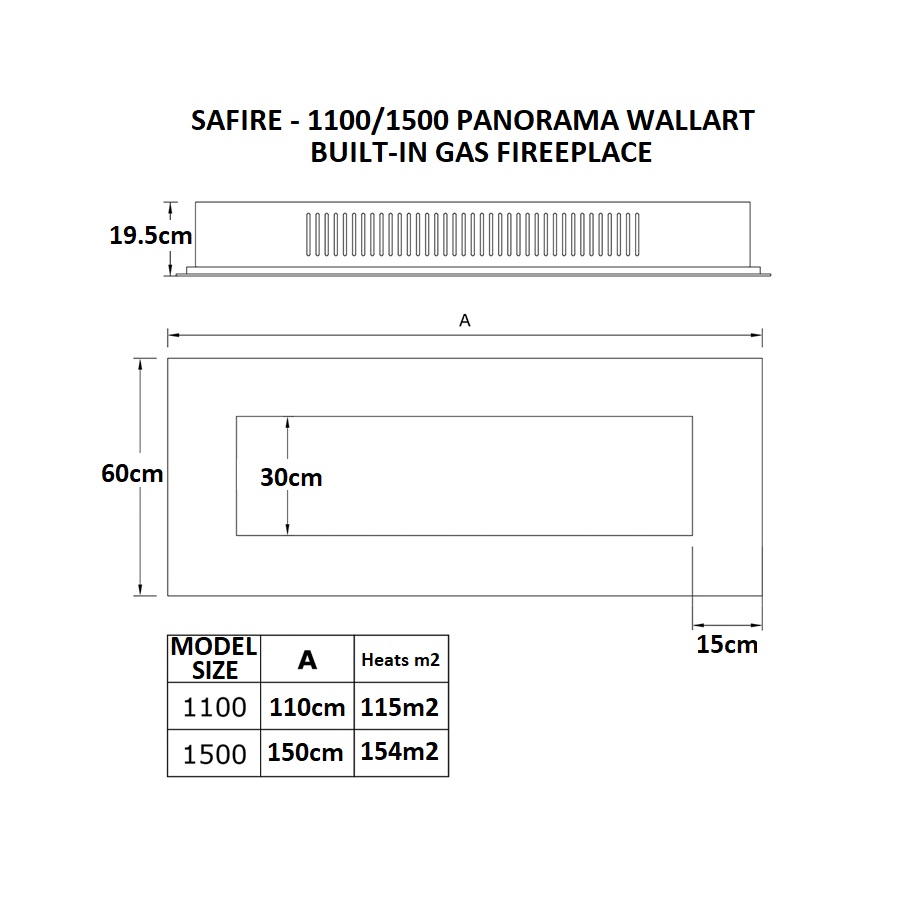
A wall hanging gas fireplace (sometimes called a wall-mounted gas fire) is a gas-fuelled unit fixed flush to — or recessed into — a wall surface. Unlike a freestanding unit, it has no plinth or base; it sits at a chosen height and presents a glass-fronted flame picture that runs on either natural gas or LPG. Most units are designed to provide real room heating as well as a visual flame effect, making them a functional centrepiece rather than a purely decorative one.
There are two main configurations to know about:
- Flueless models burn so cleanly they require only passive ventilation — a permanently open window or vent in the room is typically sufficient. These are the simpler, lower-cost installation option.
- Balanced-flue models draw combustion air in from outside and exhaust via a twin-wall flue. They work in sealed rooms and are generally preferred where room volume is limited or where you want maximum heating efficiency.
Browse our gas fireplace range to compare available models across both types. For a broader view of how gas heating compares to wood in terms of running cost and convenience, the gas vs wood-burning fireplaces guide is worth reading first.
Wall Hanging vs Built-In vs Freestanding: Key Differences
Many buyers arrive having already ruled out other formats, but a quick comparison is useful before spending:
- Wall hanging gas fireplace: No floor footprint, clean wall-mounted profile, requires a gas line run to the wall position. Best in open-plan living rooms or smaller spaces where floor layout is constrained.
- Built-in gas fireplace: Set into the wall cavity itself — very seamless, but more structurally demanding. See our built-in fireplace inserts for what that looks like in practice.
- Freestanding gas heater: Simpler to reposition, but takes up floor space and rarely matches a wall-mounted unit on design impact.
- Double-sided gas fireplace: Heats two rooms through a shared wall — worth considering if you have an open-plan kitchen-lounge or a bedroom-to-lounge layout. Our double-sided fireplaces page covers the available options.
If you are still working out which fireplace format fits your home layout, our guide on choosing the right fireplace for your home walks through the decision by room type and house style.
Installation: What It Actually Involves
This is where buyers are most often caught off guard. A wall hanging gas fireplace installation is not simply a case of mounting the unit and connecting a pipe. The main requirements are:
- Gas supply line: A dedicated gas line must run from your supply (LPG cylinder or natural gas metre) to the installation point. If your home is not currently plumbed for gas, the new supply line and metering equipment add meaningful cost before you even start on the fireplace itself.
- Flue or ventilation: Balanced-flue models require a twin-wall flue core to be run through an external wall or roof. Flueless models need a permanent, unobstructed ventilation opening in the room. Neither of these is optional — they are safety requirements, not suggestions.
- Structural wall: The unit must anchor into a solid, load-bearing wall capable of supporting 20–45 kg. Plasterboard partitions require a framework insert first. Where you position the fireplace on your floor plan will therefore be partly dictated by your wall construction.
- Certificate of Compliance (CoC): All gas installations in South Africa legally require a Gas CoC issued by a registered gas practitioner on completion, as required under SANS 10087. This is non-negotiable, and it is your legal protection as a homeowner. Always confirm your installer can issue one before signing anything.
Booking professional fireplace installation through a registered team covers all of these steps, including the CoC. It is not a project to hand to a general handyman, regardless of how straightforward it looks. For a fuller picture of what the full process costs across different installation scenarios, the fireplace installation cost guide breaks it down clearly.
Wall Hanging Gas Fireplace Prices in South Africa
Prices vary considerably based on unit size, brand, flame picture dimensions, heat output, and how far the gas and flue runs need to travel. Here is a realistic breakdown for the Cape Town and broader Western Cape market in 2026:
- Entry-level wall hanging gas fireplace (small to medium, flueless, LPG, basic flame effect): Unit cost R8,000–R15,000. Short gas run and basic installation: R3,500–R6,000. Total budget: roughly R11,500–R21,000.
- Mid-range (balanced-flue, larger panoramic flame picture, 4–6 kW heat output): Unit R15,000–R30,000. Installation including flue through wall and gas run: R6,000–R12,000. Total: R21,000–R42,000.
- Premium (large designer format, brushed steel or custom glass finish, 7–10 kW output): Unit R30,000–R60,000+. Full installation with longer runs: R10,000–R18,000. Total: R40,000–R78,000+.
If you are considering wall-mounted fireplaces more broadly — including wood-burning wall-mounted options — keep in mind that the chimney and flue costs on wood-burning units often close the initial price gap faster than buyers expect.
Brands most commonly supplied and installed in the Western Cape include Jetmaster, Comfort Flame, and several European imports. Jetmaster’s wall-mounted gas range is widely regarded as reliable, well-supported locally, and has a strong service network throughout the Western Cape — a practical advantage when something needs attention years down the line. You can review their current range on Jetmaster’s official site.
Visit our gas fireplaces page to compare current models across price bands, or contact us for a specific recommendation based on your room size and budget.
Load-Shedding Compatibility: A Practical Consideration
Most wall hanging gas fireplaces use electronic ignition, which needs mains power to operate. During load-shedding, without a UPS or inverter, you may not be able to light the fire at all — which defeats the whole point of having a gas unit during winter outages. A number of models offer battery ignition or a piezo ignition backup as an alternative.
If load-shedding resilience is a priority for you (and for Cape Town residents, it should be on your list), ask your supplier specifically about ignition type before committing to a model. It is one of the most common post-installation frustrations we hear about, and it is entirely avoidable with the right question upfront. Our expert fireplace installers in Cape Town can guide you toward units that keep working when the lights go out.
Frequently Asked Questions
Can a wall hanging gas fireplace heat an entire lounge?
Yes — most mid-range units produce between 3 kW and 8 kW of heat output, which comfortably covers a standard lounge of 25–40 m². Larger open-plan areas may need a higher-output unit or a supplementary heat source. Always confirm the kW rating and cross-reference it against your room size; a reputable supplier will help you calculate this accurately before you buy.
Do I need planning permission for a gas fireplace installation?
You generally do not need municipal planning permission for an internal gas installation that does not alter the building envelope significantly. You do legally require a Gas Certificate of Compliance under SANS 10087, issued by a registered gas practitioner on completion. Always insist on this regardless of what an installer tells you — no CoC means no legal protection if something goes wrong.
Is LPG or natural gas better for a wall-mounted unit?
Both work well. Natural gas is the most convenient if your property is on the City of Cape Town’s reticulated gas network — no cylinders to manage or swap. LPG is more widely available outside the metro and works reliably; you simply need to plan for cylinder size and the practicalities of refills. Most quality units are available in dual-fuel configurations, so the choice is usually driven by what supply you already have.
Can I move a wall hanging gas fireplace once it is installed?
Not easily. The gas line, flue penetration, and structural fixings are all built to the original wall position. Relocating the unit means re-running the gas supply, potentially repairing the original flue opening, and re-commissioning — essentially a partial reinstallation. Get the positioning right before the first installation rather than planning to adjust later.
Get It Right the First Time
A wall hanging gas fireplace rewards buyers who go in with clear expectations: the right kW output for the room, an ignition system that works during load-shedding, and a realistic budget that includes the gas supply and flue — not just the unit price tag. Done properly, it is one of the most low-maintenance, high-impact heating solutions available for a South African home.
To get a specific recommendation and price for your space, request a free installation quote from the Fire Flame team. You can also see the full scope of what we offer on our fireplace, braai and chimney services page.