
Step-by-step guide: Installing a fireplace insert in your existing hearth.
Installing a fireplace insert matters because the right choice affects heat, safety, installation cost and long-term value for South African homes. For broader fire safety guidance, the Fire Protection Association of South Africa is...
Installing a fireplace insert matters because the right choice affects heat, safety, installation cost and long-term value for South African homes.
For broader fire safety guidance, the Fire Protection Association of South Africa is a useful independent reference alongside professional installer advice.
Are you looking to make your fireplace better? Installing a fireplace insert could be the answer. These units turn old hearths into efficient heaters, whether you choose gas or wood-burning. The right insert can boost heat and make your home look better.
Let’s look at how to install a fireplace insert. We’ll also talk about what to consider when choosing one.

Key Takeaways
- Understand the advantages of installing a fireplace insert for home efficiency.
- Explore options for gas and wood-burning fireplace inserts.
- Consider compatibility with your existing fireplace during installation.
- Know the essential tools and materials needed for the process.
- Test your fireplace insert for safety post-installation.
Tell us what you need and we’ll send a free, no-obligation quote — fast.
Request a Free Fireplace Quote
Understanding the Benefits of a Fireplace Insert
Installing a fireplace insert can change your living space for the better. It brings many benefits like energy efficiency, cost savings, and better looks. It also helps the environment. A fireplace insert makes your home look great and keeps you warm.
Energy Efficiency and Cost Savings
Fireplace inserts help save energy. They keep the heat in, unlike old chimneys. This means lower heating bills for you.
They heat your home faster and better. This saves you money and keeps you warm.
Enhanced Aesthetics for Your Living Space
A fireplace insert also makes your room look better. There are many styles to choose from. You can find one that fits your home’s look.
It adds a modern touch. It makes your home cozy. It’s perfect for family gatherings.
Reduced Environmental Impact
Fireplace inserts are good for the planet. They burn less wood than old fireplaces. This saves resources and cuts down on pollution.
They help you live greener. Using less wood means less carbon emissions. It’s a step towards a cleaner home.

Measuring Your Existing Hearth for Compatibility
Before picking a fireplace insert, you need to measure your hearth accurately. You must find out the size of your fireplace opening, the clearance needed, and your ventilation requirements. Each of these steps is key to making sure the insert fits right and works well.
Determining the Size of Your Fireplace Opening
Start by measuring your fireplace’s height, width, and depth. These measurements help find the right size insert for your fireplace. Make sure to measure from the widest points, both horizontally and vertically. This includes any odd shapes in the opening.
Understanding Clearance Requirements
It’s important to follow the clearance rules set by the insert maker for safety and best performance. These rules tell you how much space is needed between the insert and flammable materials. Sticking to these guidelines helps avoid dangers and ensures the insert works smoothly.
Evaluating Ventilation Needs
Good ventilation is essential for your fireplace insert to work well. Check your chimney’s condition and any local laws about installation. Knowing your ventilation needs helps with better burning and cleaner air inside.

Preparing Your Hearth for Installation
Before installing a fireplace insert, you must prepare your hearth well. This includes cleaning the fireplace and checking the chimney. Also, make sure you follow local building codes to avoid problems.
Cleaning Your Existing Fireplace
Begin by cleaning your fireplace thoroughly. Remove soot, ash, and debris. This makes your fireplace look better and work better with the new insert. It also keeps you and your family safe from harmful fumes.
Inspecting Your Chimney and Flue
Next, inspect your chimney and flue. Check for blockages or damage. Good ventilation is key for safety. Fixing problems now can save time and prevent dangers later.
Consulting Local Building Codes
Always check the local building codes before starting. Following these codes makes your installation safe and legal. They ensure your fireplace insert is installed correctly. Ignoring them can lead to fines or safety issues.

Choosing the Right Fireplace Insert for Your Home
Choosing the right fireplace insert means knowing the different types. You can pick from wood-burning, gas, or electric fireplaces. Each type has its own benefits and things to think about.
Types of Inserts: Wood-Burning, Gas, and Electric
Wood-burning inserts give a traditional feel and the sound of crackling logs. They heat well, making them great for cold weather. Gas inserts are modern and easy to use, needing less upkeep. They light up with a button and come in many styles.
Electric fireplaces are perfect for easy setup and a cozy feel without venting. They’re great for places where traditional fireplaces don’t work.
Considerations for Size and Style
When picking a fireplace insert, check the size of your hearth. It must fit right to keep your home safe. Also, think about your home’s look. There are many styles to match your decor and taste.
Understanding Features and Efficiency Ratings
Efficiency ratings are key for your insert’s performance. High ratings mean less fuel use and more heat, saving you money. Look at features like adjustable heat, blower fans, and remote controls for more comfort. Choosing the right insert means considering these features and what you need.

Tools and Materials Needed for Installation
Installing a fireplace insert needs good preparation. You’ll need the right tools for installation and all the necessary materials. Knowing what you need makes the job easier and smoother. Here’s a list of what you’ll need for your project.
Essential Tools for DIY Installation
- Measuring tape: Accurate measurements ensure a proper fit.
- Screwdriver: Essential for securing various parts of the fireplace insert.
- Level: Ensures the insert is properly aligned.
- Masonry tools: Useful for any modifications to the fireplace structure.
Necessary Materials and Components
- Fireplace insert unit: The primary component that provides heat and ambiance.
- Chimney liner: Important for proper venting of gas and smoke.
- Flue cap: Prevents debris and animals from entering the chimney.
- Surround: Helps finish the look and protects the area around the insert.

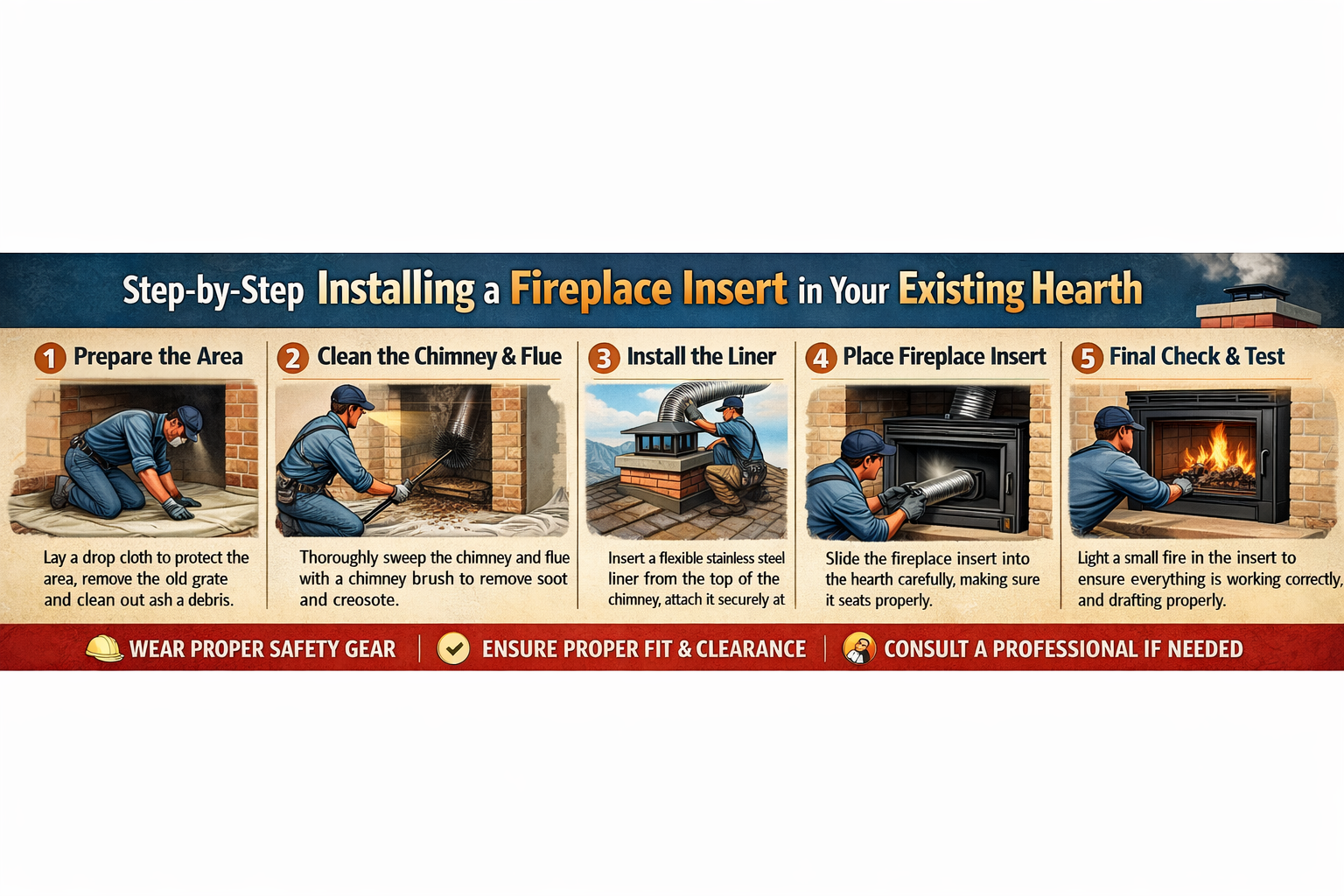
Step-by-Step Installing a Fireplace Insert
Installing a fireplace insert can change your living space for the better. It makes your home warmer and more efficient. Follow these steps to make sure it’s done right, improving both looks and function.
Positioning the Insert in the Fireplace
Start by putting the insert into your fireplace. Make sure there’s room for the flue. Getting the insert in the right spot is key for good airflow and heat.
Adjust it until it fits perfectly with your fireplace’s size.
Installing the Chimney Liner
Start the chimney liner installation from the roof. Measure and cut it to fit your chimney. Then, slide it down into the chimney, making sure it matches the insert’s flue.
This step is vital for safe venting of smoke and gases.
Securing the Flue and Cap
Now, focus on the flue. Attach the chimney liner to the insert’s flue. Then, use a secure cap to finish the job. This cap keeps debris out and ensures good ventilation.
Finalizing Your Insert’s Position and Surround
After securing the flue, place the insert in its final spot. Make sure it’s level in the fireplace. To finish, add the fireplace surround.
This not only makes your fireplace look better but also adds support and stability.

Testing Your Fireplace Insert for Safety
After installing your fireplace insert, it’s important to test it thoroughly. A burn test will show how well it works and how heat spreads. This step is key to making sure your fireplace heats your home safely and efficiently.
Conducting a Preliminary Burn Test
Start by lighting a small fire with dry wood in your insert. Watch the flames closely to see if they light up right. This test checks if the insert is working as it should. It also shows how well it performs at first.
Look out for any problems during this test. These could mean there are issues that need fixing.
Ensuring Proper Airflow and Heat Distribution
After the burn test, check how well air moves through the insert. Good airflow is key for burning wood right and heating your space well. If you see smoke or uneven heat, you need to look closer.
These checks help avoid problems later. They make sure your fireplace insert keeps your home warm and cozy.
| Test Component | Importance | Indicators of Success |
|---|---|---|
| Burn Test | Verifies functionality | Steady flames, no smoke |
| Airflow Assessment | Ensures proper combustion | No smoke in the room, good heat output |
| Heat Distribution | Confirm even heating | Consistent warmth throughout room |

Maintenance Tips for Your Fireplace Insert
Keeping your fireplace insert in good shape is key for safety and efficiency. Regular care helps your insert last longer and work better for years. Cleaning tips and a thorough inspection routine will keep it in top condition.
Regular Cleaning and Inspections
Make a cleaning schedule to clear ash and debris from your insert and chimney. A yearly clean is critical to avoid dangerous buildup and ensure good airflow. Also, check for wear or damage during your inspections.
Monitoring for Cracks and Gaps
Watching for cracks and gaps is important. Look at the firebox and around it for any damage. Fixing these issues early can stop bigger problems later.
Seasonal Preparations to Ensure Efficiency
Getting your insert ready for winter is vital. Before it gets cold, check everything, seal gaps, and clean well. This way, your fireplace will work best when you need it most.

Considering Professional Installation
Installing a fireplace insert can be rewarding but complex. Knowing when to get help from an expert installer is key. It saves time and keeps you safe. Think about your comfort with the installation to decide if you need a pro.
When to Hire an Expert Installer
Need help with a tricky installation or don’t know the local building codes? If your fireplace is unusual or needs special ventilation, an expert is a good choice. Also, if local codes are strict, a pro can guide you through them. Your safety is the most important thing during installation.
What to Expect from Professional Services
Professional installation services follow a set process. They start with checking your fireplace and the insert you’ve chosen. An expert will tell you what to expect, like how long it will take and the best way to do it.
They also offer help after the installation. This ensures your fireplace works well and safely. It gives you peace of mind as you enjoy your new fireplace insert.

Conclusion
Installing a fireplace insert can change your home for the better. It makes your home warmer and more energy-efficient. With the right planning and setup, you’ll enjoy its many benefits.
Knowing how to install a fireplace insert is important for home improvement. You can choose to do it yourself or hire experts. Either way, it will make your home look better and keep it warm.
When you start installing a fireplace insert, remember to keep it in good shape. Regular maintenance and checks are key. This way, you’ll get the most out of your insert and enjoy warmth for years.
FAQ
Q: electric fireplace — can I replace an old fireplace with an electric fireplace insert?
A: Yes. Many fireplace inserts available include electric models designed to fit into an old fireplace or masonry fireplace opening. The installation process for an electric fireplace is generally simpler because there’s no gas line or chimney work; you only need a suitable power source and ensure the hearth must be free of combustible materials and that the insert is placed in the correct position to allow radiant heat and warm air circulation.
Q: installing a wood-burning insert — what steps are involved when installing a wood-burning insert in an existing hearth?
A: Installing a wood-burning insert requires measuring the fireplace space, selecting a wood burners insert sized for the opening, preparing the fire back and flue, installing a proper chimney liner, ensuring gaps between the insert and masonry are sealed with non-combustible materials, and following local codes for clearance to combustible materials. Because this involves solid fuel, professional installation is strongly recommended to prevent fire hazards and ensure efficient radiant heat.
Q: wood burning inserts — do I need a chimney liner or special flue work for a wood burning insert?
A: Yes. Most wood burning inserts require a properly sized chimney liner to safely vent smoke and combustion gases. A liner improves draft, reduces creosote buildup, and is often required by code for fireplace installation. If the masonry fireplace is cracked or the flue is damaged, repair or relining will be part of the installation process to avoid fire hazards and ensure the insert performs well.
Q: old fireplace — can I install a gas fireplace insert in an old fireplace, and will I need a gas line?
A: You can often install a natural gas fireplace insert in an old fireplace, but you will need a certified gas line run to the unit and proper venting or direct-vent installation depending on the model. A qualified technician should connect the natural gas supply, test for leaks, and verify that the fireplace installation meets safety codes to prevent gas fire hazards and ensure efficient operation.
Q: inserts available — what types of inserts available should I consider for my hearth (electric, gas fireplace, wood burners)?
A: Fireplace inserts come in electric, gas, and wood-burning options. Electric inserts are easiest to install and need only power. Natural gas fireplace or gas fire inserts provide clean-burning convenience but require a gas line and professional hookup. Wood-burning inserts offer authentic solid fuel heat and high radiant heat but need chimney liners and regular maintenance. Choose based on desired warmth level, size of the room, fuel availability, and installation constraints.
Q: installing a wood-burning or gas unit — how do I address gaps between the insert and the hearth or cracks in the hearth?
A: Small gaps between the insert and the hearth should be filled with high-temperature, non-combustible materials specified by the manufacturer to maintain proper sealing and heat distribution. Cracks in the hearth or masonry fireplace should be inspected and repaired before installation to avoid structural and fire hazards. A professional mason or certified installer can recommend appropriate sealants or repair methods during the fireplace installation.
Q: wood burning — what clearances and combustible material concerns should I check when fitting an insert into a masonry fireplace?
A: Confirm the hearth must meet local code clearances and that any surrounding combustible materials (trim, mantel, flooring) are at safe distances or properly protected. Fireplace inserts are typically made from non-combustible materials, but the front of the fireplace and any hearth extensions must keep combustible items away to prevent fire hazards. Follow manufacturer guidelines for correct position and clearance to achieve safe installation and proper radiant heat distribution.
Q: electric fireplace vs gas fire vs wood-burning — how do I choose which insert is right for cozy warmth and my home needs?
A: Consider fuel availability, desired warmth, installation complexity, and maintenance. Electric fireplaces offer easy installation and low maintenance for supplemental warm air and ambiance. Natural gas fireplace inserts provide steady heat and convenience but require a gas line and professional fireplace installation. Wood-burning inserts produce strong radiant heat and authentic fireback but need chimney liners, regular cleaning, and attention to solid fuel storage. Match the insert type to the size of the room, heating goals, and acceptable installation process and costs.
Related reading
- Can You Install a Fireplace in an Existing Home? Yes — Here's How
- Combustion Fireplace Installation: How It Works, Costs & Compliance
- Need it done professionally? See our fireplace installation in Cape Town service.
Planning this kind of work?
Call or WhatsApp with your suburb and photographs. Fire Flames can discuss your fireplace, braai or home project and quote.
Get A Quote →